



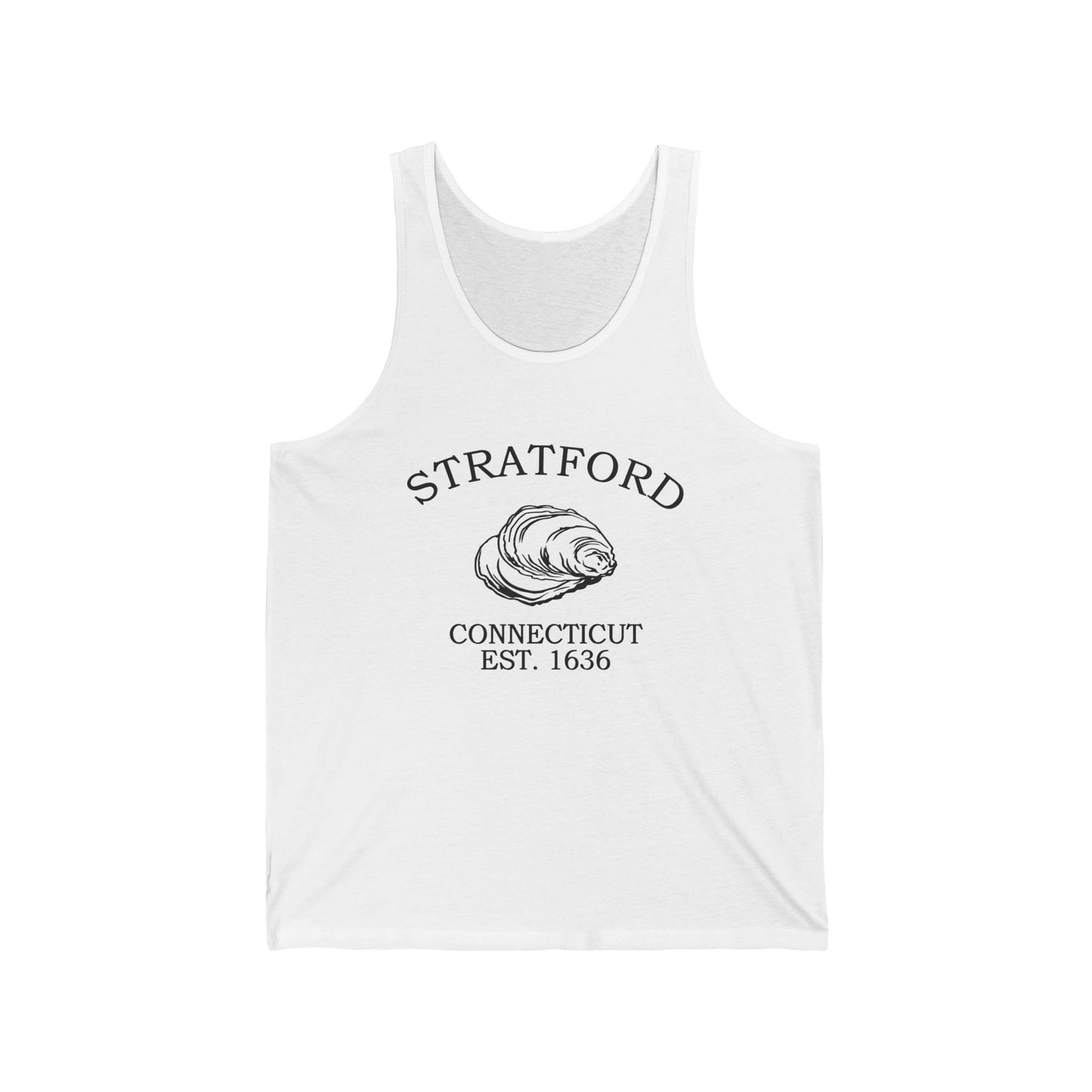
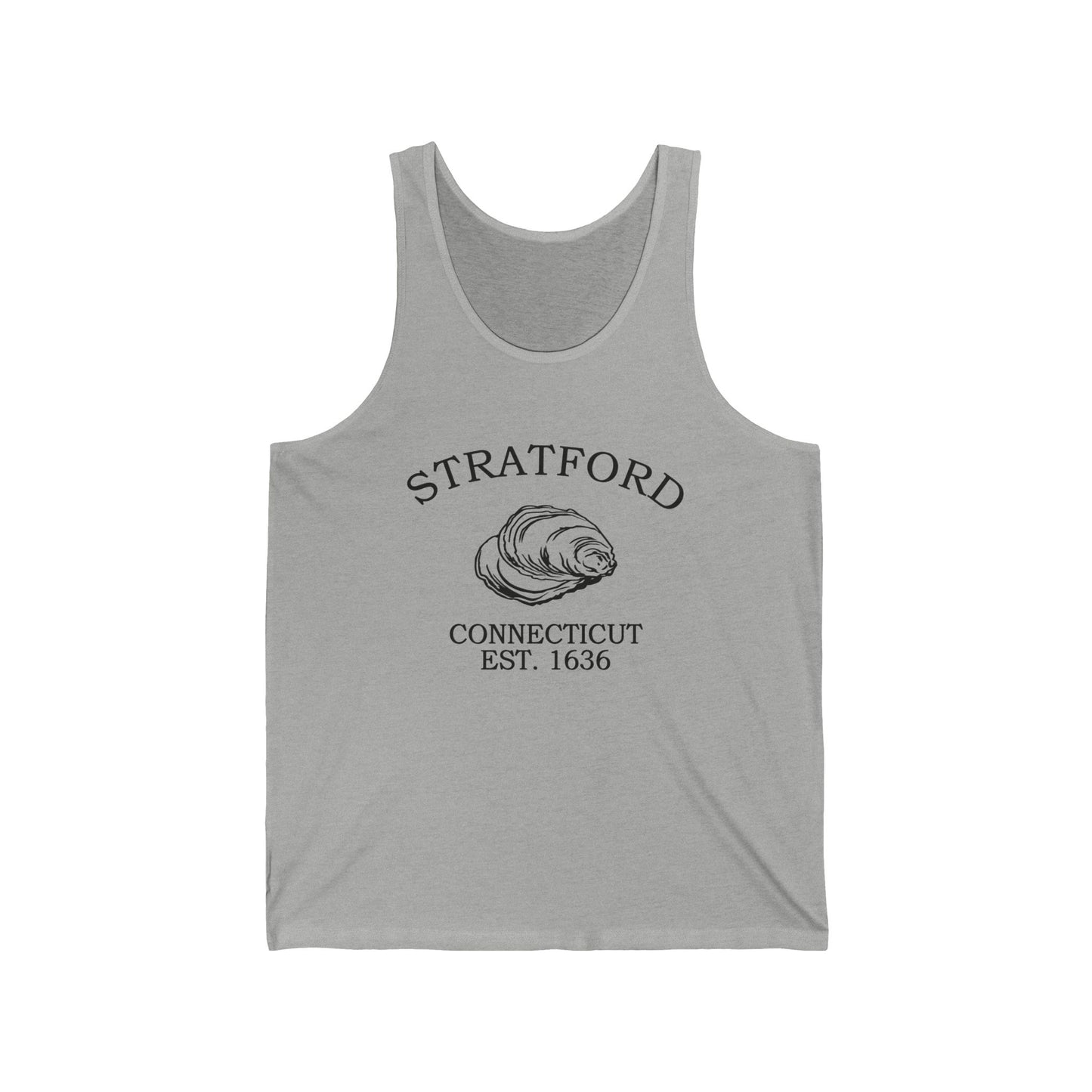
So Stratford holds two histories in one harbor: the tide that made an oyster town, and the rotor wash that made an aviation capital. Our Stratford designs gather both into wearable form. From a 1639 oyster harbor to the birthplace of the American helicopter — wear a little of Stratford's Connecticut history.
The Paugussett who lived along the Housatonic called this shore Cupheag — "place of shelter." In 1639 a group of Puritan families led by the Reverend Adam Blakeman settled at the river's mouth, and in 1643 the town was formally named Stratford, for Shakespeare's Stratford-upon-Avon in England. For its first two centuries Stratford lived off the water: oystering and shipbuilding on the Housatonic, wharves and fishing boats, the 1750 Georgian house of Captain David Judson still standing as a reminder of the colonial harbor town.
Why People Visit Stratford Connecticut
- Tour Boothe Memorial Park, a 32-acre former estate with an eclectic collection of historic buildings on the Housatonic.
- Visit the Captain David Judson House (1750), the Stratford Historical Society's colonial Georgian home.
- See Stratford Point Light, the lighthouse marking the mouth of the river on Long Island Sound.
- Relax at the Lordship beaches and seawall, facing out onto the Sound.
- Explore the National Helicopter Museum and the Connecticut Air & Space Center, telling the town's aviation story.
