


The twentieth century layered on the rest: the 1920s "Gold Coast" of beach mansions brought the first Hollywood money to the sand; the palm-lined bluffs of Palisades Park became the city's grand balcony; the Third Street Promenade turned downtown into one of America's great walking streets; and the farmers market grew into a Wednesday institution that feeds half the restaurant kitchens in Los Angeles. Through it all the pier kept its promise — and in 1998 the Ferris wheel went solar, the first of its kind, so the wheel over the Pacific now runs on the same sunshine that built the town.
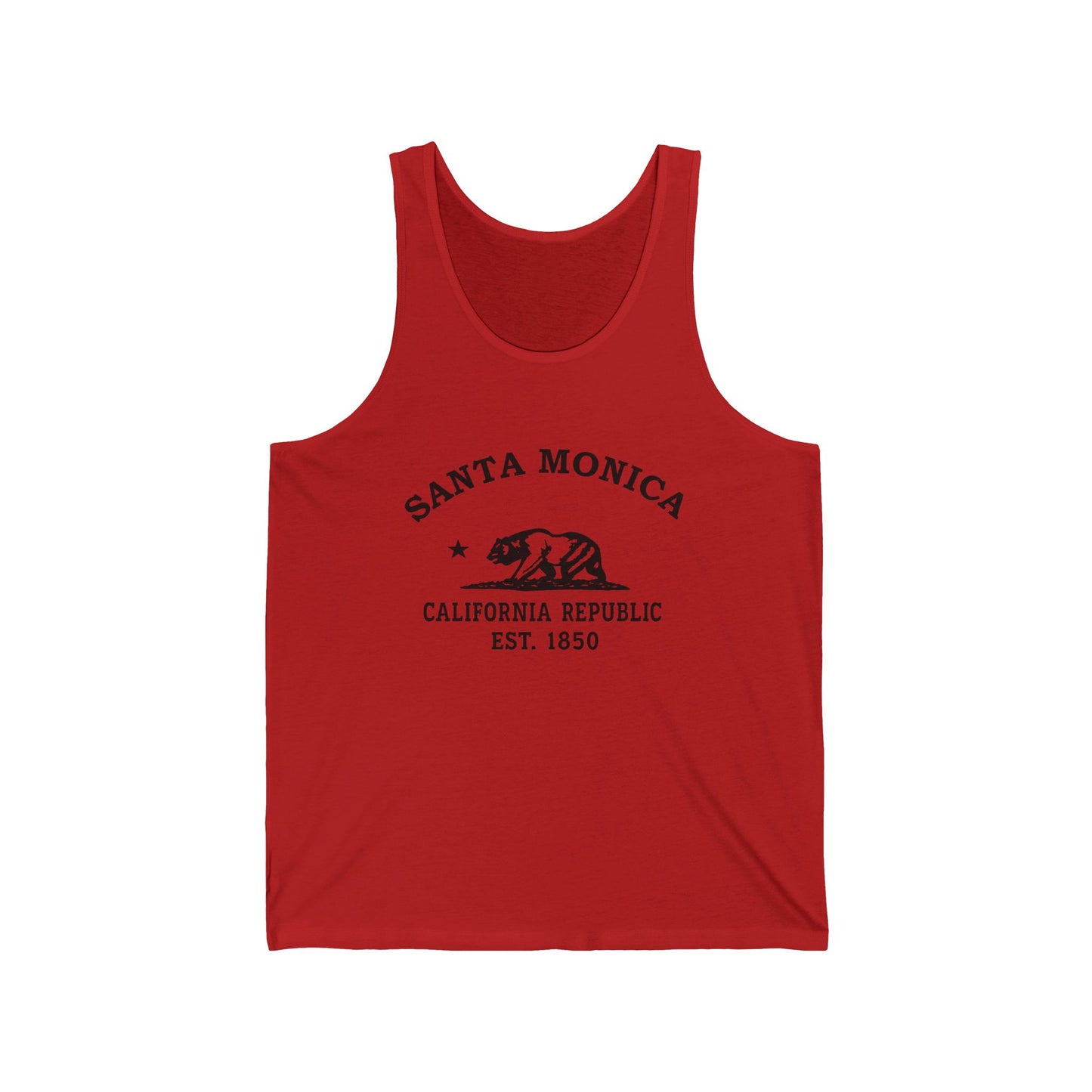
Our Santa Monica logo carries the California Republic bear and star above "Est. 1850," the year of statehood — the shared retro emblem of our California places, drawn in a worn black-and-white that recalls a WPA poster or an old pier ticket. The bear links Santa Monica to every other California town we make; what makes this one Santa Monica is everything around it — the road's end, the wheel, the carousel, and the beach that stands for all beaches.
Why People Visit Santa Monica
Santa Monica rewards visitors with a rare mix — a historic amusement pier, the western end of Route 66, miles of state beach, and one of America's great walking downtowns, all on a bright Pacific bay. People come for the pier and the End of the Trail, and stay for the sunsets off the bluffs and the easy, salt-aired grace of California's beach city.
