


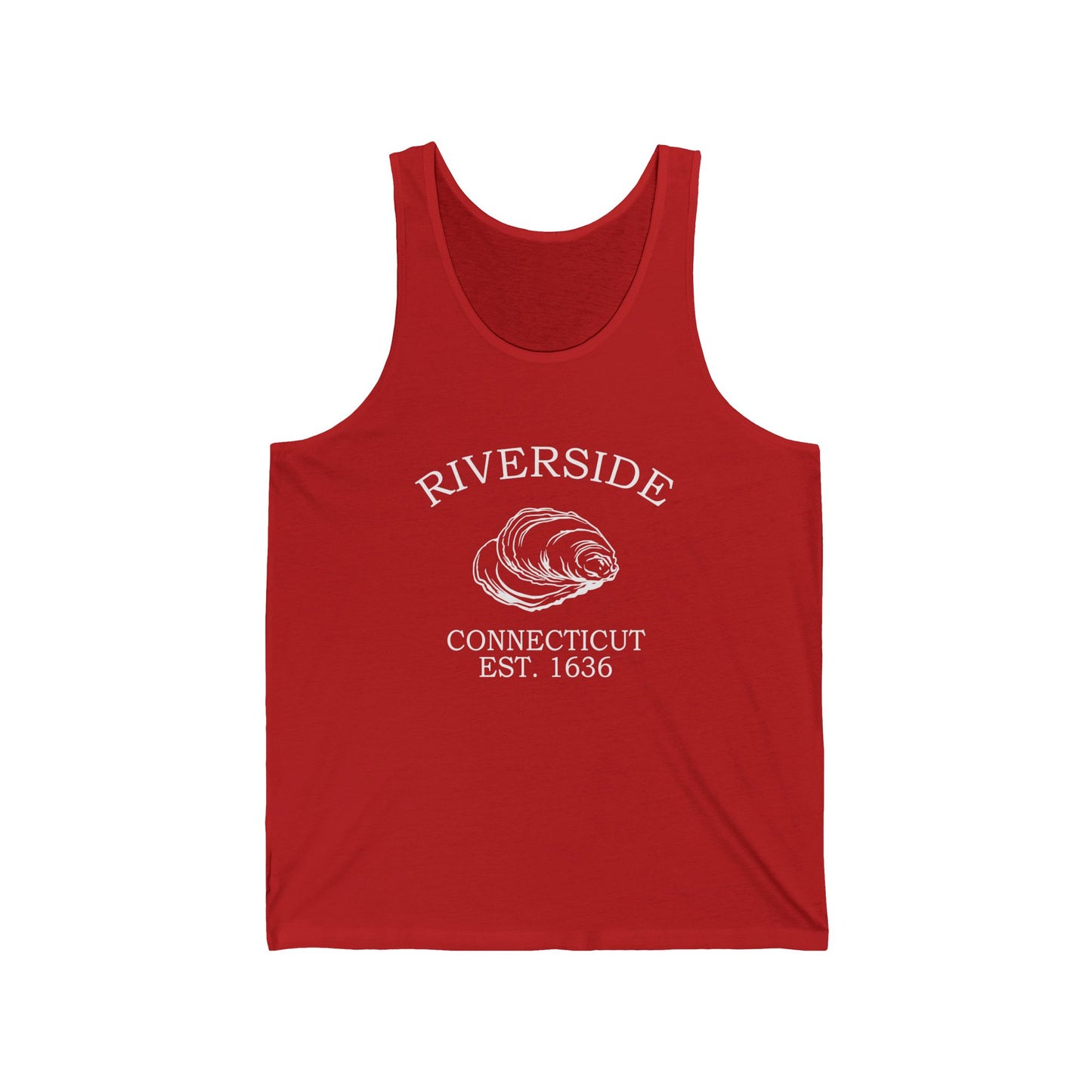
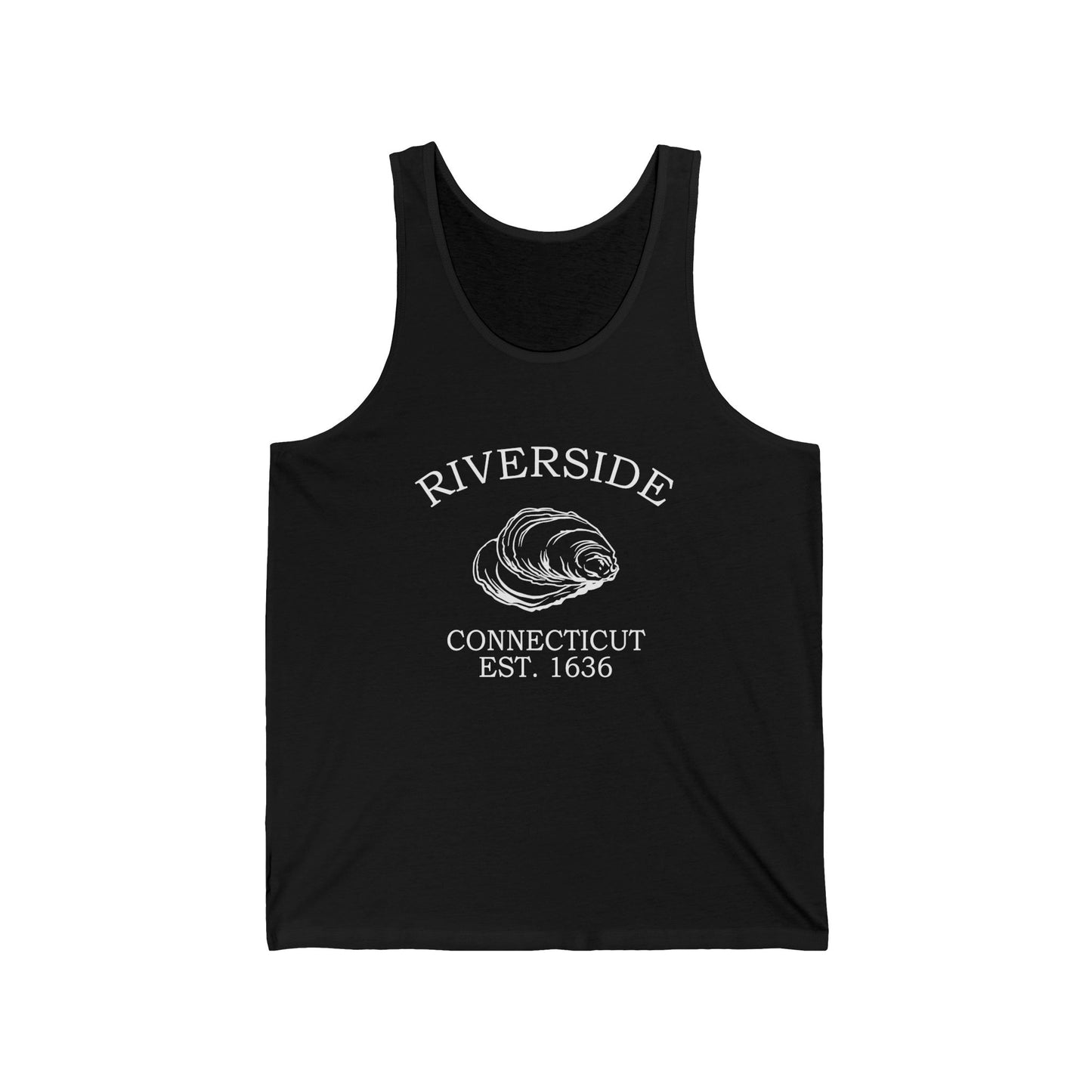
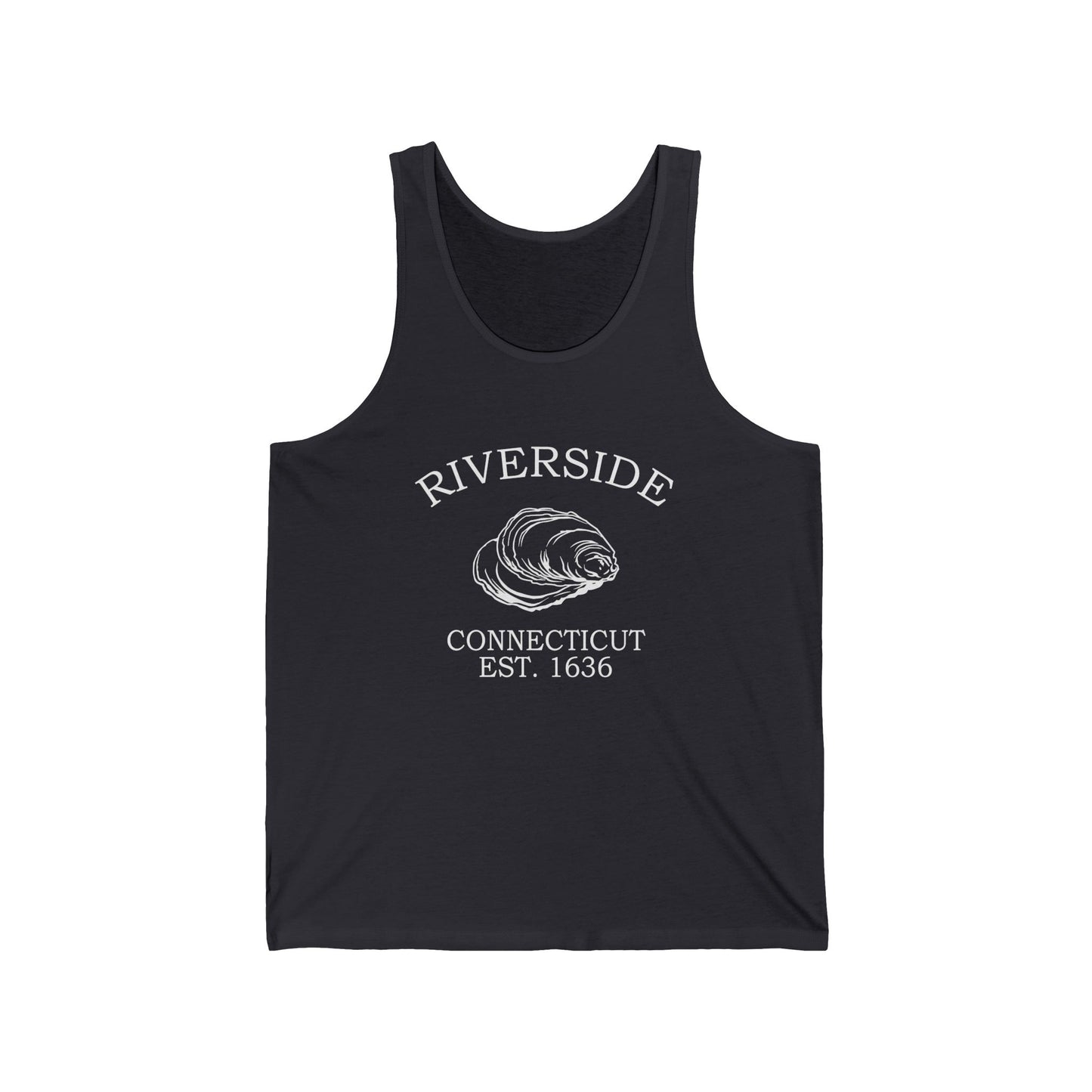
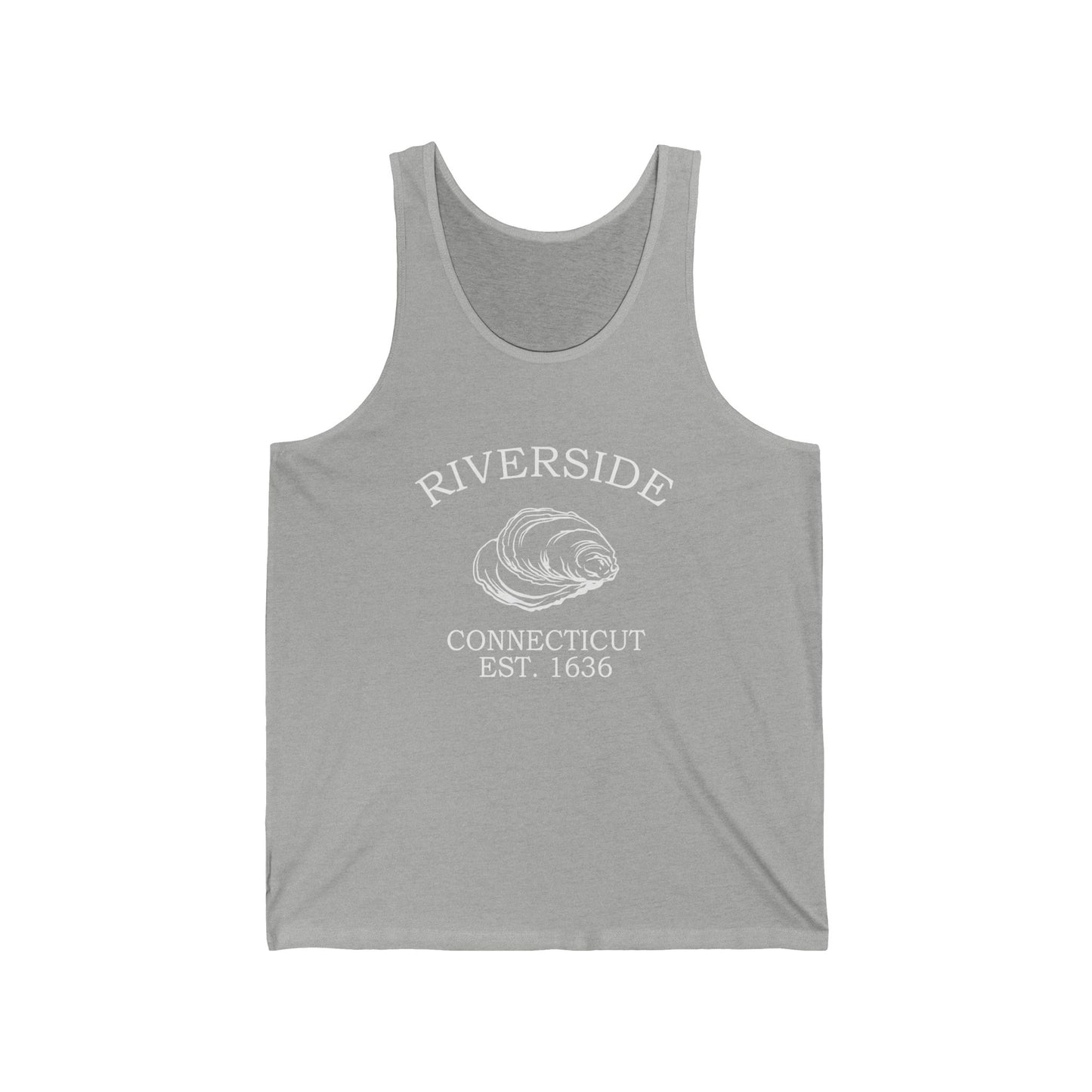
Today Riverside is a leafy, watery corner of Greenwich where an oystering neck became a genteel railroad suburb. Our Riverside designs gather that identity — the oyster emblem, the Mianus River, the quiet Sound-side shore — into wearable form. Riverside — where the Mianus River meets the Sound, and old Greenwich keeps its quiet.
The water that fed the oystermen now carries sailboats. In May 1888 a retired Civil War captain named George I. Tyson built a clubhouse on his own waterfront on the eastern shore of Cos Cob Harbor, at the mouth of the Mianus, and founded the Riverside Yacht Club — the second-oldest yacht club in Connecticut and among the oldest in the United States. Its Victorian clubhouse went up the next year, and the club has been racing on Long Island Sound ever since. Sailcloth, brass, and harbor-grey: this is Riverside’s prevailing weather.
Why People Visit Riverside
Riverside rewards visitors who like the quiet, watery side of the Gold Coast: sailboats on the Mianus, shaded streets, and a handful of real landmarks close together. Add the Sound-side parks and the easy ride to the city, and the genteel calm makes its own case.
