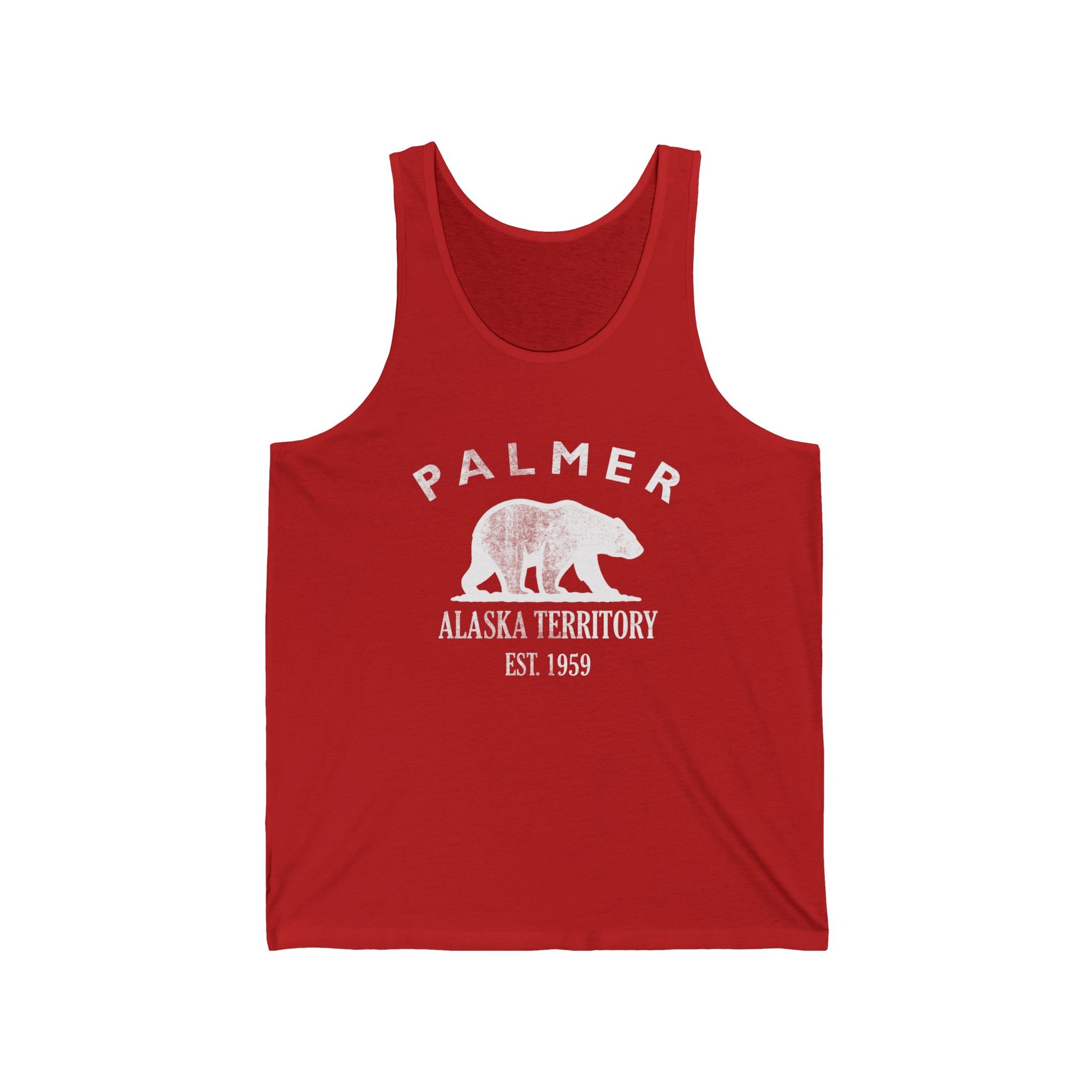
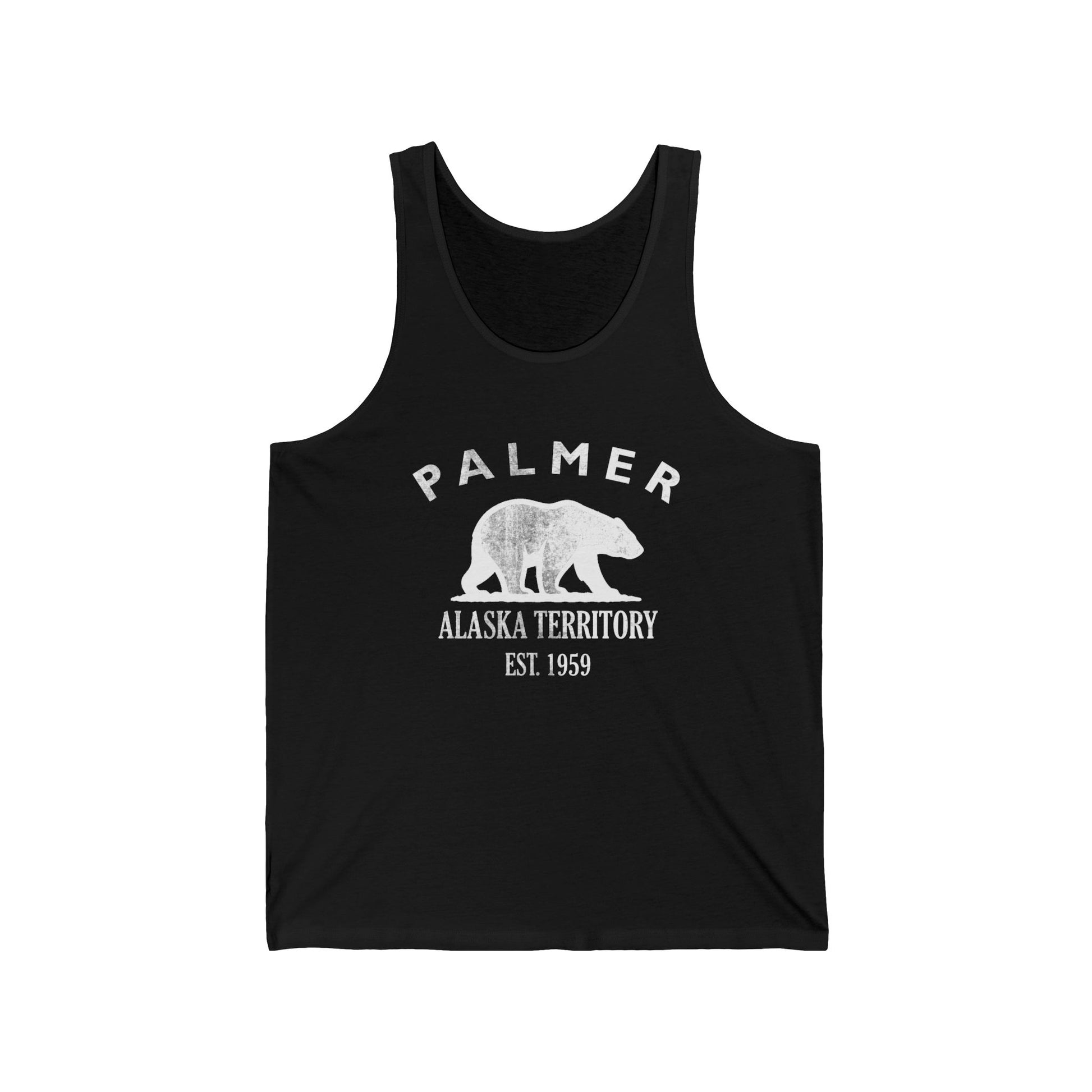
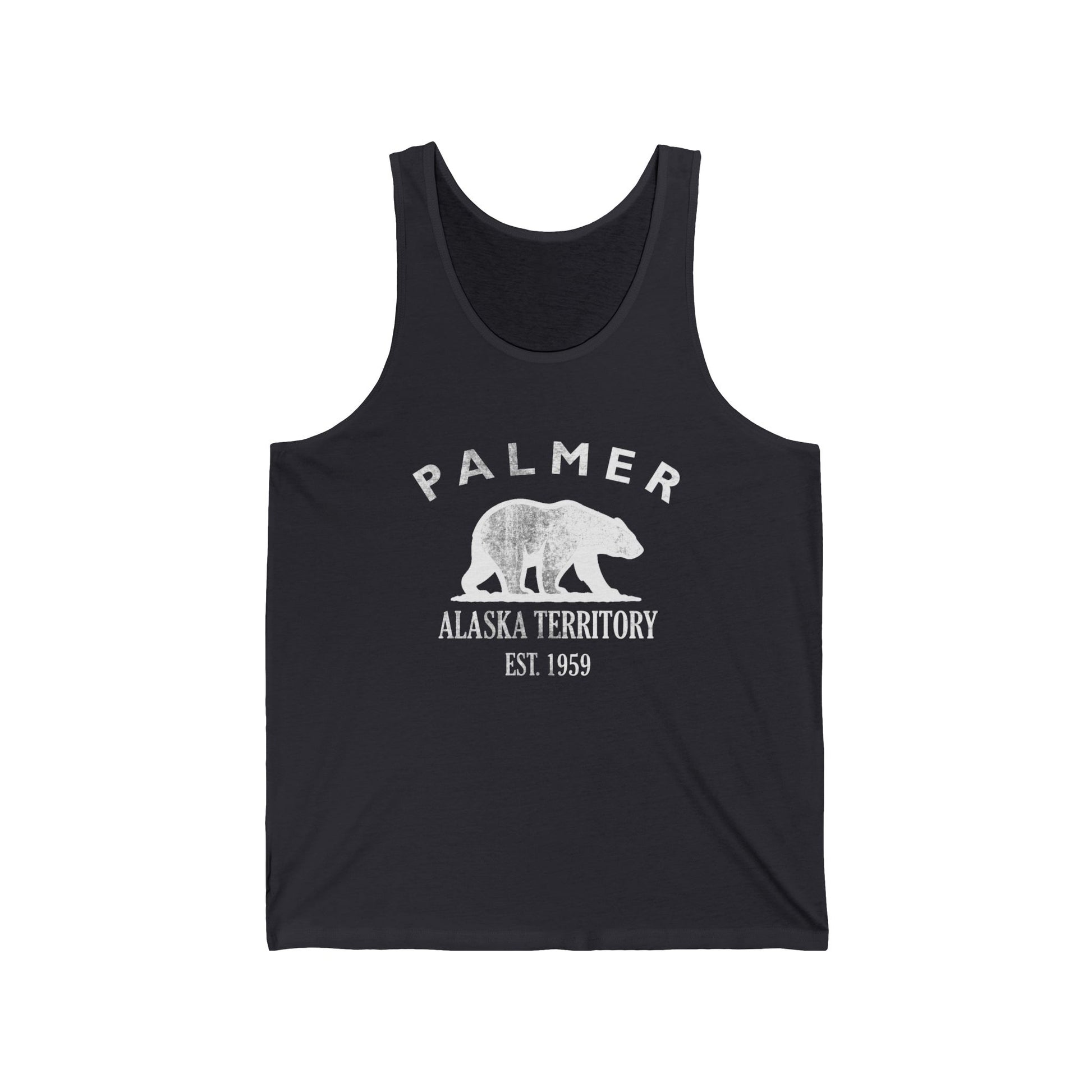
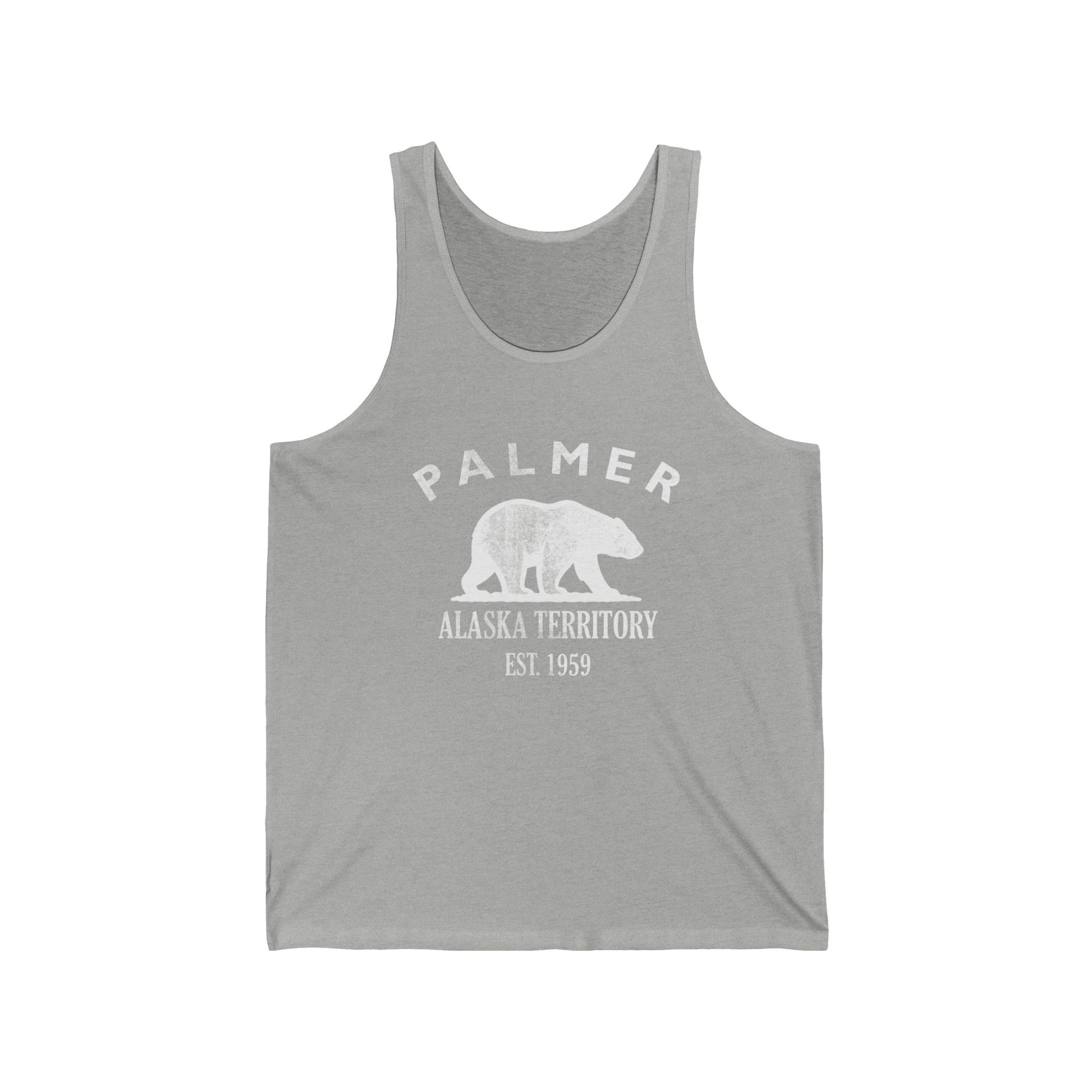
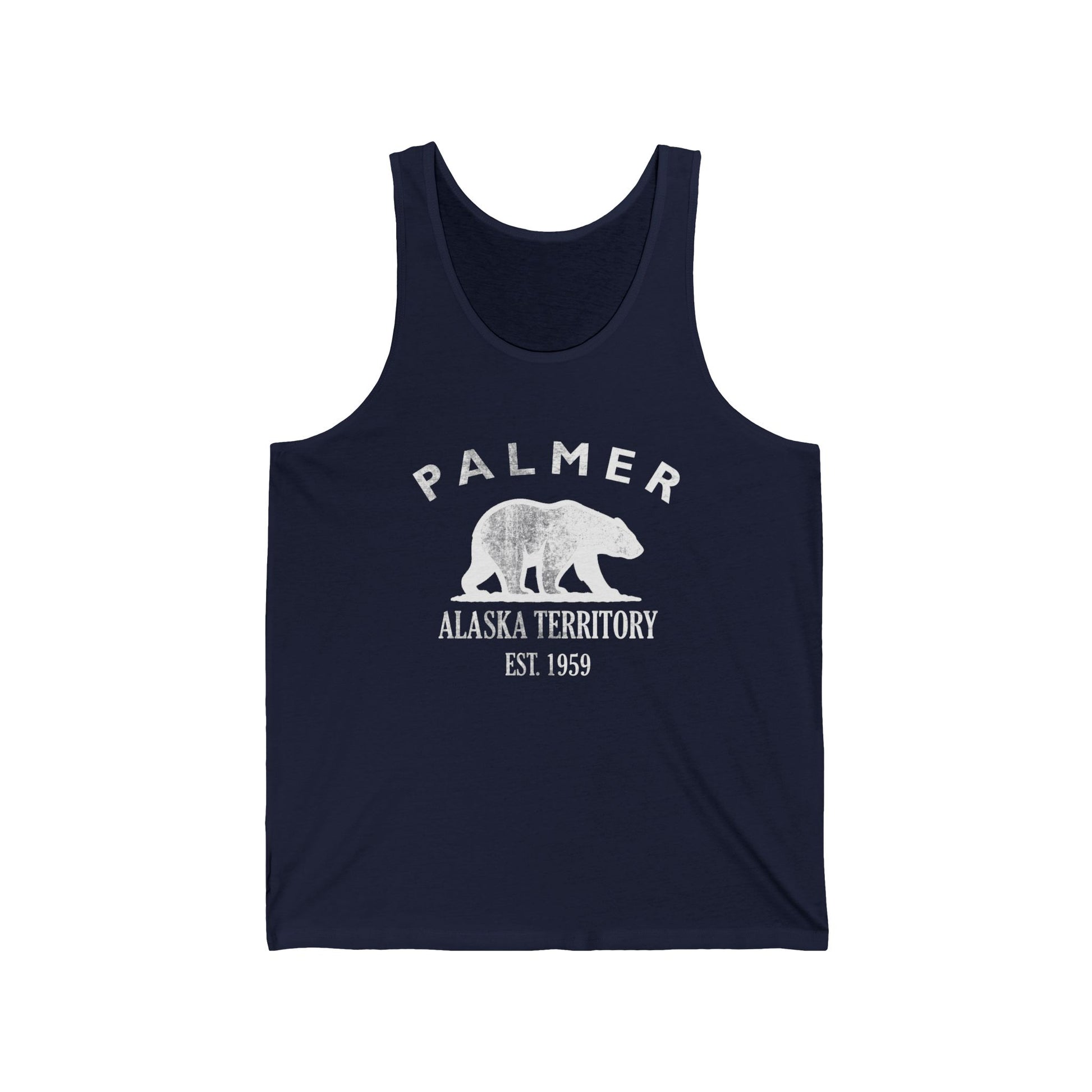
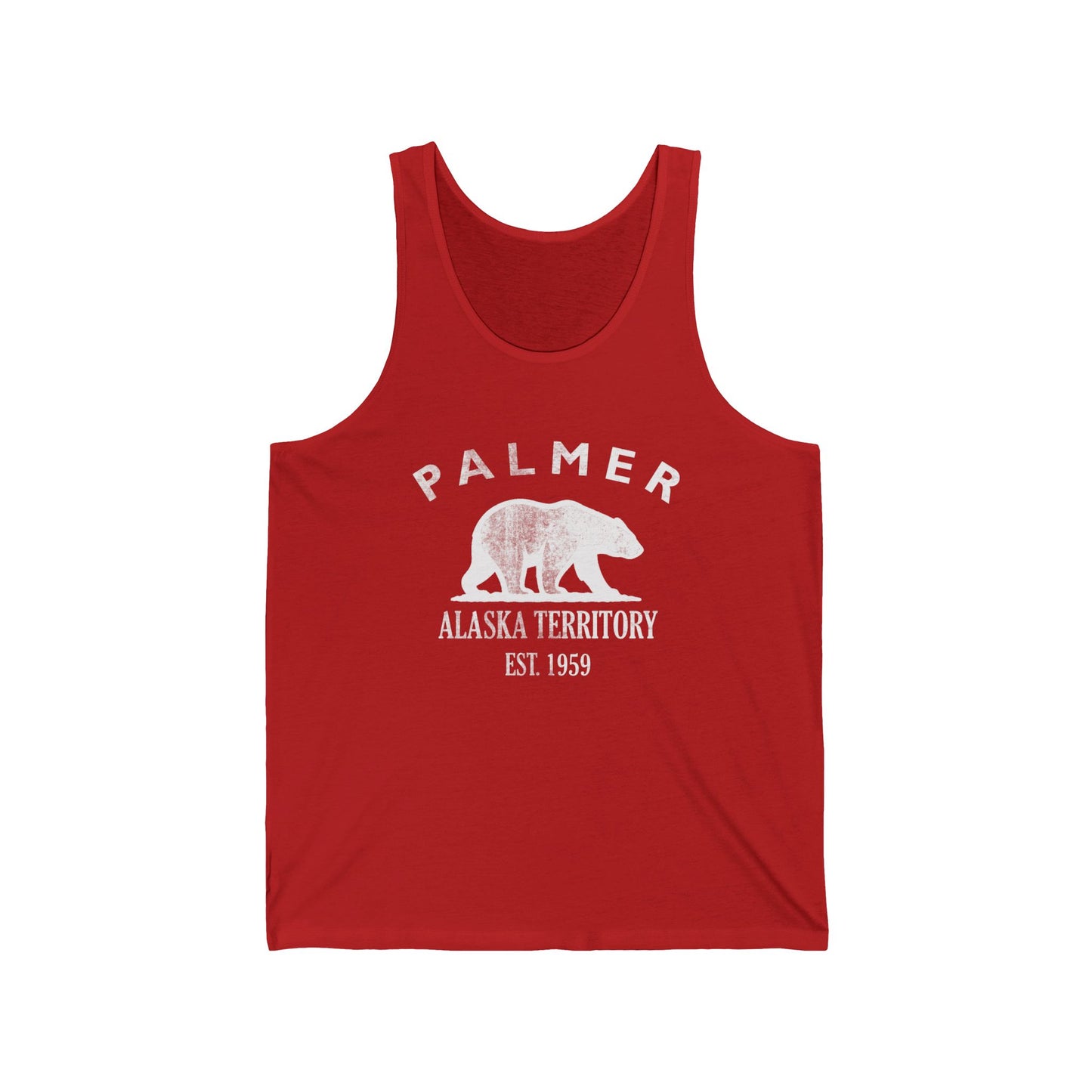
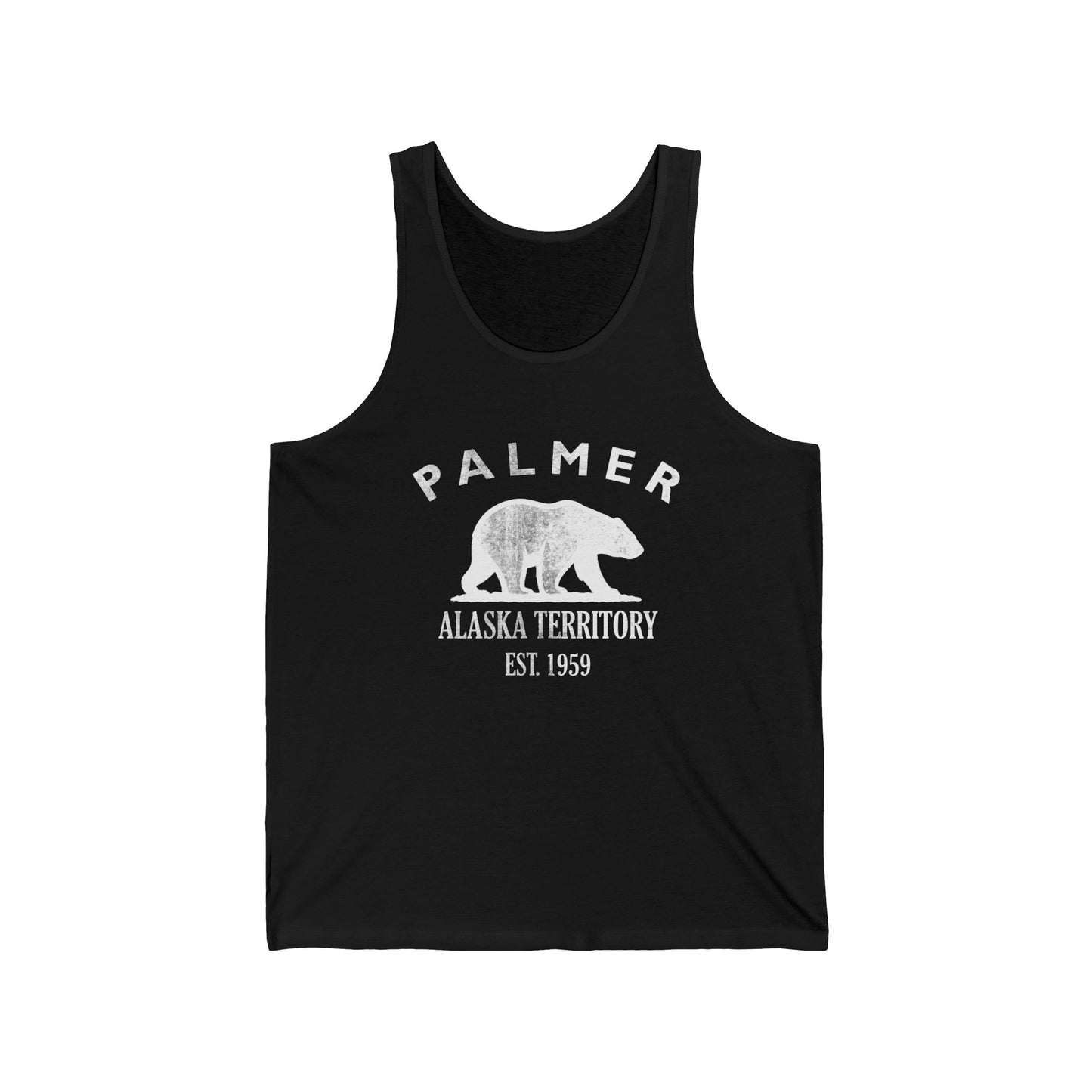
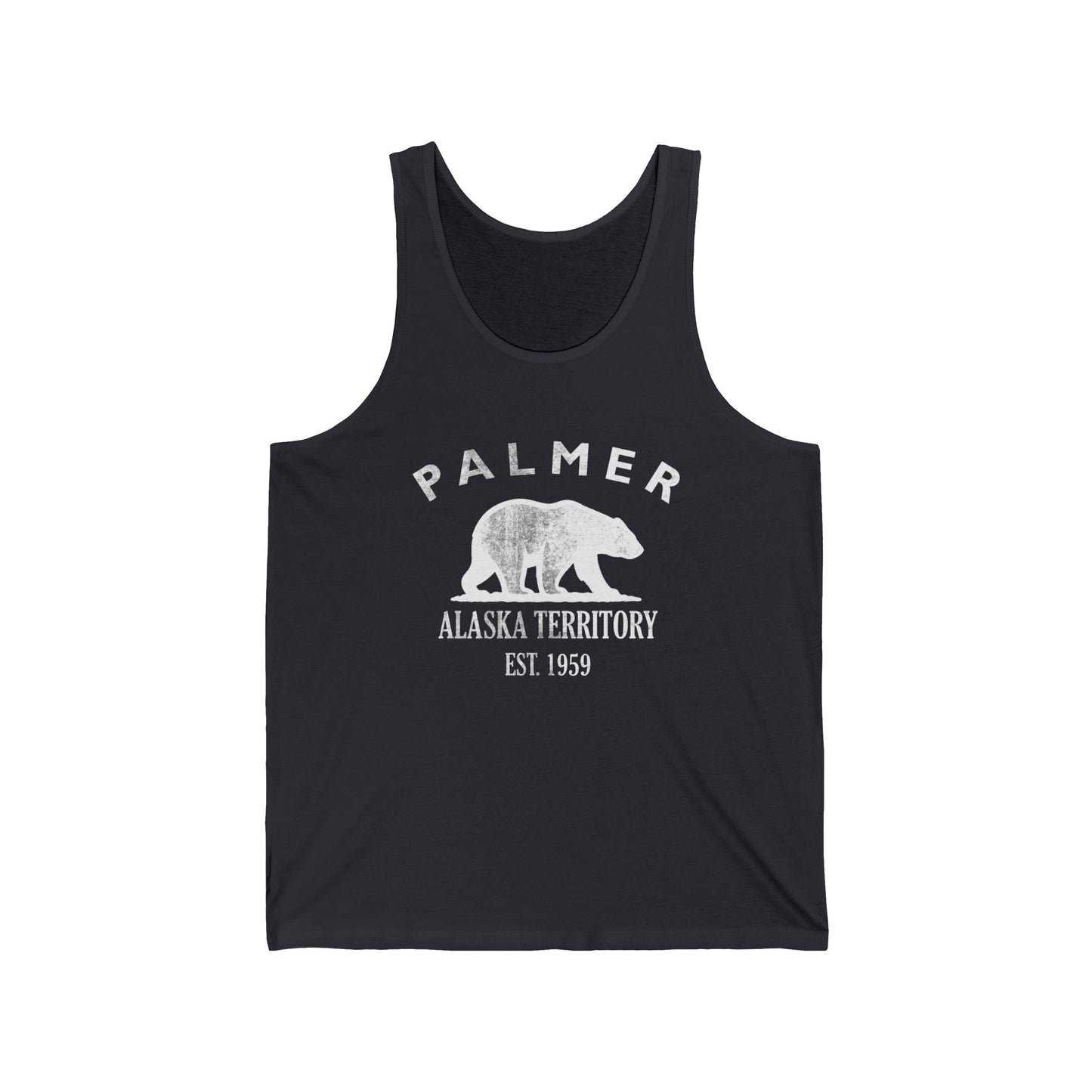
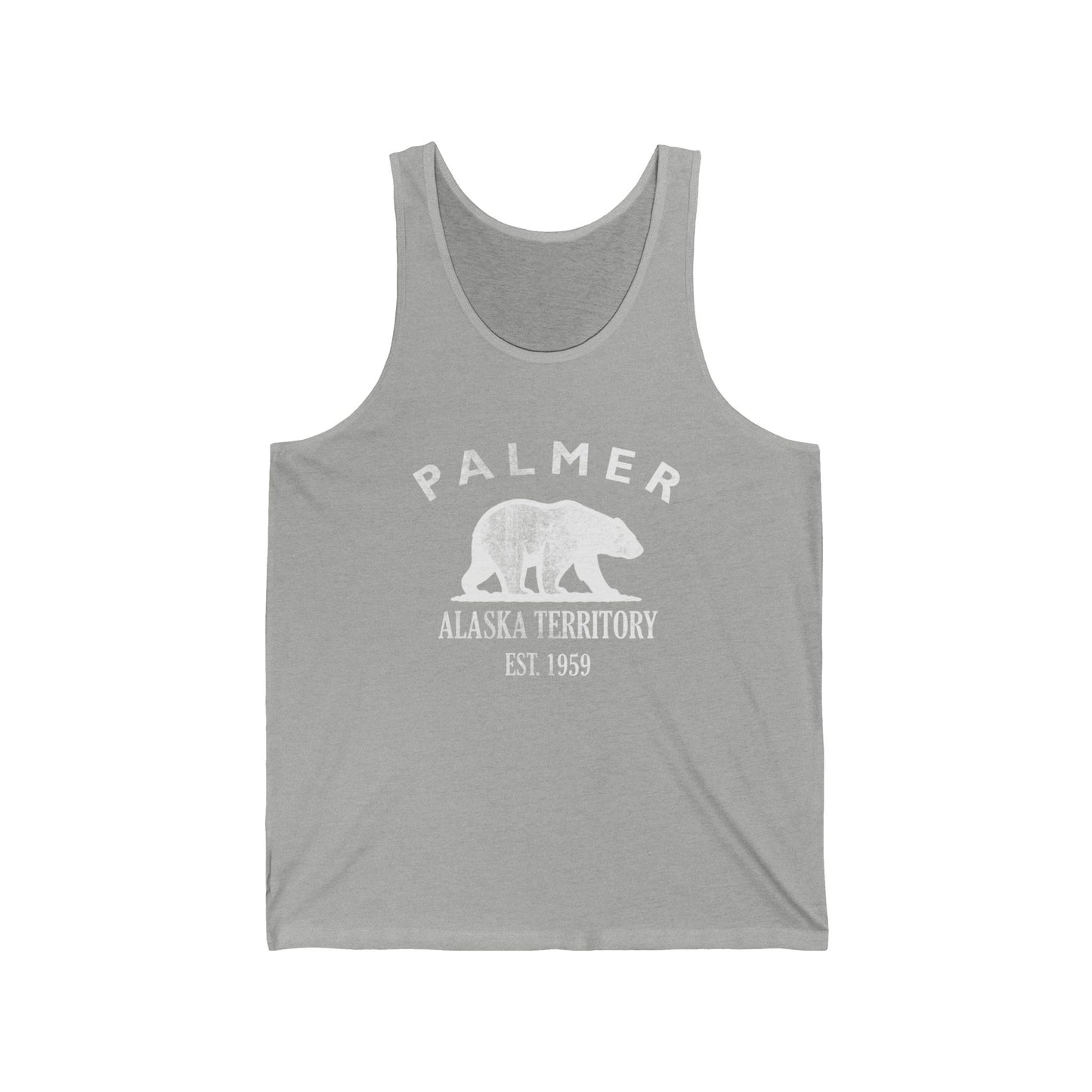
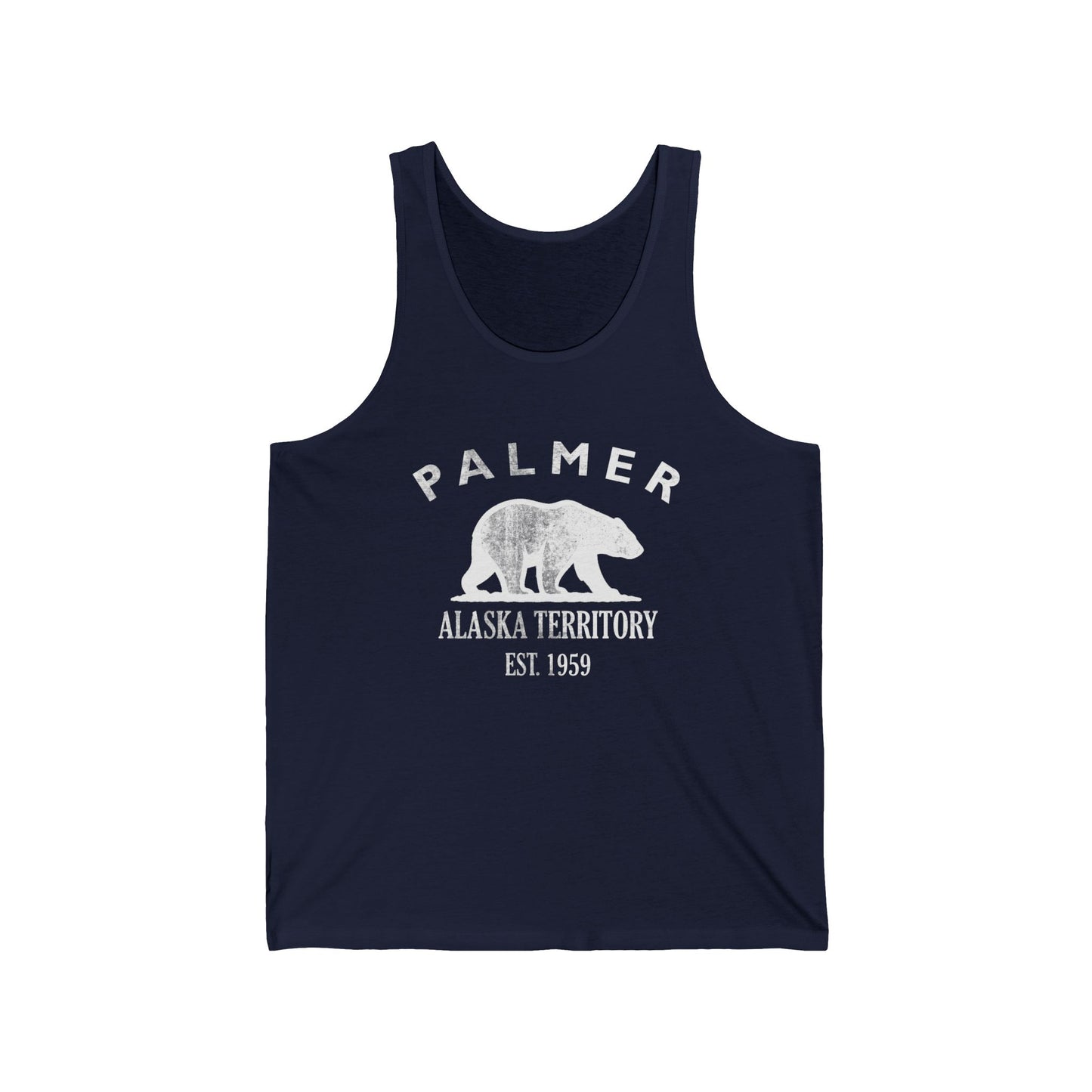
Our Palmer logo carries the Alaska bear above "Alaska Territory — Est. 1959," the shared retro emblem of our Alaska towns, drawn in worn black-and-white like an old outfitter's stamp or a crate label. The 1959 date marks Alaska statehood, and the bear is the through-line that links Palmer to every other Alaska town we make. The detail that makes this one Palmer is the colony itself — the New Deal farm families, the gambrel barns, the giant cabbages, and the Mat-Su Valley under Pioneer Peak.
Palmer incorporated as a city in 1951 and is now the seat of the Matanuska-Susitna Borough, a farm-and-commuter town forty-some miles up the Glenn Highway from Anchorage. The original colonists have mostly passed on, but their barns, their farms along Farm Loop Road, and their fair are still here, and the town still measures its year by planting, the midnight sun, and the long subarctic winter. It remains, proudly, Alaska's farm town.
Why People Visit Palmer
Palmer offers something rare in Alaska — real farm country, set against glaciers and peaks. Visitors come for the colony heritage and the State Fair, stay for the Hatcher Pass alpine and the Musk Ox Farm, and leave understanding why this one valley, under all that summer light, became the place Alaska grows its food.
