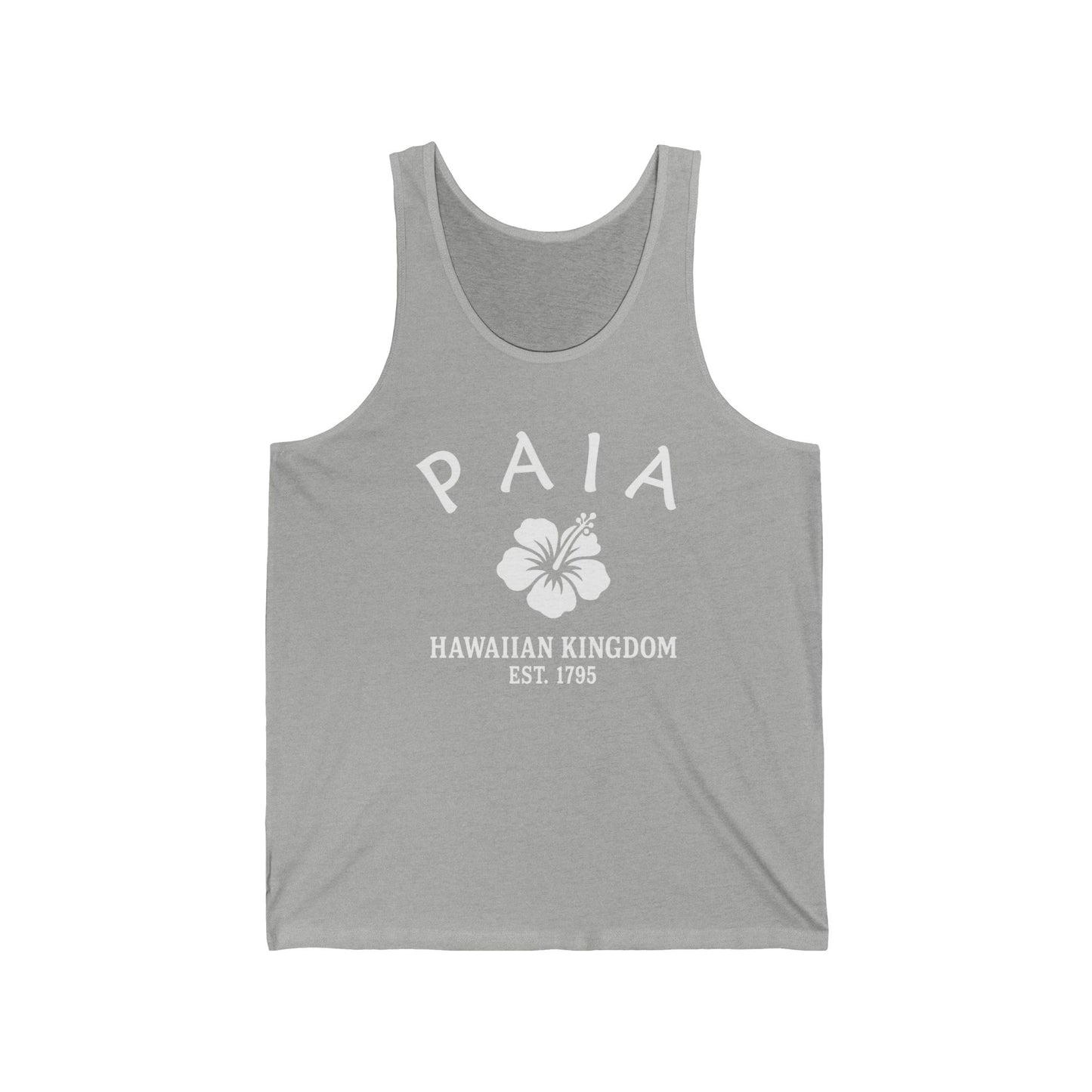
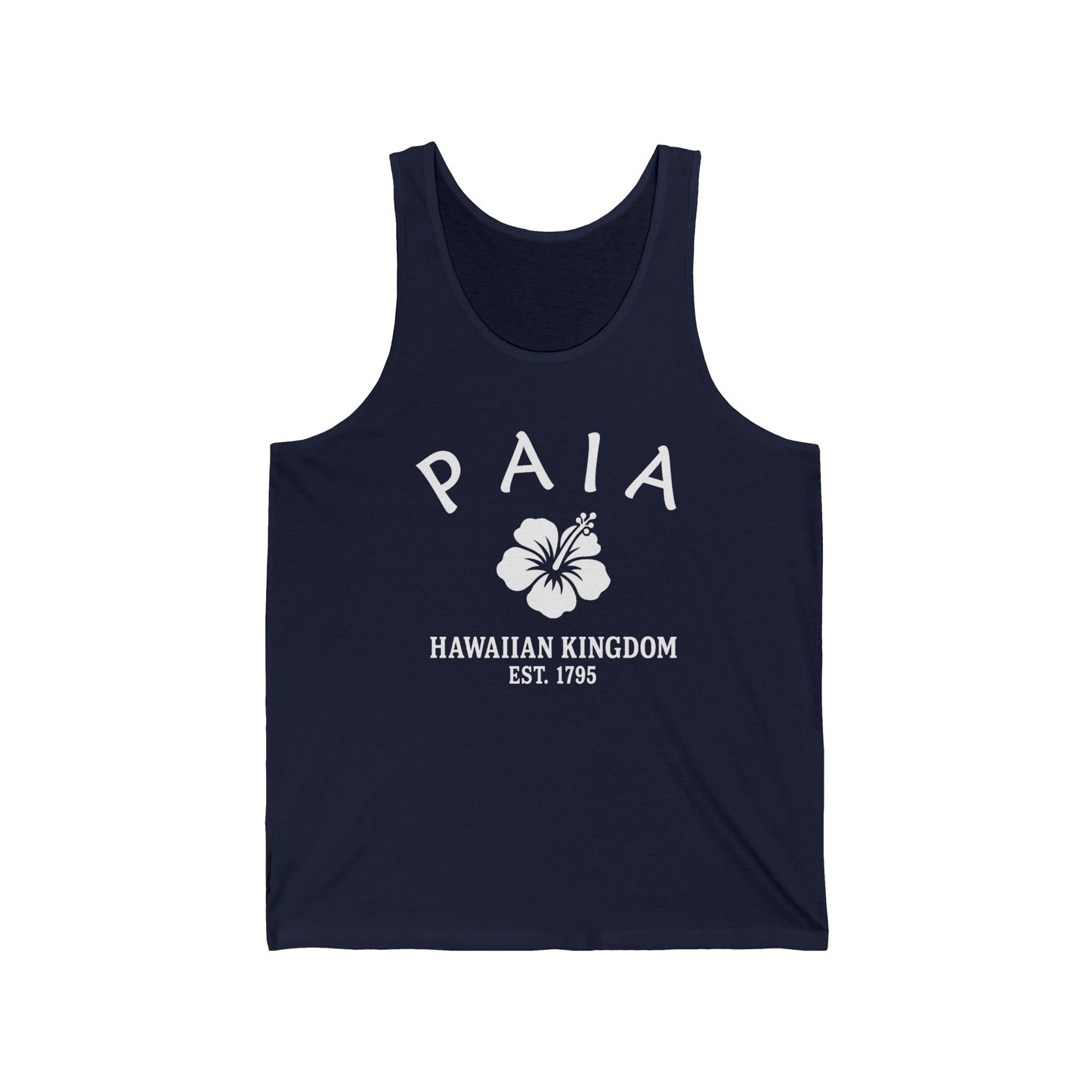
Our Pāʻia logo carries the Hawaiian hibiscus over "Hawaiian Kingdom · Est. 1795," the shared emblem of every Merlin Classics Hawaiʻi place, printed in clean retro black-and-white like an old travel decal. The hibiscus stands for the islands as a whole; what makes this one Pāʻia is everything around it — the pastel plantation storefronts, the wind at Hoʻokipa, the bohemian Baldwin Avenue soul, and the salt smell of the North Shore where the road to Hāna begins.
Then the wind found it. Just two miles east at Hoʻokipa, the relentless trade winds and reef break combine into some of the most consistent windsurfing conditions on earth, and through the 1980s and 1990s the pioneers of the sport set up shop in town and made Pāʻia known the world over as the "Windsurfing Capital of the World." The same winds now draw kitesurfers and foilers too. The giant winter wave at Jaws (Peʻahi) lies just beyond, and green sea turtles haul out to rest on the sand at Hoʻokipa — watched, by law, from a respectful distance. And all the while Pāʻia kept its oldest job: the last town to gas up, grab food and turn east onto the 64-mile Road to Hāna.
Why People Visit Pāʻia
Pāʻia offers a whole mood in one small town: bohemian, barefoot charm, world-class wind and surf, and the romance of the open road to Hāna. It is the coolest little town on Maui — and for the artists, surfers and free spirits who live here, simply home, the place where old Maui still feels like itself.
