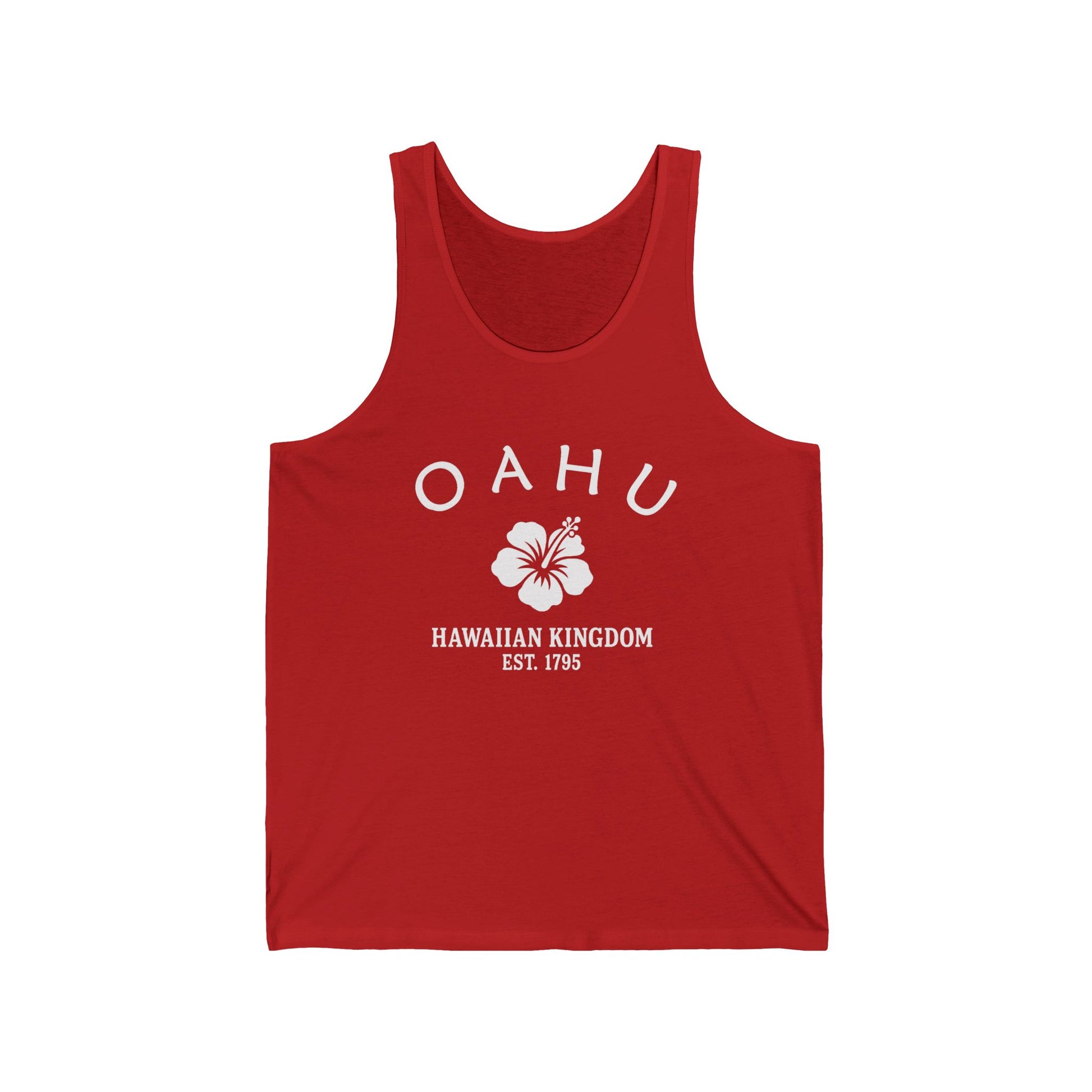
From Oʻahu the Hawaiian Kingdom grew. Honolulu, with the only sheltered deep-water harbor for miles, became the capital around 1850 and the hub of the islands' trade — sandalwood, then whaling fleets, then sugar and pineapple — drawing missionaries and merchants and, to the plantations, waves of immigrant labor from Japan, Okinawa, Portugal, China and the Philippines. The monarchy raised ʻIolani Palace there in 1882 — the only royal palace on American soil, lit by electricity before the White House — and ruled from its halls. Around it stood the Kingdom's Honolulu: Kawaiahaʻo Church of 1842, the "Westminster Abbey of Hawaiʻi," and the gilded statue of Kamehameha that still faces the old courthouse. This was the heart of a sovereign Hawaiian nation.
Today Oʻahu is Hawaiʻi's gathering place in full: the capital and the crowds, the surf and the city, home to roughly a million people and to the most blended culture in the islands, where nearly everyone's grandparents came from somewhere else and the food, festivals and music to match are part of daily life. It became the heart of the fiftieth state in 1959, and it remains where Hawaiʻi meets the world. Our Oʻahu designs gather that spirit into wearable form. Oʻahu — the Gathering Place, where Diamond Head watches over Hawaiʻi's beating heart.
Why People Visit Oʻahu
Oʻahu offers the whole of Hawaiʻi in one place: deep history and living culture, world-famous surf, a great multicultural city, and beaches for every mood. It is where most visitors begin — and, for the million people who live here, simply home, the island where Hawaiʻi gathers.
