


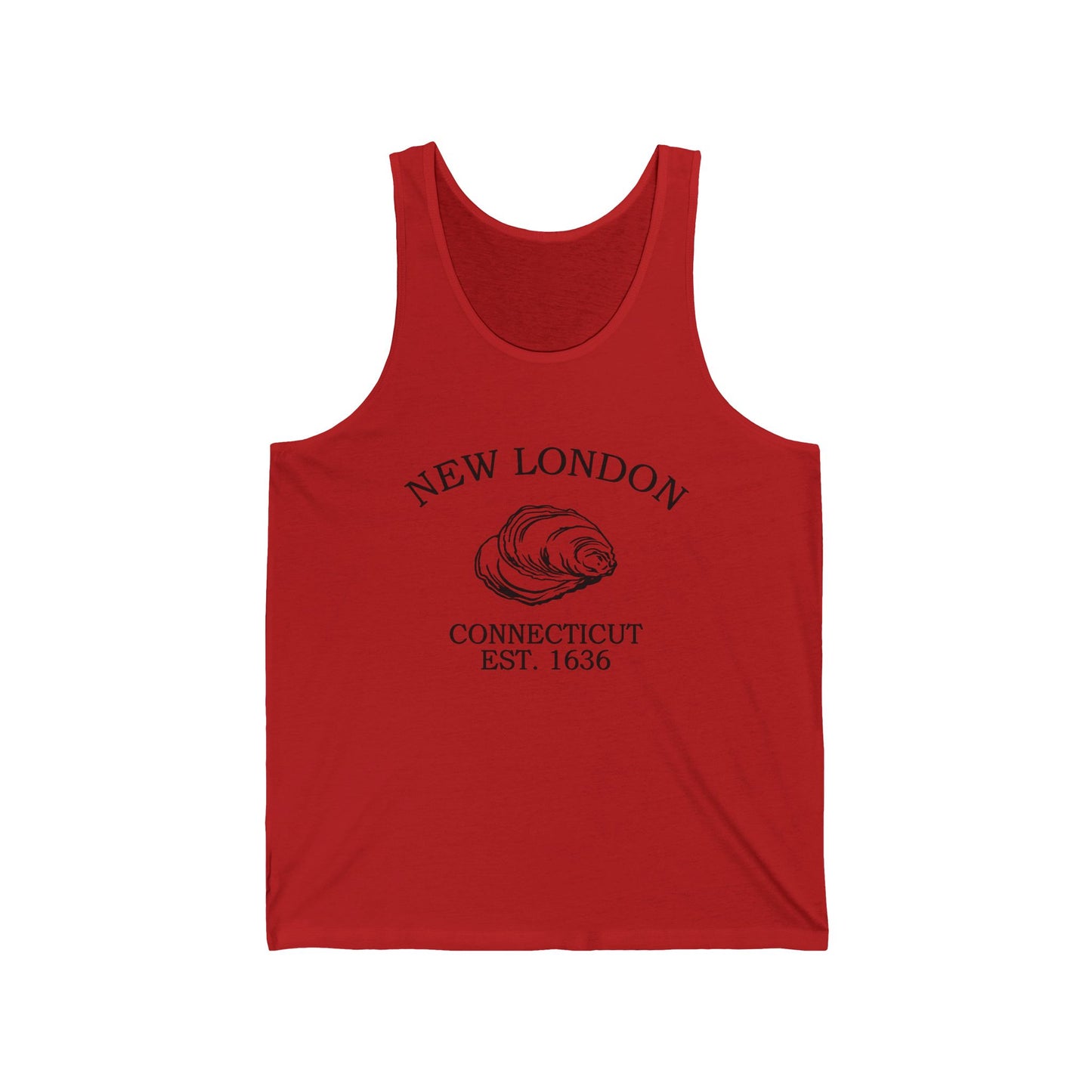

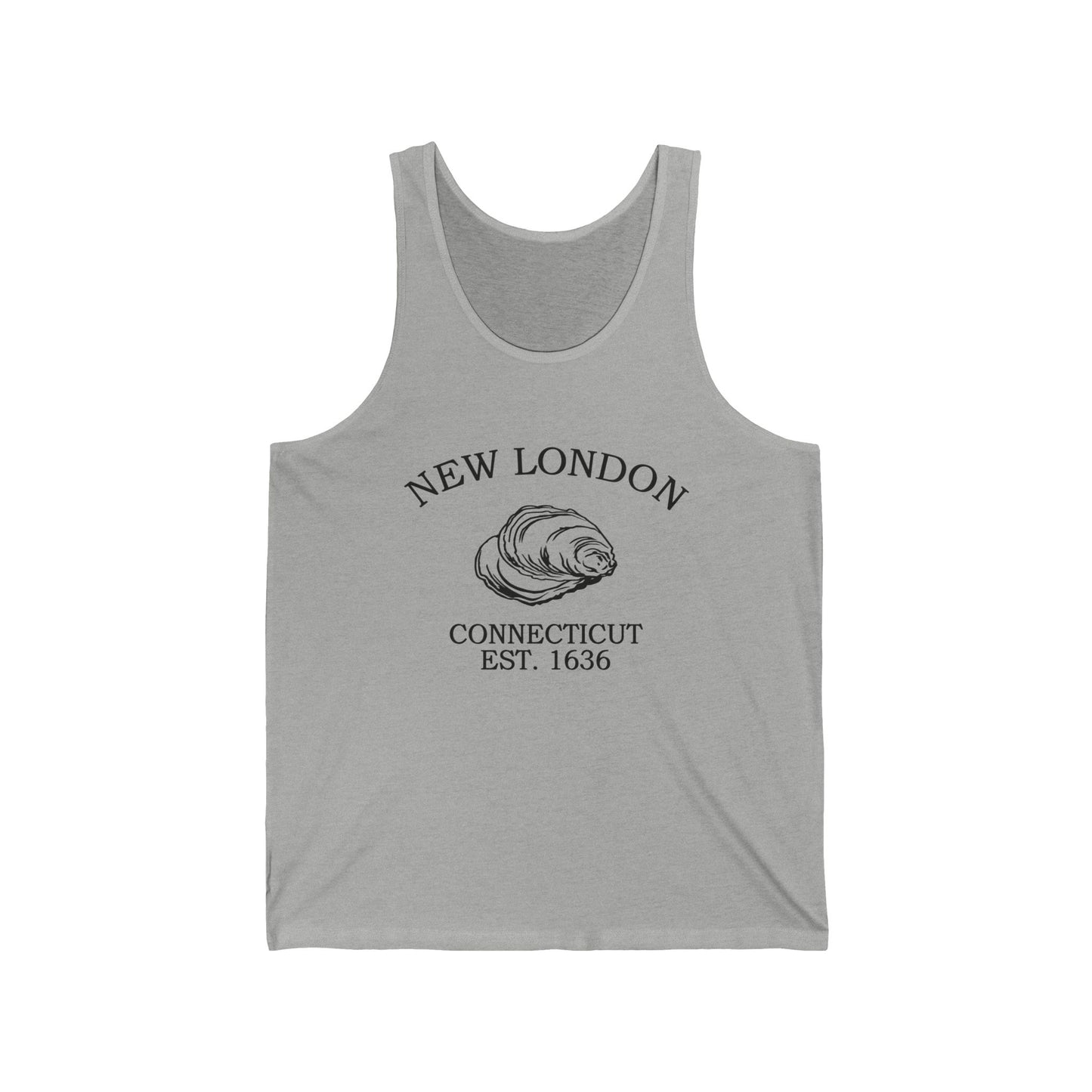
Our New London logo carries Connecticut's oyster shell over “1636” — the shared emblem of every Merlin Classics Connecticut town, marking the founding year of the Connecticut Colony. The oyster shell is the state's maritime shorthand: abundance, the shoreline, the working coast. Printed black-and-white with the worn look of an old oyster-crate label or a piece of coastal signage, it reads as vintage New England. What makes this one New London is the place behind it: the Whaling City, the Coast Guard Academy, the deep harbor on the Thames. On a tee or a cap it reads less like a souvenir and more like a piece of the Connecticut shoreline — worn plain.
What it turned to was whaling. New London had chased whales since the early 1700s, but the trade peaked in the 1840s: in 1847 the port passed Nantucket to stand second only to New Bedford, and by mid-century it was the second-busiest whaling port in the world. The fortunes that came home built the Greek Revival mansions of Whale Oil Row, and in 1833 — at the height of that wealth — the city raised a Custom House on Bank Street designed by Robert Mills, architect of the Washington Monument; it is the oldest U.S. Custom House still in operation, and when the schooner Amistad was towed into the harbor in 1839, it was this waterfront that received her.
Why People Visit New London Connecticut
- Visit the U.S. Coast Guard Academy and, when she's in port, the barque Eagle.
- Tour Fort Trumbull State Park, the granite fort with harbor views and coastal-defense exhibits.
- See New London Harbor Light — the oldest lighthouse in Connecticut — and the offshore New London Ledge Light.
- Walk Whale Oil Row and the historic downtown around Bank Street and the 1833 Custom House.
- Spend a summer day at Ocean Beach Park, or catch a show at the Garde Arts Center.
- Ride the Cross Sound Ferry across to Orient Point, or sail for Block Island.
