



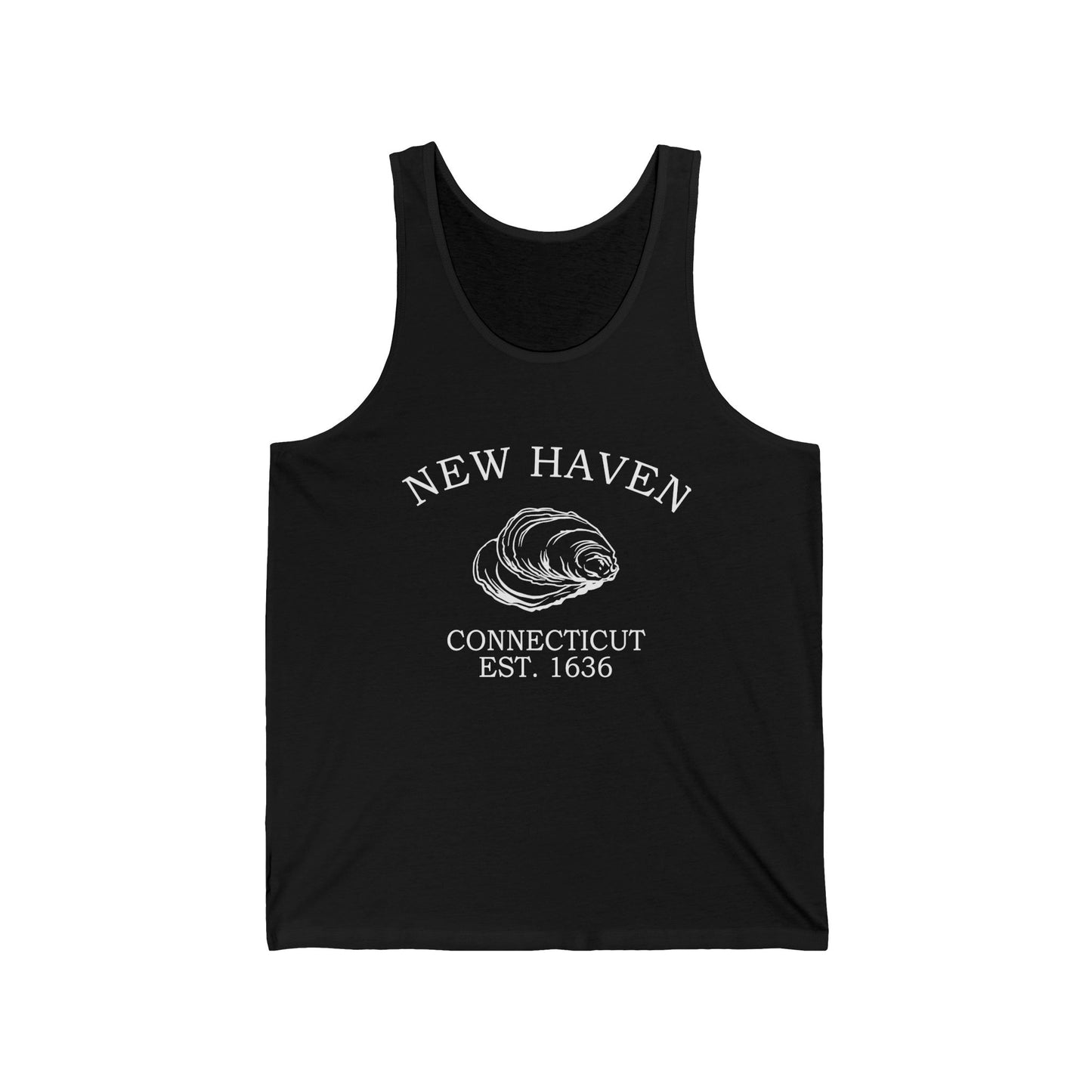
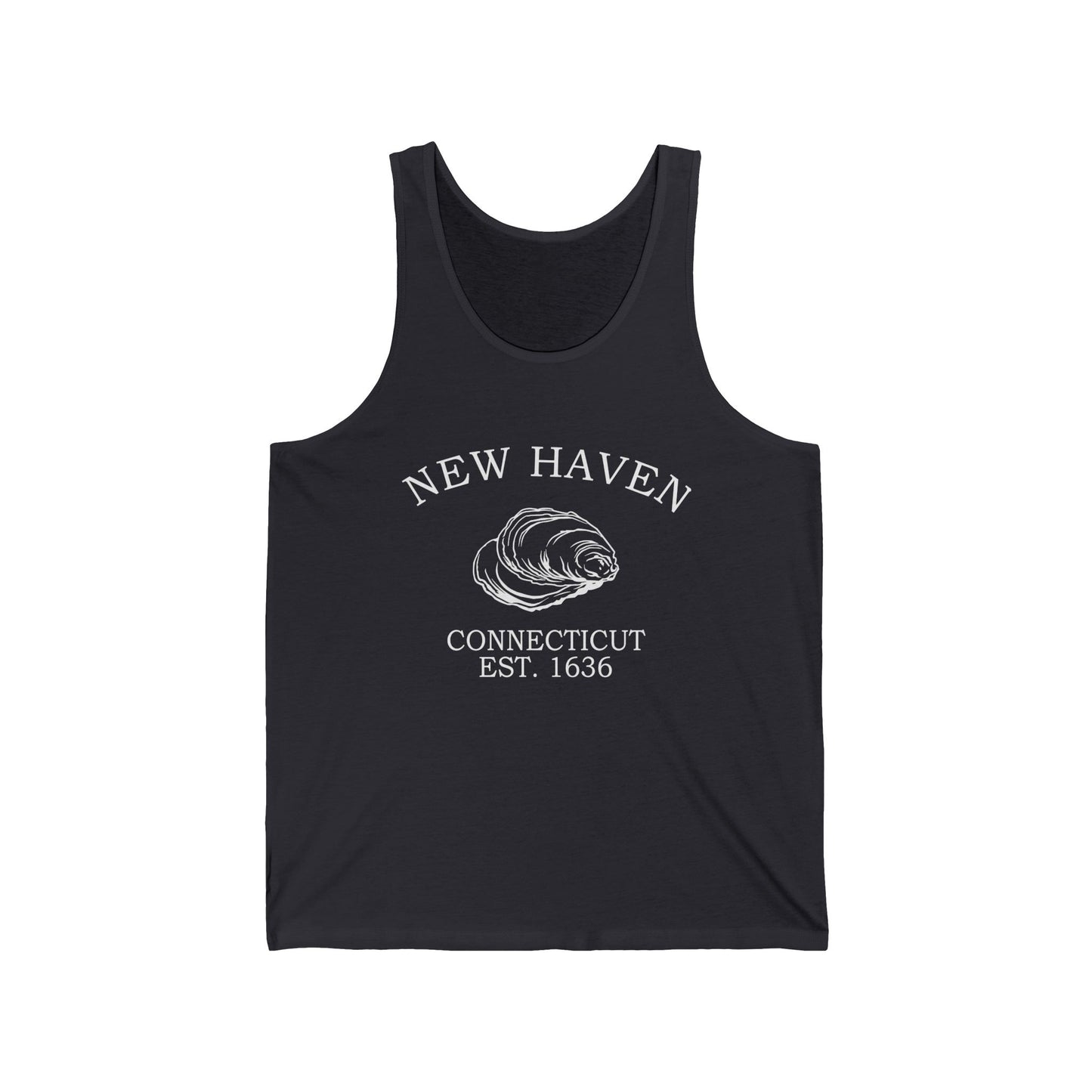
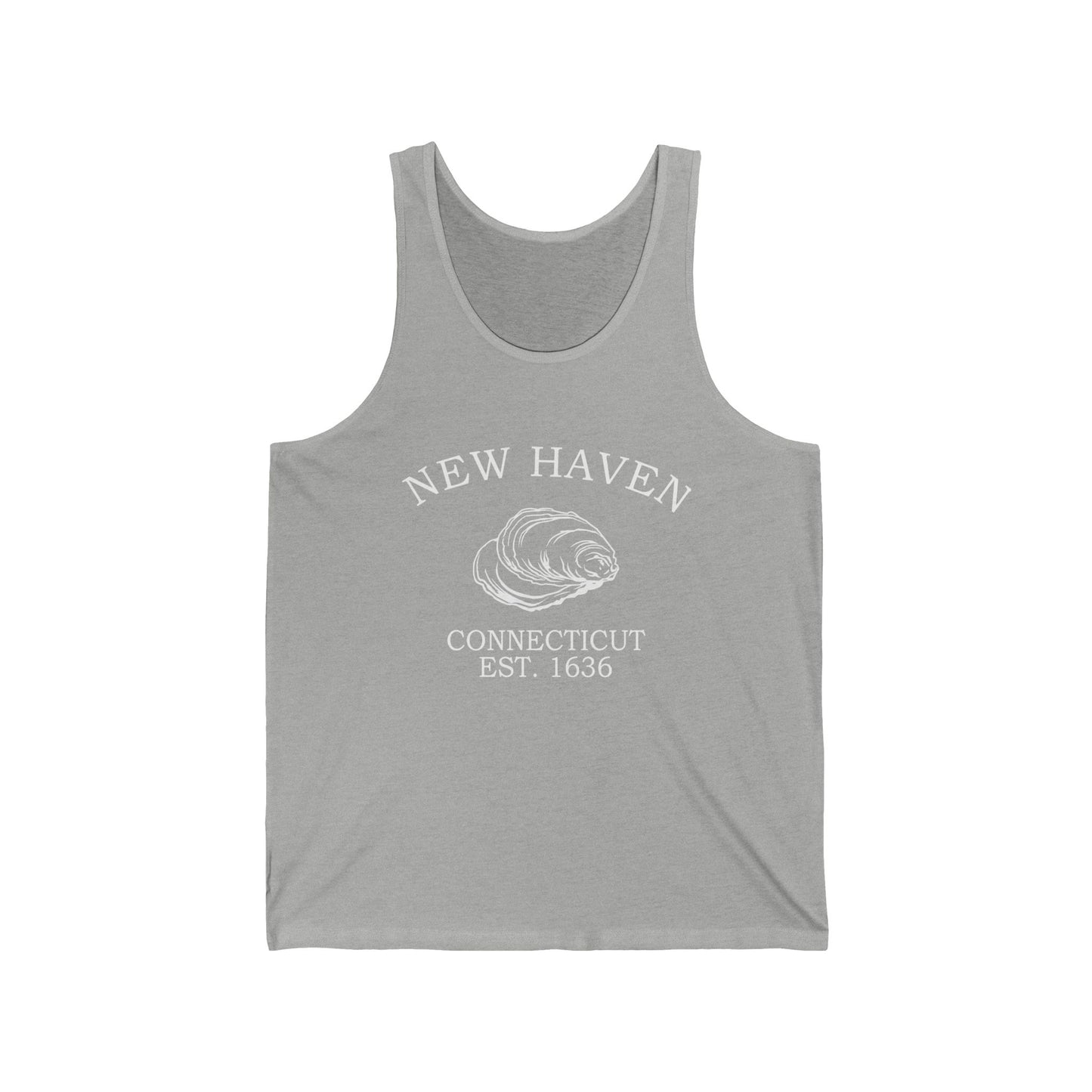
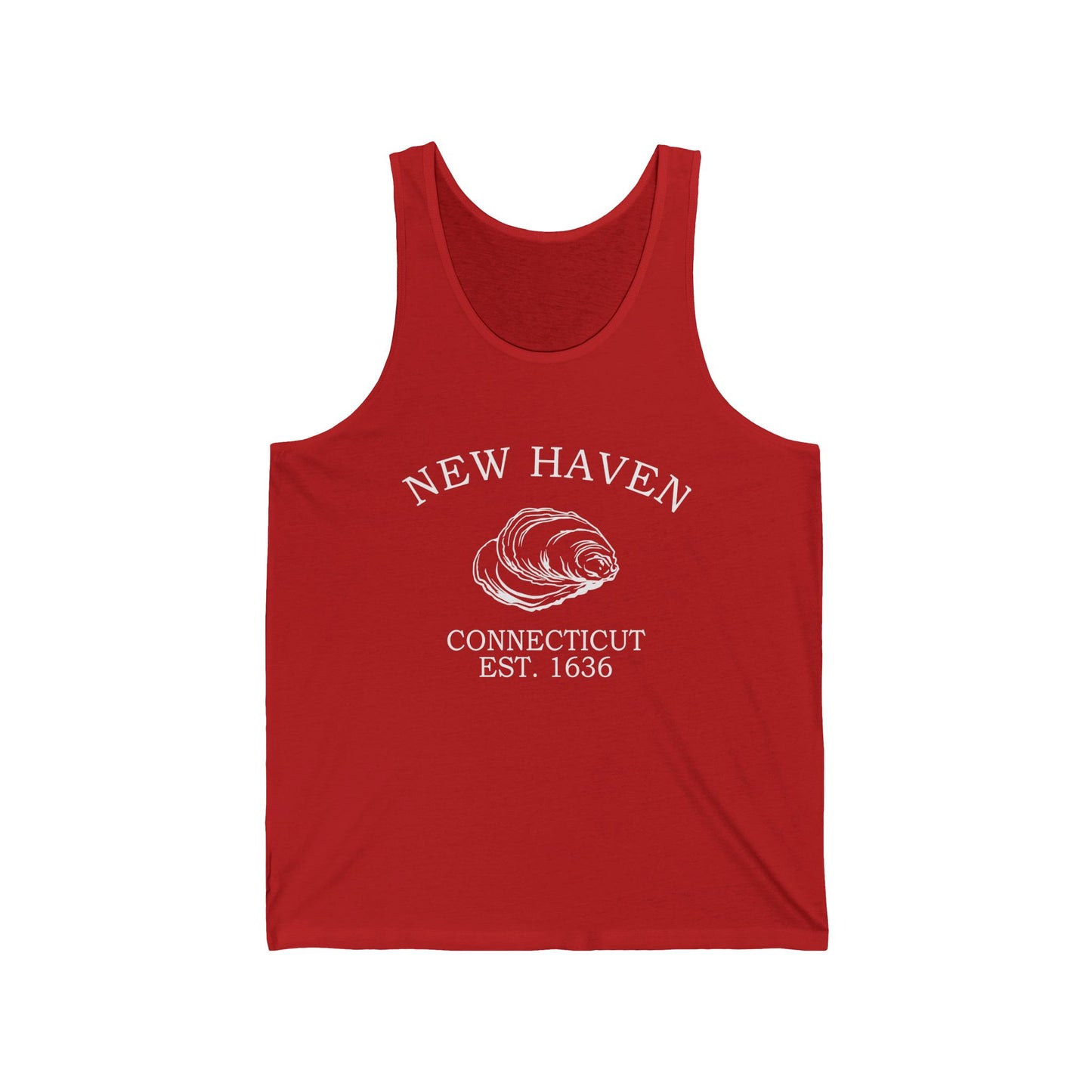
Our New Haven logo carries the same emblem every Merlin Classics Connecticut place wears — a Long Island Sound oyster, above "New Haven, Connecticut, Est. 1636," rendered in hand-printed black and white with a worn, vintage feel. The oyster is Connecticut's shoreline mark, the through-line that ties New Haven to every other Connecticut place we make — a nod to the Sound that built these towns. What makes this one New Haven is everything around it: the Elm City, the nine-square Green, the regicides' cave on West Rock. On a tee or a cap it reads less like a souvenir and more like a piece of the Connecticut shore — Est. 1636, worn plain.
New Haven's stories run with the harbor and the ridges. They'll tell you the elms once arched right over the streets, which is how the Elm City got its name. They'll tell you about the Great Shippe that sailed for England in 1646 and was never seen again — except, the legend says, as a phantom ship in the clouds over the harbor. They'll point up at West Rock and the regicides' cave, and down at the brownstone lighthouse on the Sound, and then they'll argue, at length, about whose apizza is best.
Why People Visit New Haven Connecticut
People come to New Haven for the layered history and the harbor — the first planned city in America, the regicides' cave, the lighthouse on the Sound — and for the museums, theaters, and the apizza the city argues about endlessly. It is compact, walkable, and deep: four centuries of New England on Long Island Sound.
