




The Gulf shore here was Calusa homeland for centuries before any of it carried a Kentucky accent — the people who fished these waters and met the first Spanish ships off this coast in 1513; Seminole people followed in the early 1800s. The town itself begins in the autumn of 1886, when the Naples Town Improvement Company — organized by Walter N. Haldeman, publisher of the Louisville Courier-Journal, and his partner John Stuart Williams, a former Confederate general and U.S. senator from Kentucky — bought 3,712 acres between the Gulf of Mexico and Naples Bay for $11,136. They named the place after the Bay of Naples in Italy and marketed it as the "Bay of Naples of America," a winter retreat for wealthy Northern families.
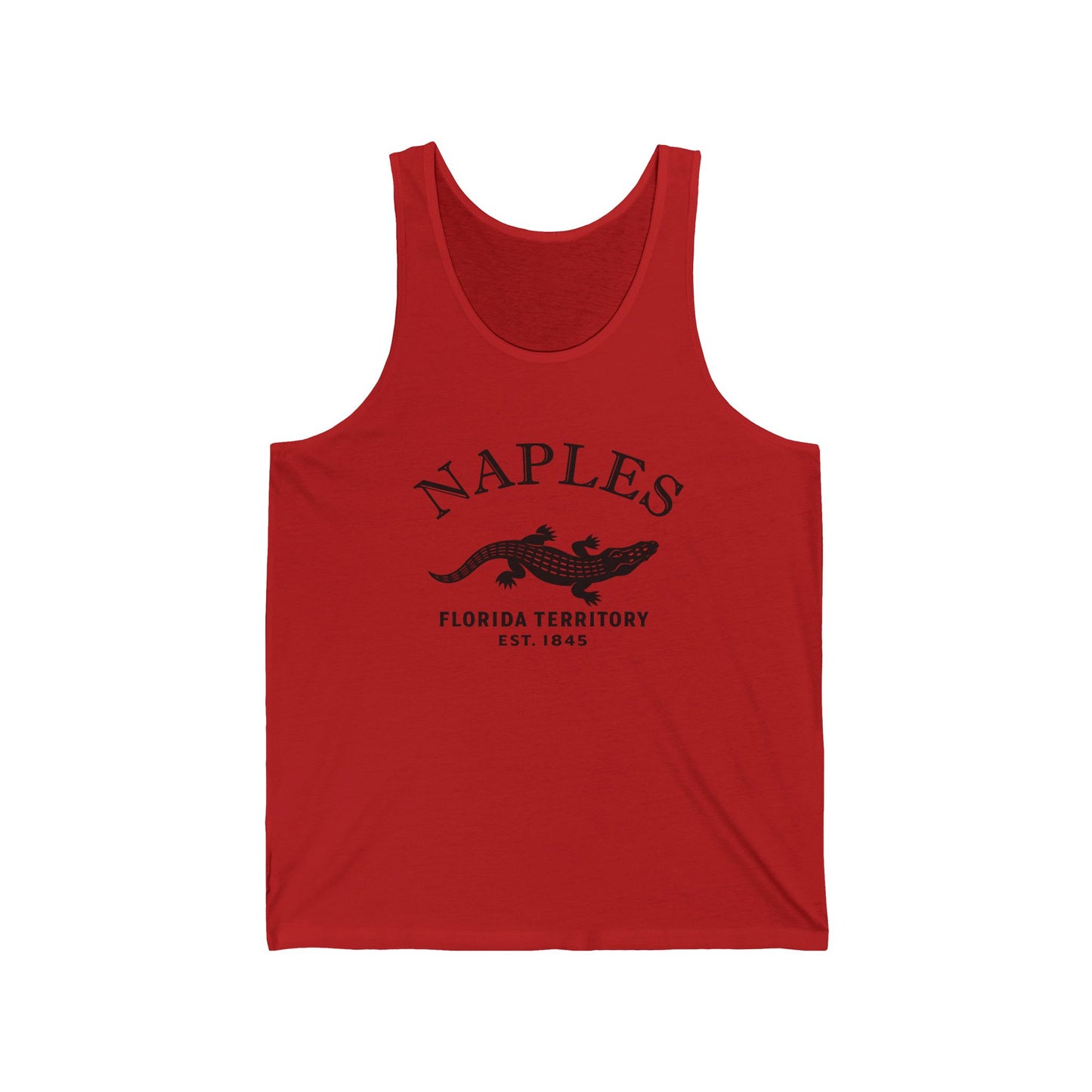
Our Naples logo carries Florida's alligator over "1845," the year of statehood and the shared emblem of every Merlin Classics Florida place. The alligator is the Everglades in shorthand — and Naples sits right at the gateway to the Everglades, the Ten Thousand Islands, and Big Cypress, where the gladesman frontier meets the Gulf-coast resort. Printed black-and-white with the worn look of an old crate label or a piece of marsh-camp signage, it reads as Old Florida. What makes this one Naples is the place behind it: the 1886 winter colony, the 1888 pier, the swamp buggy, and the home by the Gulf.
Why People Visit Naples Florida
- Tour Historic Palm Cottage (1895), the oldest house in Naples and home of the Naples Historical Society.
- Visit the Naples Depot Museum, the restored 1927 Seaboard Air Line railroad station.
- Stroll Fifth Avenue South, the revitalized historic main street of galleries, courtyards, and palm-lined blocks.
- Walk the Naples Botanical Garden's themed landscapes and wetland boardwalks.
- See the historic Naples Pier site at the foot of 12th Avenue South, where the 1888 landmark is being rebuilt once more following Hurricane Ian (its latest reconstruction is underway).
