


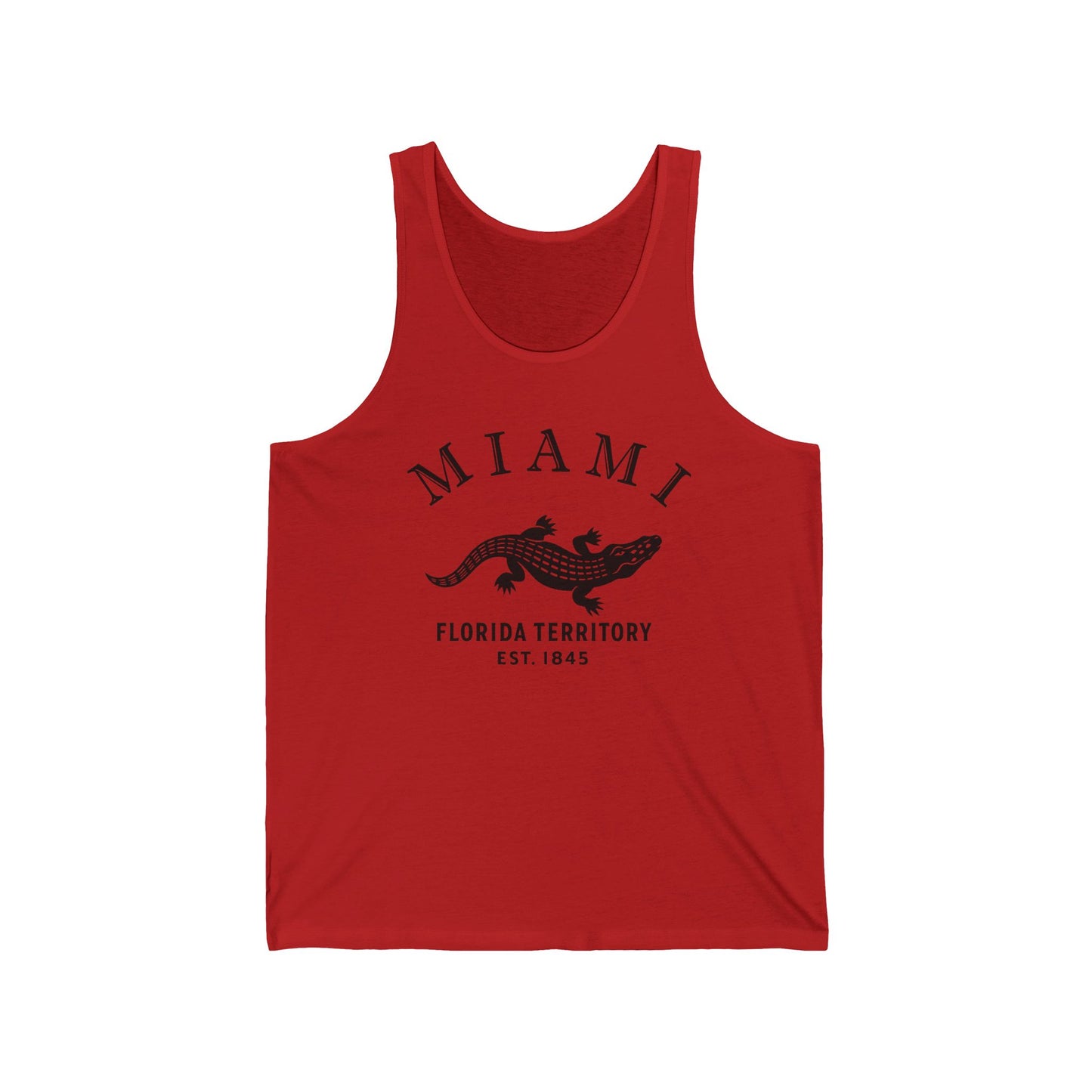

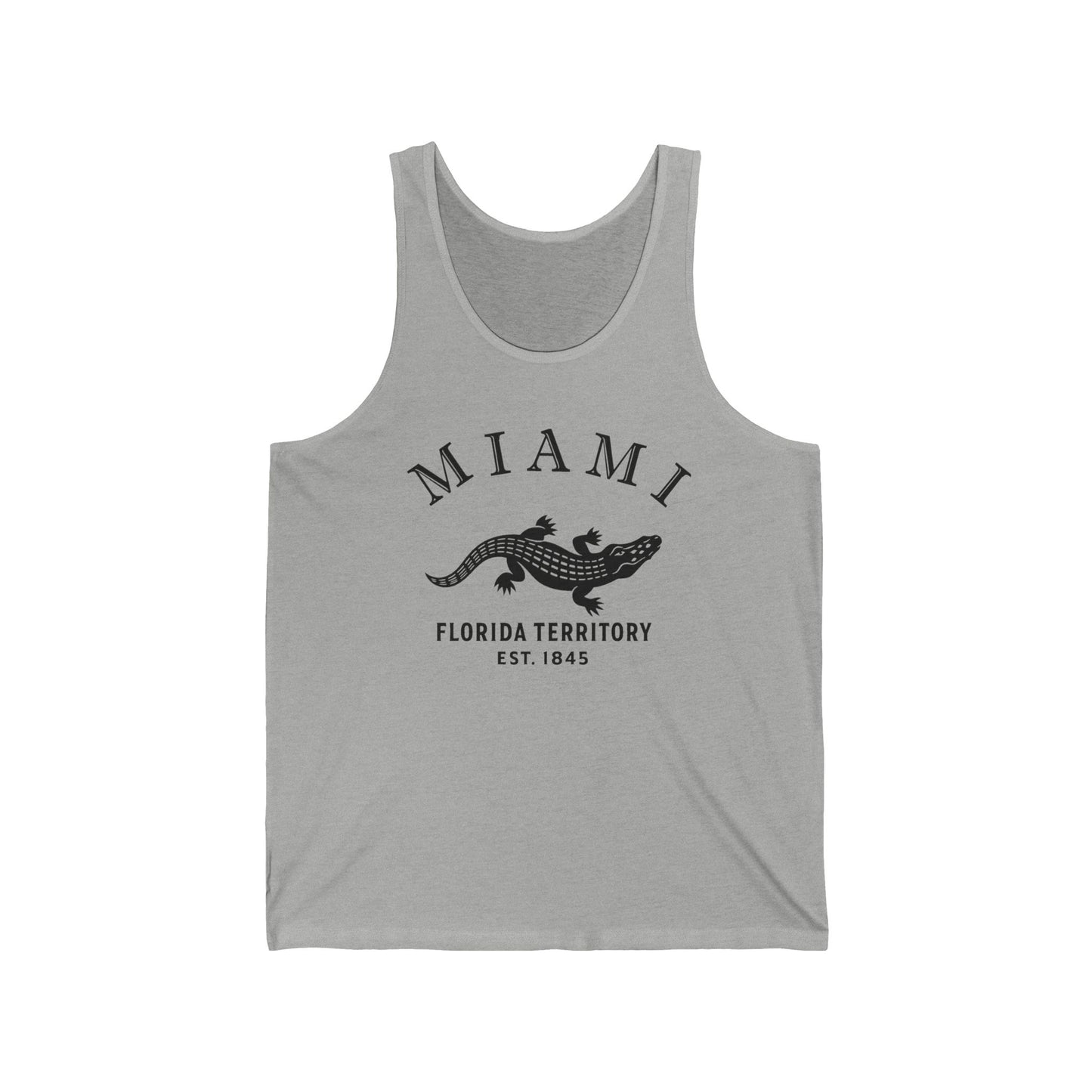
So Miami gathers a founding mother, an orange blossom, a pool-hall vote, a refugee tower, a pastel skyline, and the Queen of Salsa dance music onto one bay — and our Miami designs gather that into wearable form. Whether Miami is your hometown, your winter, your Calle Ocho, or the city you still mean to reach, wear the history. Magic City since 1896.
Long before any of it, Biscayne Bay was home. The Tequesta people lived at the mouth of the Miami River for thousands of years before European contact, fishing the bay and the reef line from a village that stood where downtown towers stand now. The city’s name is older still — from Mayaimi, the old name of the great lake inland and of the people who lived beside it, carried down to the river and the bay. The Spanish arrived in 1513, the British held Florida from 1763 to 1783, and the territory passed to the United States in 1821, with Florida becoming the 27th state on March 3, 1845. Successive removals pushed the Tequesta and their successors from the river they had held longest — a loss the city’s history owes its first debt to. Miami remains the only major city in the mainland United States to sit in the tropical climate zone.
Why People Visit Miami Florida
- Walk Calle Ocho in Little Havana — order a cafecito at a ventanita, watch the domino games at Máximo Gómez Park, and pick up pastelitos from a Cuban bakery.
- Stand before the Freedom Tower on Biscayne Boulevard, the 1925 landmark modeled on Seville’s Giralda that served as the Cuban Refugee Center from 1962 to 1974.
- Tour the 1916 Vizcaya estate and its gardens on Biscayne Bay in Coconut Grove — the boom era’s Italian Renaissance fantasy, now a museum.
- Drive the Mediterranean Revival streets of Coral Gables, George Merrick’s 1925 planned city, stroll Miracle Mile, and see the coral-rock Venetian Pool of 1924.
- See the murals of Wynwood, the warehouse district turned open-air gallery north of downtown.
- Take a boat tour of Biscayne Bay from Bayfront Park or the Miami River — the skyline from the water is the city’s best portrait.
- Cross the Rickenbacker Causeway to Key Biscayne for beaches, the Cape Florida lighthouse, and bay views back toward the city — with the stilt houses of Stiltsville standing offshore on the flats.
- Day-trip west to the Everglades or south toward Biscayne National Park — the wild tropical frame around the metropolis.
- Time a winter visit for the height of snowbird season, when the bay is at its bluest and the café windows never close.