


In the late eighteenth century the island became a center of the wars that would unite the archipelago. In 1790, at the Battle of Kepaniwai in ʻĪao Valley, the forces of Kamehameha I defeated Maui's defenders in a battle so costly that its name remembers the dead. Kamehameha went on to unify the Hawaiian Islands under a single kingdom, and Maui sat near the heart of the new realm. It is a history Hawaiians tell with care: a story of their own rulers and their own land, not a footnote to someone else's arrival.
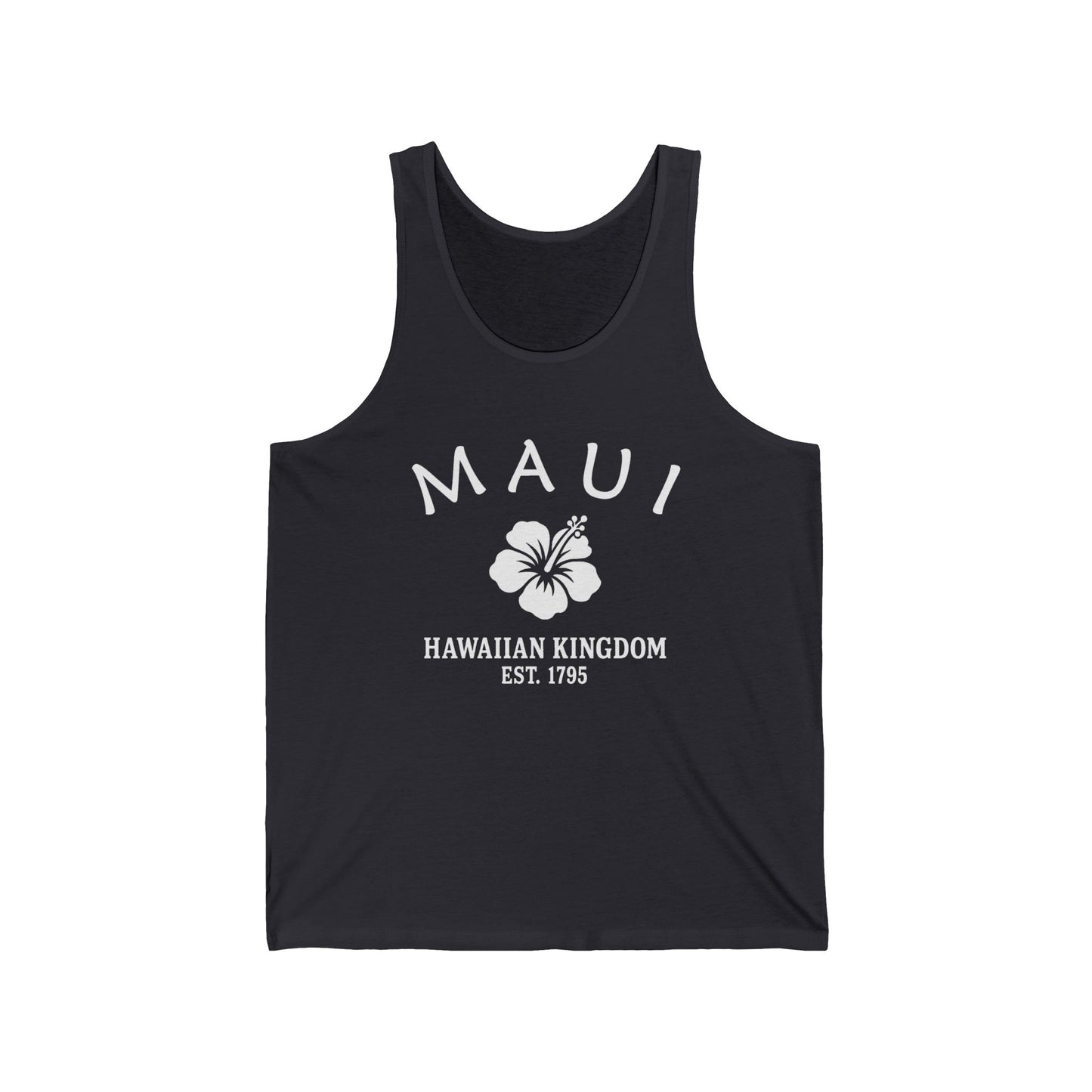
Today Maui is the Valley Isle — two volcanoes, a green valley between them, and the House of the Sun rising over the Pacific. Its story runs from the Polynesian voyagers and the deep Native Hawaiian homeland, through Kamehameha's unification and the kingdom's old capital at Lahaina, to the plantation era and the island travelers know today. Our Maui designs gather that identity into wearable form, with cultural respect at the center — the hibiscus, the volcanoes, and the sea. Maui, Hawaiʻi: the Valley Isle, where Haleakalā meets the Pacific. Aloha ʻāina.
Why People Visit Maui
Maui draws visitors for its landscape and its depth — a sacred volcanic summit, a rainforest coast road, a green valley behind the harbor towns, and the Pacific where humpbacks winter — all carried by a living Native Hawaiian culture. People come for Haleakalā, the Road to Hāna, and the beaches, and stay for the quiet of upcountry and the sense of a place with a long memory. It is scenic, storied, and unmistakably Hawaiian.
