




Hammonasset Beach State Park — Connecticut's largest shoreline state park, two miles of sand on Long Island Sound — opened July 18, 1920, and drew 75,000 visitors its first season.
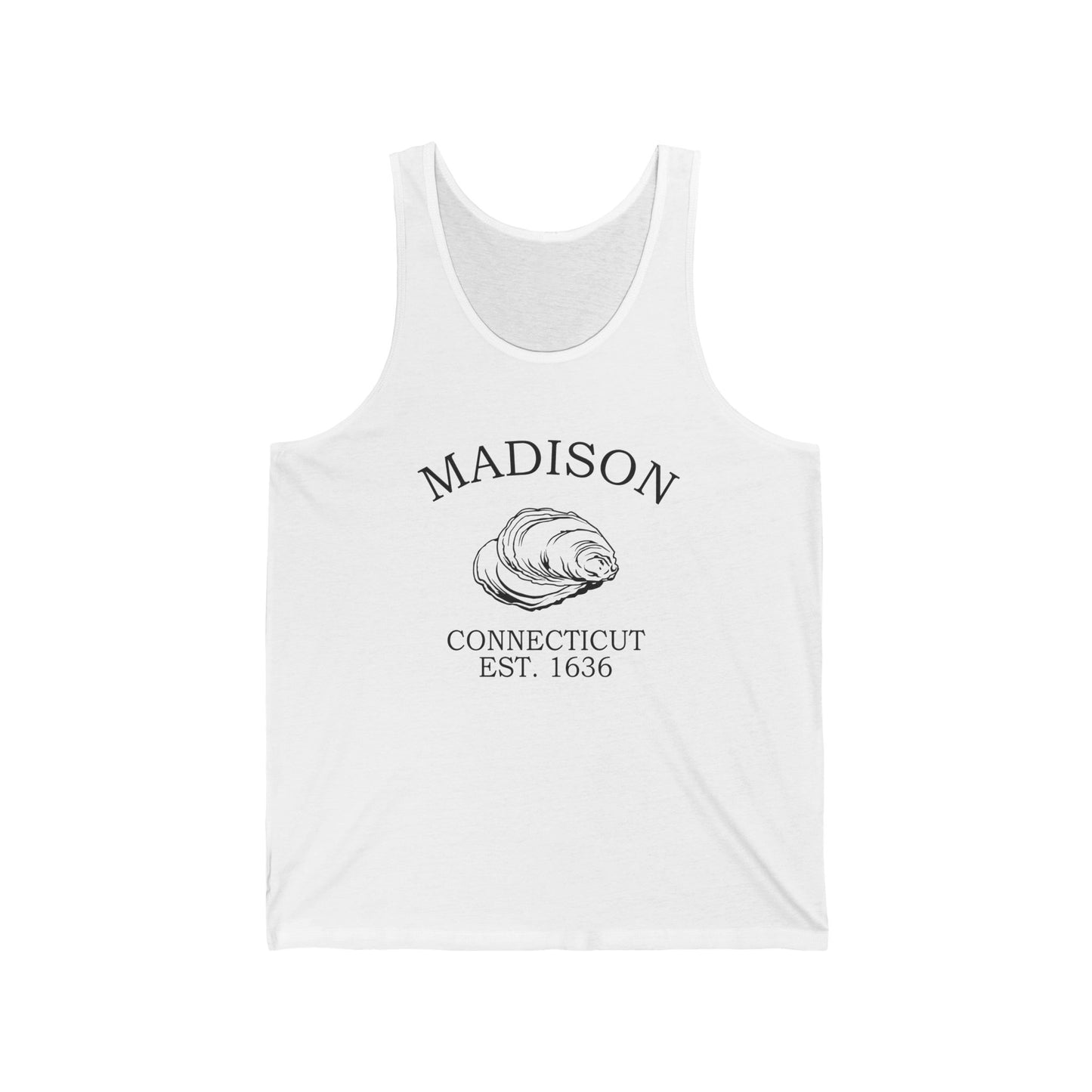
Our Madison retro logo uses the Connecticut oyster-shell motif over "Connecticut - Est. 1636," emphasizing coastal identity and the colonial founding of the state. Black-and-white styling mirrors oyster crate labels and maritime signage — rugged, timeless, retro in style — bridging Madison's layered heritage: the Hammonassett people's land and sea, colonial endurance, and the summer-town century. On merchandise it reads authentic and vintage — an emblem of Connecticut shoreline pride.
Why People Visit Madison Connecticut
- Spend a day at Hammonasset Beach State Park — two miles of sandy beach on Long Island Sound, the largest shoreline state park in Connecticut, open to the public since July 18, 1920, with a boardwalk, campground, and picnic groves.
- Walk out to Meigs Point at the eastern end of the park — rocky headland views over the Sound — and visit the Meigs Point Nature Center for tide-pool touch tanks and salt-marsh exhibits.
- Stroll the Madison Town Green, one of the oldest in Connecticut, with the 1838 Greek Revival First Congregational Church facing it.
- Tour the Deacon John Grave House on the Boston Post Road — the 1685 saltbox that is one of the oldest houses in Connecticut, home to nine generations of the Grave family and now a museum.
- Visit the Allis-Bushnell House, the Madison Historical Society's museum a few doors down the Post Road.
- Browse the independent bookstore on the Boston Post Road that draws readers and authors from across the region — hundreds of author events a year on a colonial-era main street.
- Walk Madison Center — clapboard shops, cafes, and an art-house cinema along the Boston Post Road, built for window-shopping and ice cream.
- Paddle or birdwatch the lower Hammonasset River estuary and the salt marshes behind the beach.
- Fish or watch the boats along the East River and Neck River town shorelines.
- Circle Tuxis Pond on the walking path just behind the village center.
