


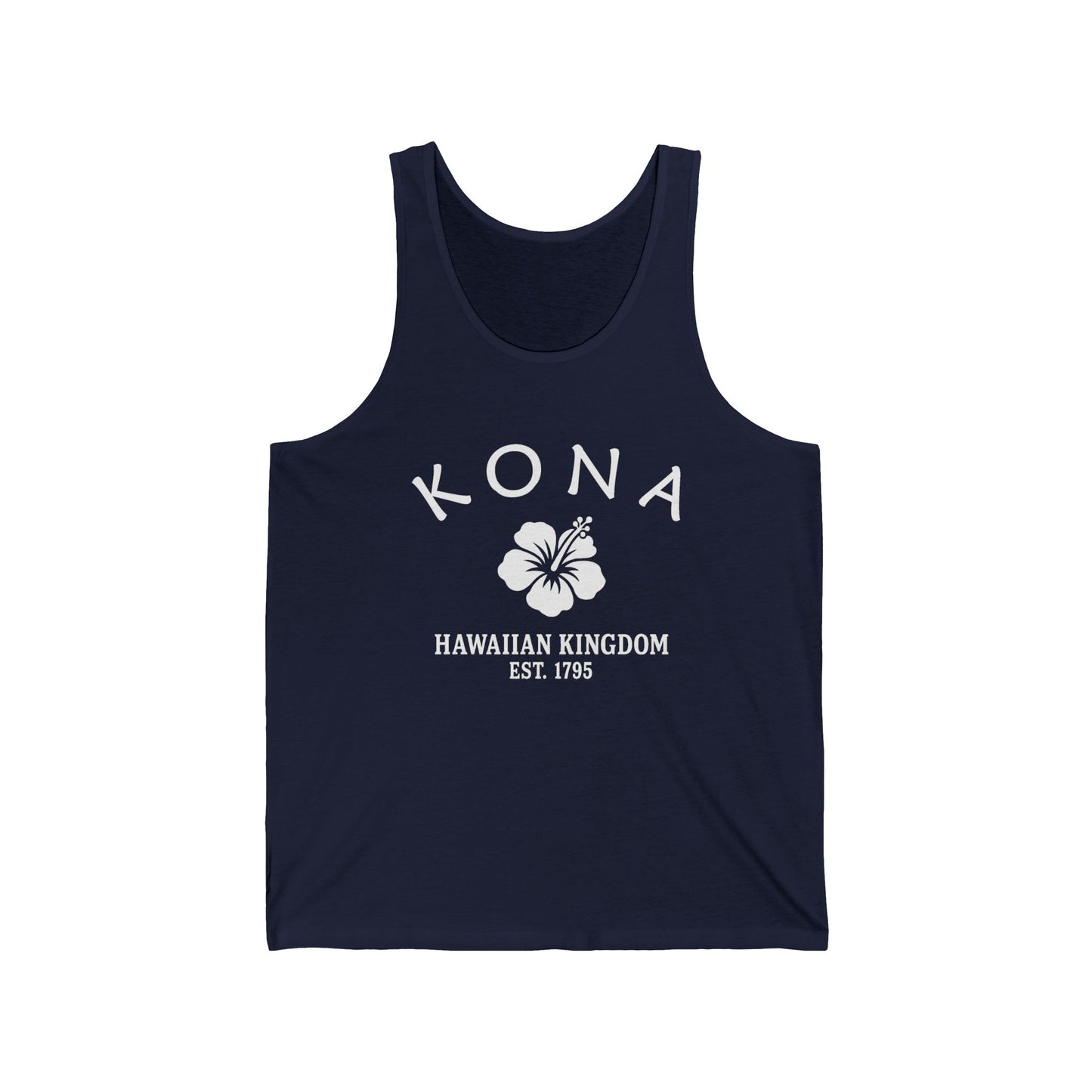
Kona holds the hinge of Hawaiian history in a single mile of shoreline: the heiau where a kingdom's founder died, the church where a new era began, the palace the royals kept coming back to, and the pier where the world now gathers. Our Kona designs gather that identity — the hibiscus, the coffee, the black-rock coast — into wearable form. On the Kona Coast since Kamehameha.
The coffee belt. On the slopes of Hualālai above the town, at 800 to 2,500 feet where morning sun gives way to afternoon cloud, lies the Kona Coffee Belt — the only place in the United States where coffee has been grown at commercial scale for more than a century. The belt was built largely by Japanese immigrant families who came to Hawaiʻi's plantations in the late 1800s and took up coffee land around Hōlualoa and the upland villages; many of those farms are still worked by their third- and fourth-generation descendants, alongside Filipino, Portuguese, and Native Hawaiian farming families. The November coffee festival that fills the town each year is the oldest food festival in Hawaiʻi — a harvest celebration for a crop that made Kona's name known on every café menu in the world.
Why People Visit Kailua-Kona Hawaiʻi
Kona offers culture beside calm ocean days. Visitors enjoy palaces, petroglyphs, and bayfront sidewalks. It is sunny, walkable, and rich with island stories. Travelers find year round appeal in parks, paths, and public spaces. The setting combines natural beauty with accessible neighborhoods and landmarks. History and everyday culture sit side by side in a welcoming way. Visitors can plan relaxed mornings and unhurried afternoons without missing key sights.
