


Today Kailua-Kona is the Big Island's western front door: flights land at Kona International Airport on Hualālai's 1801 lava flow, Aliʻi Drive runs its bayfront mile of shops and restaurants between the palace and the pier, coffee-farm tours climb into the belt, and the calm leeward water that made Kailua Bay a royal anchorage now fills with snorkelers, paddlers, and — every October — the finish line of the Ironman World Championship at Kailua Pier. The town has never incorporated; like every Hawaiian community it is governed at the county level, a census-designated place of about 20,000 that serves as capital of the Kona coast in everything but paperwork.
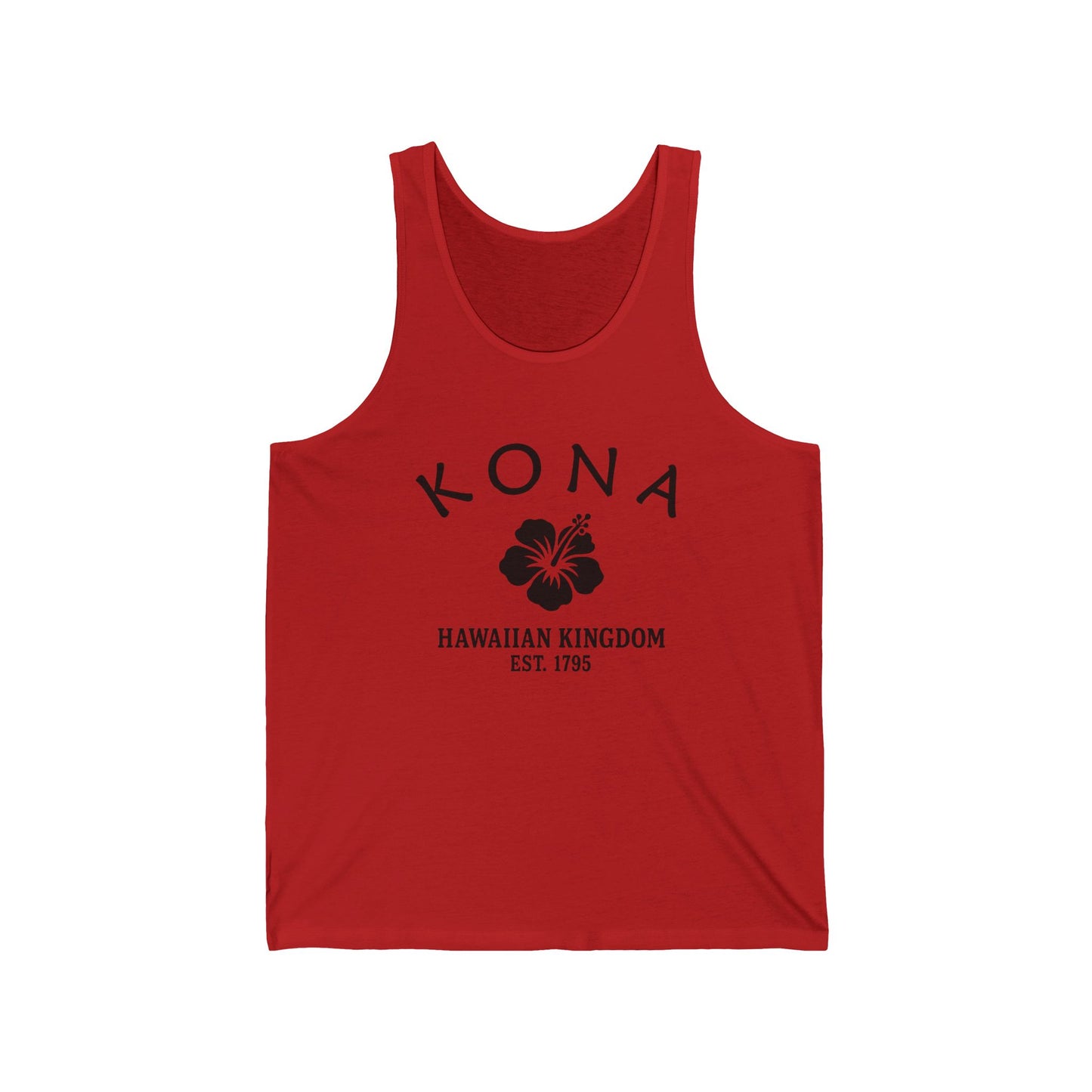
Our Kona retro logo carries Hawaiʻi's hibiscus — the state flower — printed black-and-white with the worn look of an old crate label from the coffee lands. The hibiscus is the shared emblem of every Merlin Classics Hawaiʻi place; what makes this one Kona is the story behind it — the king at Kamakahonu, the palace by the pier, and the coffee ripening on the mountain above the bay.
Why People Visit Kailua-Kona Hawaiʻi
- Tour Puuhonua o Honaunau, sacred refuge with temples and coastal lava platforms.
- Walk Kaloko Honokohau paths, fishponds, petroglyphs, and quiet shoreline coves.
- Visit Hulihee Palace, seaside residence with artifacts and galleries.
- Stroll Alii Drive, palms, seawalls, and ocean viewpoints along the strip.
- Stand by the Kailua Pier, boats and breezes over the turquoise bay.
