


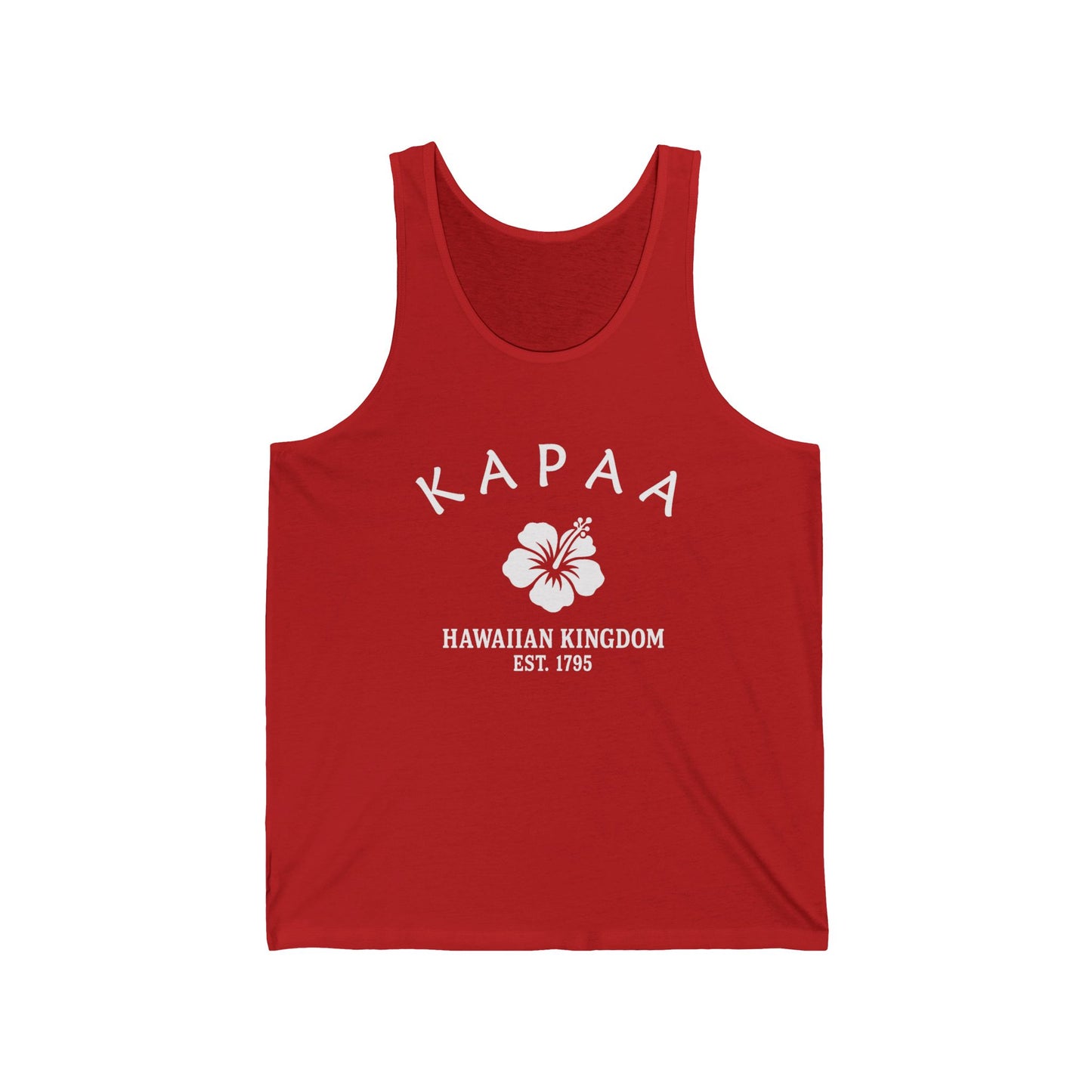
Our Kapaʻa logo carries the Hawaii hibiscus above “Hawaiian Kingdom — Est. 1795,” the shared retro emblem of our Hawaii towns, drawn in worn black-and-white like an old travel decal. The 1795 date marks Kamehameha's unification of the islands; Kauai kept its own path a while longer, holding out under King Kaumualiʻi until his voluntary cession in 1810. The hibiscus is the through-line that links Kapaʻa to every other Hawaii town we make, and the details that make this one Kapaʻa are the Coconut Coast, the Sleeping Giant on the ridge, and the plantation-town storefronts.
Today Kapaʻa is the active hub of the Coconut Coast. The Ke Ala Hele Makalae, an eight-mile paved coastal path, runs the shoreline for walkers and cyclists; kayaks put in on the Wailua River toward the Fern Grotto; ʻOpaekaʻa Falls and Wailua Falls drop through the green interior; and Kealia Beach, just to the north, draws the bodysurfers. Lydgate Beach Park to the south keeps a protected pool for families, and the Kauai Coconut Festival each fall gathers the whole coast. It is Kauai at its most lived-in — a town with a beach, a bike path, and a long memory.
Why People Visit Kapaa
Kapaʻa rewards travelers who want the real, working Kauai rather than a resort bubble — a town with a beach and a bike path, the Sleeping Giant on the ridge, and the sacred green valley of Wailua a few minutes south. People come for the coastal path and the river, for the plantation-era main street, and for an easygoing east-shore day where Kauai's deep history and everyday island life sit side by side.
