


The Navy settled the river in the 1940s — Naval Air Station Jacksonville in 1940, Naval Station Mayport at the river’s mouth in 1942 — and shipyards worked around the clock through the war; the carriers and the naval air overhead have been part of the city’s weather ever since. In 1968 Jacksonville and Duval County consolidated into a single government, and the city woke up the largest by land area in the contiguous United States: room enough inside the limits for the Atlantic beaches — off which the North Atlantic right whale, the most endangered of the great whales, comes to calve each winter — 80,000 acres of parks, the centuries-old Treaty Oak on the Southbank, Friendship Fountain facing the skyline, and the cable-stayed sweep of the Dames Point Bridge downriver.
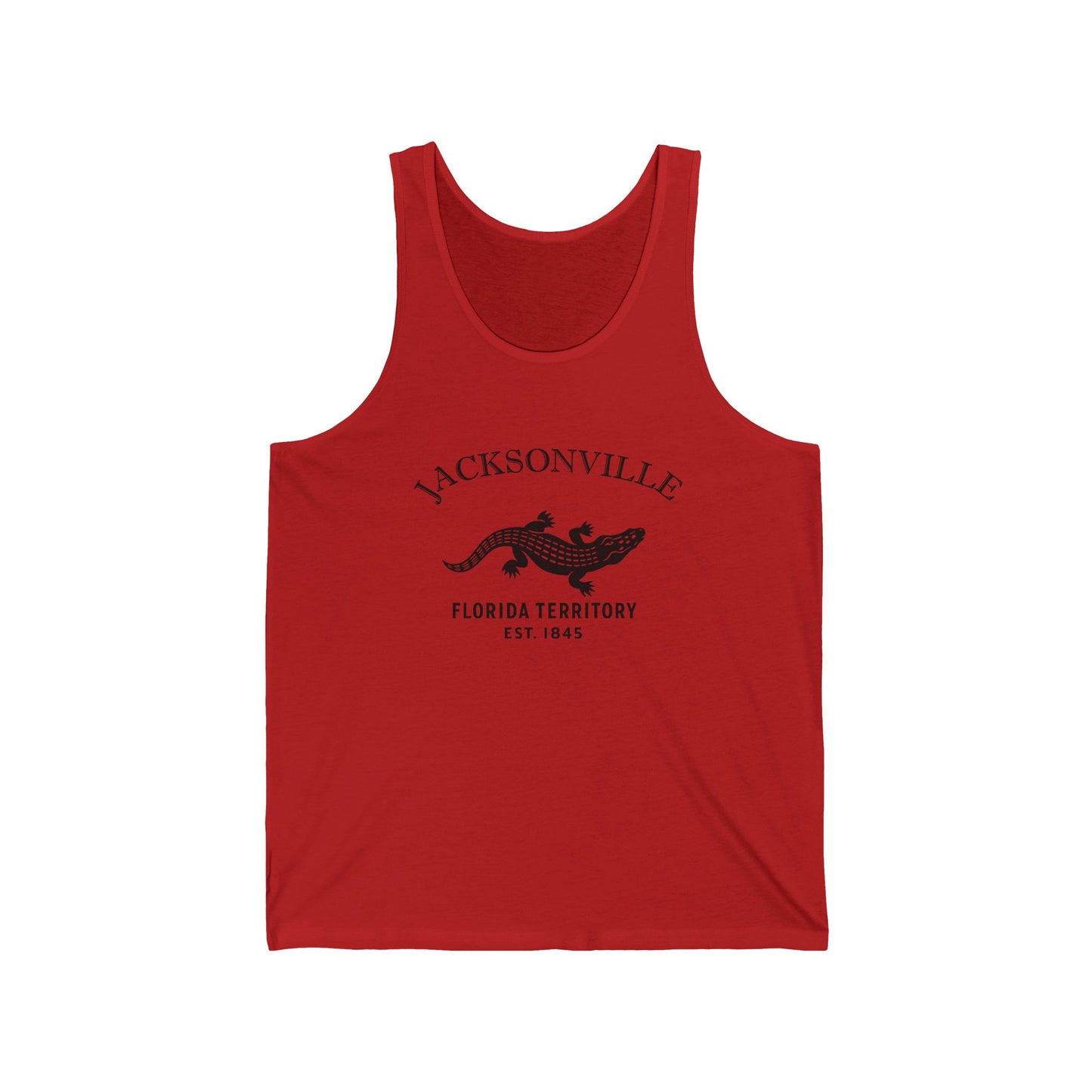
Our Jacksonville design carries the Florida alligator beneath an arched JACKSONVILLE and the line Florida Territory · Est. 1845, printed in a black, woodcut-style mark. The alligator is old Florida itself — the river-and-swamp country the city grew out of — and the 1845 date marks Florida statehood. It is a River City emblem: not the tourist Florida of postcards, but the lived-in city on the river that runs north.
Why People Visit Jacksonville Florida
- Look up at the Laura Street Trio and the St. James Building downtown — the Prairie School rebuild of 1901 standing in straight modern lines.
- Walk both Riverwalks past Friendship Fountain, with the skyline across the north-flowing St. Johns.
- Stand under the Treaty Oak on the Southbank — a live oak centuries older than the city around it.
- Spend a beach day at Jacksonville Beach, Neptune Beach, or Atlantic Beach — the barrier islands are inside the city limits.
- Visit Fort Caroline National Memorial and the Timucuan Preserve for the French colony of 1564, the river marshes the Timucua knew, and the preserved, sobering history at Kingsley Plantation.
- Photograph the fallen giants of Boneyard Beach on Big Talbot Island, and swim at Little Talbot or Hanna Park.
- Ride the tiny St. Johns River Ferry at Mayport and eat local shrimp where the boats come in.
- Browse the historic districts — San Marco’s 1920s square, Five Points, Riverside-Avondale’s leafy streets, Springfield’s restored blocks, and Mandarin on the river — where Harriet Beecher Stowe wintered and wrote.
- Catch the LaVilla story downtown, where the Harlem of the South once rang with jazz and blues.