


And the fighter got its name secondhand. The British ordered the aircraft before America was in the war and flew it first, as the Mustang Mk I; the Americans wanted to call their version the Apache, tried it — the dive-bomber variant, the A-36, kept the name for a while — and then dropped it in favour of the British choice. Everyone agrees the British took the word from the wild horses of the American West. Nobody wrote down why. So the plane that came off a North Texas prairie carried a name the British had already borrowed from the animal that used to run it — the long way round, and back to the same grass.
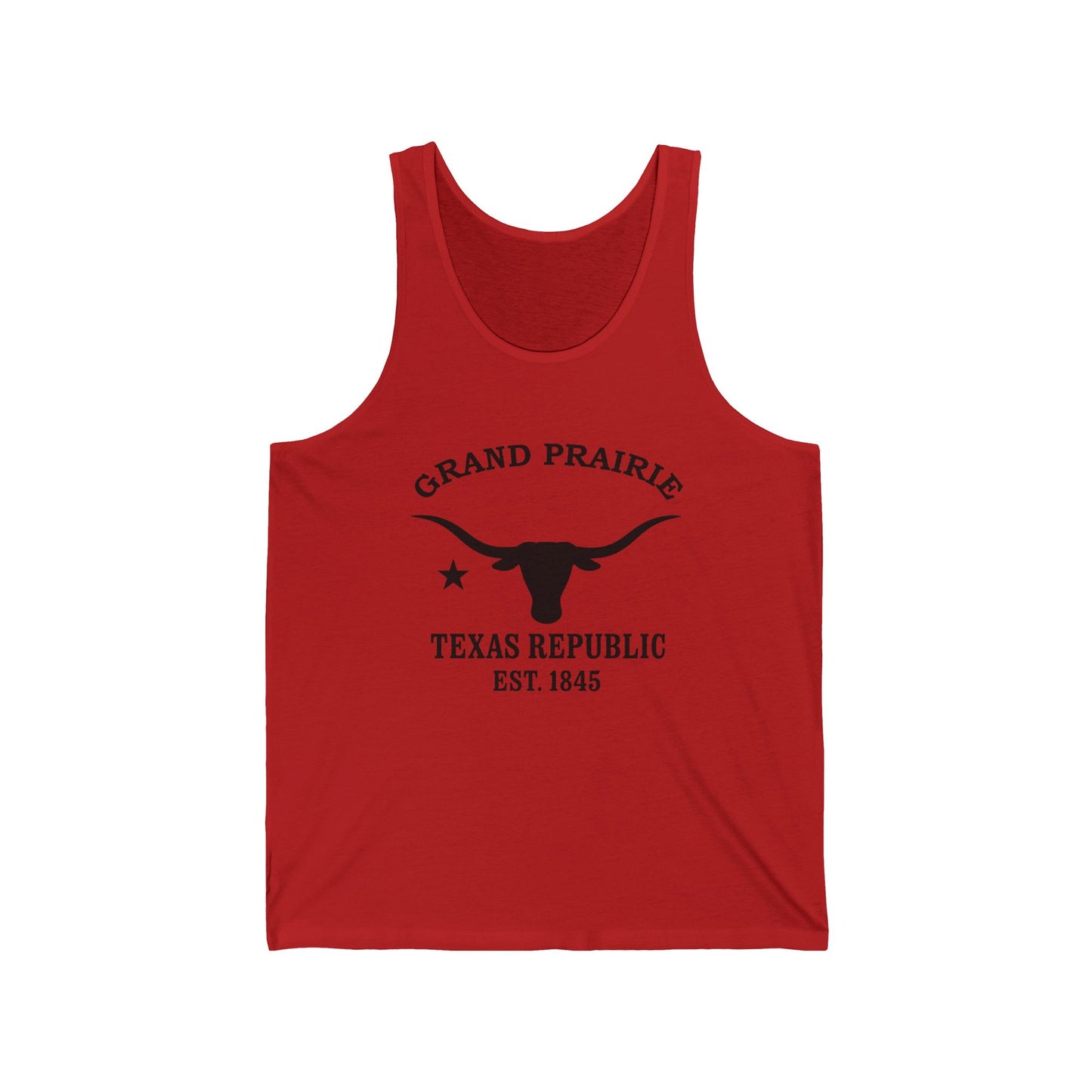
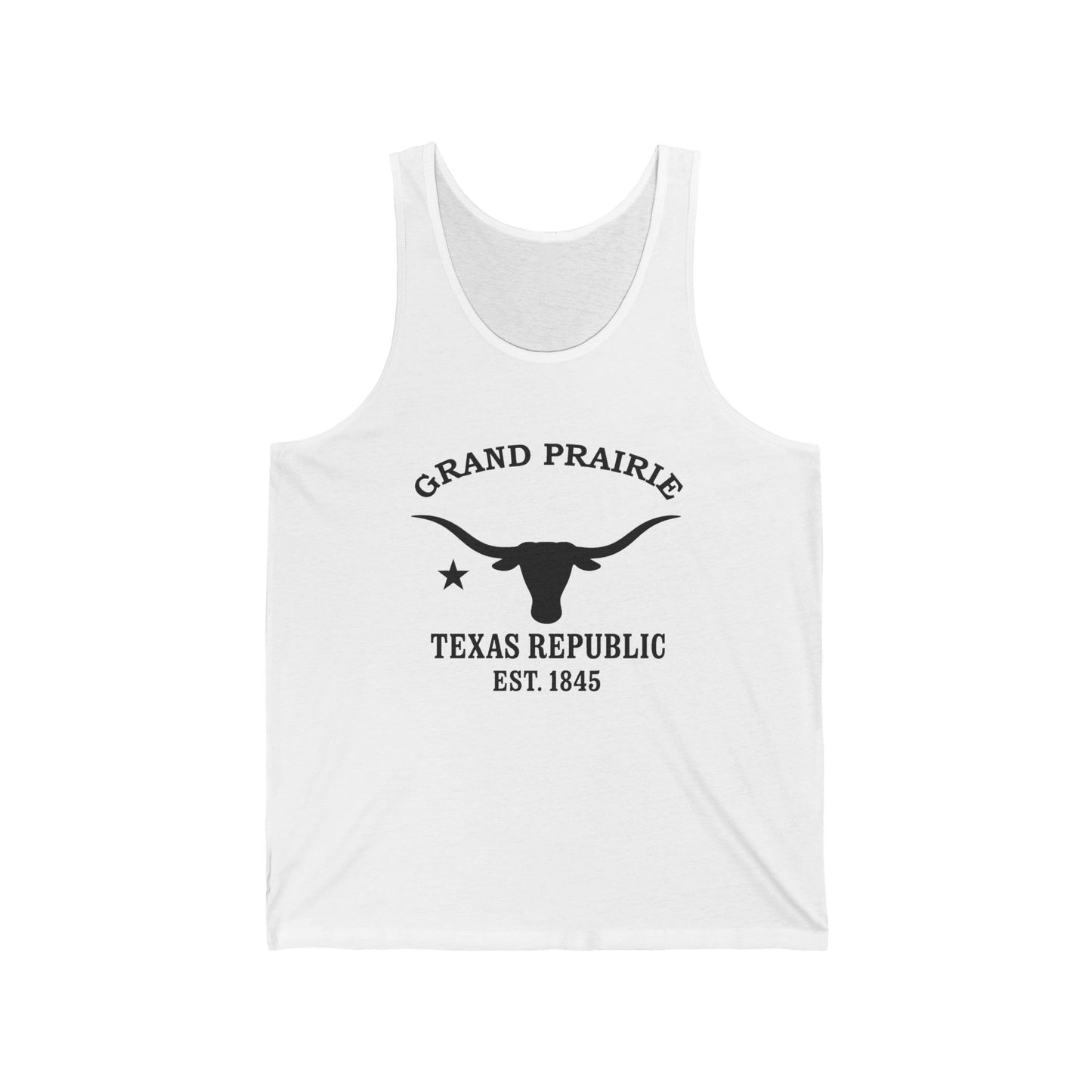
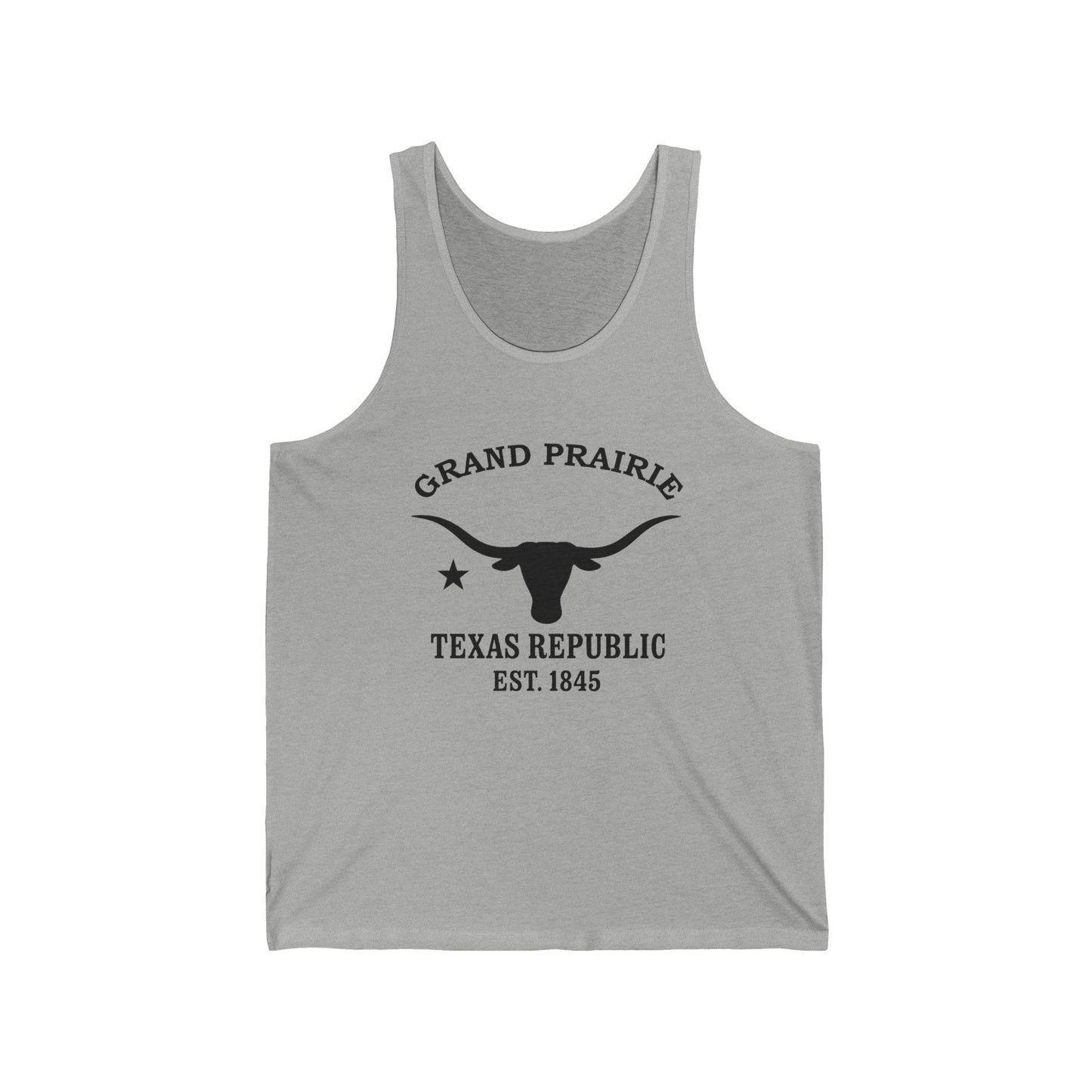
Our Grand Prairie logo carries the Texas longhorn and Lone Star, the emblem every Merlin Classics Texas place wears, set over “Texas Republic, Est. 1845.” The longhorn and the star are the state’s shorthand — endurance, independence, the open range — printed black-and-white with the worn look of an old barn brand or a rodeo bill. What makes this one Grand Prairie is what stands behind it: the grassland that named the town, the horses that ran it, and the aircraft that borrowed their name. On a tee or a cap it reads less like a souvenir than like a piece of North Texas, worn plain.
Why People Visit Grand Prairie, Texas
People come for the central Metroplex location and the mix of prairie, lakes, and live racing — and stay curious about an aviation heritage most visitors never expect from a city between Dallas and Fort Worth. It is flat, friendly, and in the middle of everything, with a long horizon and a longer memory than its suburbs suggest.
