


Every summer the largest wild sockeye salmon run on Earth pours into Bristol Bay, and Dillingham is the town it runs through. Set at the head of Nushagak Bay where the Wood River meets the Nushagak, this is the regional hub of the bay — the government, medical, and freight center for a fishery that has topped fifty million fish for eleven straight years and crested near seventy-nine million in the record run of 2022. The Nushagak District off Dillingham's own waterfront is among the strongest in the bay, and each June the town's population nearly doubles as drift boats, set-netters, and processors converge on the red-salmon return. The Central Yup'ik people, who have lived on the Nushagak drainage for centuries, named the point of land where the two rivers meet Curyung — loosely, "the point where the clear and muddy waters meet," the clear water of the Wood and the silt-heavy Nushagak braiding together below the bluff. Later mapmakers called it Snag Point. The Russians built the Alexandrovski Redoubt trading post near the site at Nushagak in 1818, and a Russian Orthodox mission followed in 1837, but it was salmon that made the modern town: canneries rose along Nushagak Bay through the 1880s, and the growing settlement took the name Dillingham in 1904, after the United States senator from Vermont who had toured the territory on inspection. The City of Dillingham incorporated in 1963. Thirty miles to the north sits the credential few towns anywhere can claim — Wood-Tikchik State Park, established in 1978 and, at roughly 1.6 million acres, the largest state park in the United States, more than half of all Alaska's state-park land gathered into one roadless wilderness of interconnected clear-water lakes that are themselves the spawning grounds of the bay's salmon. Dillingham is the headquarters of the 4.7-million-acre Togiak National Wildlife Refuge as well, and there is no road from any of it to the rest of Alaska — the town is reached by plane or by boat, with one twenty-mile paved road running north to Aleknagik and the edge of the park. Clear water and muddy water, lake systems the size of small states, and a salmon run with no equal on the planet: Dillingham is the working front door to all of it.
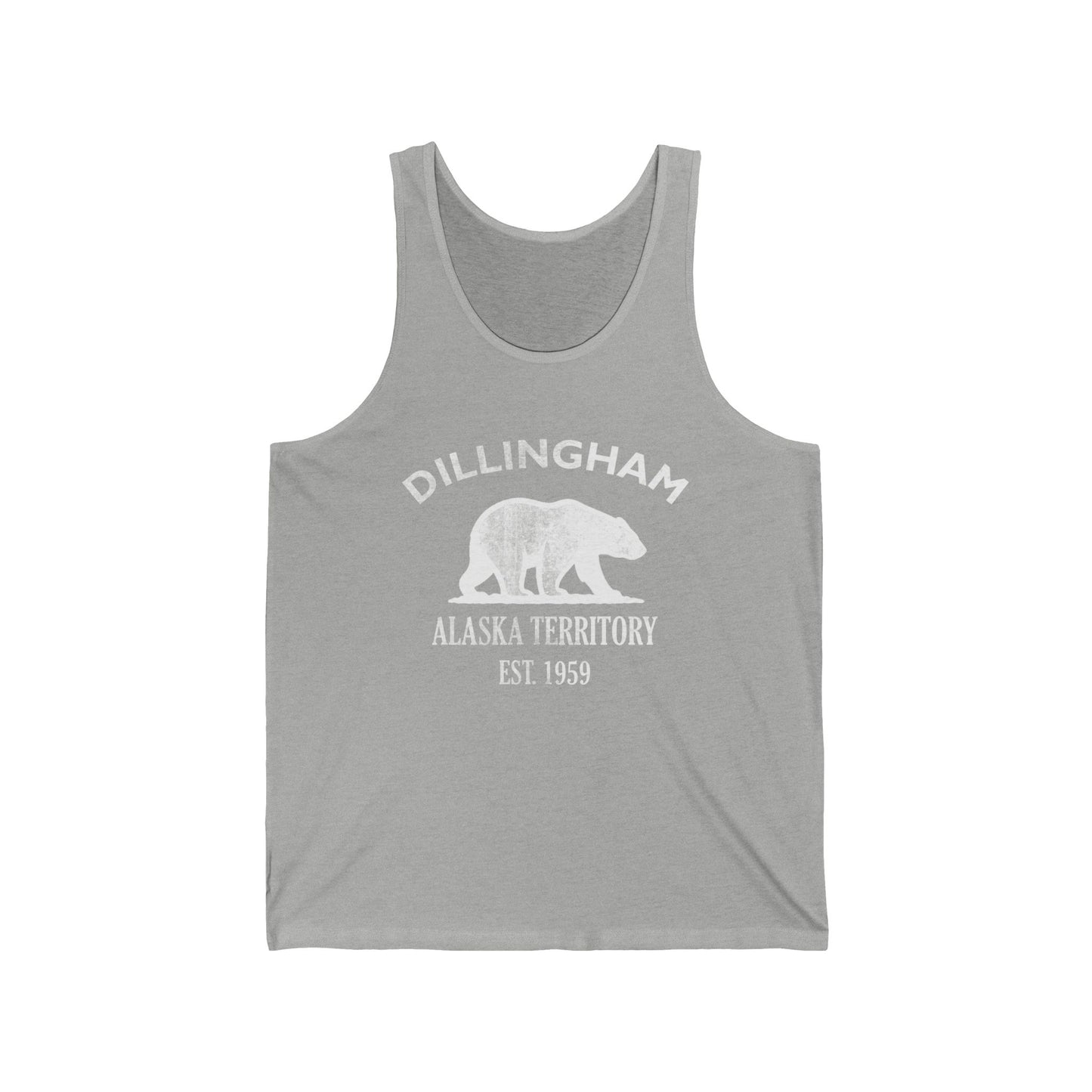
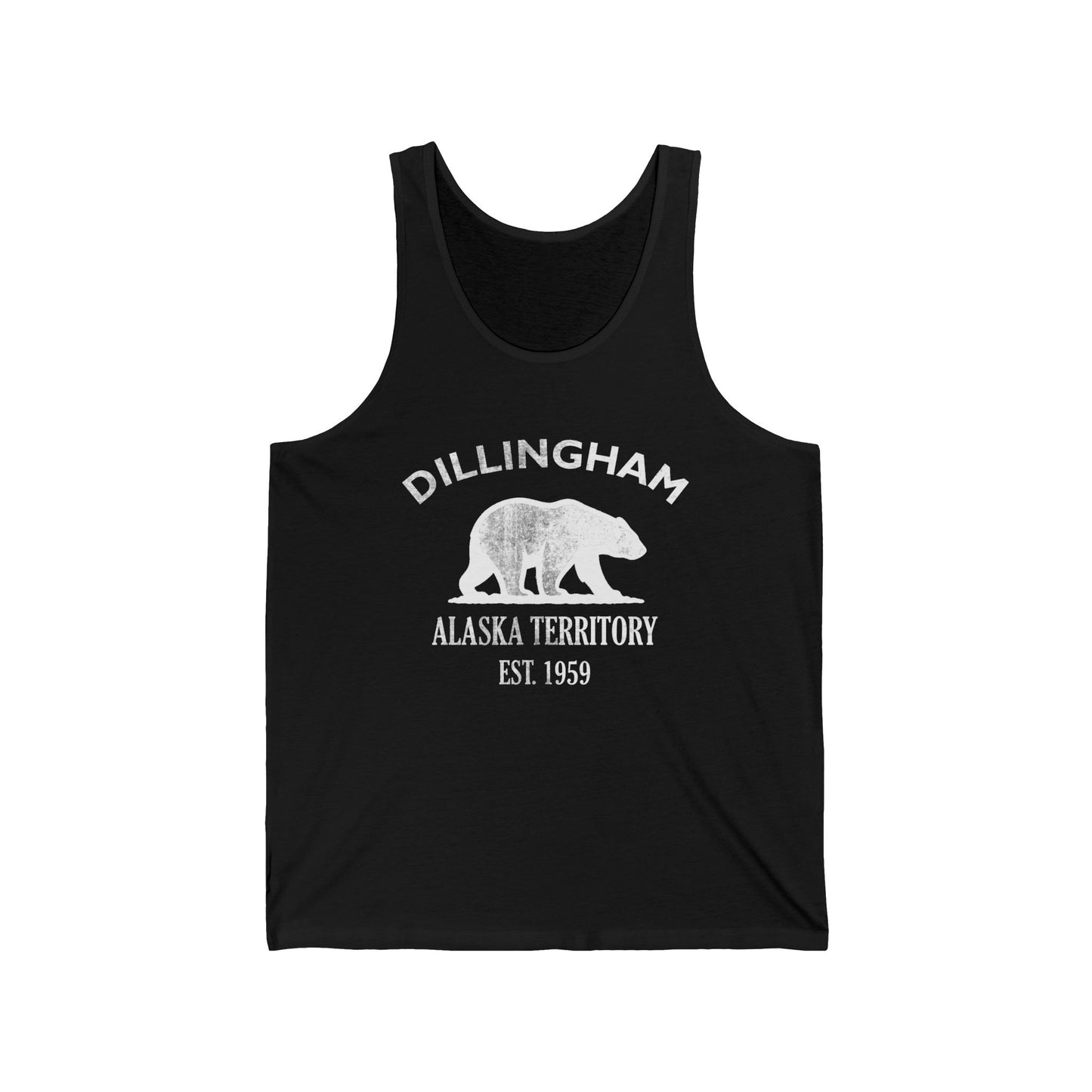
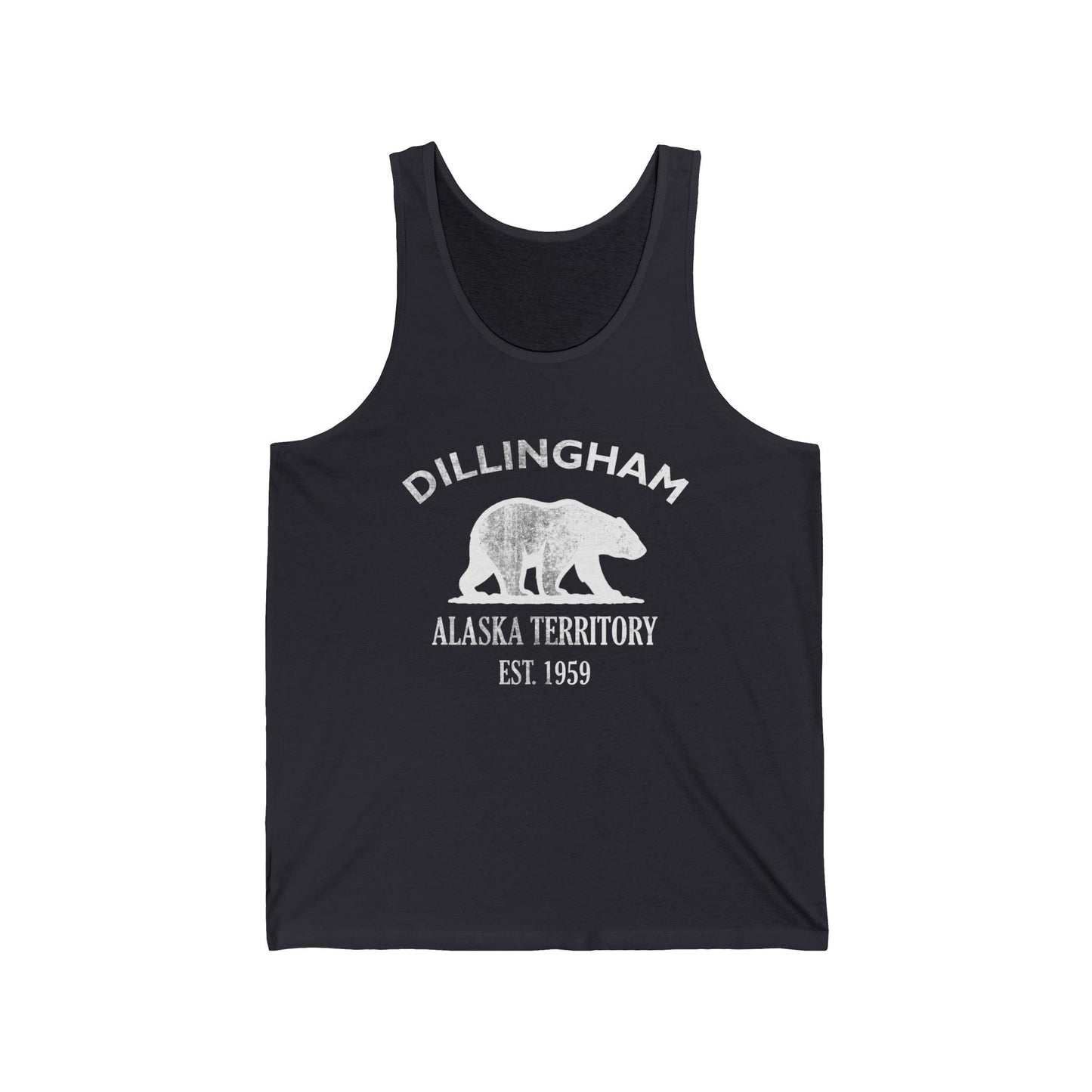
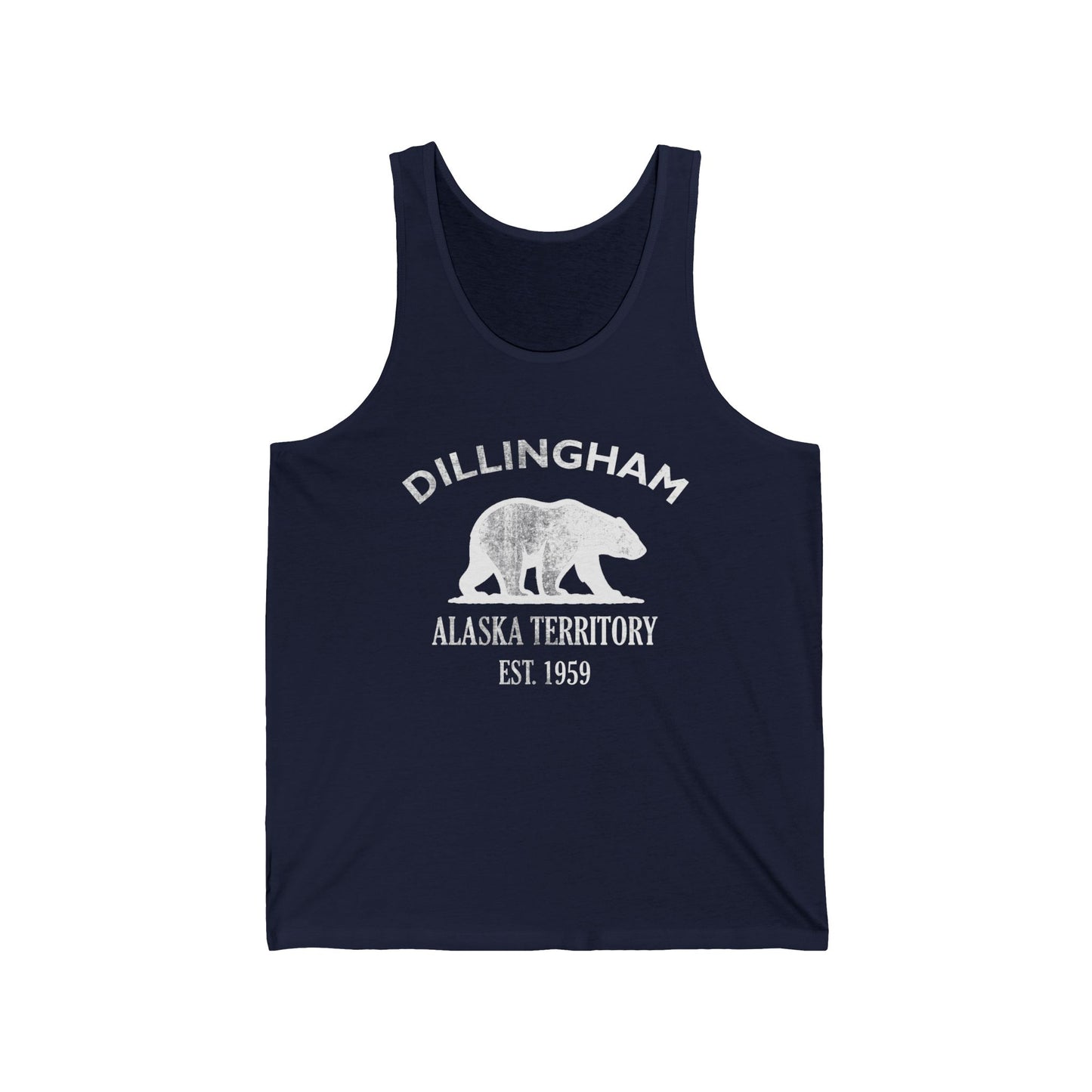
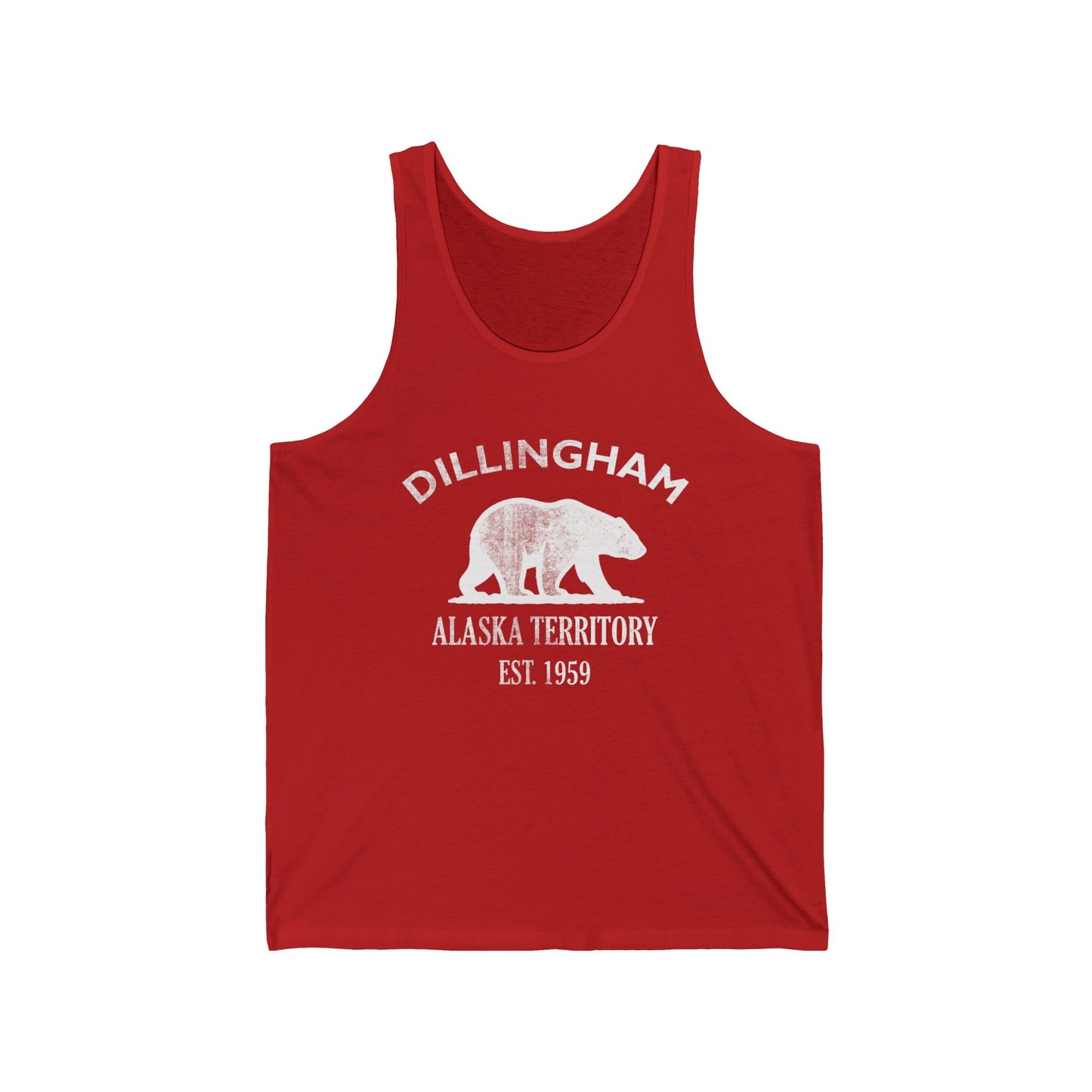
Today Dillingham is known as a cultural and fishing hub of Bristol Bay. Its story reflects Indigenous heritage, commercial fishing, and resilience against storms. Our Dillingham designs celebrate this layered identity, pairing the bear motif with vintage styling. They invite you to explore the Dillingham collection and carry forward a reminder of Alaska’s resilience. Retro in tone, the motif reflects authenticity, endurance, and cultural pride. Dillingham’s logo honors both heritage and modern industry, making it a vintage emblem of Alaska’s fishing culture. Explore the collection and share in its story of endurance and pride.
Why People Visit Dillingham Alaska
Dillingham offers the rare combination of a genuine working fishery and an unmatched wilderness backyard: the regional hub of Bristol Bay, set where the clear Wood River meets the muddy Nushagak at the Yup'ik place called Curyung, the service center of the largest wild sockeye salmon run on Earth, the gateway to Wood-Tikchik State Park — the largest state park in the United States — and the headquarters of the 4.7-million-acre Togiak National Wildlife Refuge. There is no road in; the town is reached by plane or boat, which keeps it unhurried and close to the water. Working town. Working harbor. Salmon country at the edge of the largest state park in the nation.
