


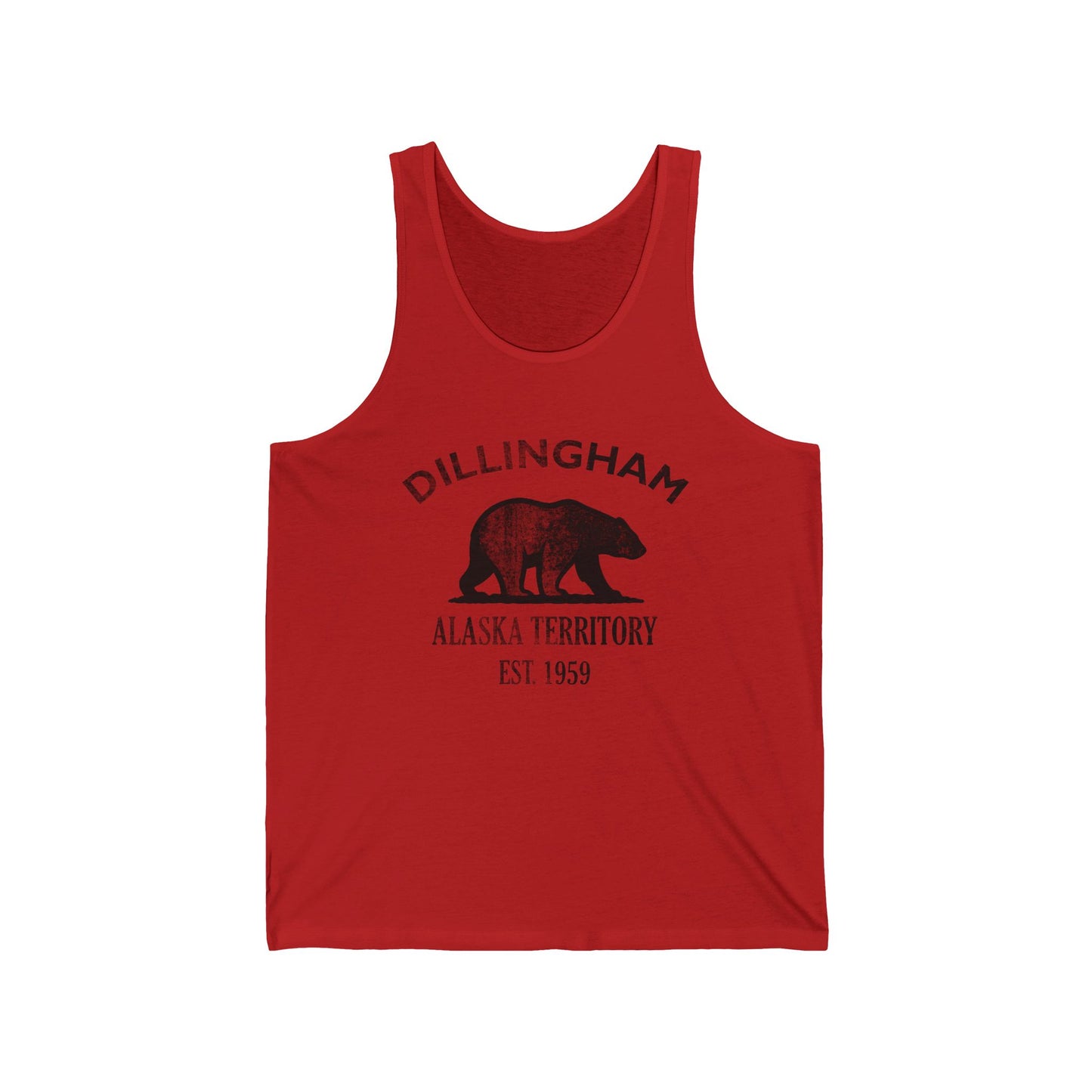
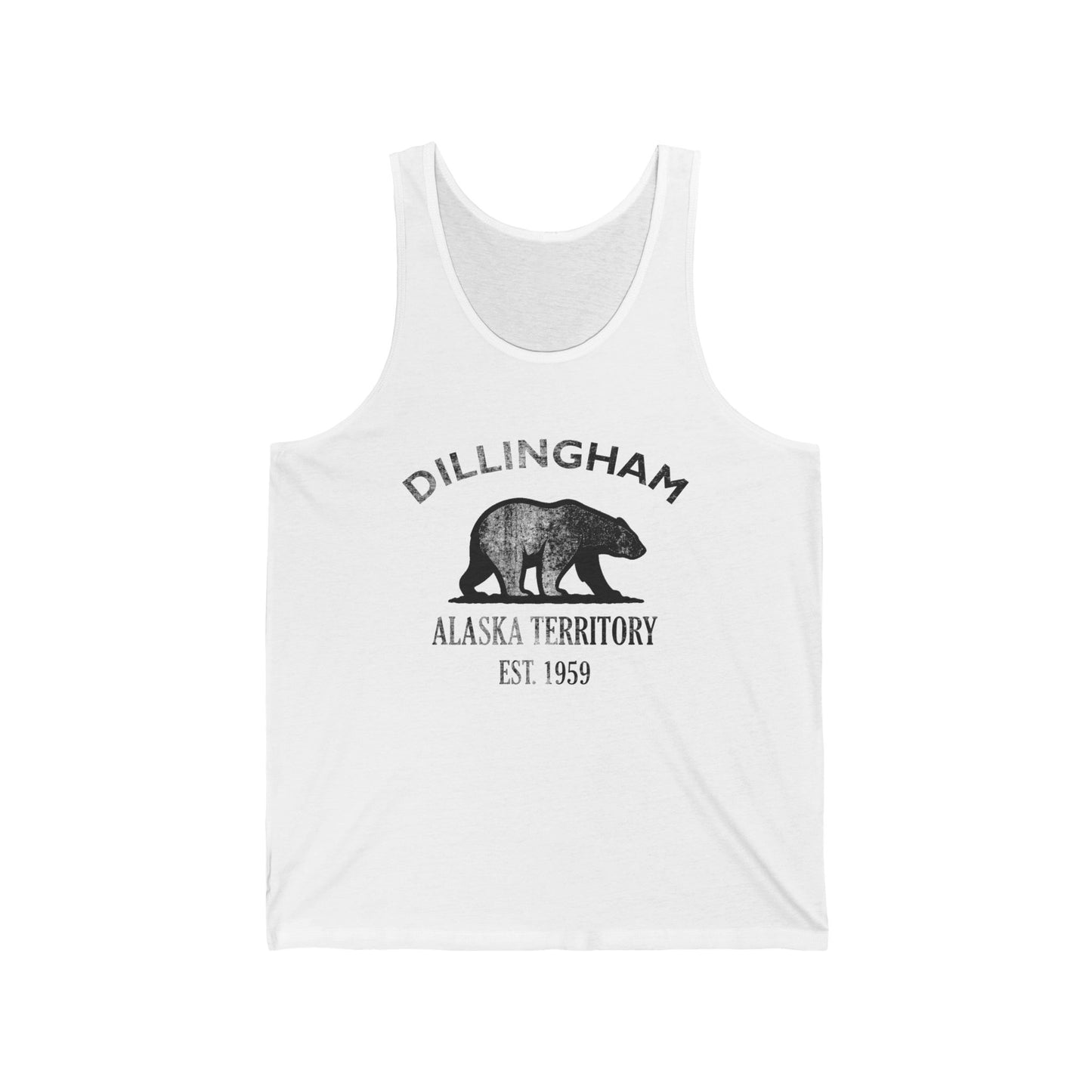
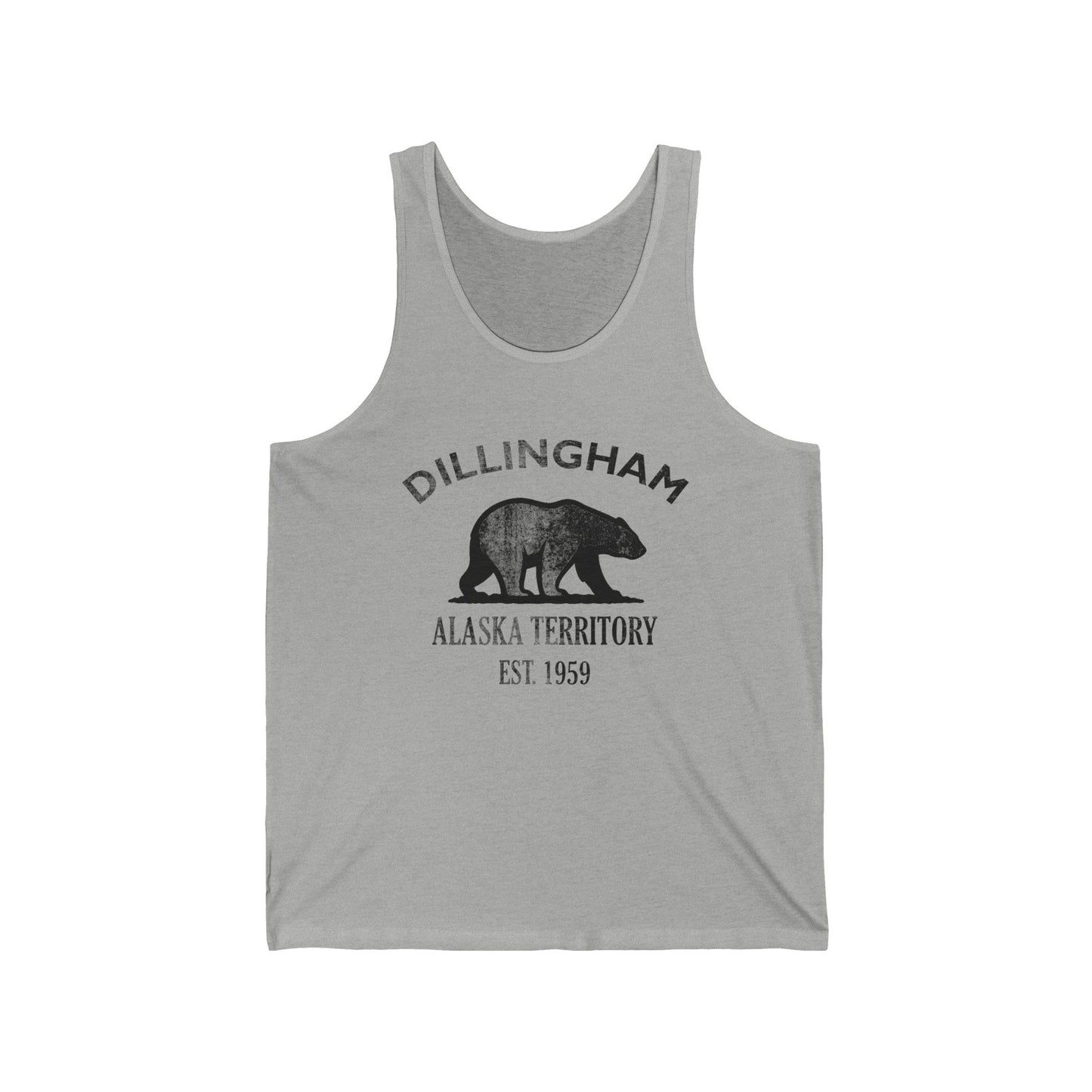
Dillingham, Alaska, sits at the head of Bristol Bay, home to Indigenous Yup’ik people who fished salmon and hunted for centuries. Russian traders arrived in the eighteenth century, and the town grew during the twentieth century as a fishing hub. Its name honors Senator William Dillingham, though local heritage remained central. The founding identity reflects both Indigenous survival and colonial influence, tied to the sea. Dillingham’s story highlights a community built on fishing, resilience, and resourcefulness, where survival in harsh conditions required endurance and cultural pride. Its roots emphasize Alaska’s broader frontier narrative of resilience.
Our Dillingham retro logo uses Alaska’s distressed bear motif, representing strength, resilience, and wilderness identity. The bear reflects both Indigenous reverence and frontier endurance, while “1959” grounds the motif in Alaska’s statehood. Its black-and-white styling is rugged and vintage, resembling crate labels or outfitter branding. The motif bridges Dillingham’s dual identity: Native subsistence and modern fishing industry. On merchandise, it conveys authenticity, pride, and toughness, retro in tone. The bear emblem honors Dillingham’s story: resilience, heritage, and fishing pride. Retro in style, it is a vintage emblem of Alaska’s maritime and frontier endurance.
Why People Visit Dillingham Alaska
- Drive the road north to Aleknagik and Lake Aleknagik — the single twenty-mile paved route out of town and the southern gateway to the Wood River Lakes.
- Fly into Wood-Tikchik State Park — at roughly 1.6 million acres the largest state park in the United States, a roadless wilderness of interconnected clear-water lakes; outfitters in Dillingham rent inflatable kayaks, rafts, and canoes, and a paddle from Lake Kulik back to Dillingham runs close to 140 miles over ten to fourteen days.
- Walk the small-boat harbor — the working docks of the Nushagak District fleet, drift boats and set-net skiffs, with views across the bay toward low mountains.
- Stroll the beaches along Kanakanak Road — tidal flats and the long changing light on Nushagak Bay.
- Learn the region's story at local cultural and heritage centers when open — the Yup'ik history of Curyung and the Bristol Bay fishery.
- Visit the headquarters of Togiak National Wildlife Refuge — 4.7 million acres of walrus, seals, migratory birds, and one of the largest wild herring fisheries.
- Watch for eagles, seabirds, and brown bears along shoreline pullouts and quiet overlooks — this is bear country, salmon country, and a major flyway all at once.
- Time a visit to summer salmon season — June and July, when the largest wild sockeye run on Earth fills the bay and the town runs around the clock.
