


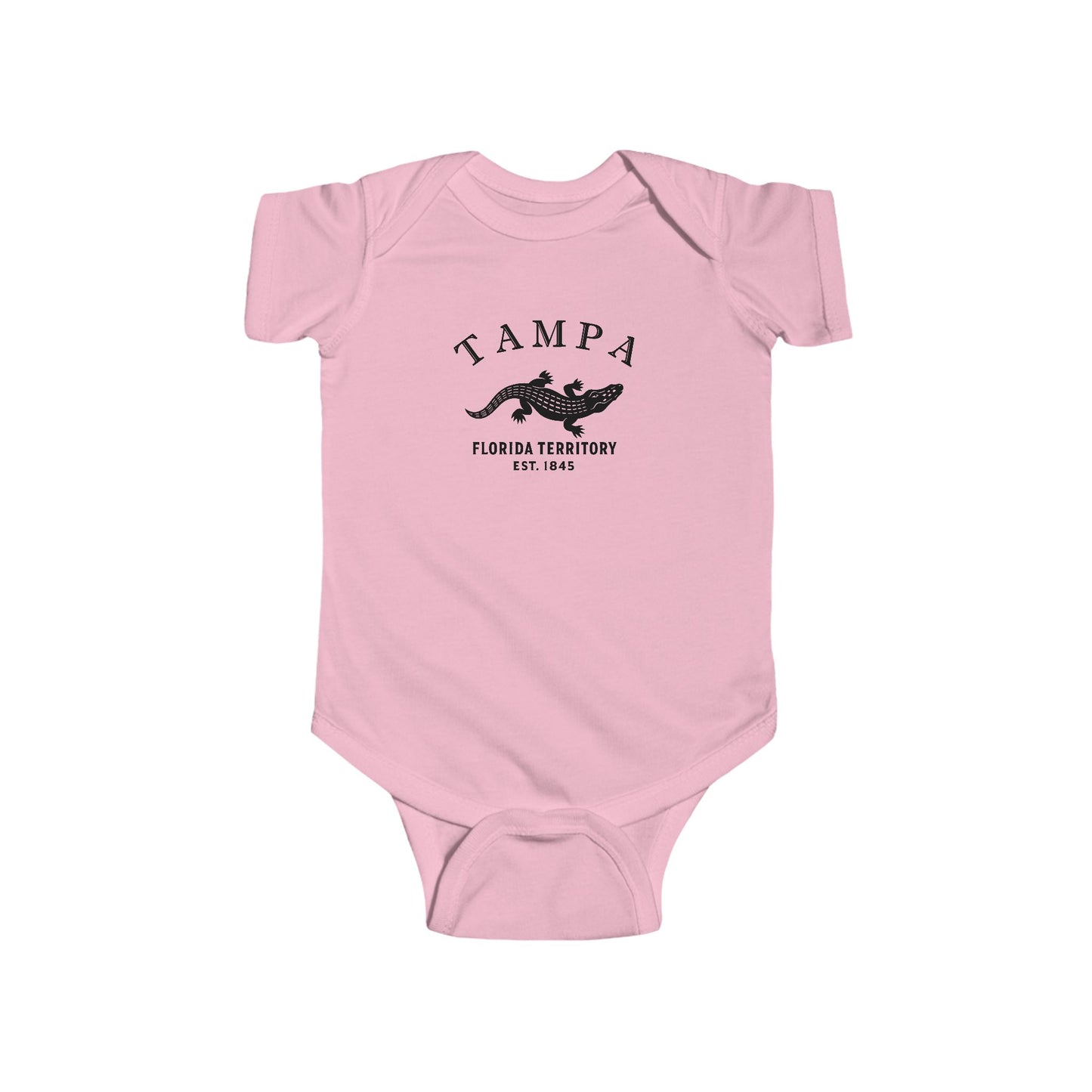
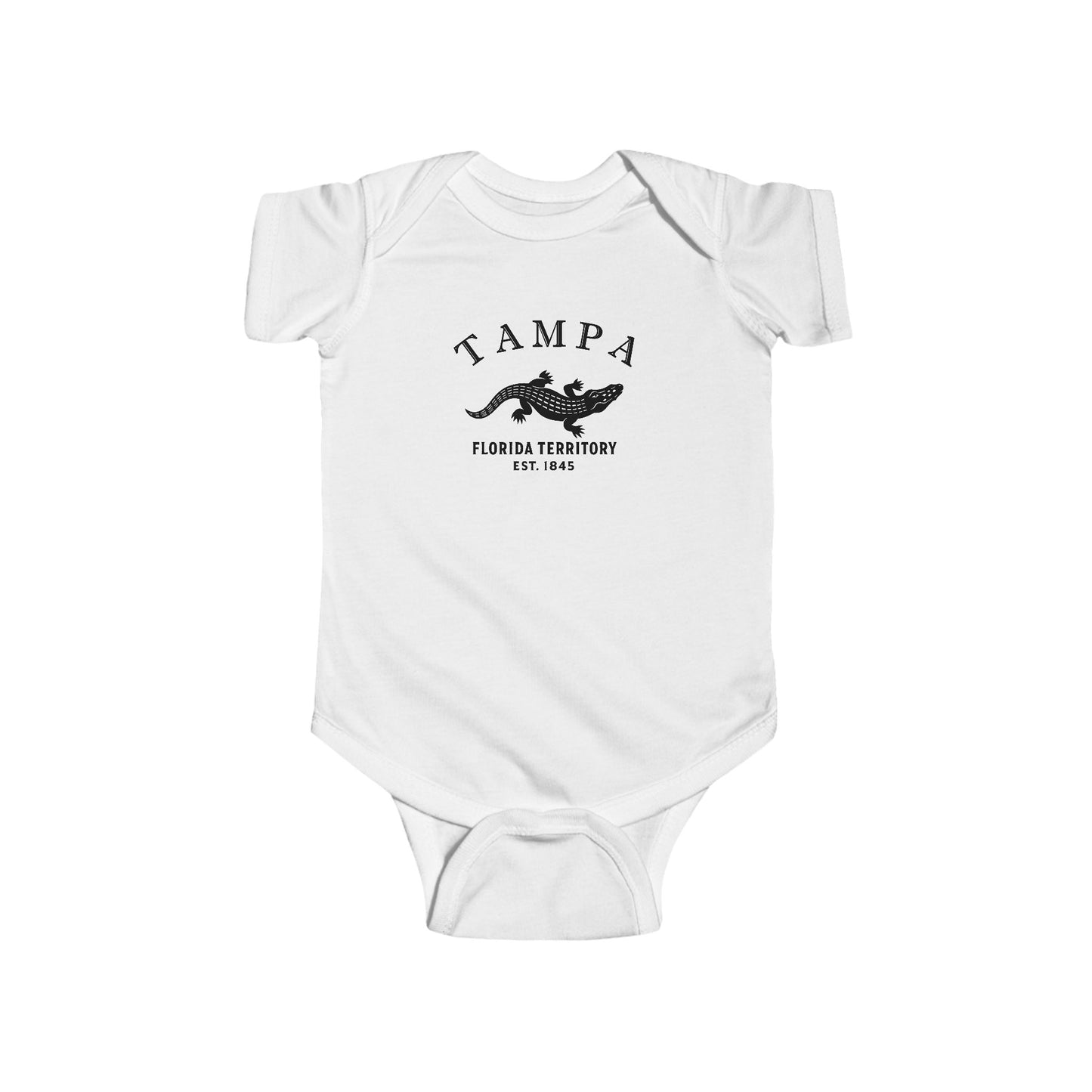
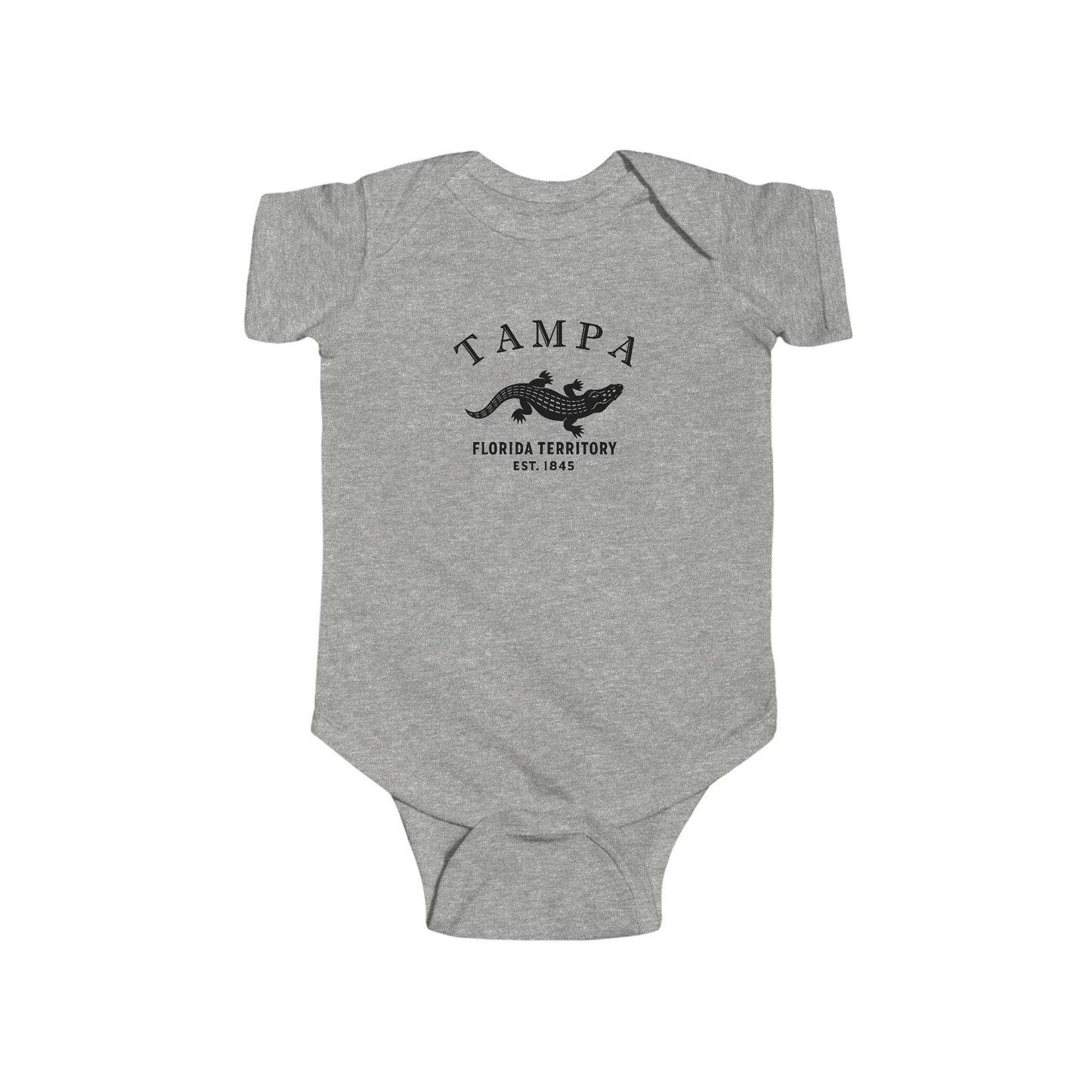
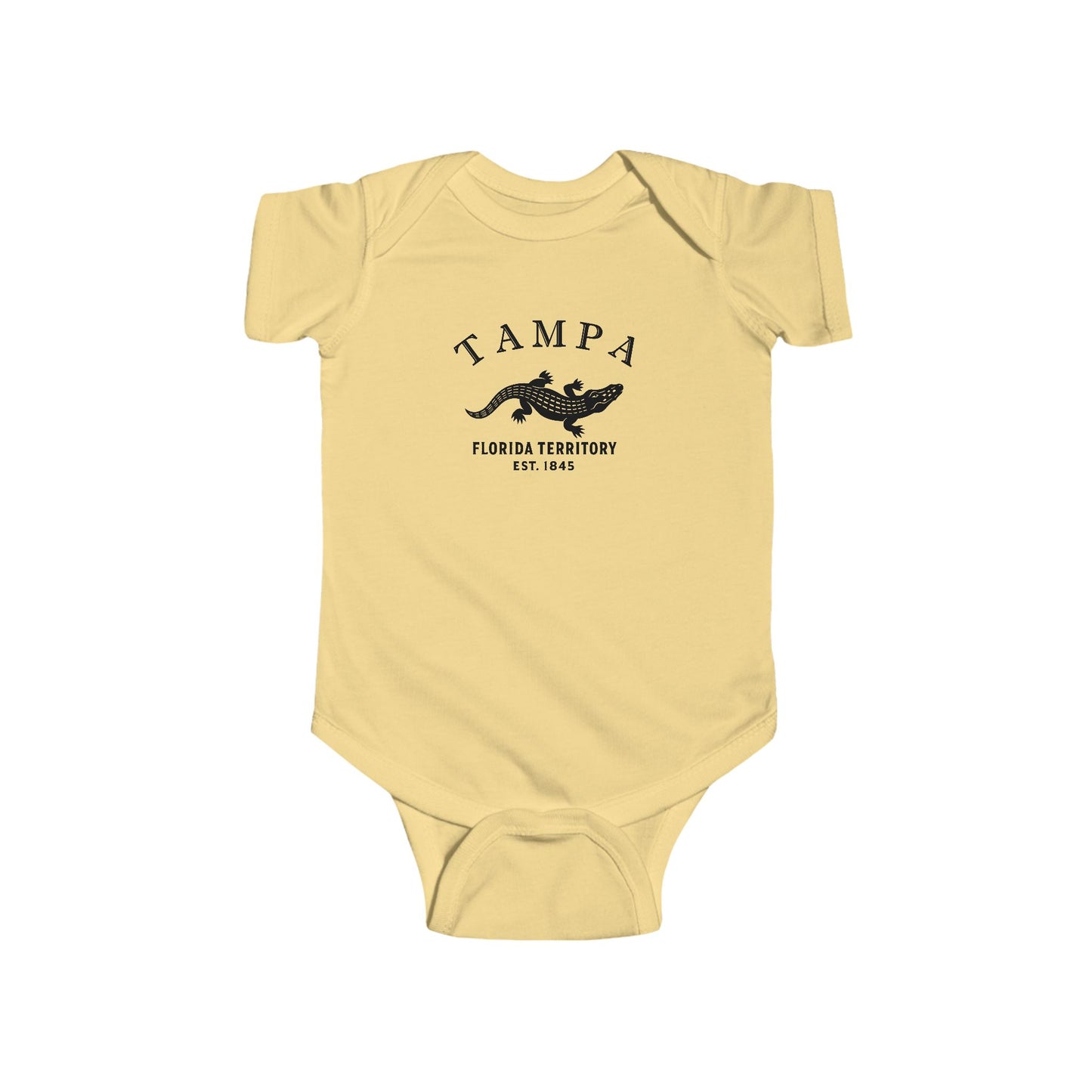
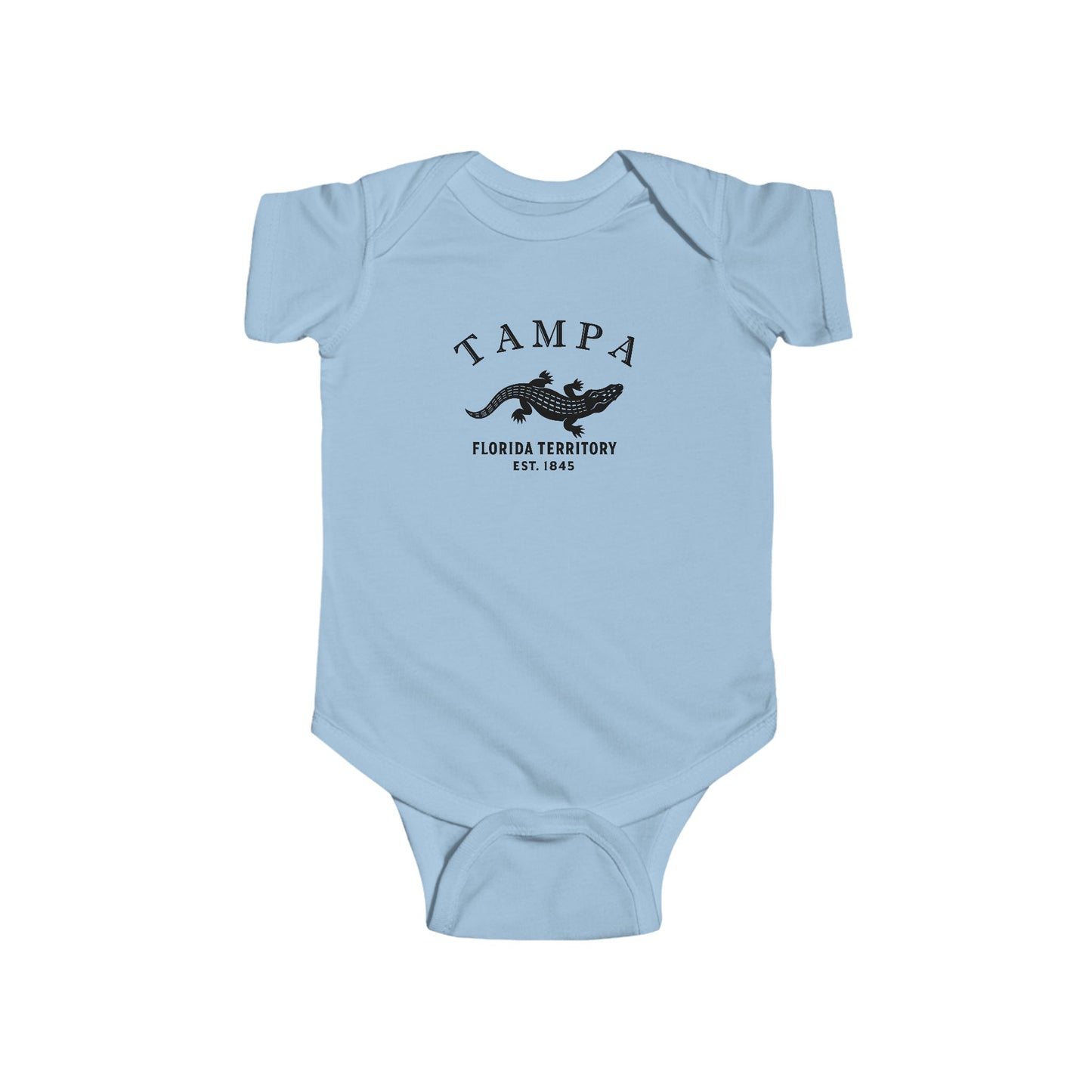
Our Tampa logo carries the Florida alligator above "Florida Territory — Est. 1845," the shared retro emblem of our Florida towns, drawn in worn black-and-white like an old cigar-box label or crate stamp. The 1845 date marks Florida statehood, and the alligator is the through-line that links Tampa to every other Florida town we make. The detail that makes this one Tampa is Cigar City itself — Ybor's brick factories, the Latin Quarter, Plant's minarets, and the pirates who storm the bay each January.
What's with Cigar City? In 1885 a Spanish-born cigar manufacturer named Vicente Martinez Ybor moved his operation to a stretch of scrub northeast of downtown Tampa and built a town around it — block after block of brick cigar factories and little wooden casitas for the workers. Cuban, Spanish, and Italian immigrants poured in to roll cigars by hand, and within twenty years Tampa was turning out hundreds of millions of them a year, more than anywhere on earth. They called it the Cigar Capital of the World, and Tampa has called itself Cigar City ever since. The brick factories still stand in Ybor; the story they tell is about immigrants and craft, not just tobacco.
Why People Visit Tampa
Tampa draws travelers who want real heritage with Gulf sunshine — the brick-and-cigar history of Ybor's Latin Quarter, the fairy-tale minarets of Plant's hotel, the bay and the Riverwalk, and a pirate festival unlike anywhere else. It is a city that wears its immigrant, working-waterfront story openly, an easy gateway to the Gulf beaches just across the bay.
