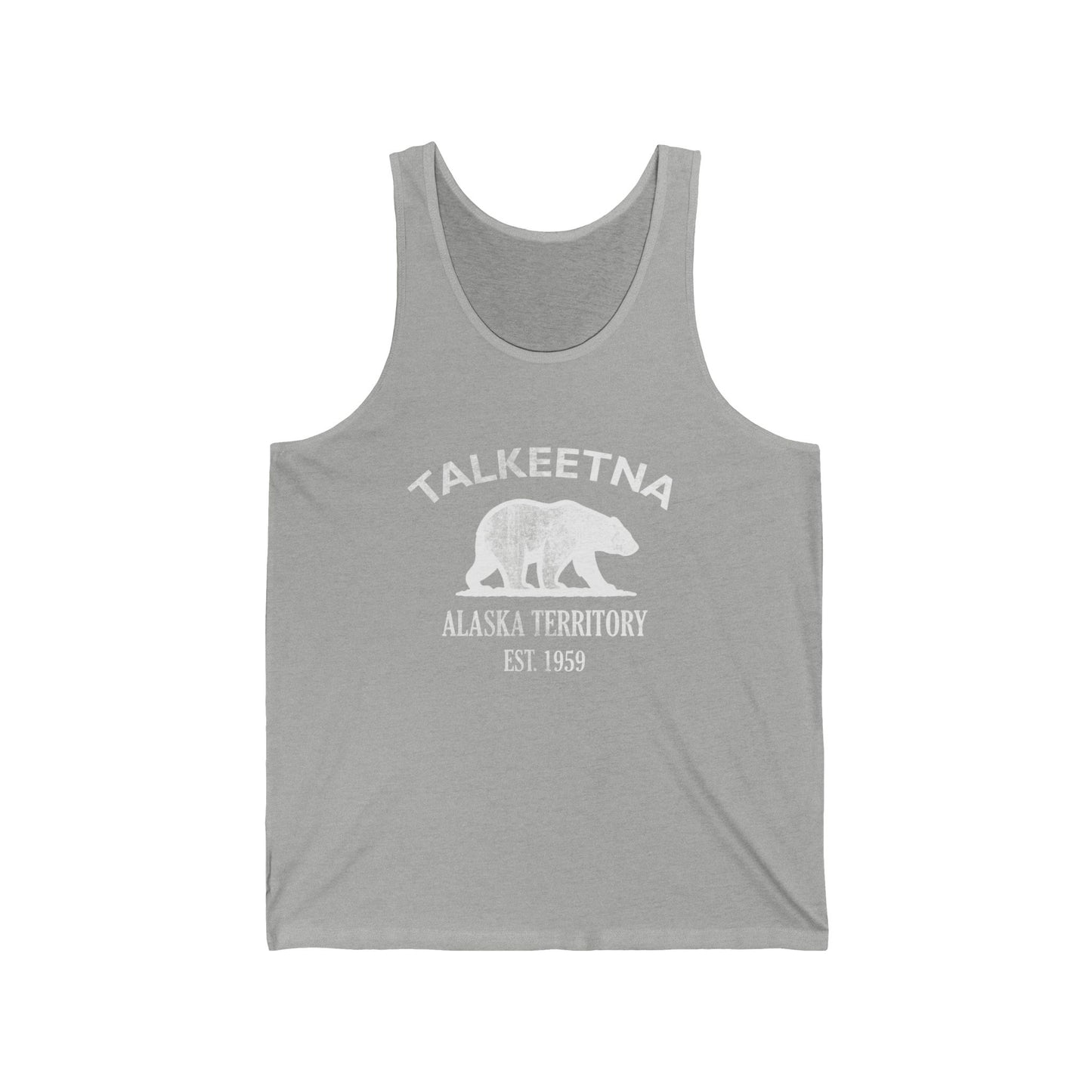
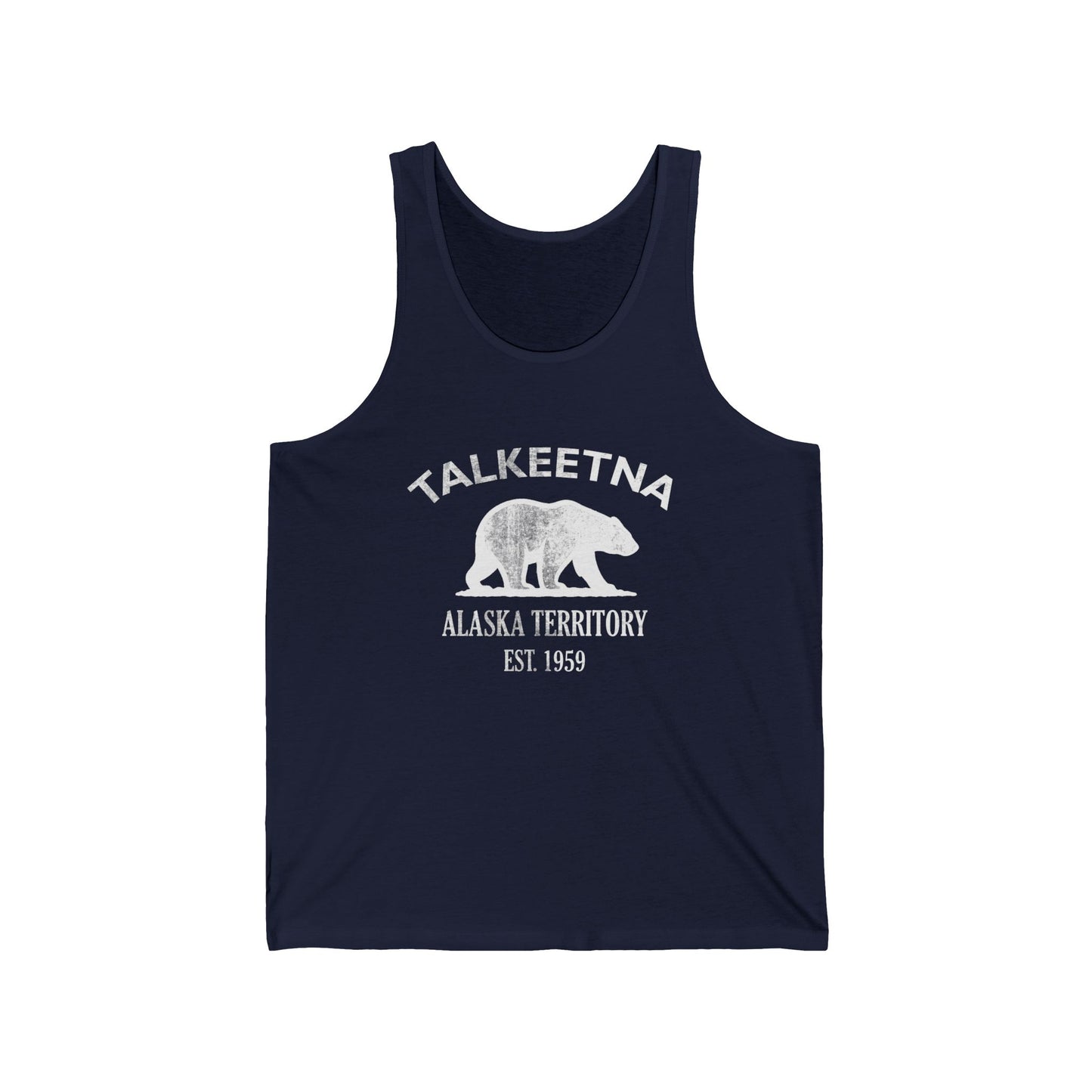
So Talkeetna gathers a Dena’ina name for joining rivers, a gold-rush landing, an eighty-lot railroad auction, a log Main Street on the National Register, the ranger station where every Denali expedition begins, ski-planes bound for a glacier, and a mayor who purrs — and our Talkeetna designs pack all of it into wearable form. Whether Talkeetna is your hometown, your basecamp, your flag-stop, or the town you promised yourself you’d get back to, wear the history. Below Denali since 1896.
The geography keeps the town honest: fourteen miles up a spur road off the Parks Highway, two and a half hours north of Anchorage, with the Talkeetna Mountains to the east and the river confluence at the end of Main Street. Summer brings near-endless daylight and salmon in the Susitna; winter drops to forty below, and the aurora works the sky from September to March.
Why People Visit Talkeetna Alaska
Talkeetna offers the three-rivers confluence the Dena'ina have gathered at for centuries, the National Register downtown with the Roadhouse and Nagley's and the Fairview Inn intact and operating, the Walter Harper Ranger Station that every Denali climber walks through, the long view of the highest mountain in North America rising at the head of the Susitna Valley, the Alaska Railroad Denali Star at the depot daily, and the small-plane glacier-landing tradition that opened the mountain to the world. It is a small town at the end of a fourteen-mile spur road, and almost every climber on Denali has stood on its one main street first. Below Denali since 1896.
