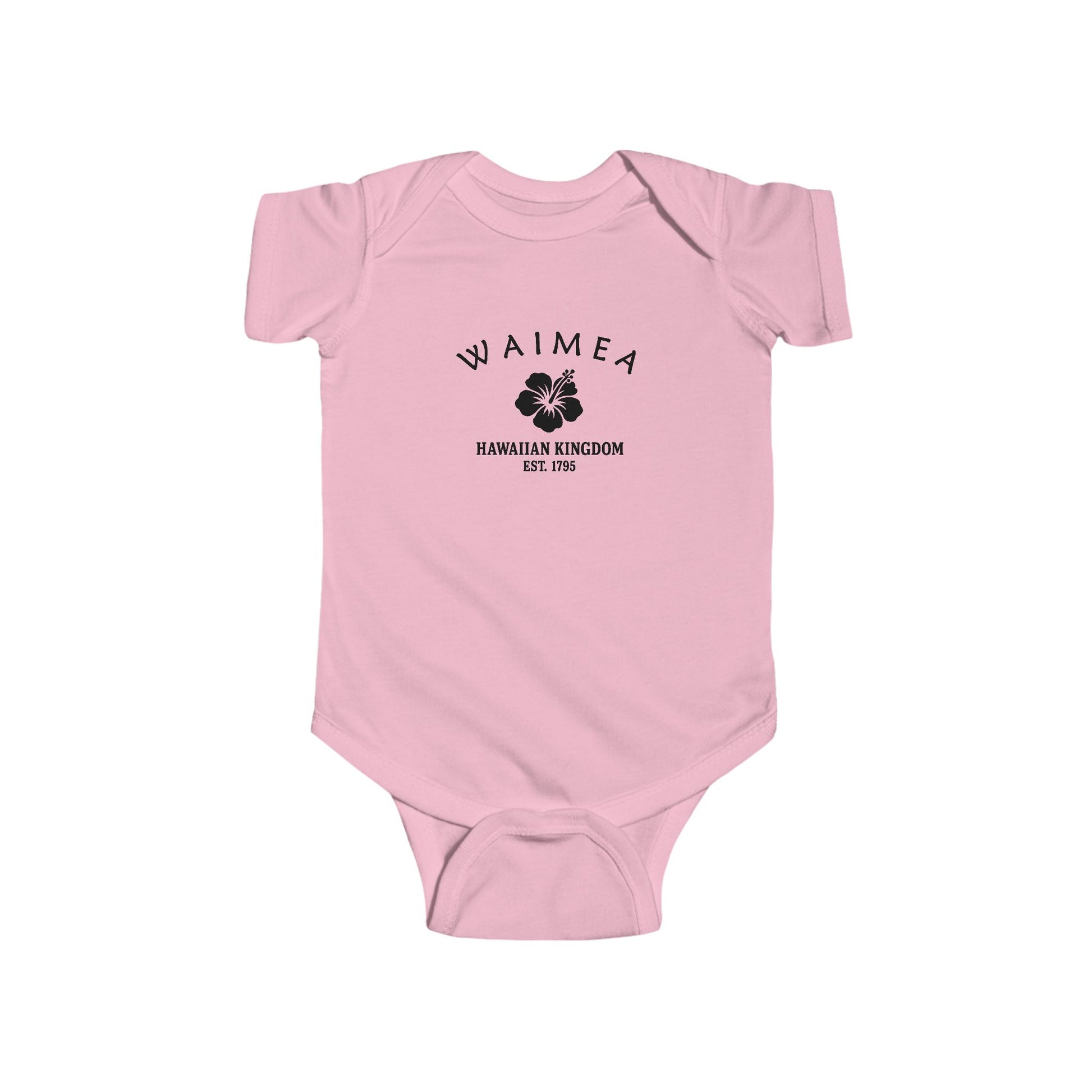
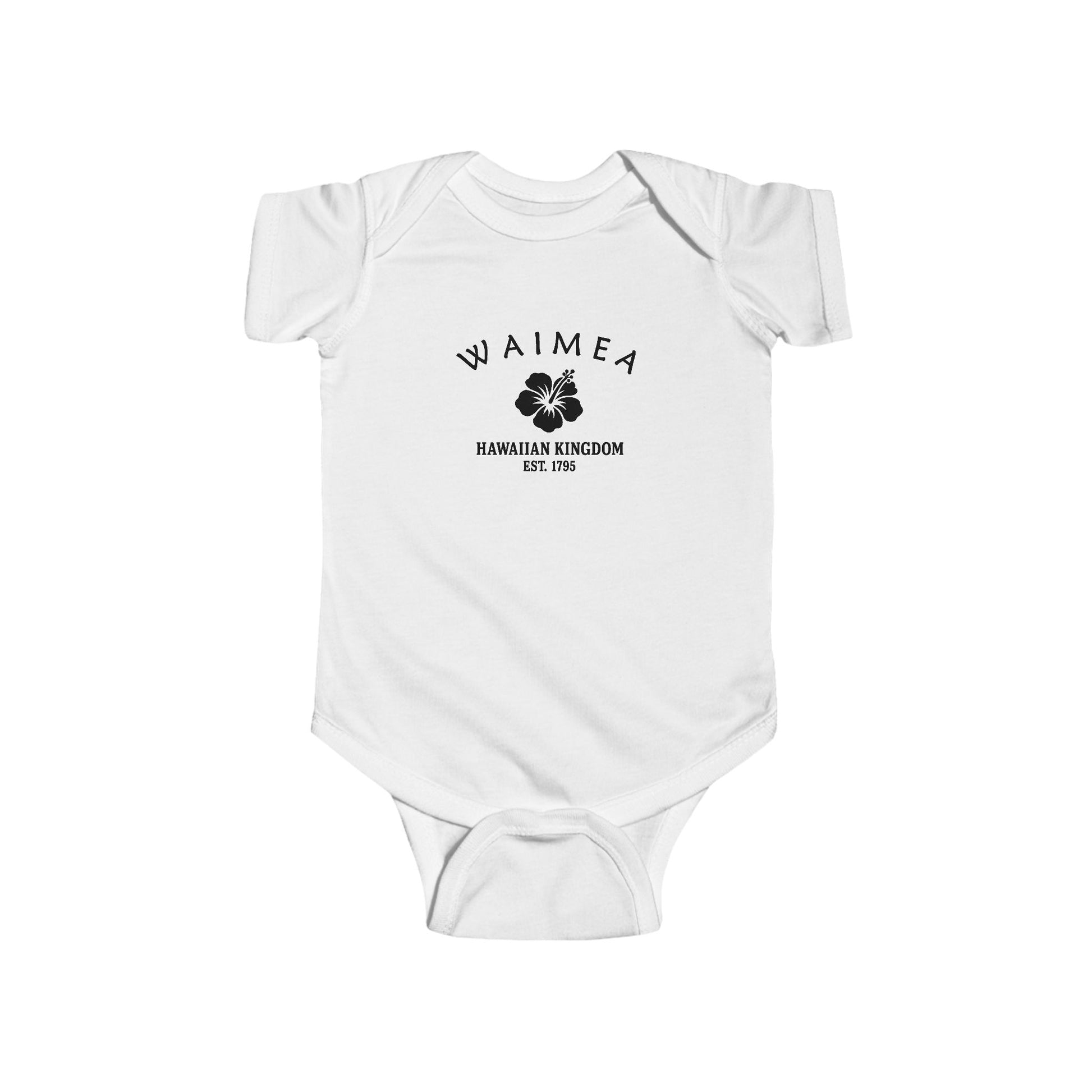
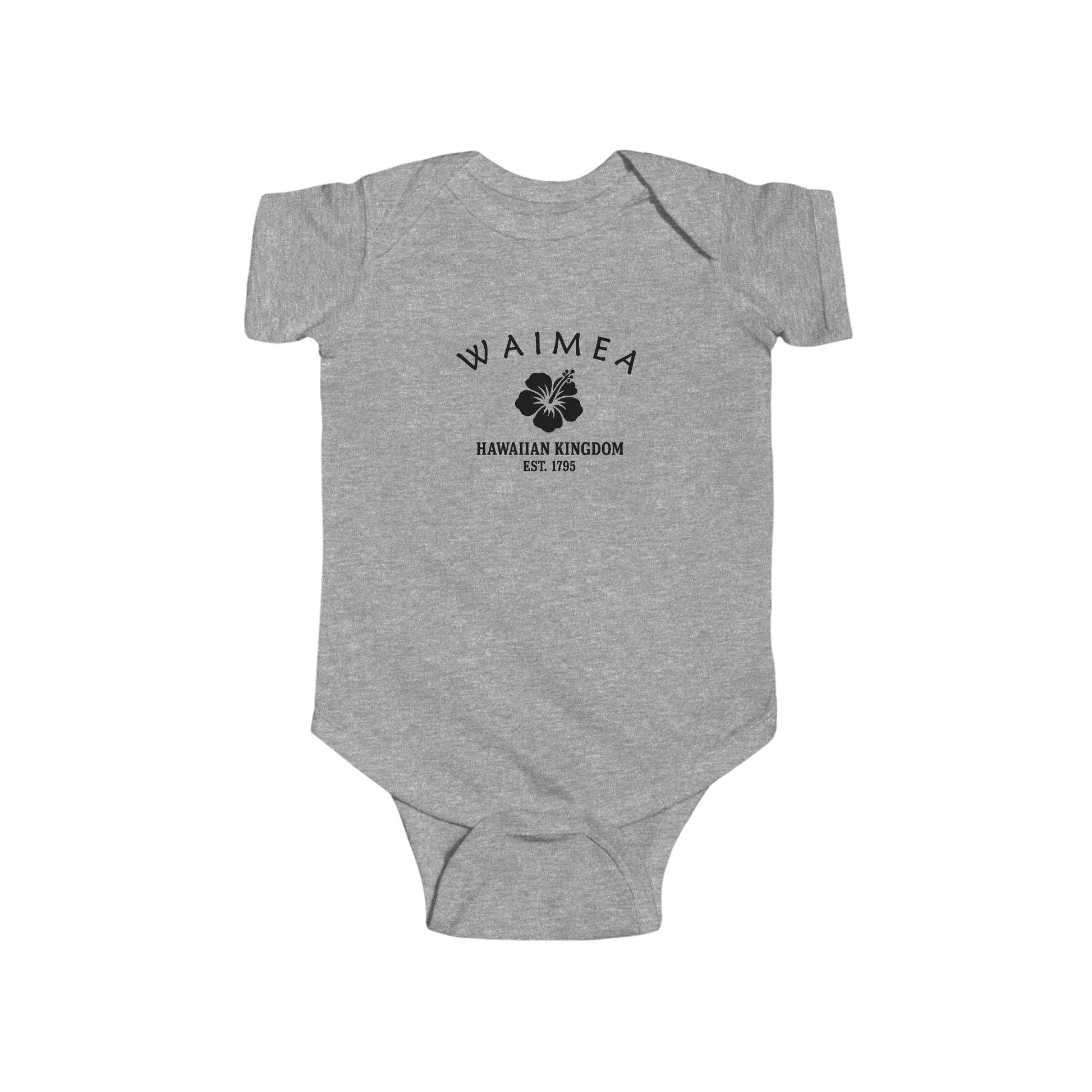
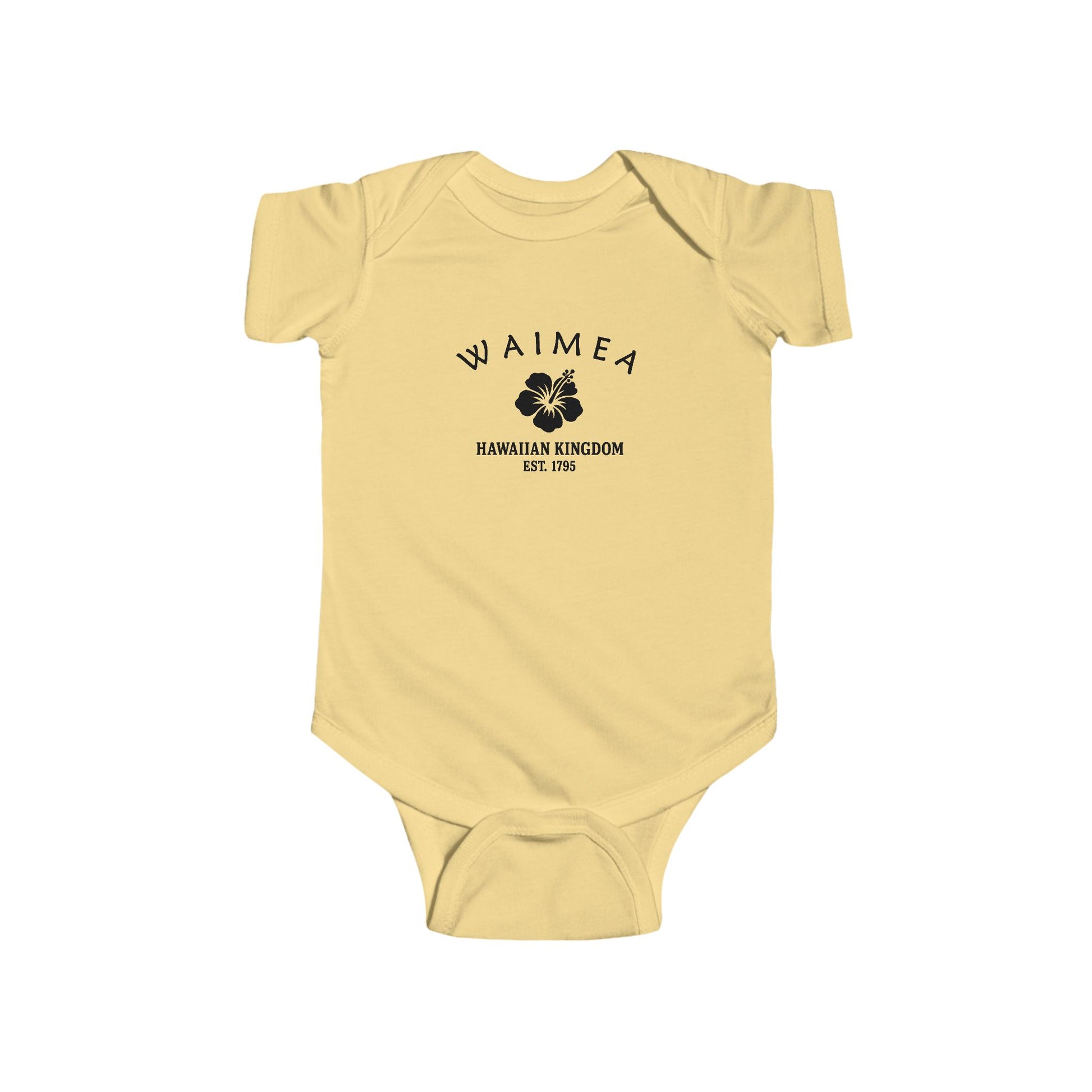
Today Waimea — Kamuela on the envelope — is still paniolo country: ranch land and farmers' markets, cool misty mornings, a rodeo every Fourth of July, and Mauna Kea standing over it all. Our Waimea designs gather that identity — the hibiscus emblem, the upland pastures, the Hawaiian cowboy heritage — into wearable form. It is a Hawaiian town that has stayed itself — Native roots and paniolo pride, ranch and rodeo, cool air and big skies. Waimea, Hawaiʻi — where the cowboys came first, high on the green slopes of the Big Island.
This was old, settled country long before the cattle came. Native Hawaiians had farmed the Waimea uplands since around 1100–1200 AD, terracing the leeward slopes into field systems walled with kuaiwi and watered by ʻauwai canals tapped from the Waimea streams; the upper slopes are said to have supported more than ten thousand people before Western contact. After contact, two waves remade the land — first the sandalwood cutters of the early 1800s, who stripped the fragrant ʻōhiʻa and māmane forests and carried the wood down to the coast for the China trade, and then the cattle that turned the cleared ground into the open pasture Waimea is known for today.
Why People Visit Waimea
Waimea offers the Hawaiʻi that isn't a beach — cool, green, and high, with a deep ranching culture and Native Hawaiian roots. Visitors come for the paniolo heritage, the upland air, the farmers' markets, and the rare feeling of a Hawaiian cowboy town under the slopes of a sacred mountain.
