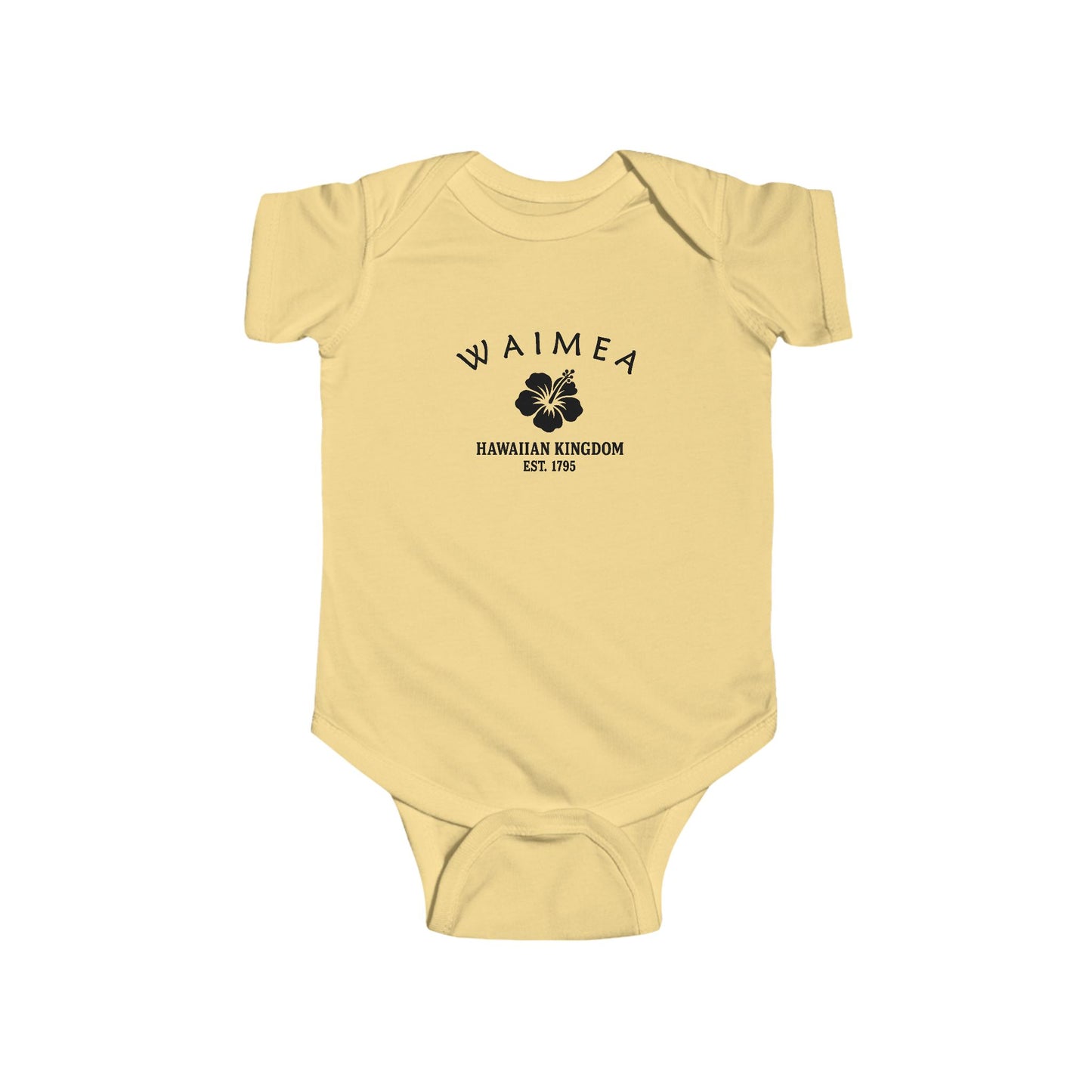
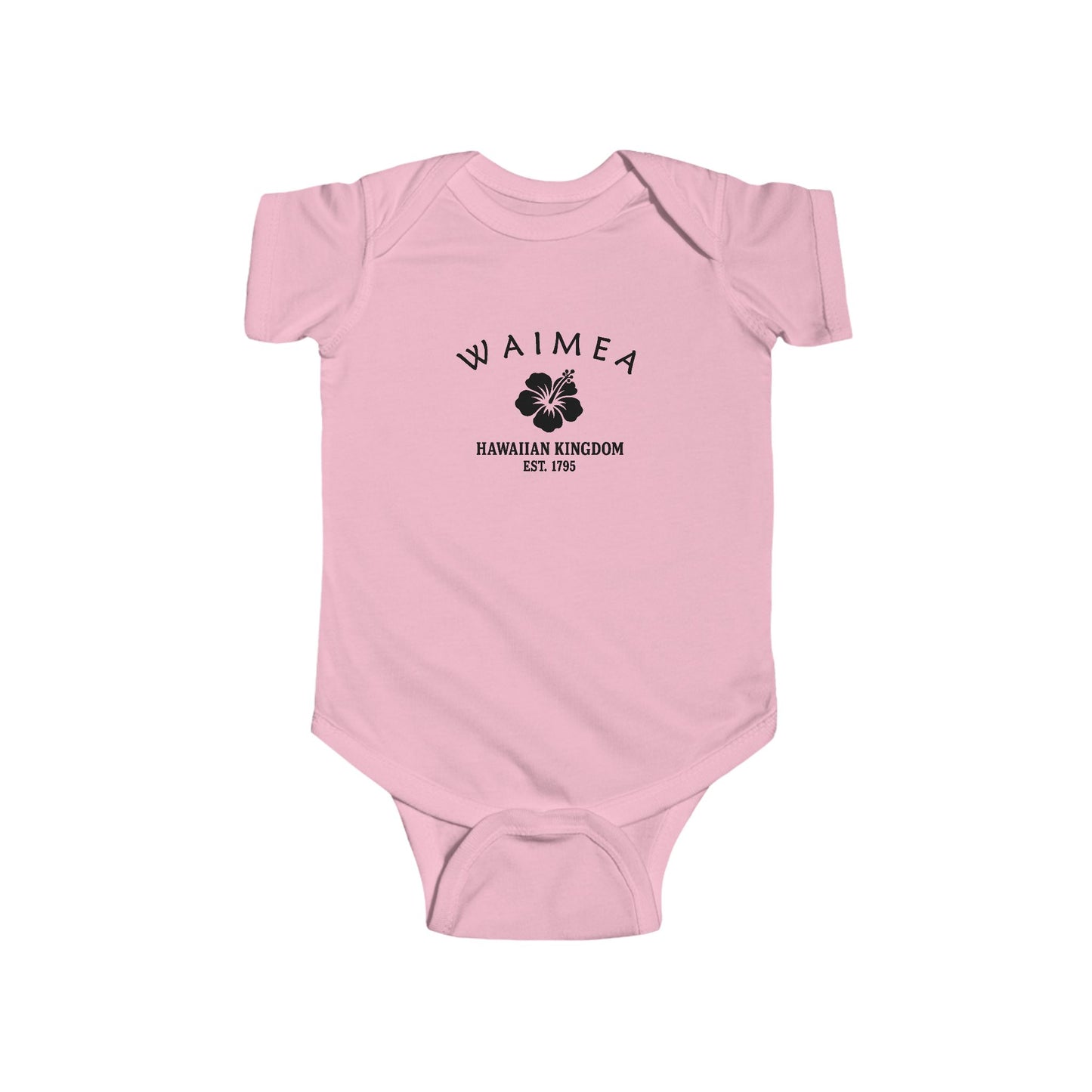
Waimea goes by two names. “Waimea” — “reddish water” — is the old Hawaiian name, but it is shared by towns on Kauaʻi and Oʻahu, so the post office here took a second one: Kamuela, the Hawaiian form of “Samuel,” after Samuel Parker, John Palmer Parker's prominent grandson. The sign on the post office still says Kamuela; the people who live there still say Waimea. Both names point to the same cool upland town and the same ranching family that shaped it. The town sits some 2,700 feet up, cool and often fog-wrapped — close enough to the Kohala-coast beaches to surprise first-time visitors with sweaters and woodsmoke.
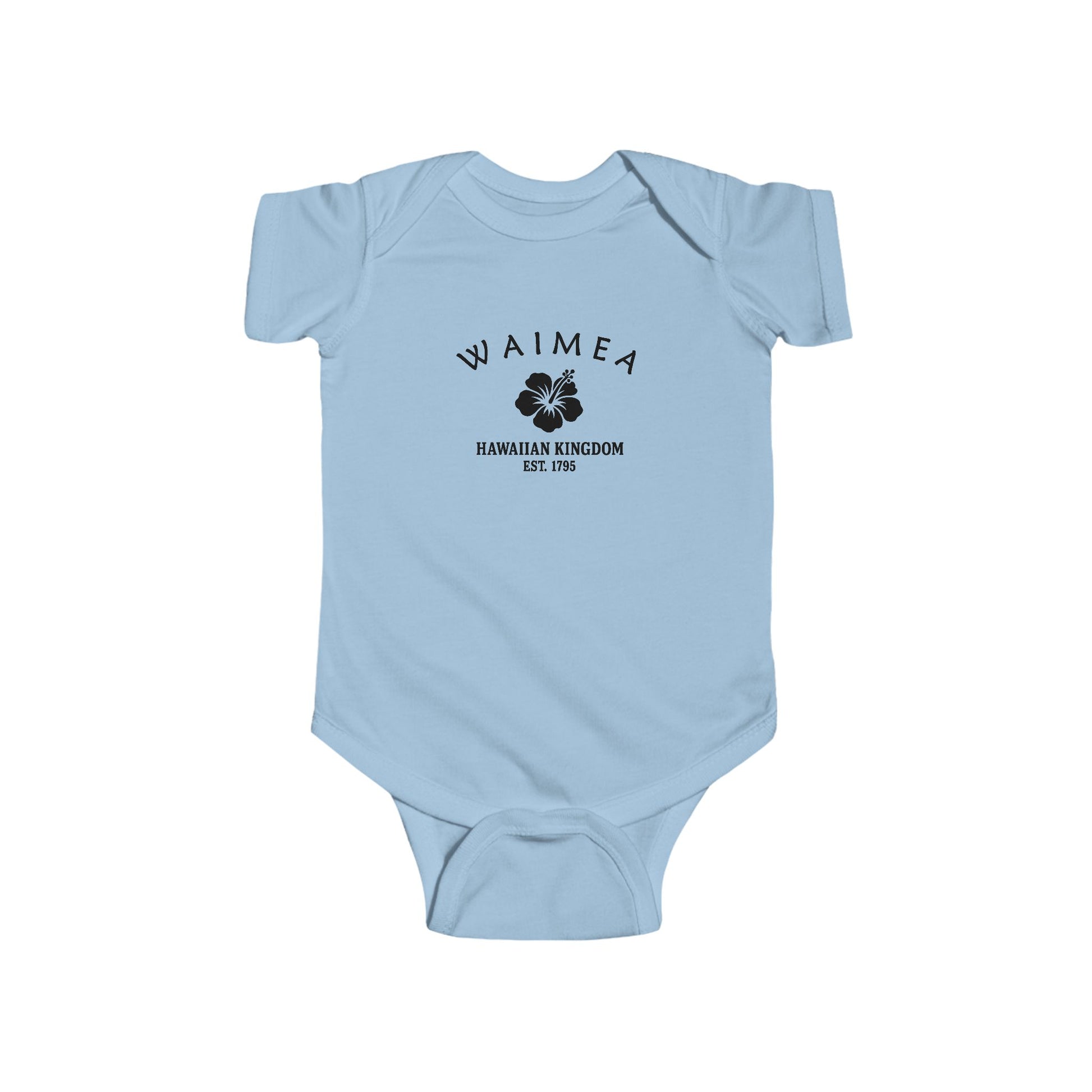
Our Waimea logo carries the Hawaiian hibiscus over “Hawaiian Kingdom · Est. 1795,” the year Kamehameha I unified the islands — the shared emblem of every Merlin Classics Hawaiʻi place. Printed in a clean retro black-and-white that reads like an old travel decal, the hibiscus stands for the islands as a whole; what makes this one Waimea is the country behind it — the paniolo on the high pastures, Parker Ranch under Mauna Kea, and a Hawaiian town that has been green, cool, and proud of its cowboys for nearly two centuries.
Why People Visit Waimea
Waimea offers the Hawaiʻi that isn't a beach — cool, green, and high, with a deep ranching culture and Native Hawaiian roots. Visitors come for the paniolo heritage, the upland air, the farmers' markets, and the rare feeling of a Hawaiian cowboy town under the slopes of a sacred mountain.
