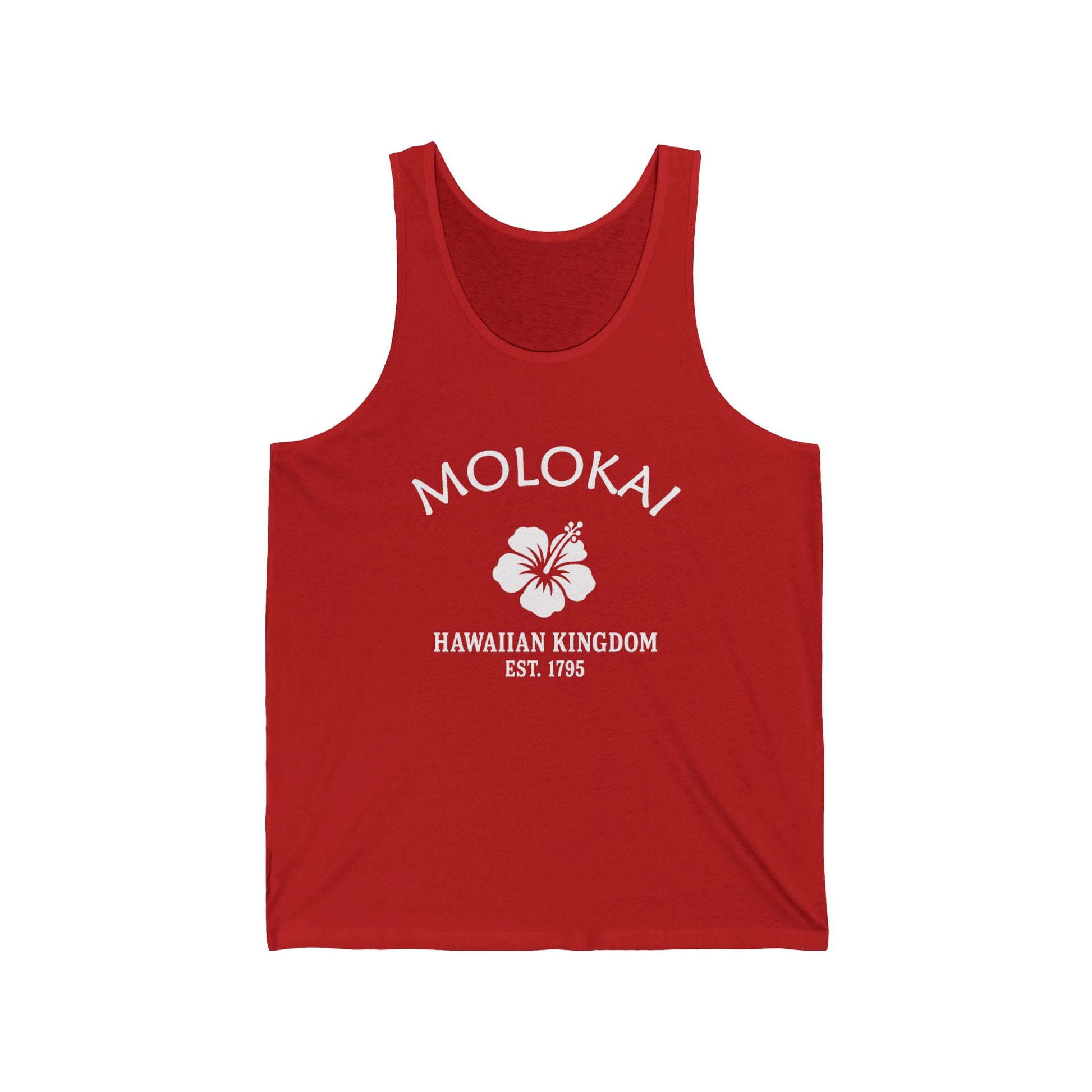
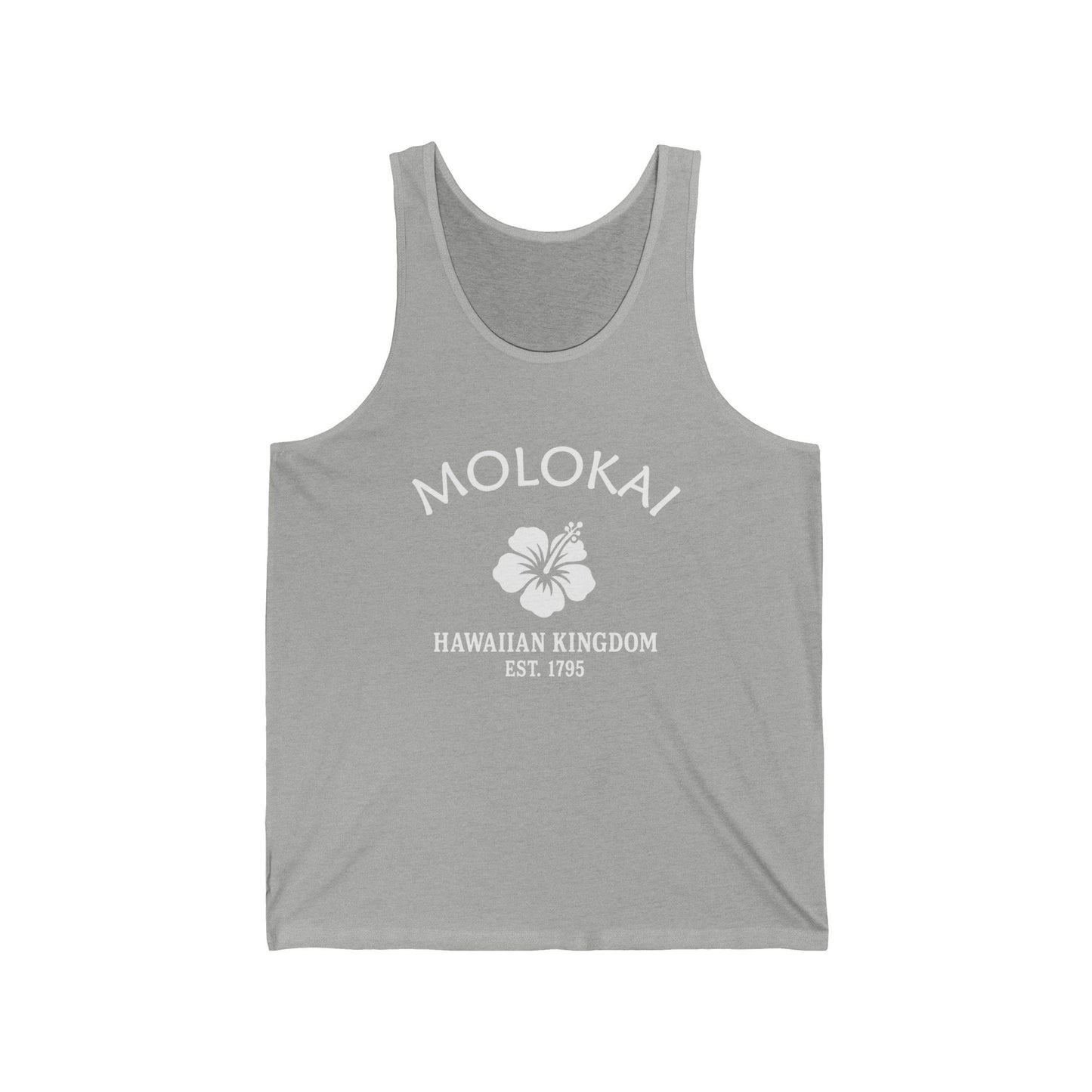
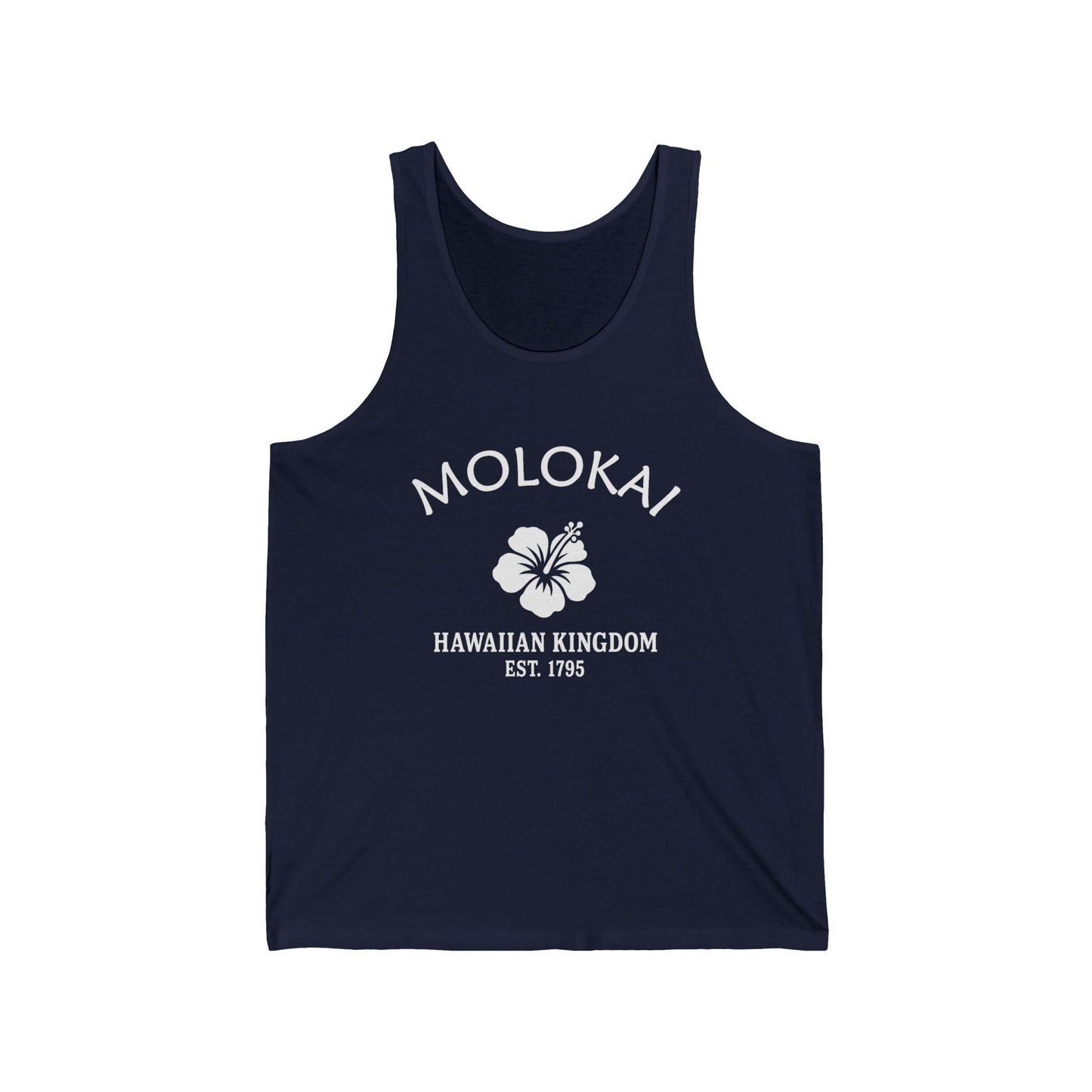
Our Molokaʻi logo carries the Hawaiian hibiscus over "Hawaiian Kingdom · Est. 1795," the shared emblem of every Merlin Classics Hawaiʻi place, marking the 1795 unification of the islands under Kamehameha. Printed in clean retro black-and-white like an old crate label, the hibiscus stands for the islands as a whole; what makes this one Molokaʻi is everything around it — the taro loʻi and the south-shore fishponds, the tallest cliffs in the world, the outrigger crews who cross the channel each fall, and the deep quiet of an island that chose to stay itself.
Below the great north cliffs lies a place of profound and solemn memory: the isolated Kalaupapa Peninsula. From 1866, under Kingdom law, people diagnosed with Hansen's disease were exiled there, cut off by the sea and the cliffs; over the following century more than eight thousand, most of them Native Hawaiians, were taken from their families and sent to Kalaupapa. In 1873 a Belgian priest, Father Damien, came to live among them and care for them, and he remained until the disease claimed his own life in 1889; Mother Marianne Cope carried the work on. Both were later canonized. Forced isolation ended in 1969, and a few residents chose to stay in the only home they had known. Today Kalaupapa is a national historical park and a living memorial — a story held with reverence, never for sale.
Why People Visit Molokaʻi
Molokaʻi offers the rarest thing in Hawaiʻi: an island that is still genuinely itself. It pairs deep living culture — hula's birthplace, the fishponds, the homestead lands — with dramatic, near-empty coast and a pace the rest of the islands lost long ago. Quiet, rural, and proud, it is made for travelers who want the real Hawaiʻi and are willing to meet it on its own terms.
