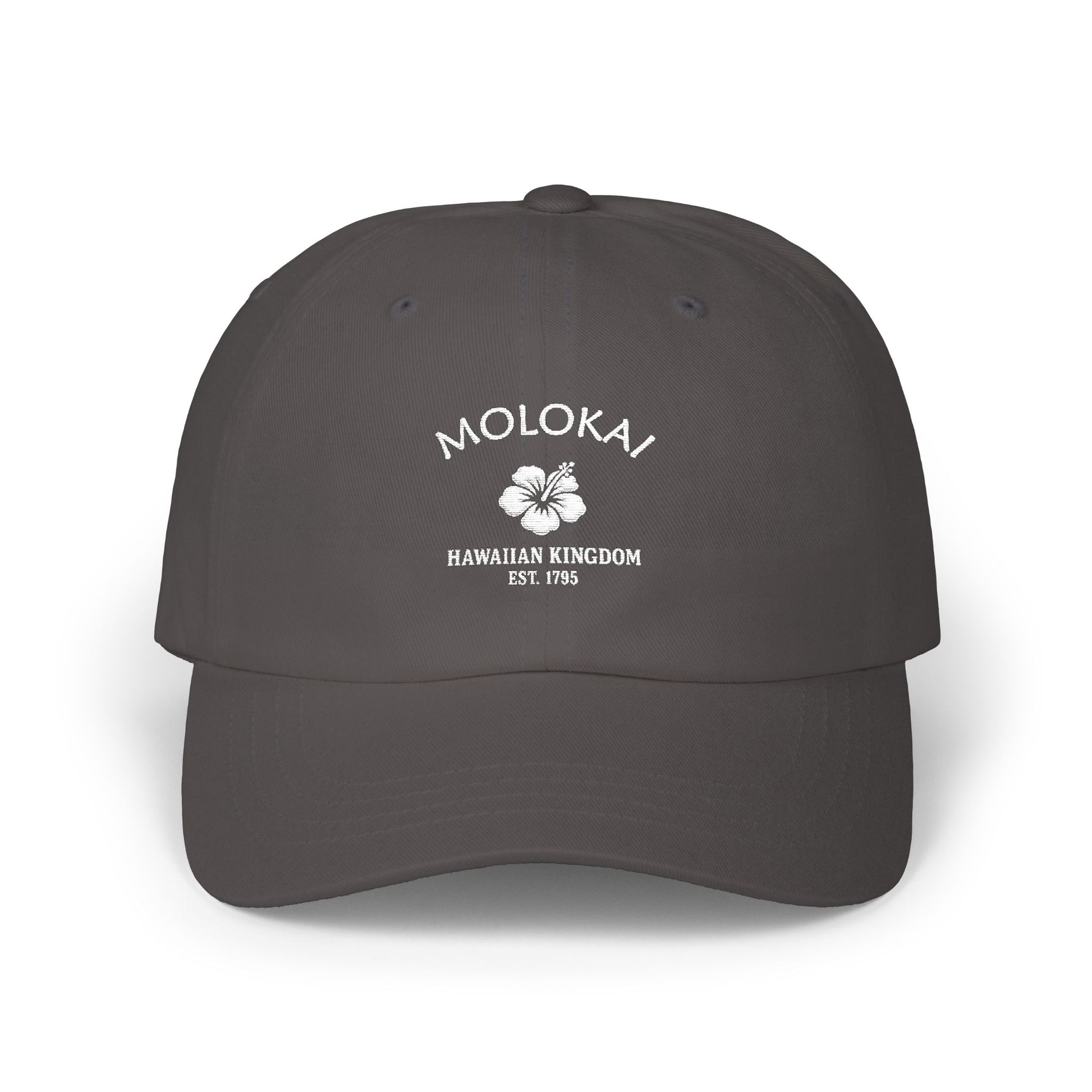
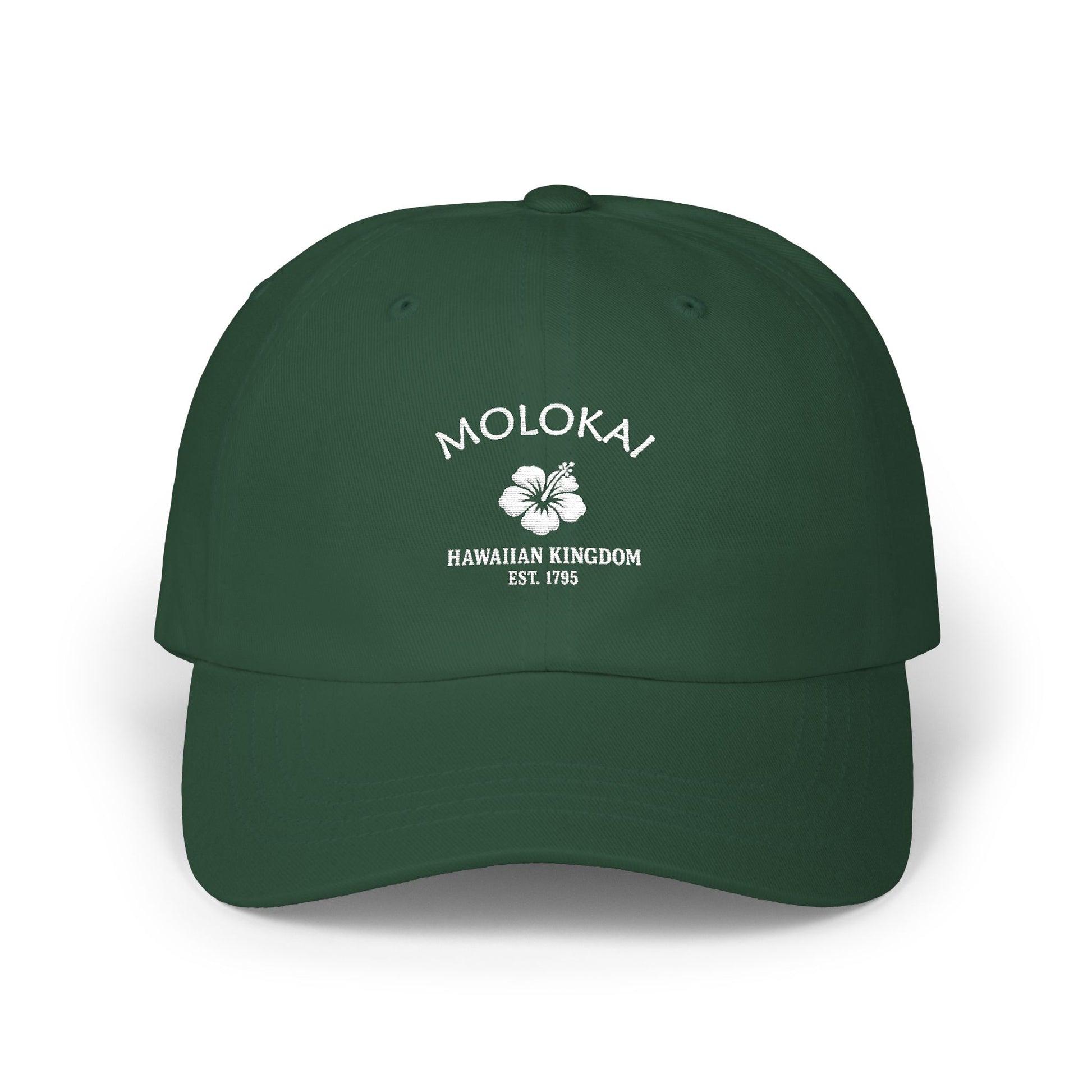
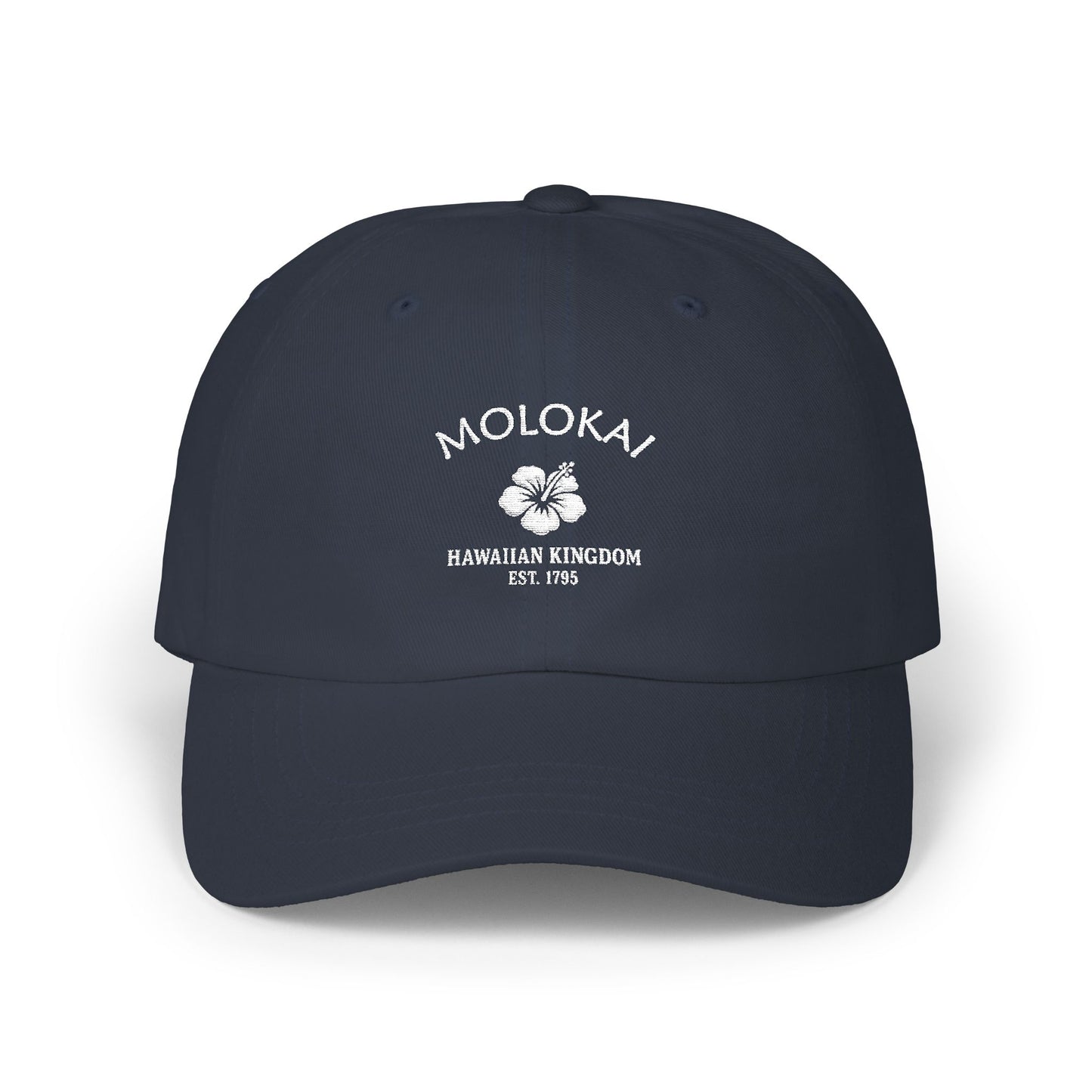
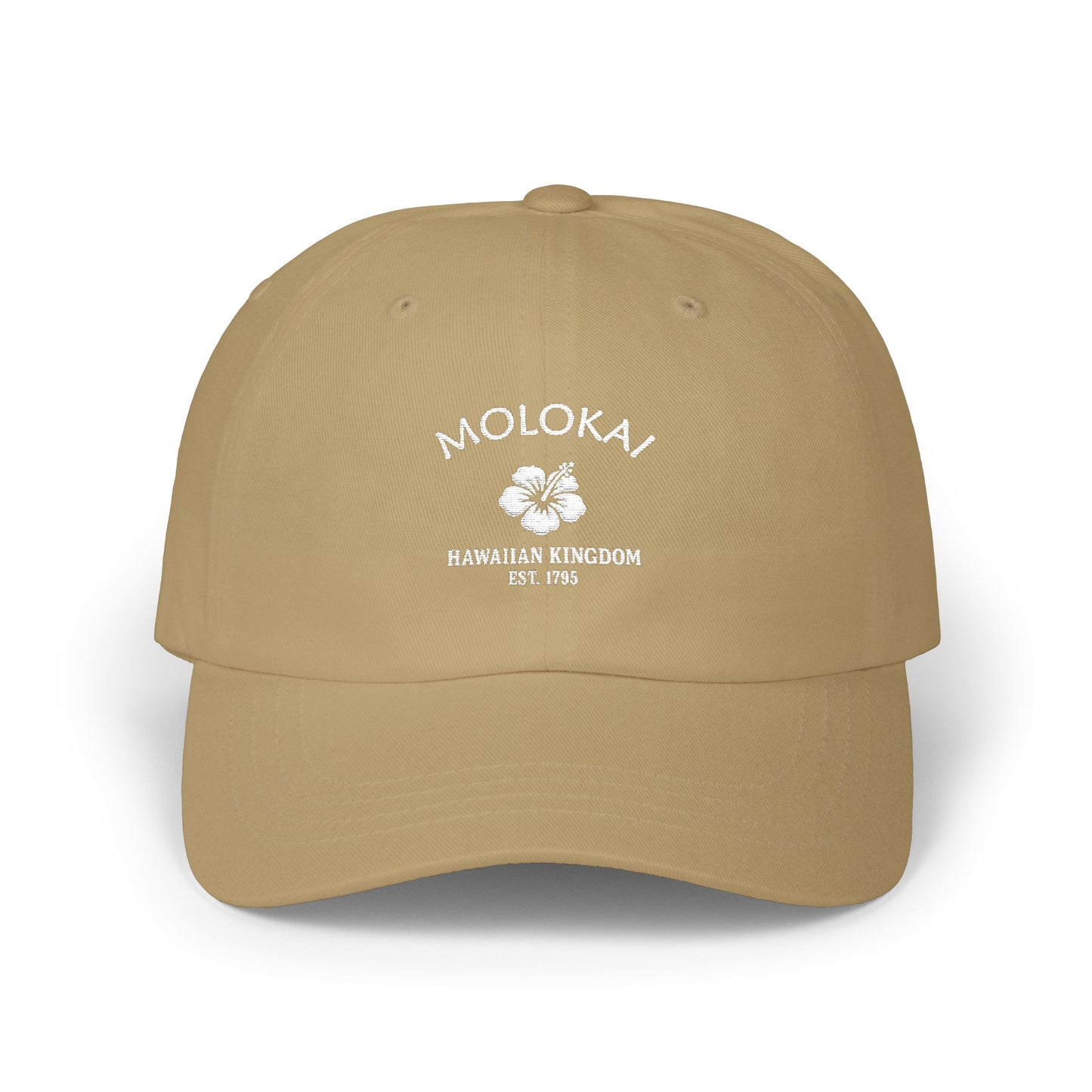
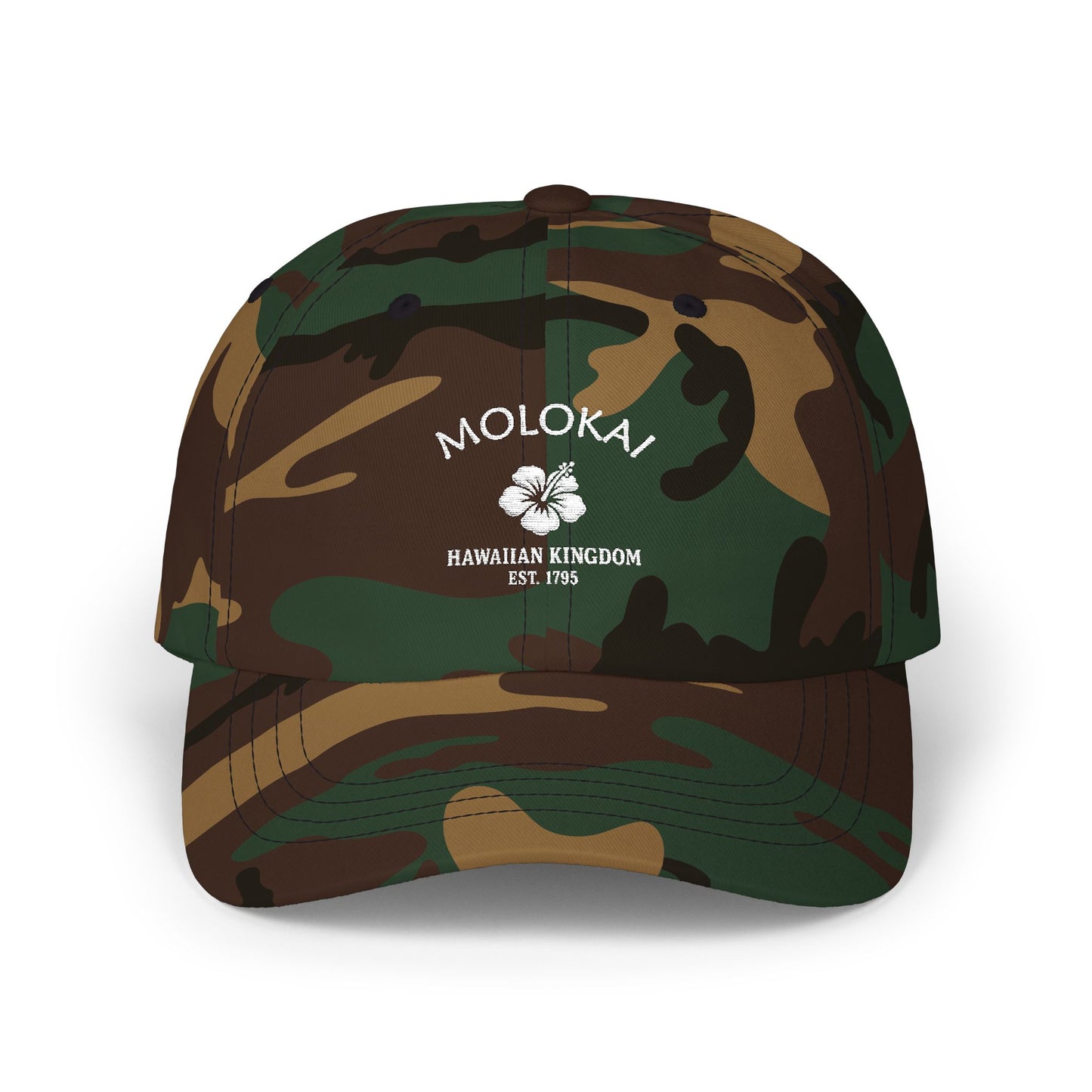
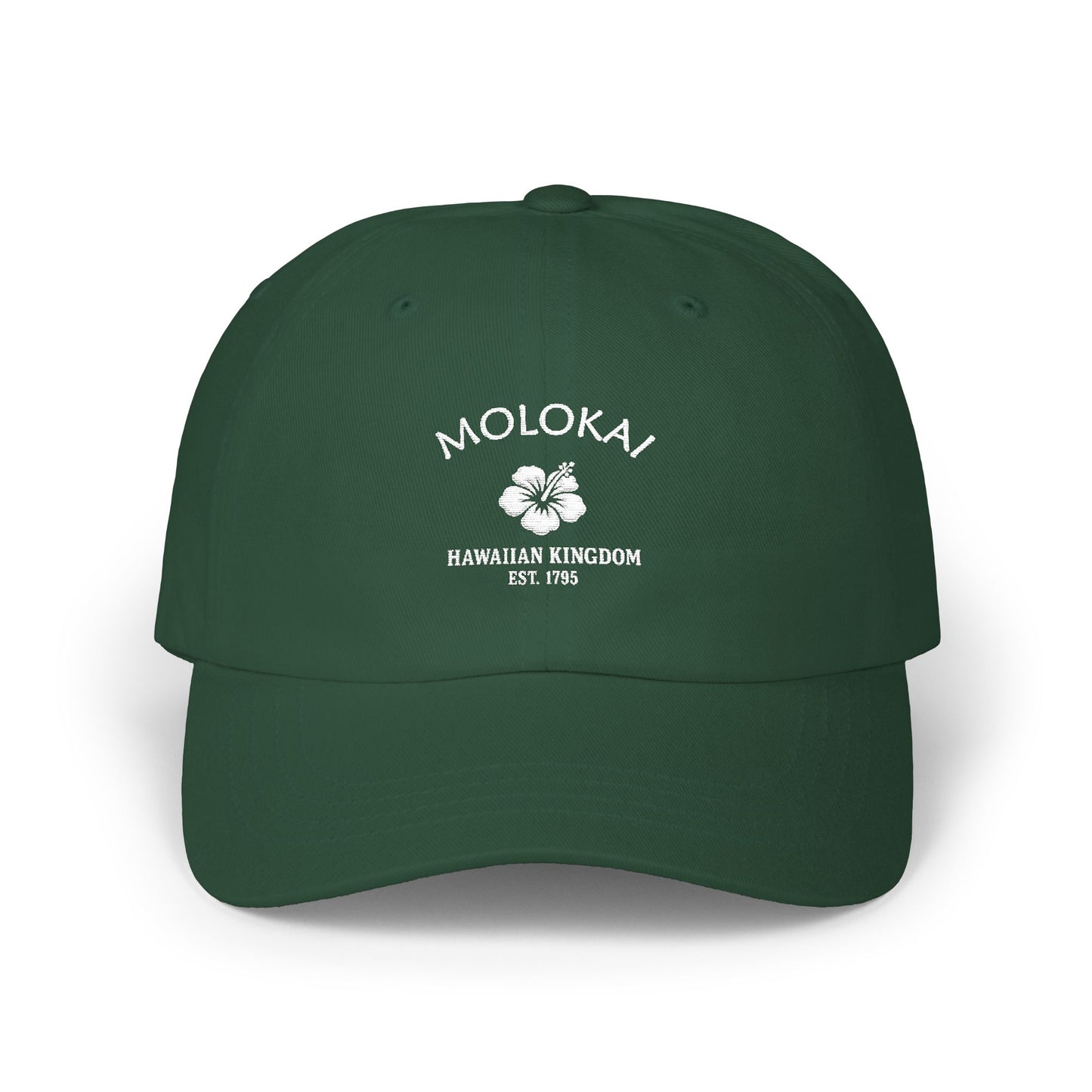
Each October that channel comes alive for the Molokaʻi Hoe, when outrigger canoes launch from the island's west end and paddle the treacherous Kaiwi Channel all the way to Oʻahu — a world-championship race that began in 1952 and keeps a seafaring tradition older than memory. The rest of the year the island simply goes on being itself: rural, unhurried, fiercely proud, the most Hawaiian place in Hawaiʻi. Our Molokaʻi designs gather that spirit into wearable form. Molokaʻi — the Friendly Isle, where old Hawaiʻi still lives beneath the tallest cliffs in the world.
The island carried its Hawaiian character straight through the upheavals of the nineteenth and twentieth centuries. In the 1860s King Kamehameha V kept a retreat near Kaunakakai and planted the royal Kapuaiwa Coconut Grove — a thousand palms, one for each warrior of his guard — that still shades the south shore. Cattle ranching and, later, pineapple plantations reshaped the plains, but Molokaʻi never urbanized. And in 1922 it became the birthplace of something else: Hawaiʻi's very first Hawaiian Home Lands homestead, at Kalamaʻula, where Native Hawaiian families returned to the soil under Prince Kūhiō's homesteading act. To this day Molokaʻi has one of the largest Hawaiian homestead communities in the islands.
Why People Visit Molokaʻi
Molokaʻi offers the rarest thing in Hawaiʻi: an island that is still genuinely itself. It pairs deep living culture — hula's birthplace, the fishponds, the homestead lands — with dramatic, near-empty coast and a pace the rest of the islands lost long ago. Quiet, rural, and proud, it is made for travelers who want the real Hawaiʻi and are willing to meet it on its own terms.
