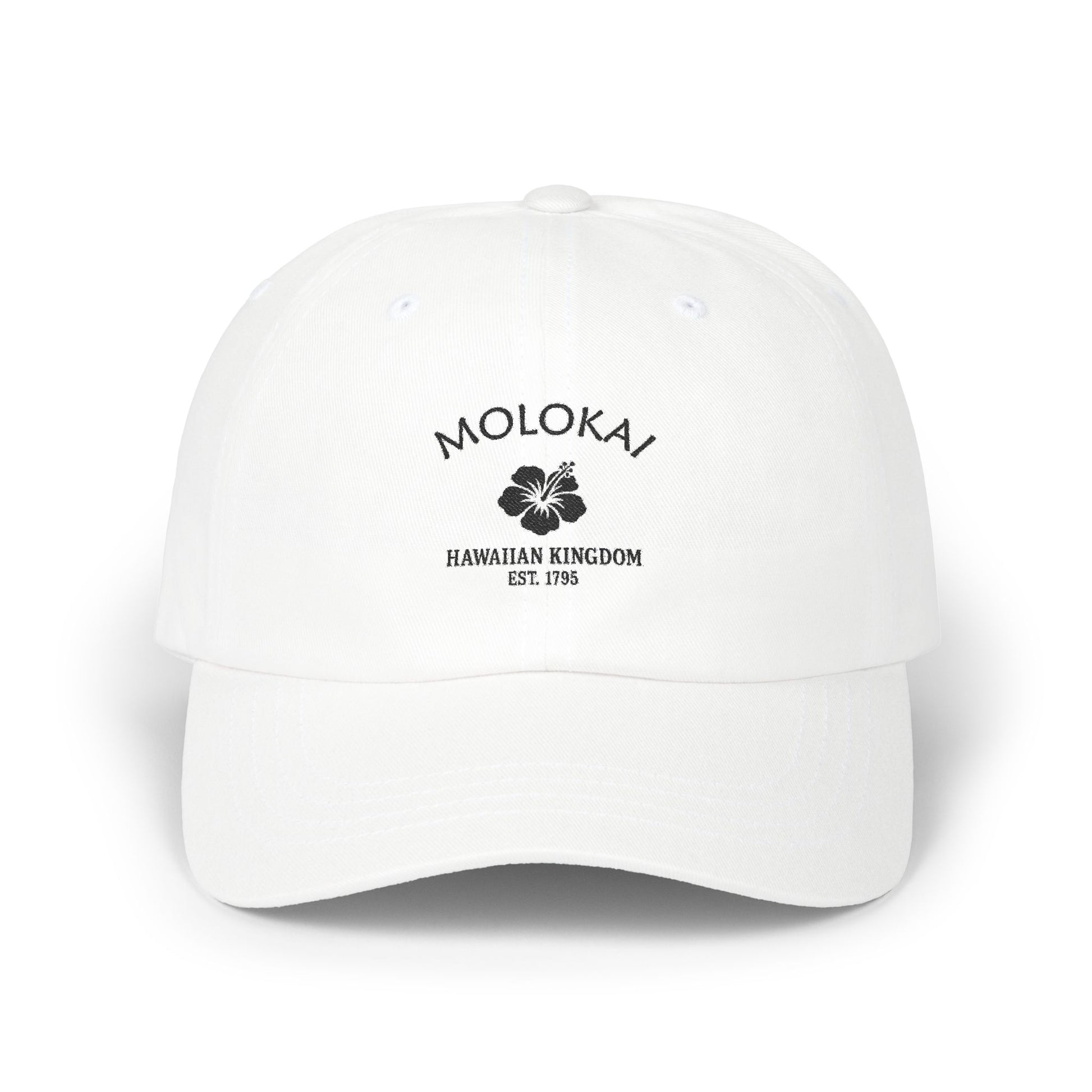
Each October that channel comes alive for the Molokaʻi Hoe, when outrigger canoes launch from the island's west end and paddle the treacherous Kaiwi Channel all the way to Oʻahu — a world-championship race that began in 1952 and keeps a seafaring tradition older than memory. The rest of the year the island simply goes on being itself: rural, unhurried, fiercely proud, the most Hawaiian place in Hawaiʻi. Our Molokaʻi designs gather that spirit into wearable form. Molokaʻi — the Friendly Isle, where old Hawaiʻi still lives beneath the tallest cliffs in the world.
The land matches the depth of the culture. Molokaʻi is the fifth-largest Hawaiian island, roughly thirty-eight miles long, set between Oʻahu and Maui. Its windward north coast rises into the tallest sea cliffs in the world — a wall of green plunging some three thousand six hundred feet and more straight to the Pacific, recorded in the Guinness book and sheltering deep, near-roadless valleys behind it. The dry west end runs the other way entirely, into the soft pale sand of Papohaku, one of Hawaiʻi's largest beaches, often empty for its full length. Lush to windward, dry to leeward, rural everywhere: this is the closest thing left to old Hawaiʻi.
Why People Visit Molokaʻi
Molokaʻi offers the rarest thing in Hawaiʻi: an island that is still genuinely itself. It pairs deep living culture — hula's birthplace, the fishponds, the homestead lands — with dramatic, near-empty coast and a pace the rest of the islands lost long ago. Quiet, rural, and proud, it is made for travelers who want the real Hawaiʻi and are willing to meet it on its own terms.
