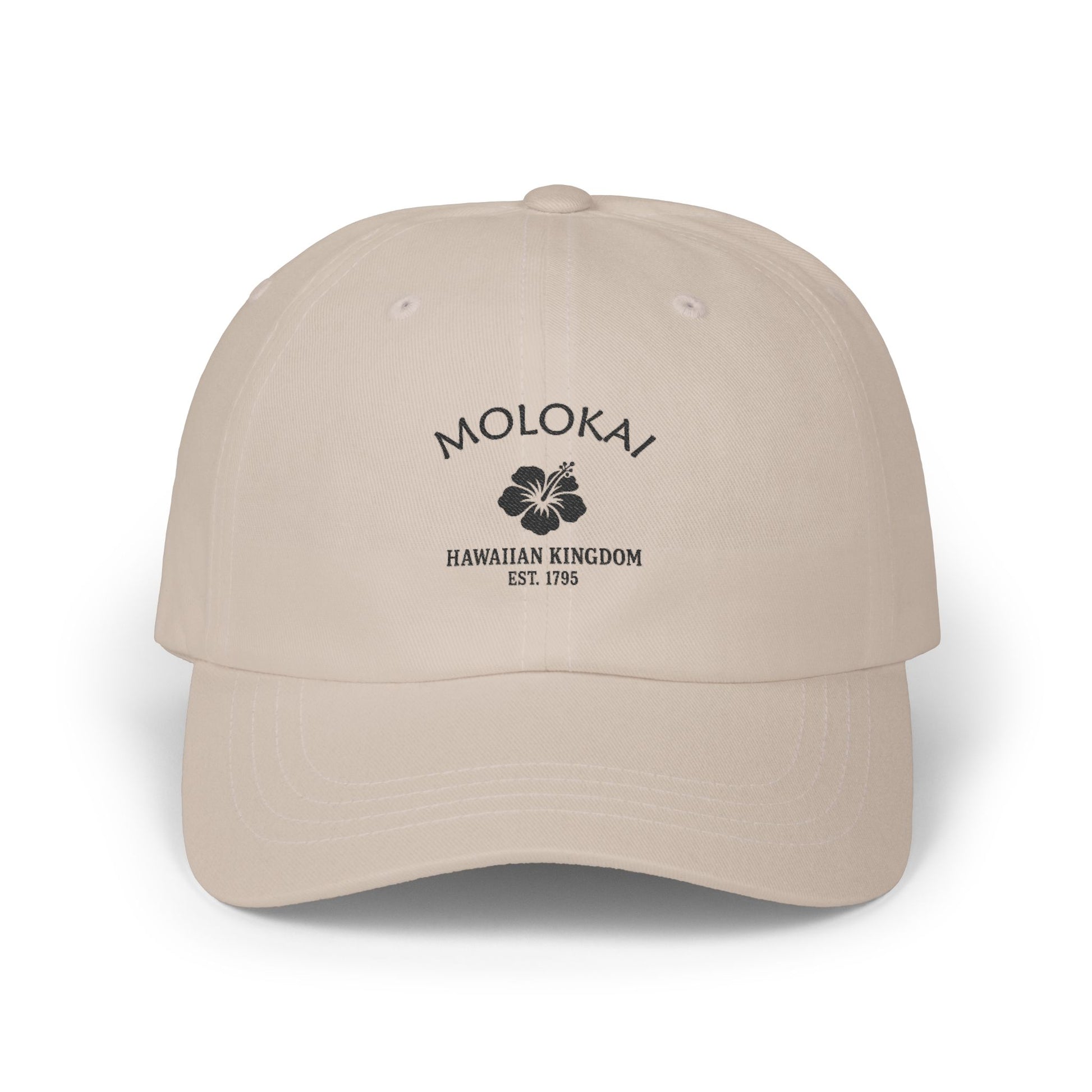
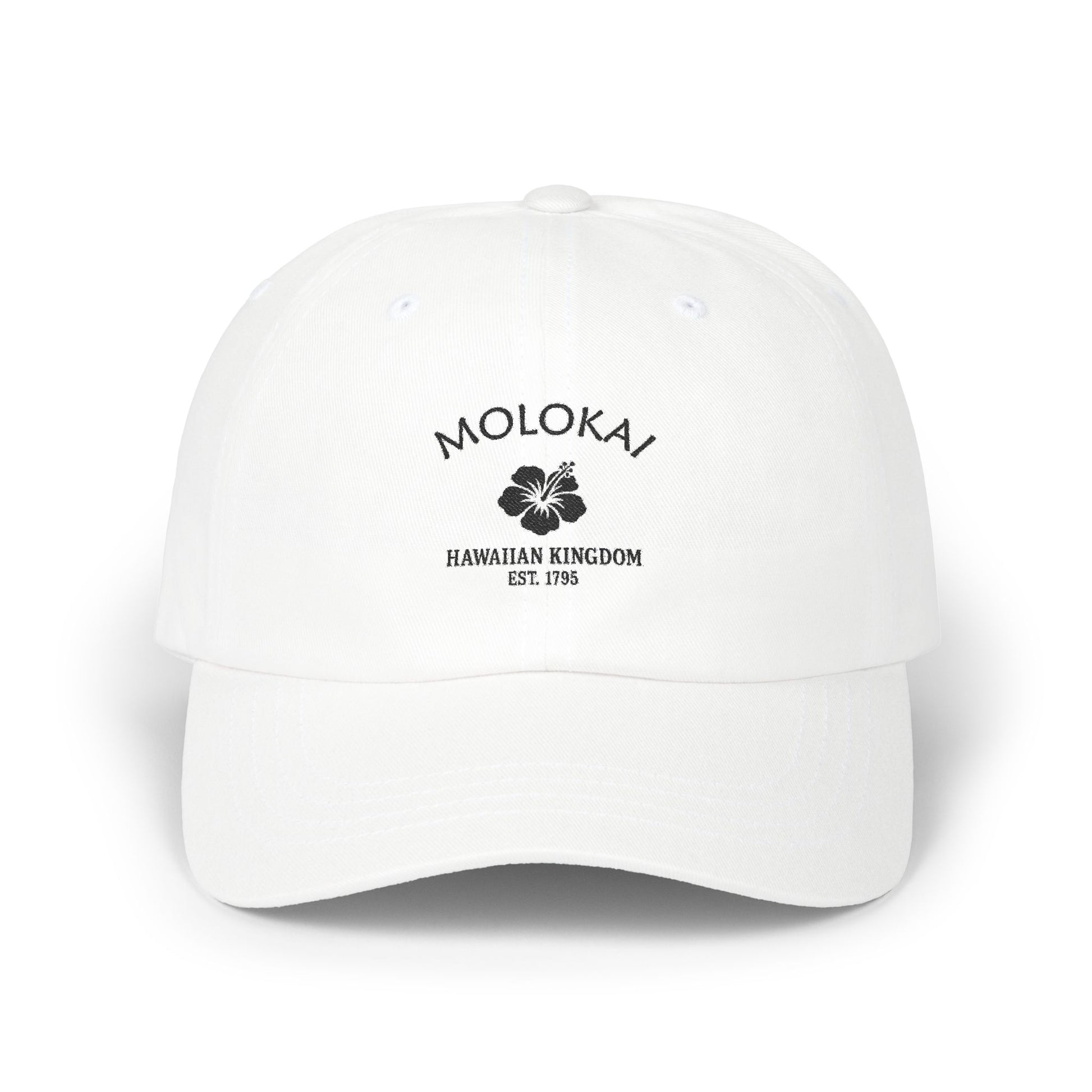
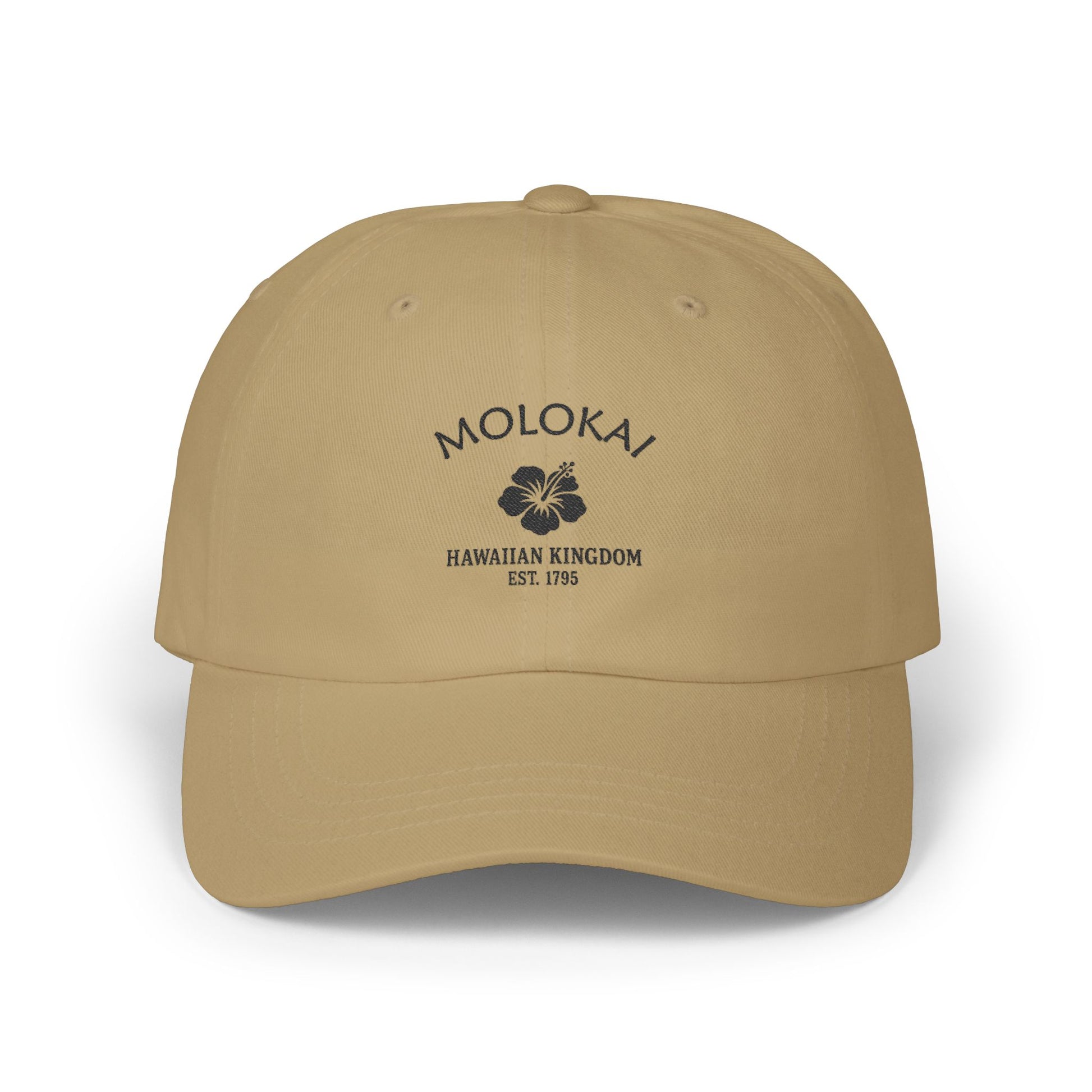
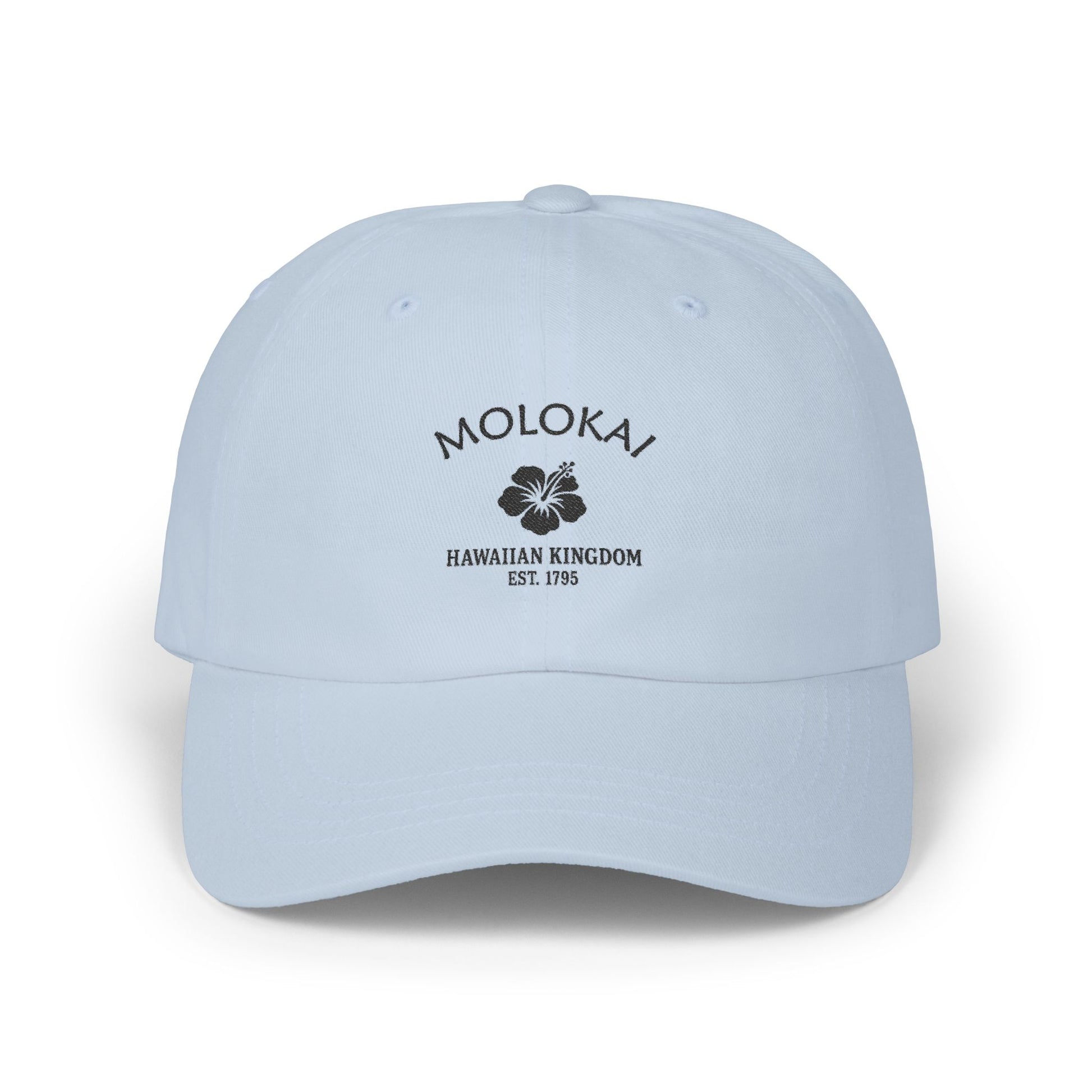
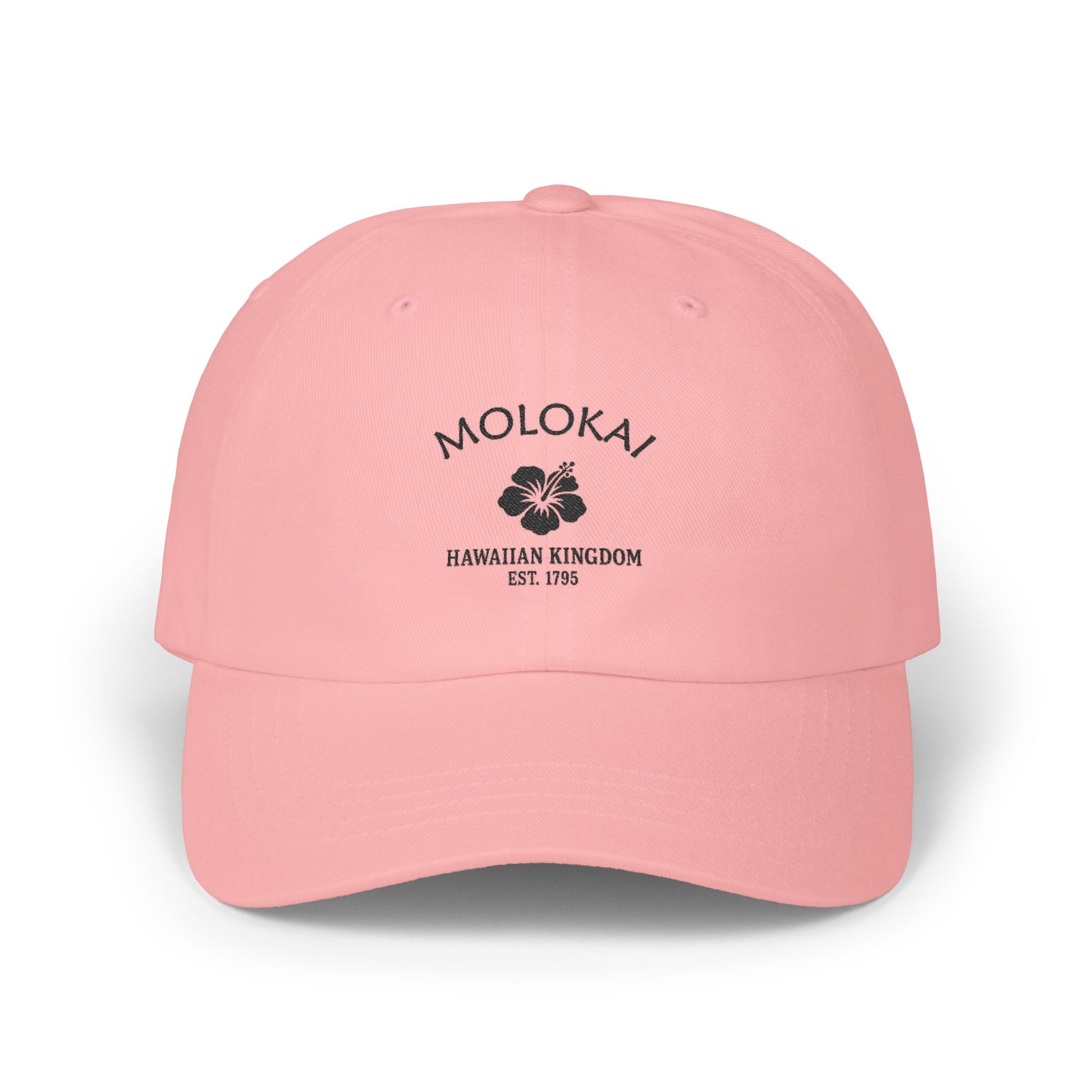
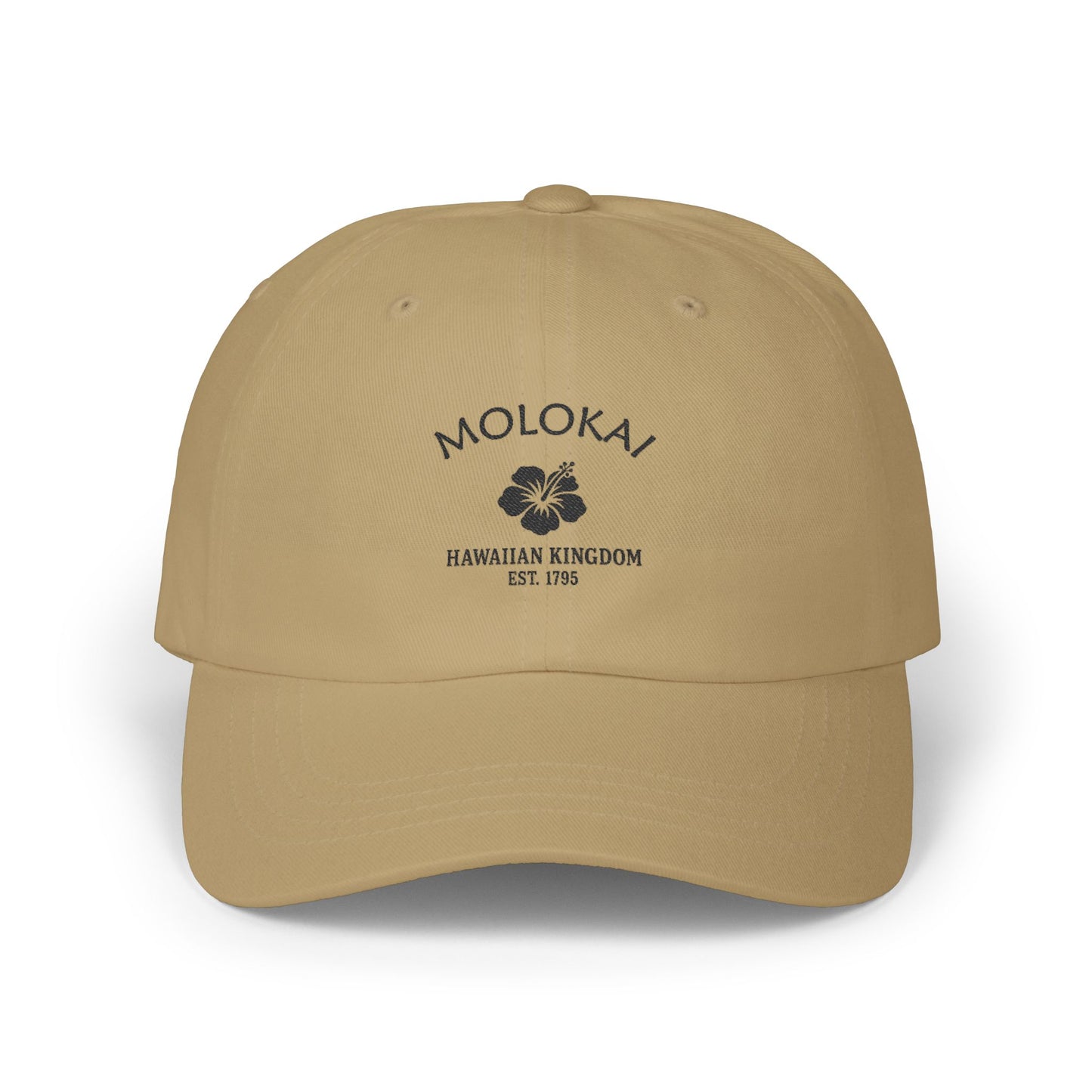
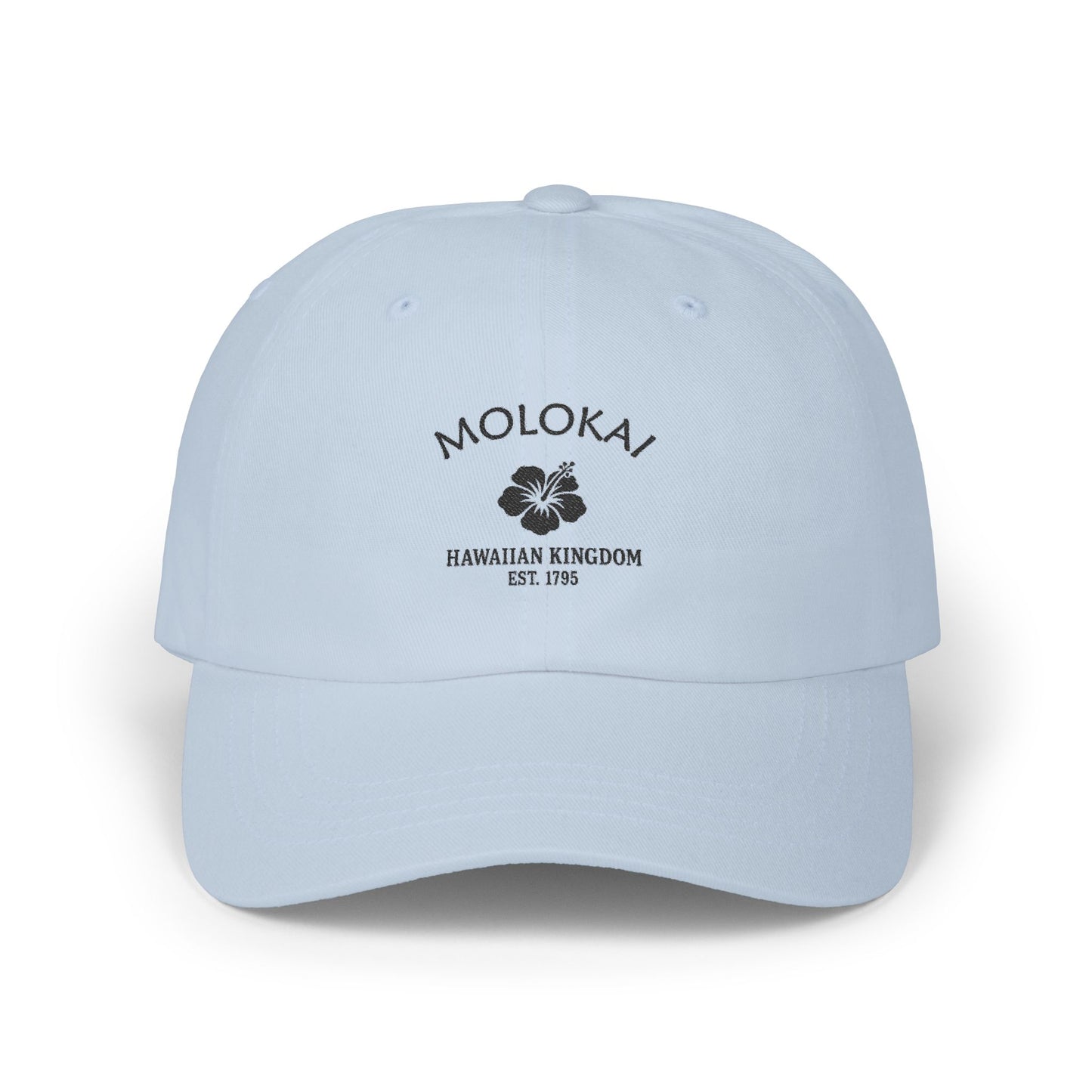
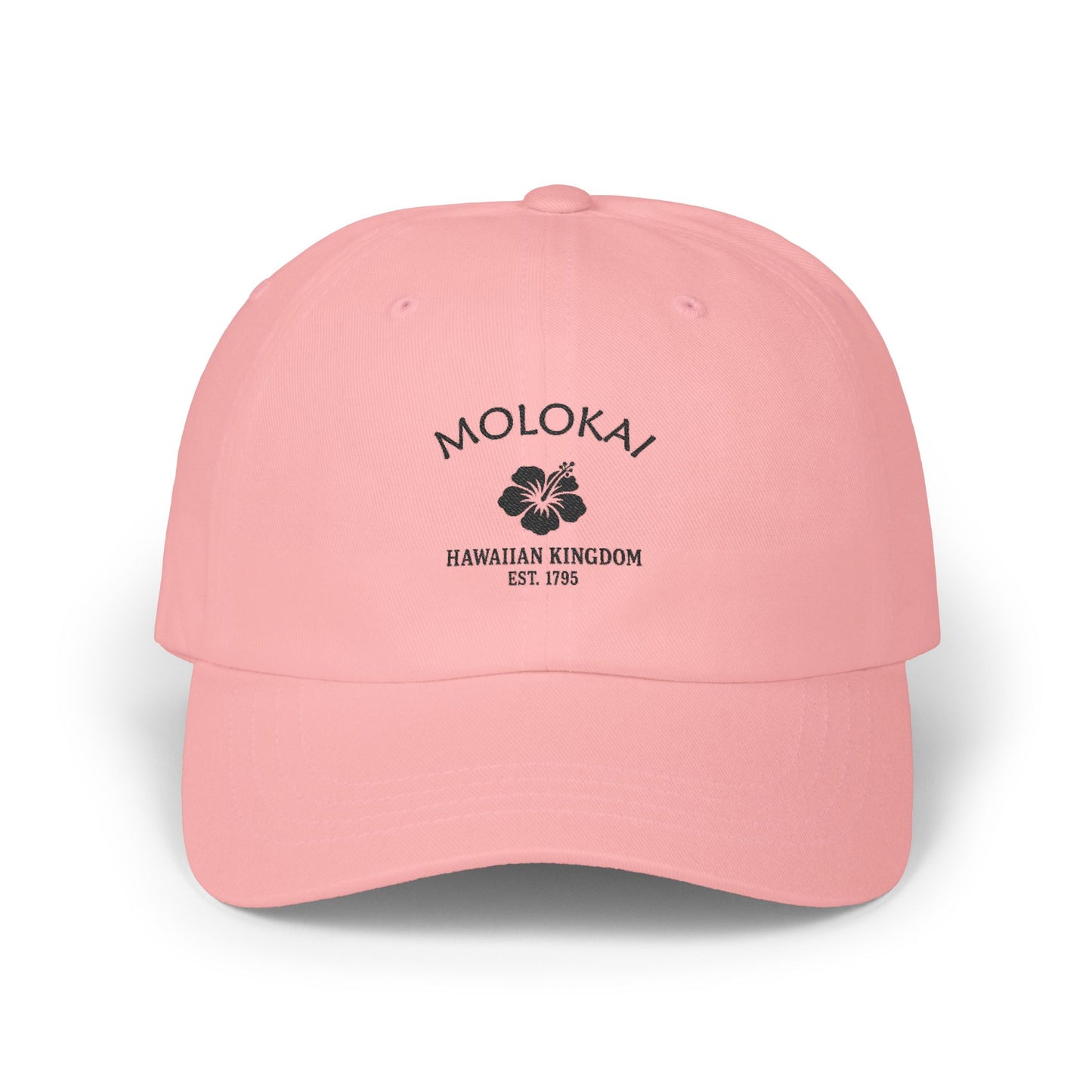
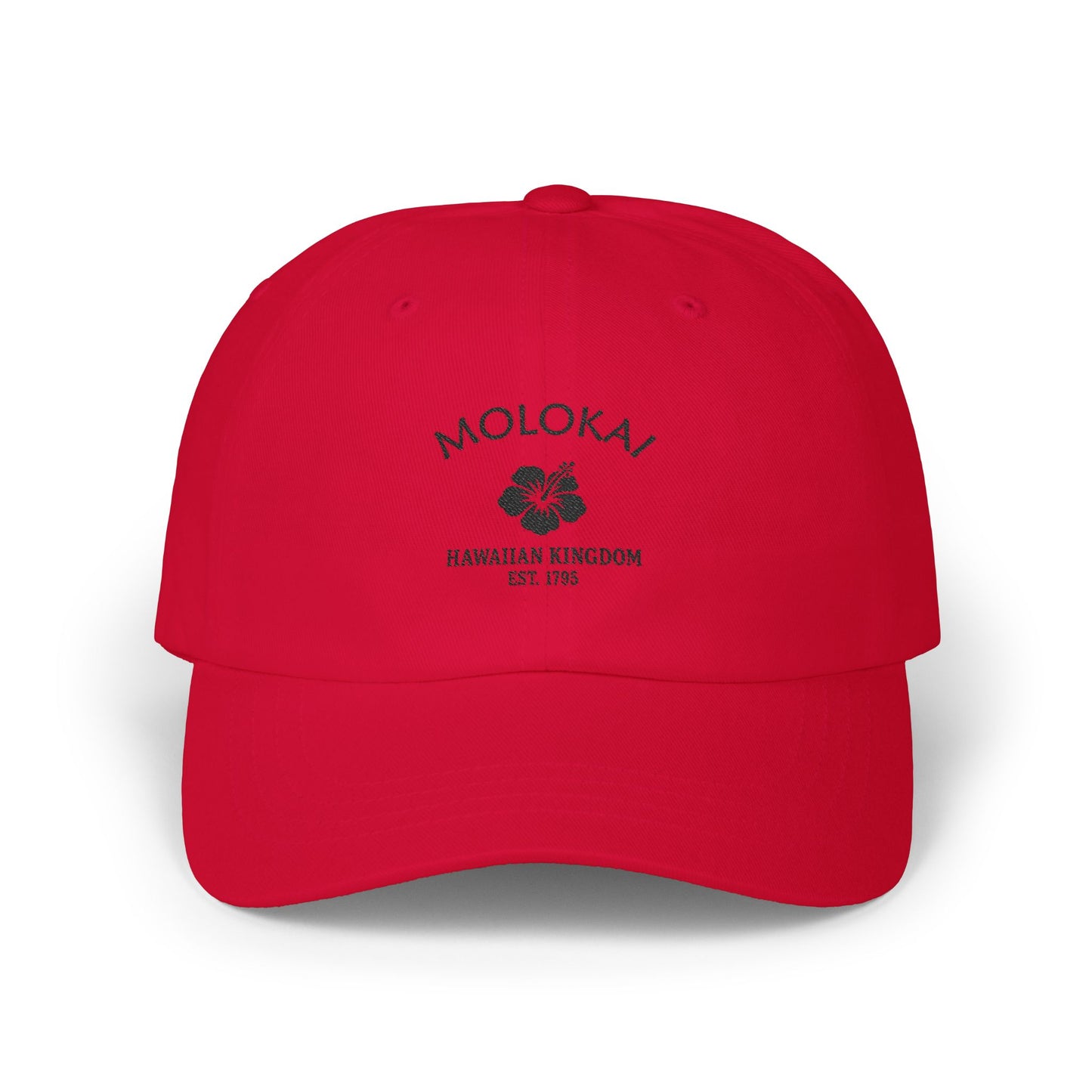
Our Molokaʻi logo carries the Hawaiian hibiscus over "Hawaiian Kingdom · Est. 1795," the shared emblem of every Merlin Classics Hawaiʻi place, marking the 1795 unification of the islands under Kamehameha. Printed in clean retro black-and-white like an old crate label, the hibiscus stands for the islands as a whole; what makes this one Molokaʻi is everything around it — the taro loʻi and the south-shore fishponds, the tallest cliffs in the world, the outrigger crews who cross the channel each fall, and the deep quiet of an island that chose to stay itself.
The island carried its Hawaiian character straight through the upheavals of the nineteenth and twentieth centuries. In the 1860s King Kamehameha V kept a retreat near Kaunakakai and planted the royal Kapuaiwa Coconut Grove — a thousand palms, one for each warrior of his guard — that still shades the south shore. Cattle ranching and, later, pineapple plantations reshaped the plains, but Molokaʻi never urbanized. And in 1922 it became the birthplace of something else: Hawaiʻi's very first Hawaiian Home Lands homestead, at Kalamaʻula, where Native Hawaiian families returned to the soil under Prince Kūhiō's homesteading act. To this day Molokaʻi has one of the largest Hawaiian homestead communities in the islands.
Why People Visit Molokaʻi
Molokaʻi offers the rarest thing in Hawaiʻi: an island that is still genuinely itself. It pairs deep living culture — hula's birthplace, the fishponds, the homestead lands — with dramatic, near-empty coast and a pace the rest of the islands lost long ago. Quiet, rural, and proud, it is made for travelers who want the real Hawaiʻi and are willing to meet it on its own terms.
