






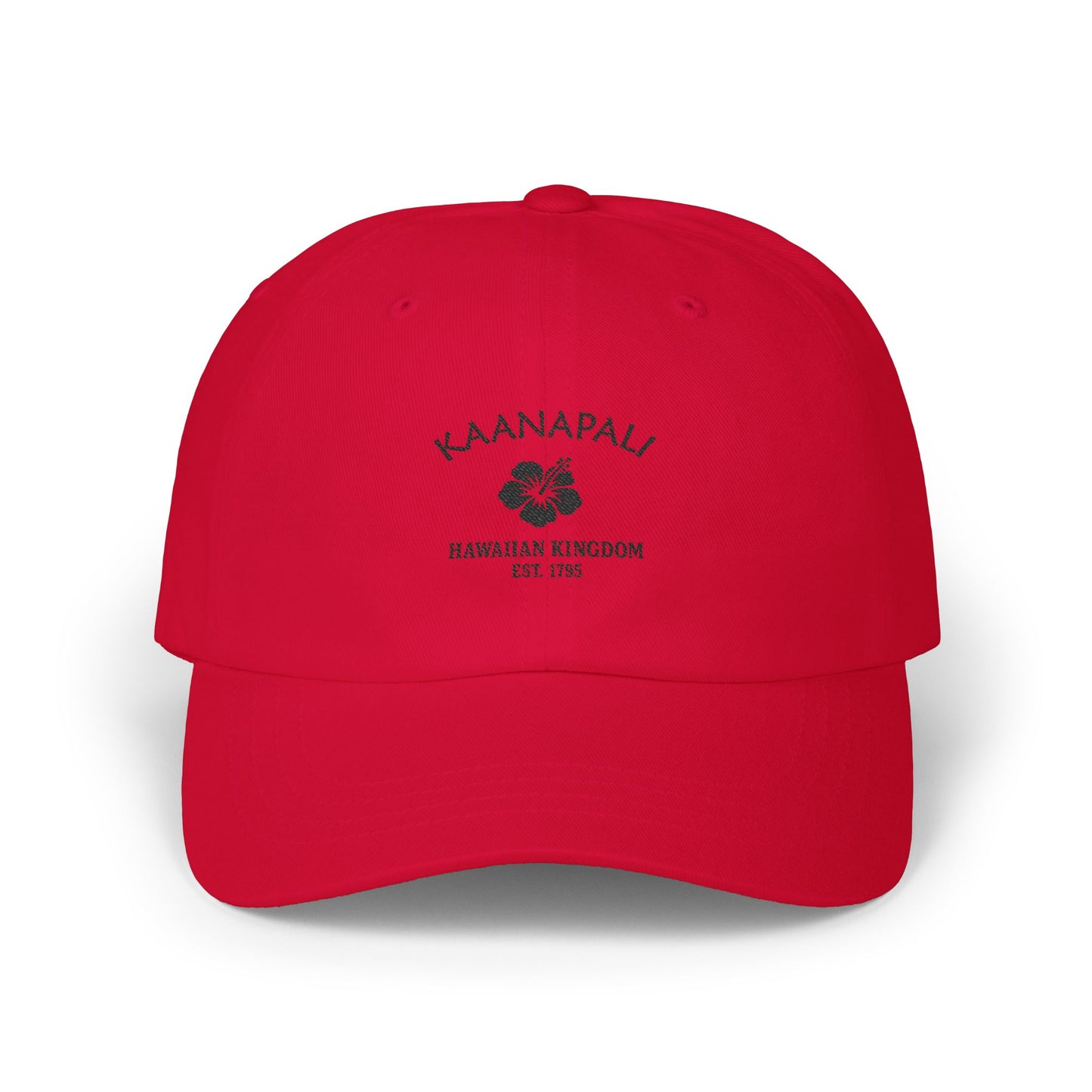
Today Kāʻanapali is West Maui’s resort coast — a long, bright beach beneath green mountains, the islands in view and whales offshore in winter — but its story runs deeper than the hotels: royal land and sacred ground, a century of sugar, and the little steam train that still runs through the island’s memory. Our Kāʻanapali designs gather that into wearable form. Kāʻanapali, Maui — three miles of golden sand below the West Maui Mountains, where black lava meets the sunset sea.
What’s with the Sugar Cane Train? Kāʻanapali’s beach was famous for sugar long before it was famous for resorts. From the 1890s, narrow-gauge rail lines threaded the cane fields above this shore — part of more than two hundred miles of plantation track on Maui alone — hauling harvested cane down to the Pioneer Mill in Lahaina, a couple of miles south. Trucks took over the work by the 1950s, but in 1969 a six-mile stretch of that old right-of-way was revived as the Lahaina, Kāʻanapali & Pacific Railroad — the Sugar Cane Train. For decades its vintage steam engines pulled open-air coaches between Lahaina and Puʻukoliʻi, just north of here, whistling past the cane and across a tall curved wooden trestle, with Lānaʻi and Molokaʻi spread across the water and the West Maui Mountains rising behind. Millions of visitors rode it before it fell quiet.
Why People Visit Kāʻanapali
Kāʻanapali offers the classic West Maui beach day: warm, calm water, a long walkable shore, mountains behind and islands in view. It pairs an easy resort coast with deep heritage — royal land, sacred ground, a century of sugar, and the memory of the Sugar Cane Train. It is sunny, scenic, and welcoming, with year-round appeal.
