










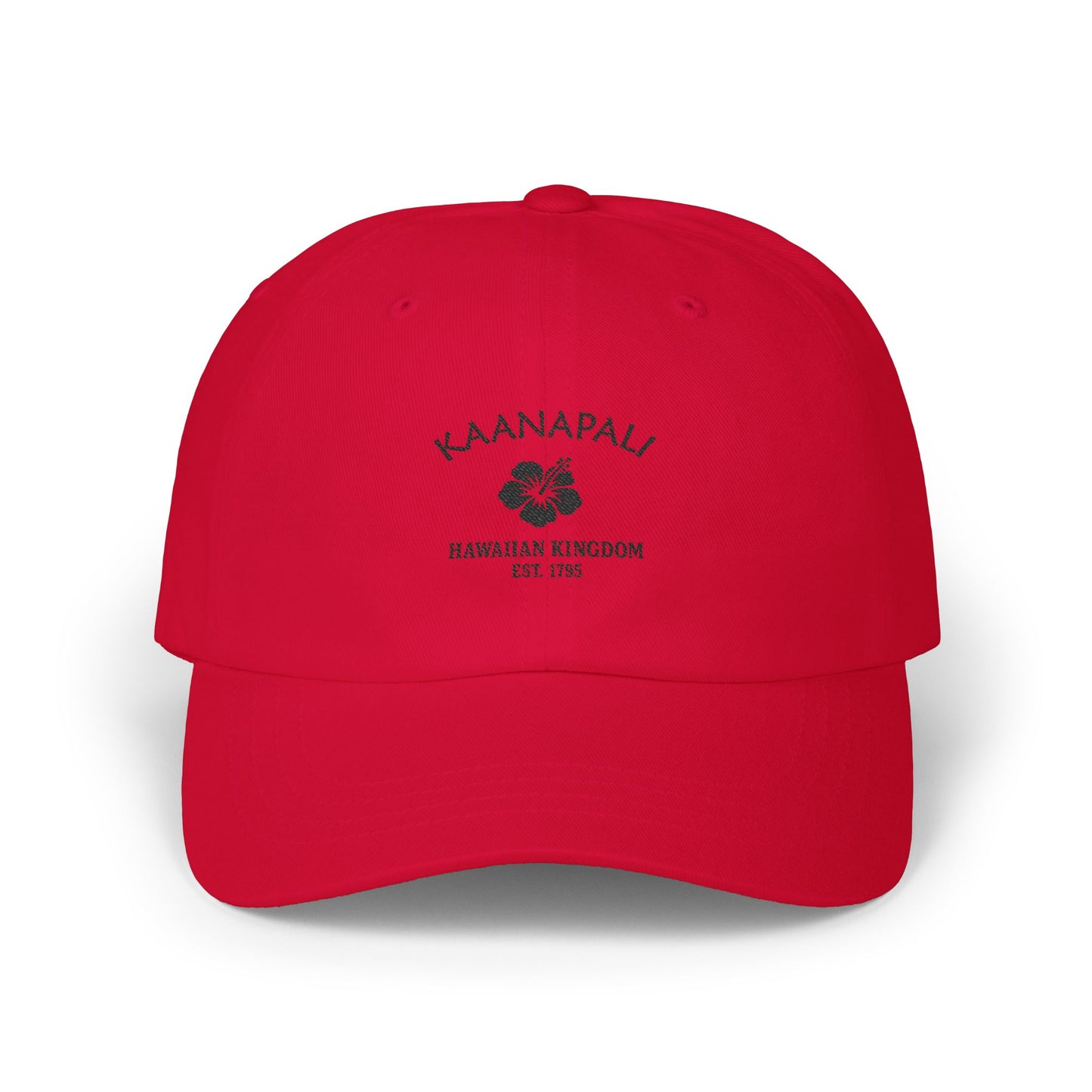
Our Kāʻanapali logo carries the Hawaiian hibiscus over “Hawaiian Kingdom · Est. 1795,” the shared emblem of every Merlin Classics Hawaiʻi place, marking the 1795 unification of the islands under Kamehameha. Printed in clean retro black-and-white like an old travel decal, the hibiscus stands for the islands as a whole; what makes this one Kāʻanapali is everything around it — the black rock and the golden sand, the cane that once ran to the sea, and the steam train that carried its memory along the shore.
Long before the cane and the hotels, this was storied West Maui ground. Kāʻanapali was an ancient Hawaiian district of fishing villages and royal lands, set beneath the steep green wall of the West Maui Mountains — Mauna Kahalawai. In the sixteenth century the chief Piʻilani unified West Maui, binding its four bays together as Nā Hono A Piʻilani, and in 1802 Kamehameha I drew up his war fleet on this coast as he completed the conquest that made him king of all the islands. The wide beach travelers prize today was a gathering place and a training ground for generations of Hawaiians.
Why People Visit Kāʻanapali
Kāʻanapali offers the classic West Maui beach day: warm, calm water, a long walkable shore, mountains behind and islands in view. It pairs an easy resort coast with deep heritage — royal land, sacred ground, a century of sugar, and the memory of the Sugar Cane Train. It is sunny, scenic, and welcoming, with year-round appeal.
