


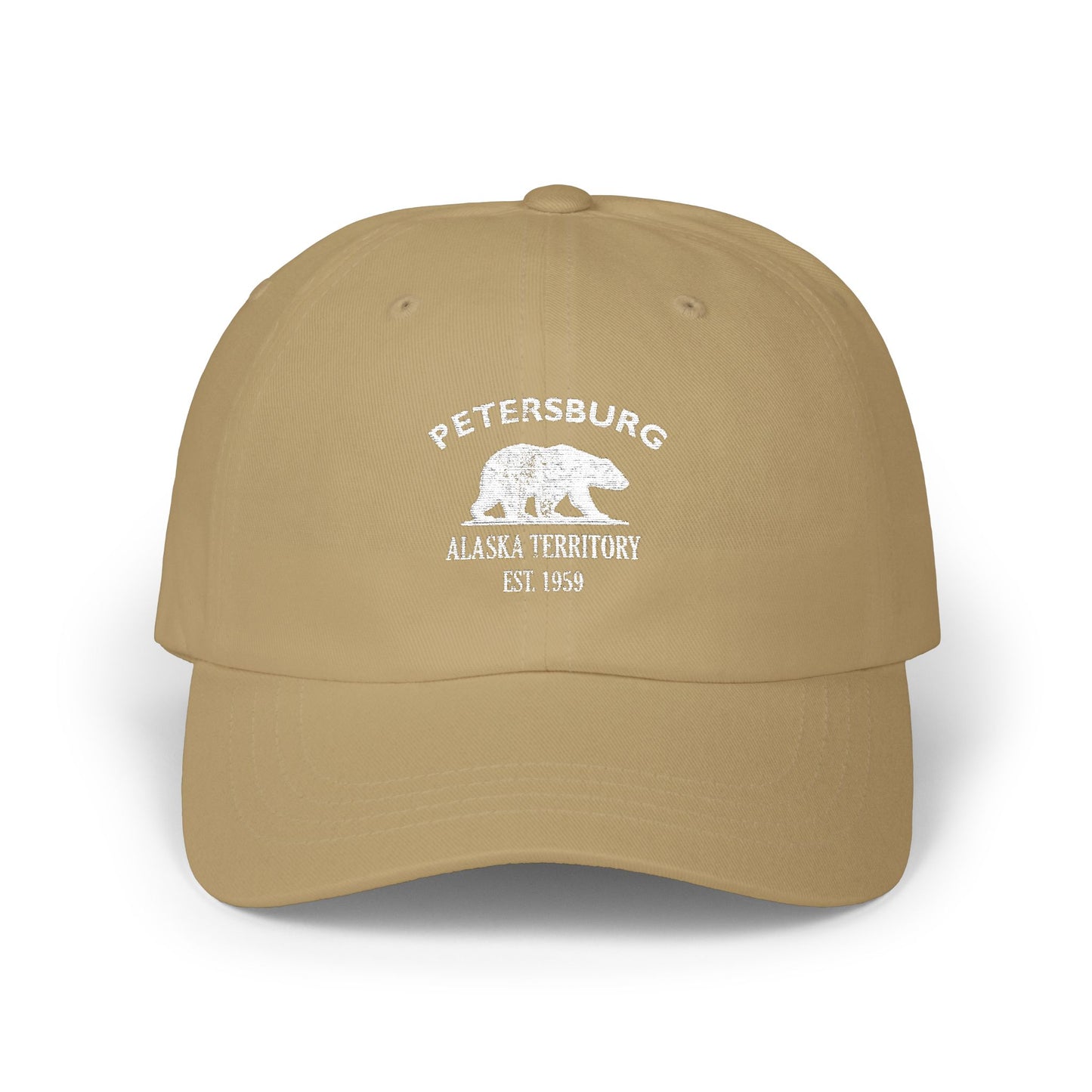
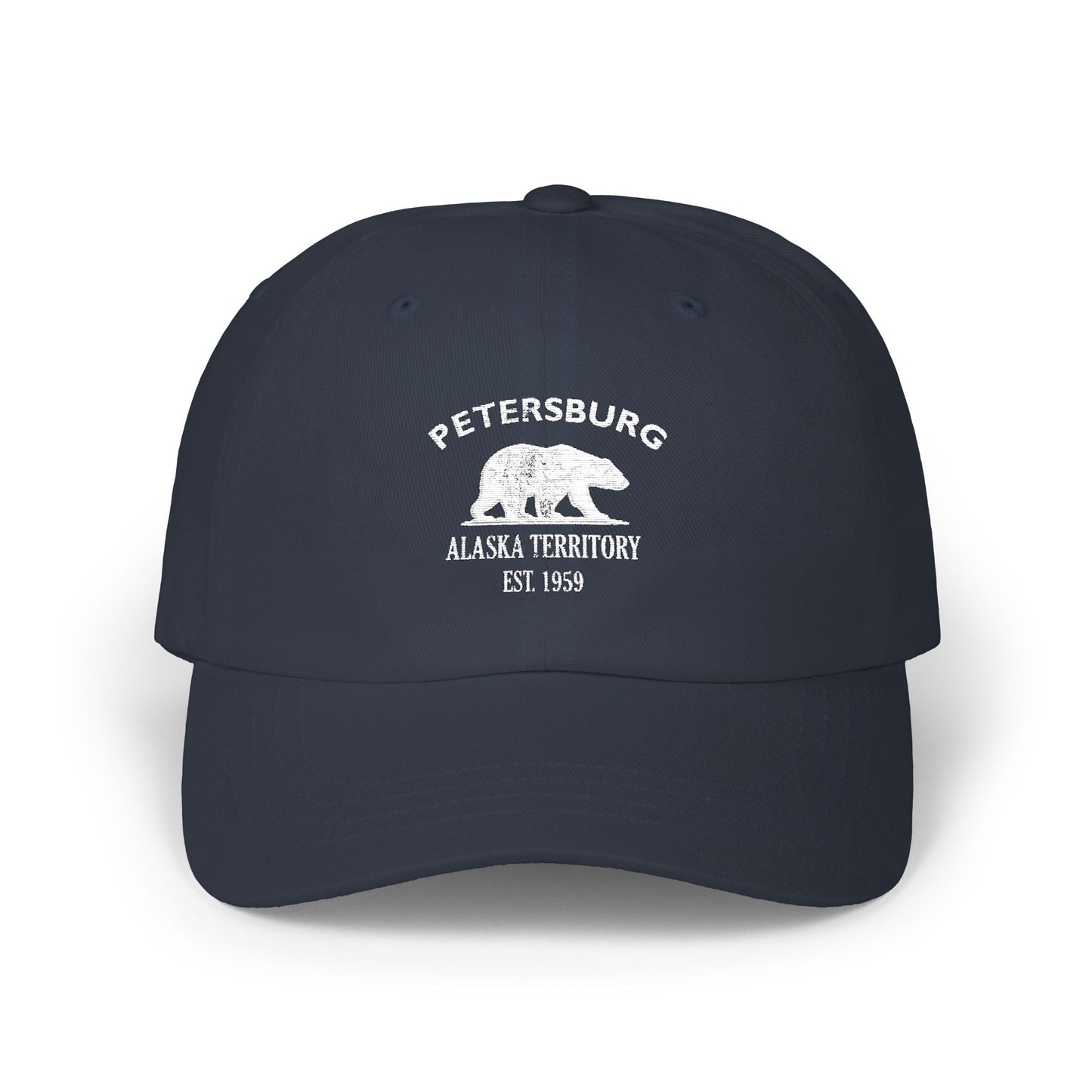
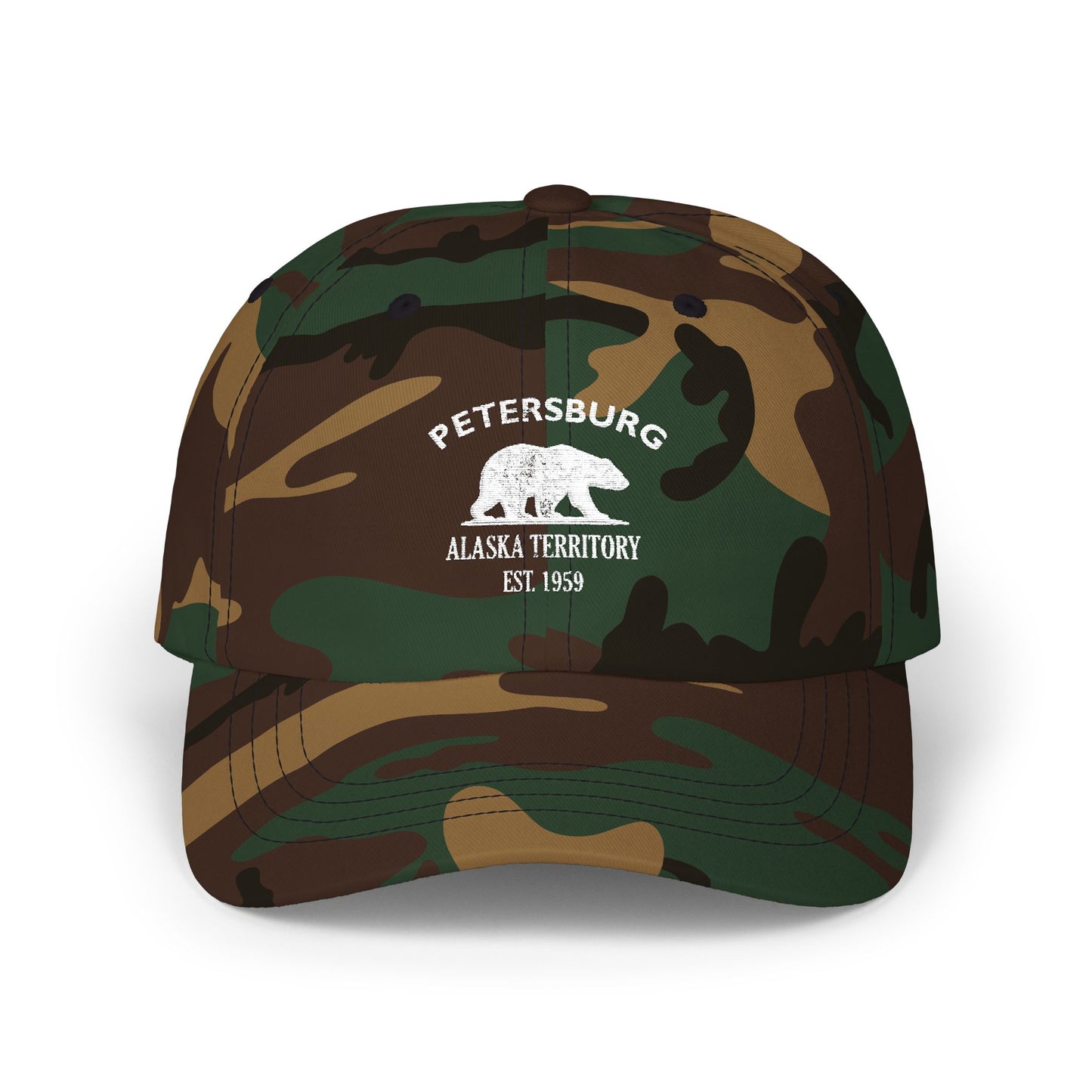
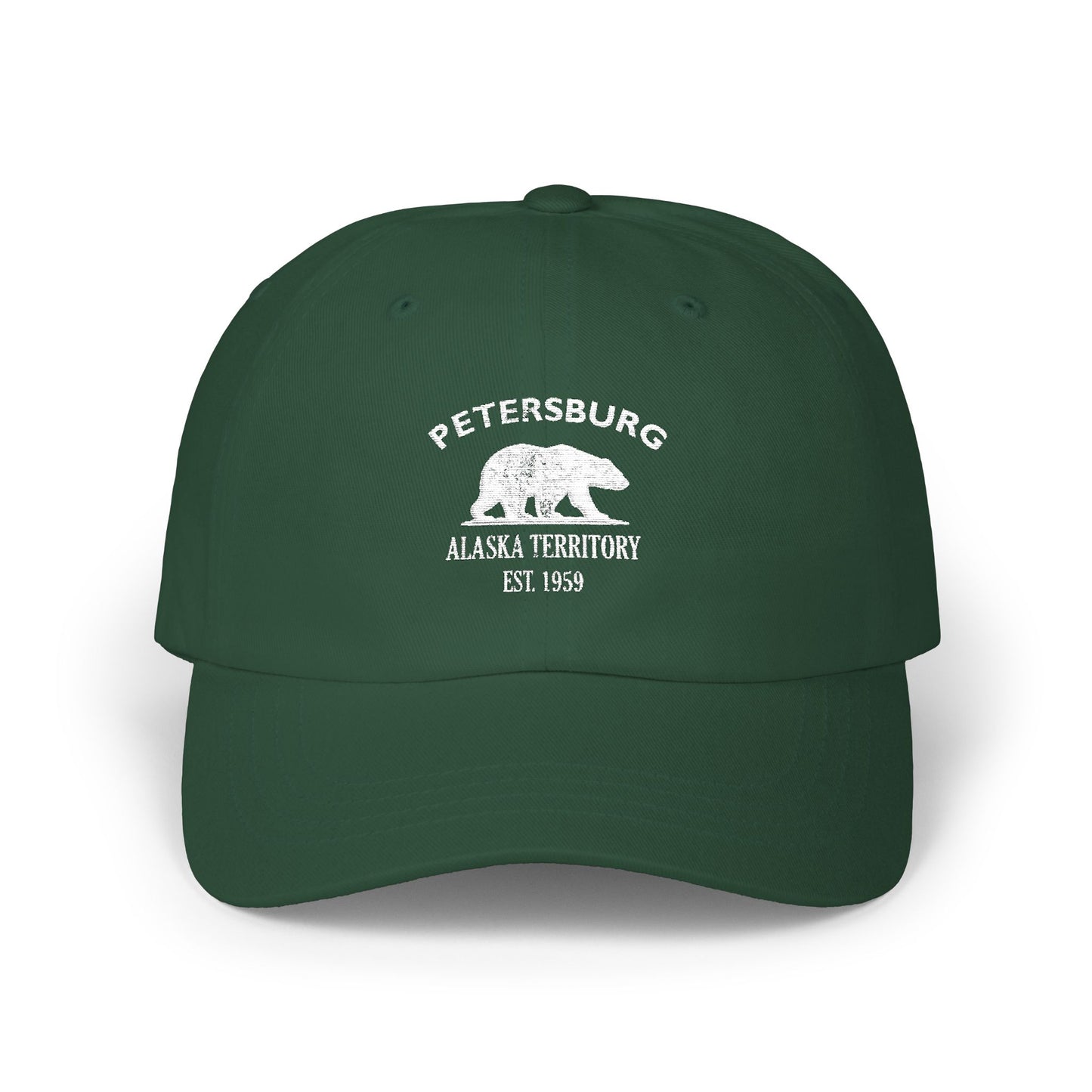
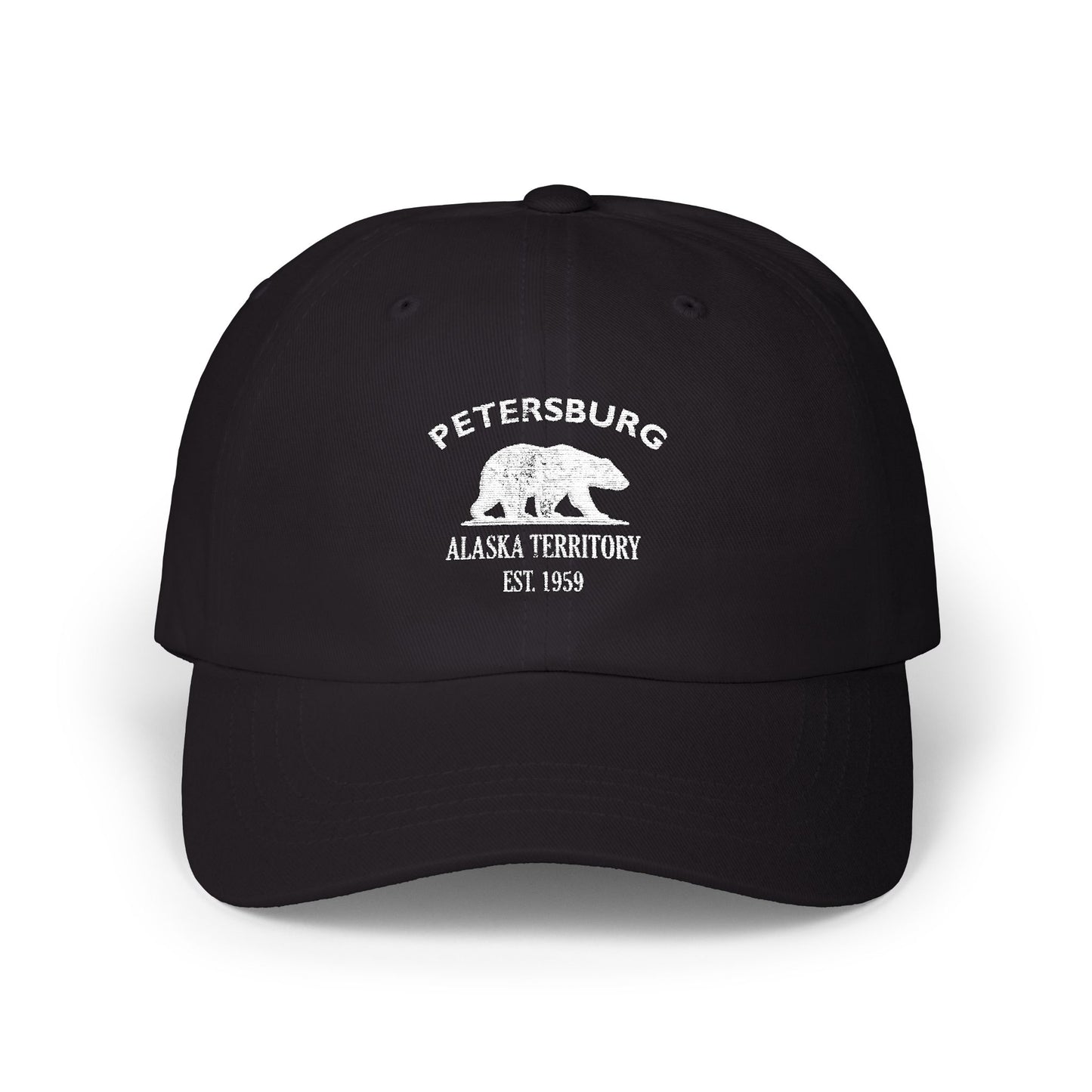
Our Petersburg retro logo features the Alaska bear — a frontier emblem of the territorial north, rendered distressed in black-and-white with a hand-printed, crate-stamp feel that suits a town that has always packed fish out of its own harbor. The bear stands square, walking the shore the way a working bear actually walks, and the "Alaska Territory" framing and "Est. 1959" date together honor the long frontier era and the statehood that finally followed it. On a tee, a cap, or a wall print, the bear reads as what Petersburg actually is: a working Alaska fishing town that built its own hall, raised its own children on the waterfront, and never gave the Norwegian language up.
Walk Petersburg today and the layers stack on one waterfront. The Sons of Norway Hall is still there on its pilings, its shutters still rosemaling-painted, still the center of the town's Norwegian cultural life. The Valhalla — a life-sized Viking ship replica — sits in Bojer Wikan Fishermen's Memorial Park at the south end of Sing Lee Alley, and every May around Syttende Mai, Norwegian Constitution Day, the Little Norway Festival "floats" the Valhalla through the streets. The harbor still has the largest home-based halibut fleet in Alaska. The Wrangell Narrows still threads north-to-south through it all, with the Tongass National Forest standing in dark green walls along both sides. Alaska's Little Norway, on the Wrangell Narrows since 1897.
Why People Visit Petersburg Alaska
Petersburg is the rare Alaska town where the heritage is real and the working harbor is still working. Visitors come for Alaska's Little Norway — the 1912 Sons of Norway Hall, the rosemaling, the Little Norway Festival, the Norwegian-American fishing-town identity that hasn't softened into a souvenir. They come for the Wrangell Narrows and the boat day to LeConte Glacier. They come for the largest home-based halibut fleet in Alaska tied up at the harbor a block from downtown. And they come because Petersburg is what a working Southeast Alaska town looks like when the cannery has never stopped running and the locals still mostly know each other. It is compact, walkable, Norwegian, working, and unmistakably Alaska.
