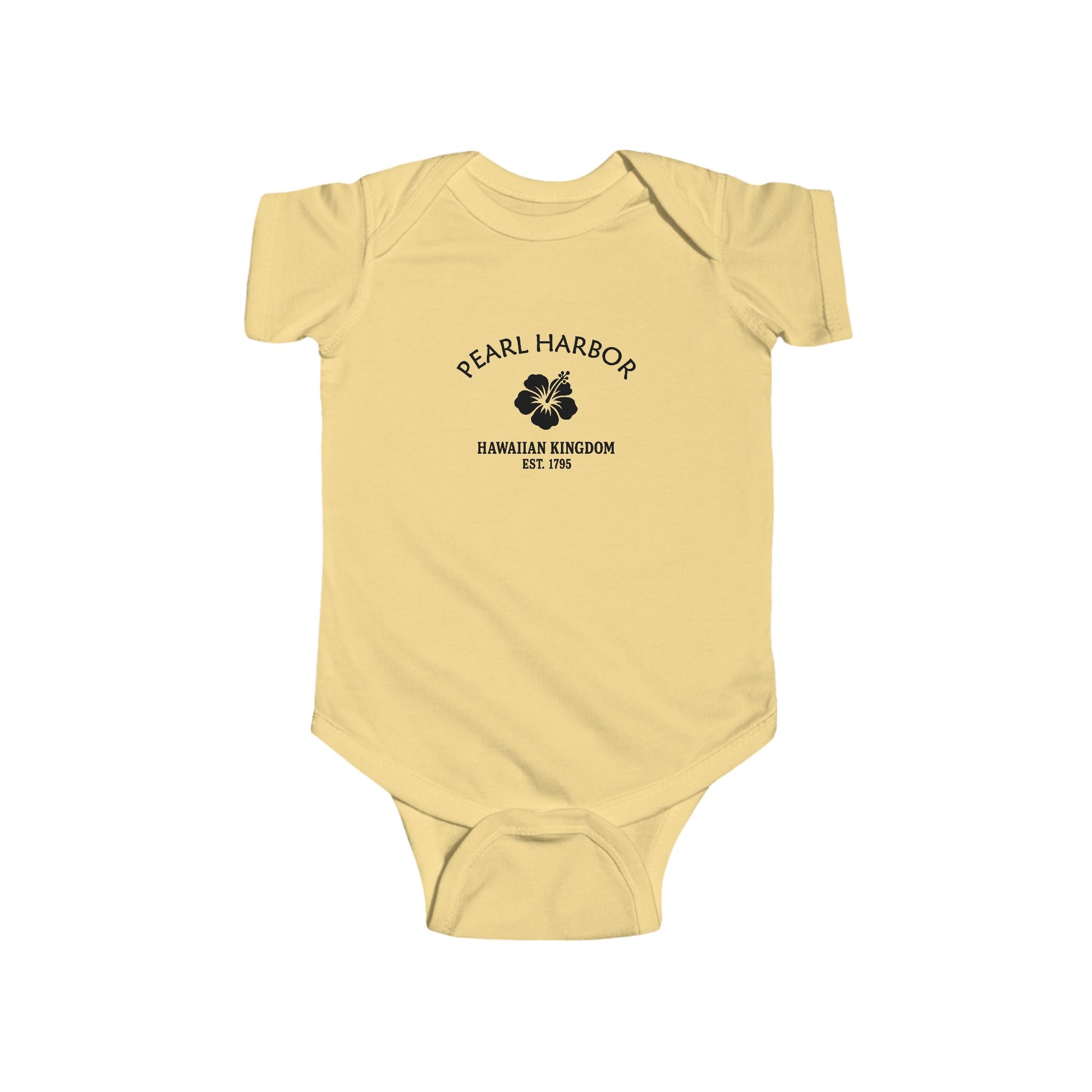
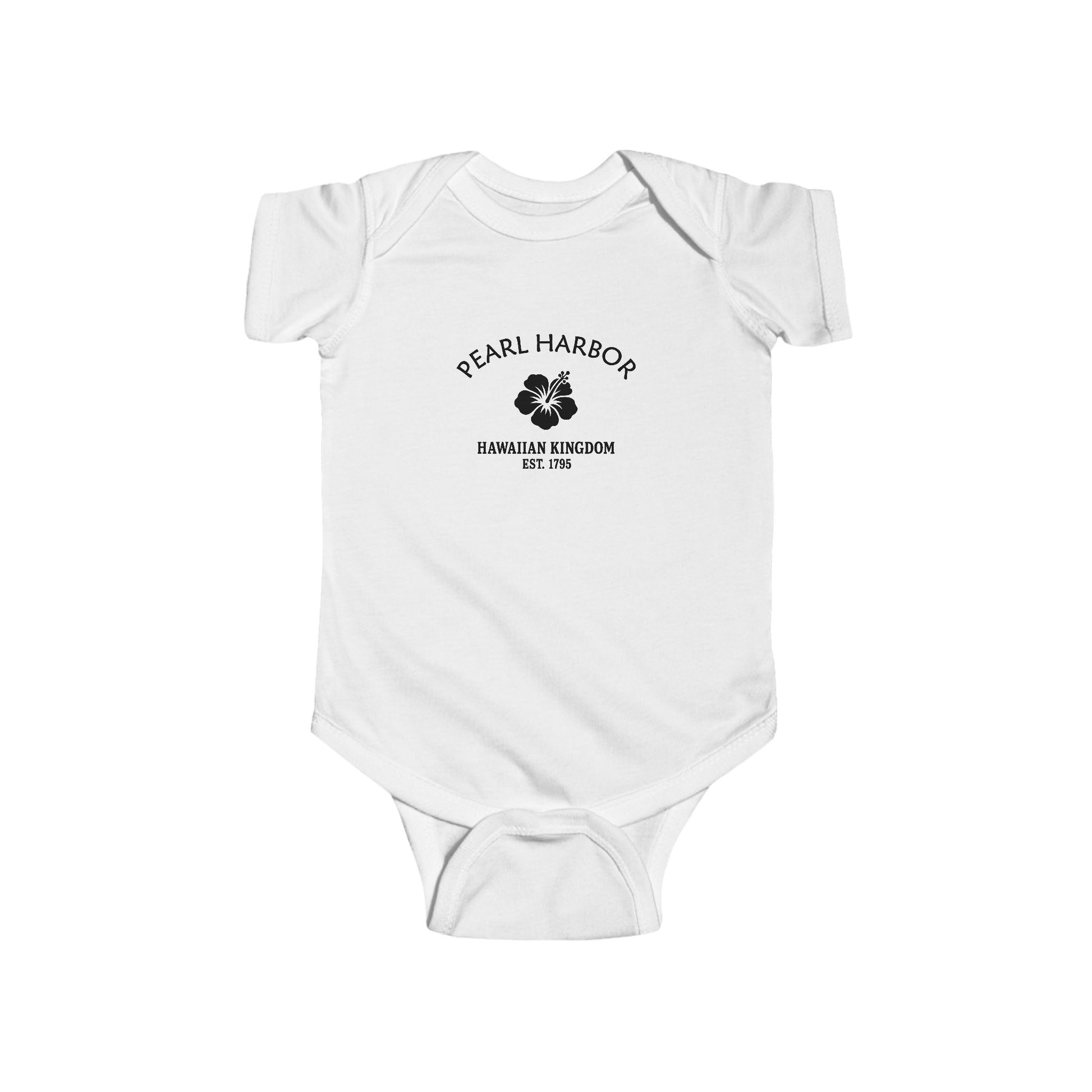
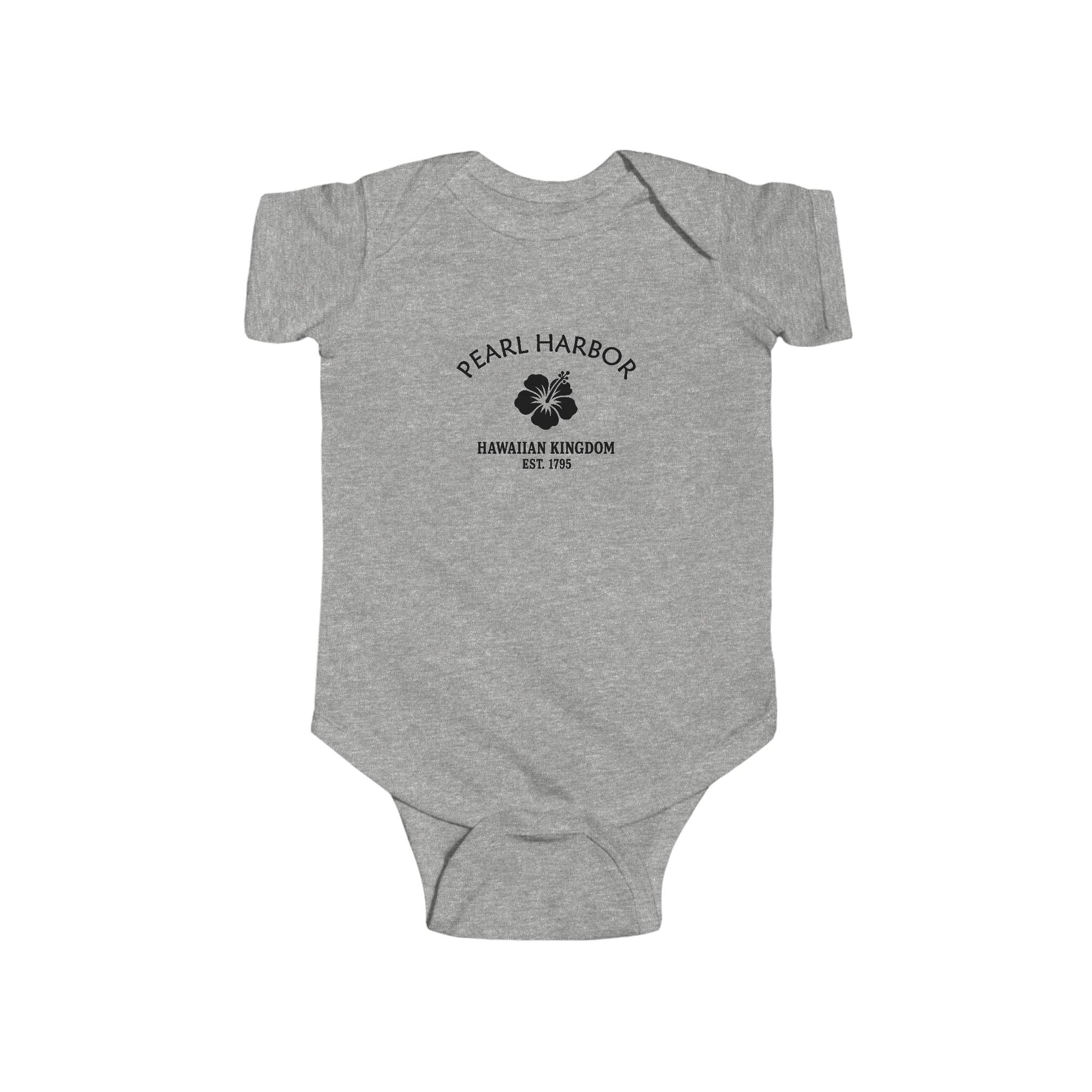
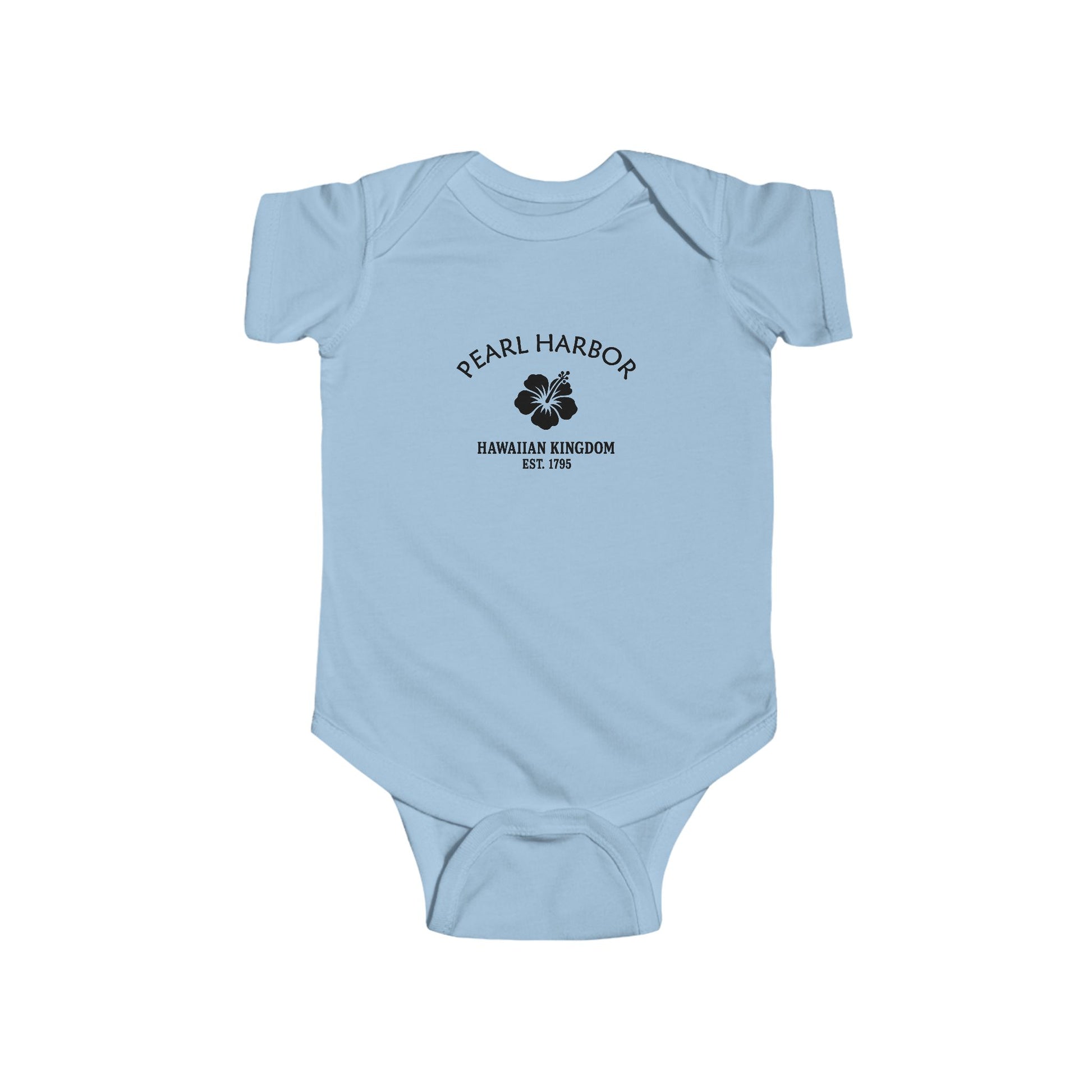
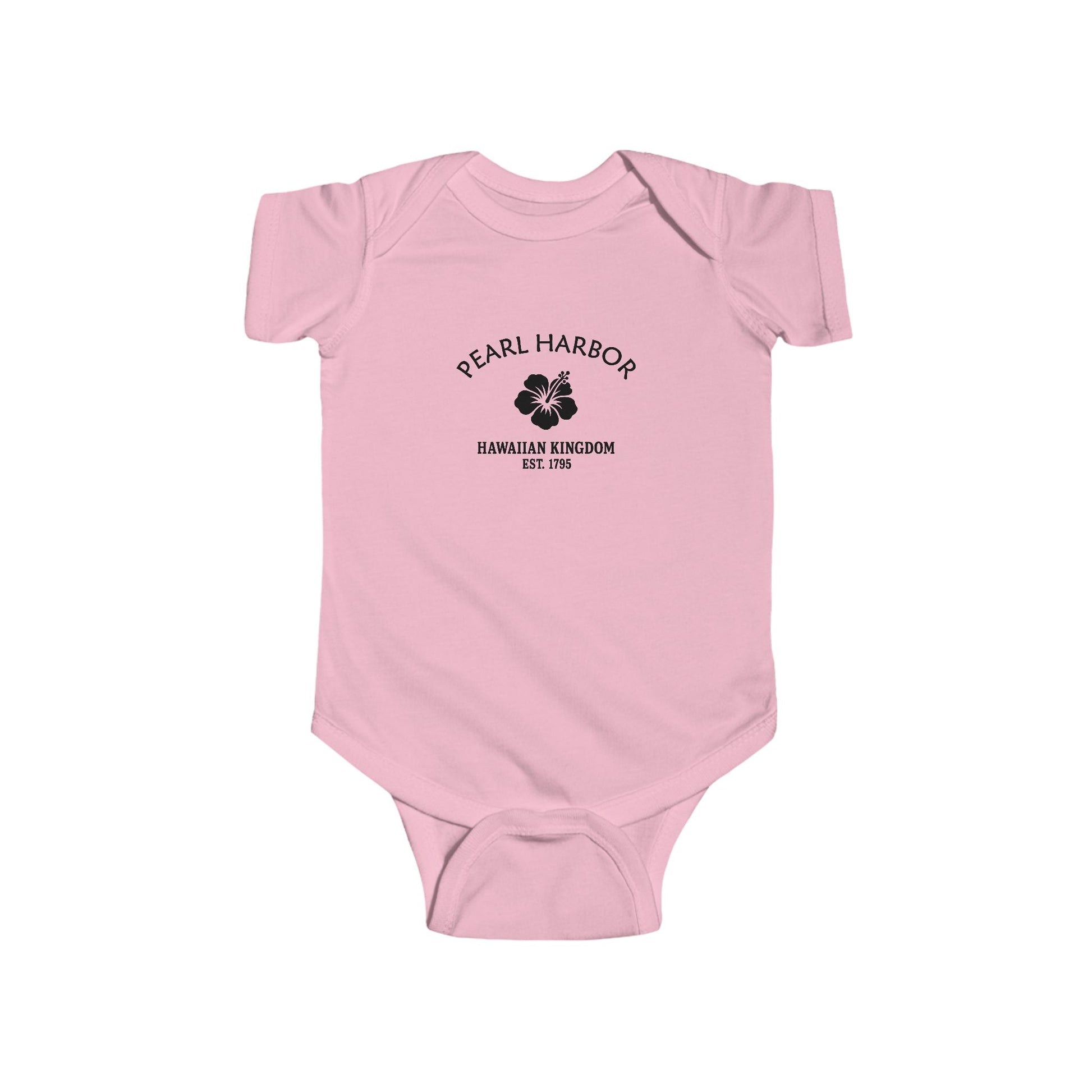
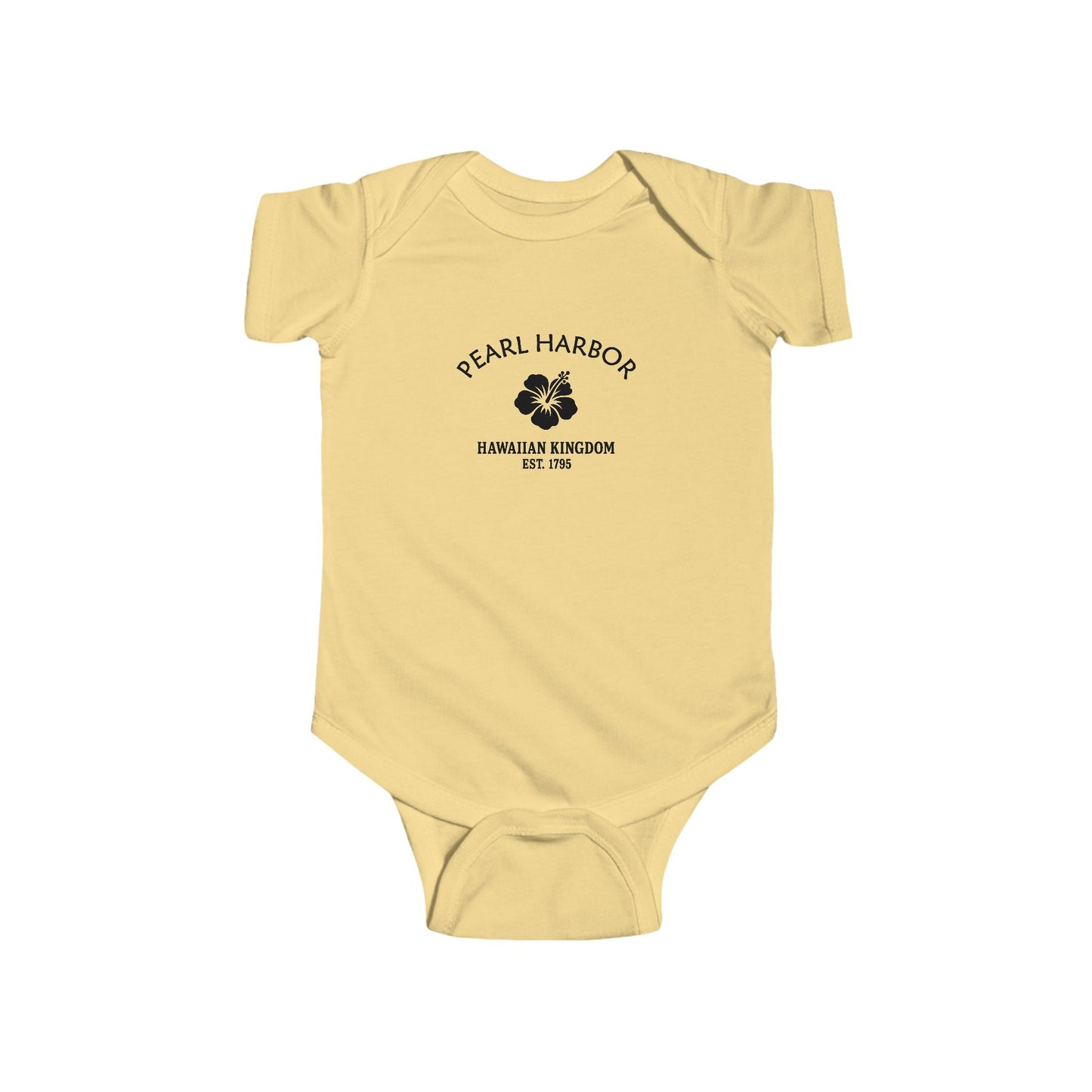
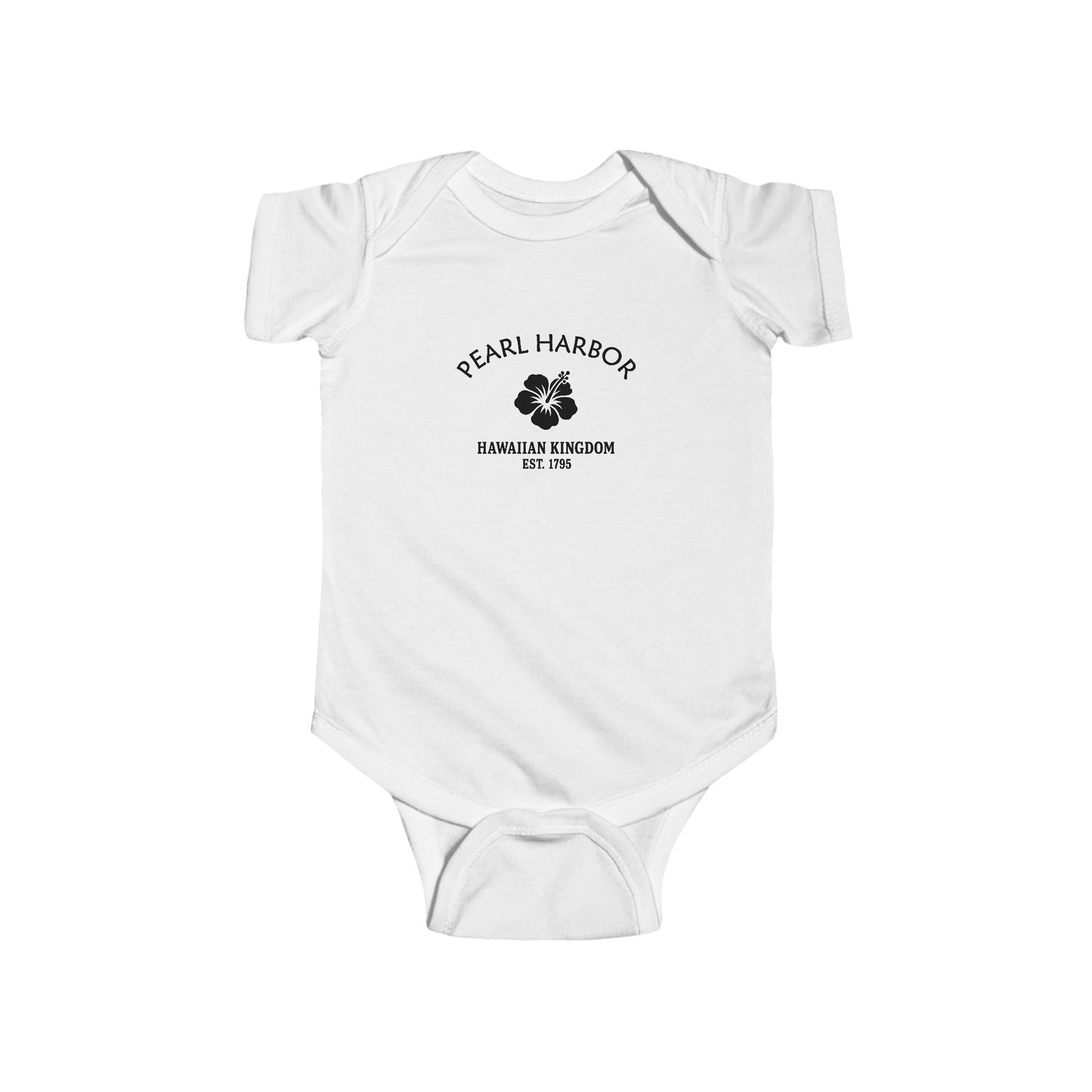
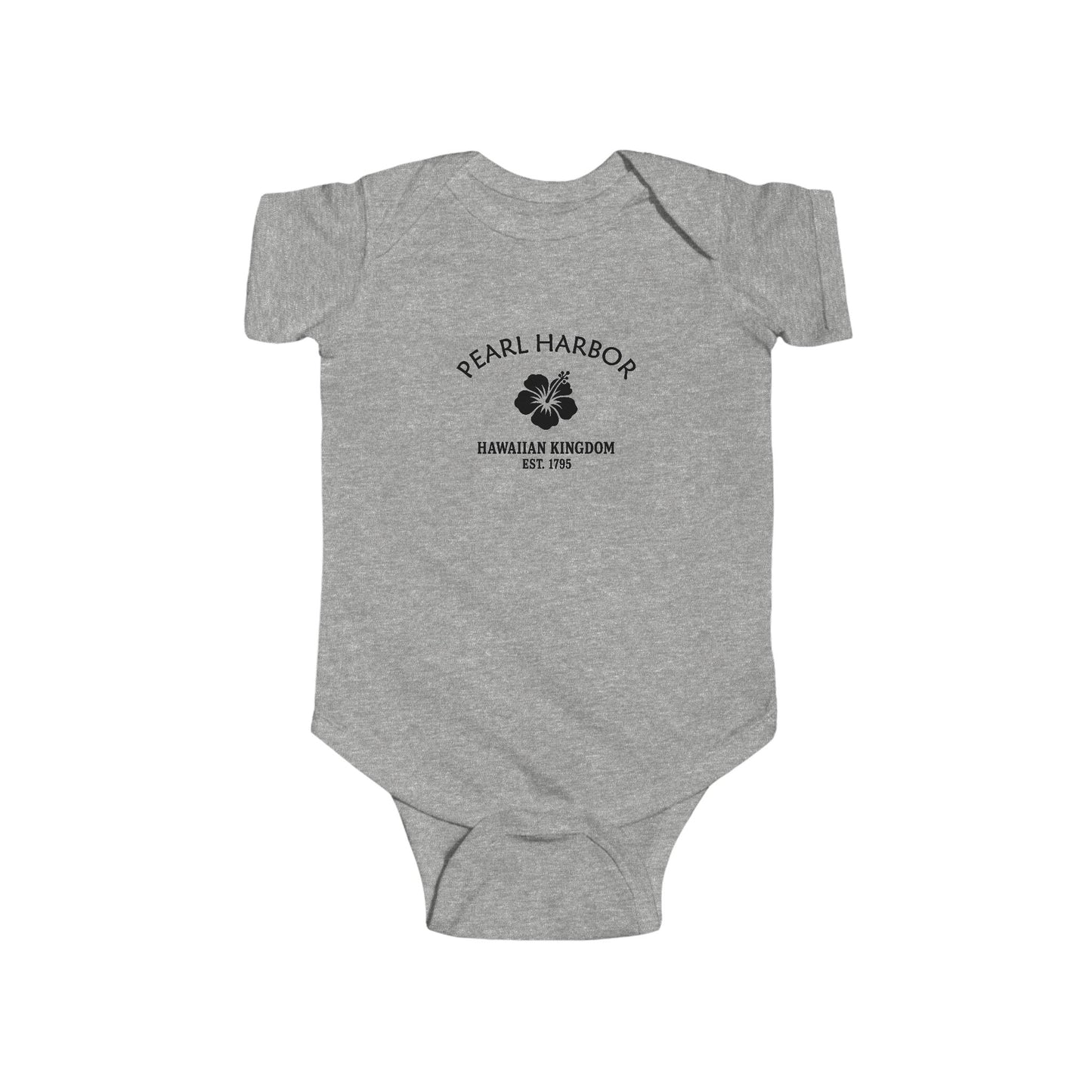
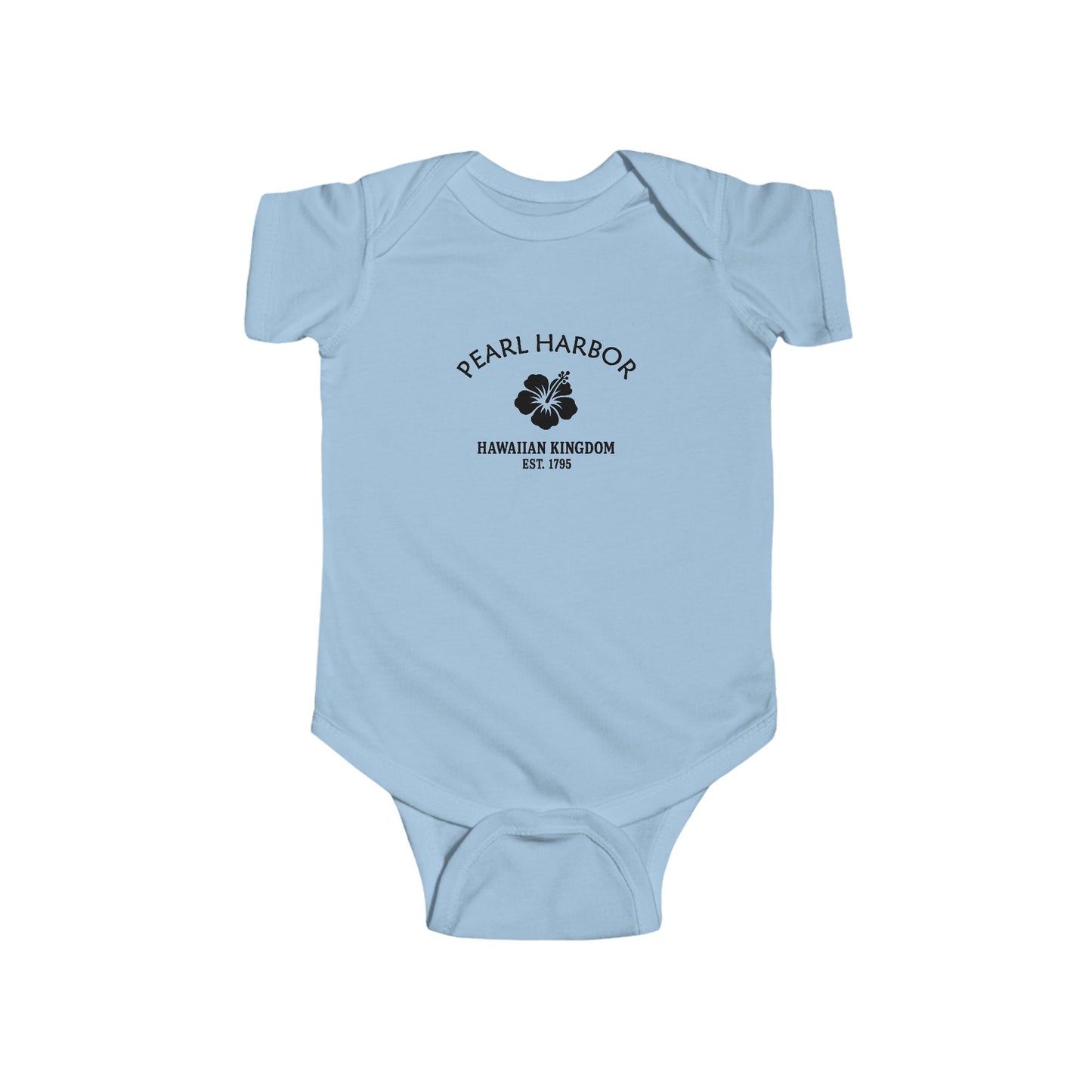
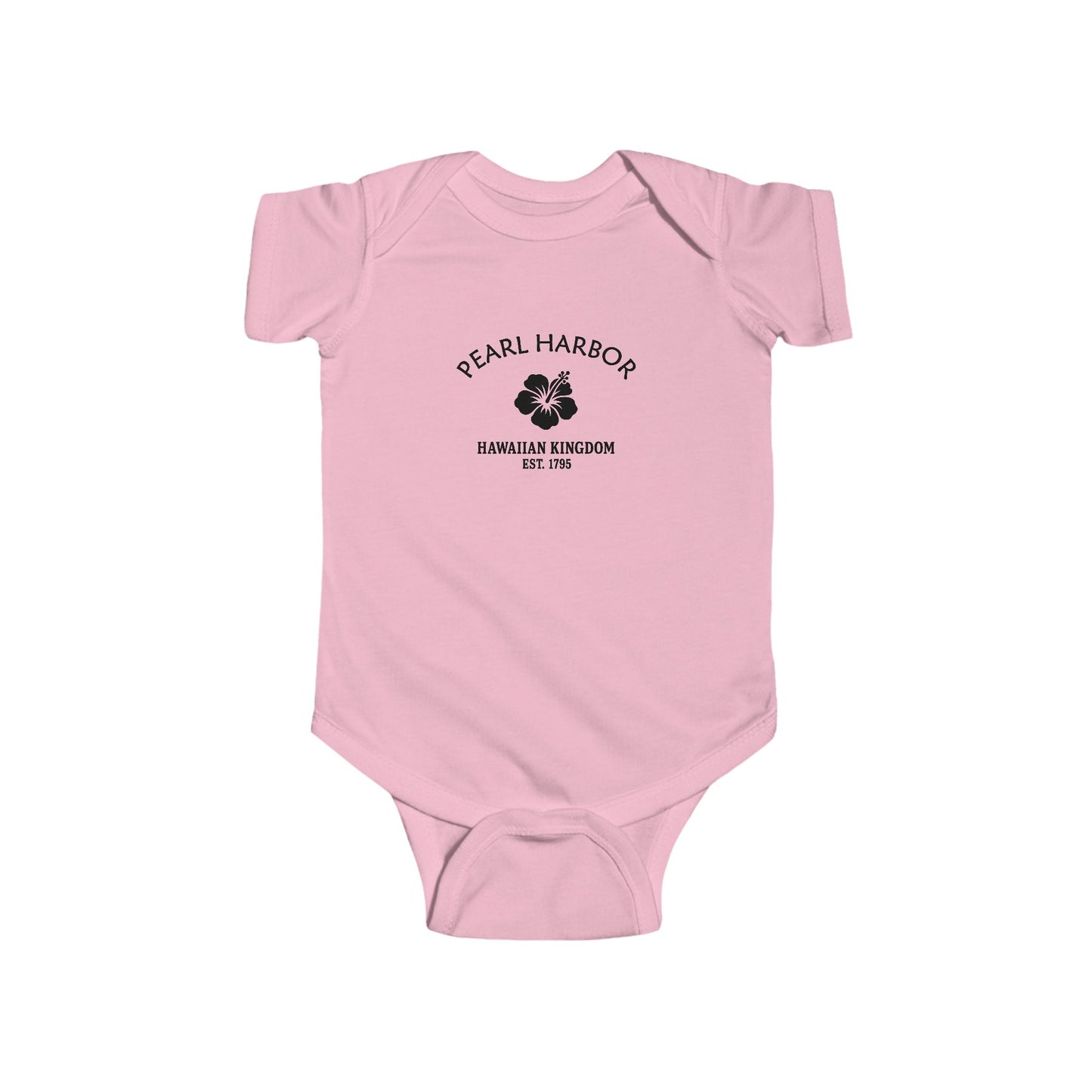
Our Pearl Harbor design wears the hibiscus, Hawaiʻi's flower, beneath the words “Hawaiian Kingdom — Est. 1795,” marking the year Kamehameha's victory on Oʻahu drew the islands into one realm. Rendered in clean black and white, like an old travel decal or crate label, it is a heritage mark — a nod to the islands' own story and to the deep Hawaiian identity of Puʻuloa, the waters of pearl. It is worn for the place and its people, not for any single chapter of its past.
These shores were the heart of ʻEwa, a moku (district) counted among the political centers of Oʻahu before Kamehameha. Puʻuloa was its larder. Observers of old Hawaiʻi judged these bays the most favorable in all the islands for building loko iʻa, the walled coastal fishponds in which Hawaiians raised fish on a scale found almost nowhere else; people had tended them here since at least the mid-1400s. Shrimp, shellfish, and penned fish came out of Puʻuloa in steady abundance, and the families of ʻEwa built a settled, well-fed life around the harbor's quiet lochs.
