


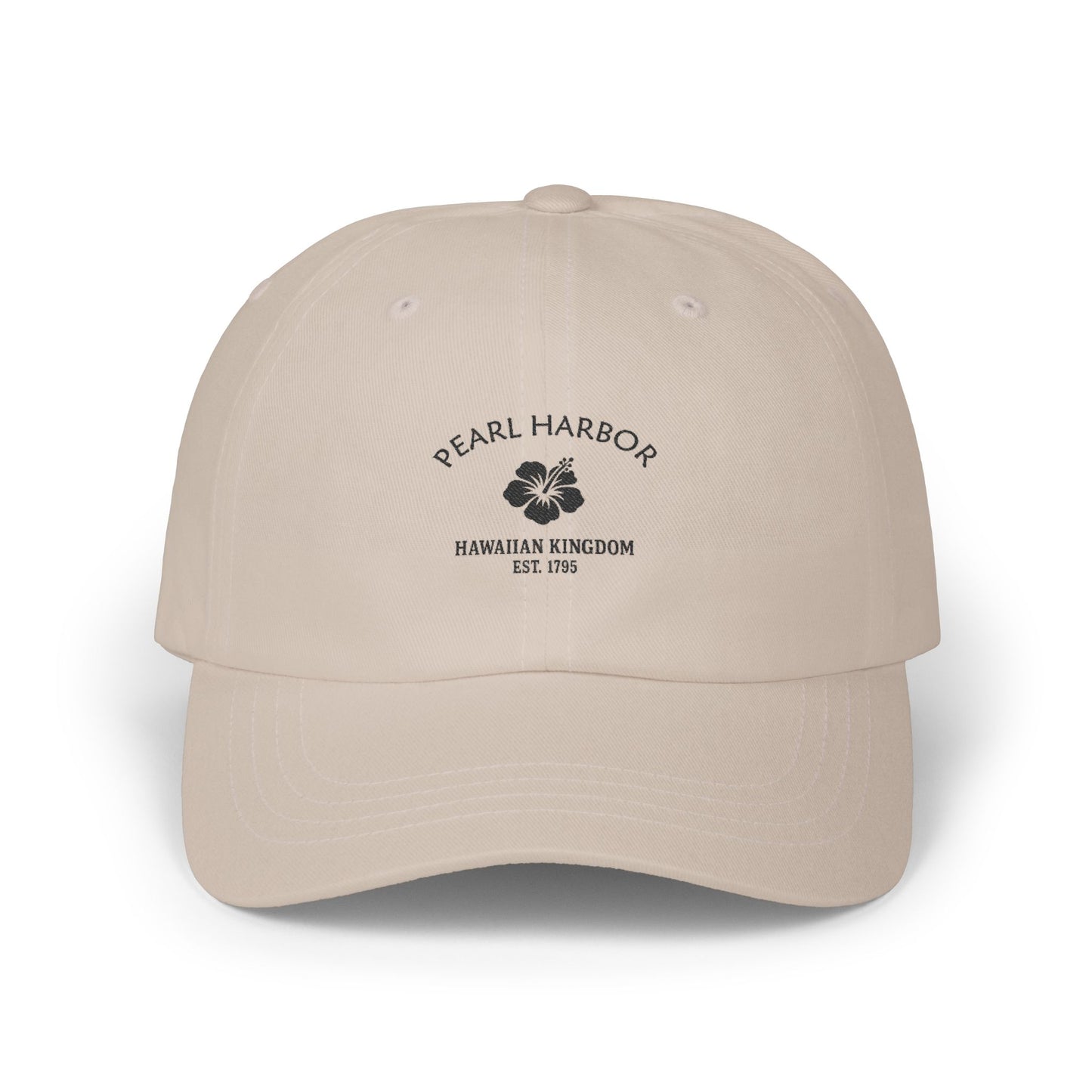
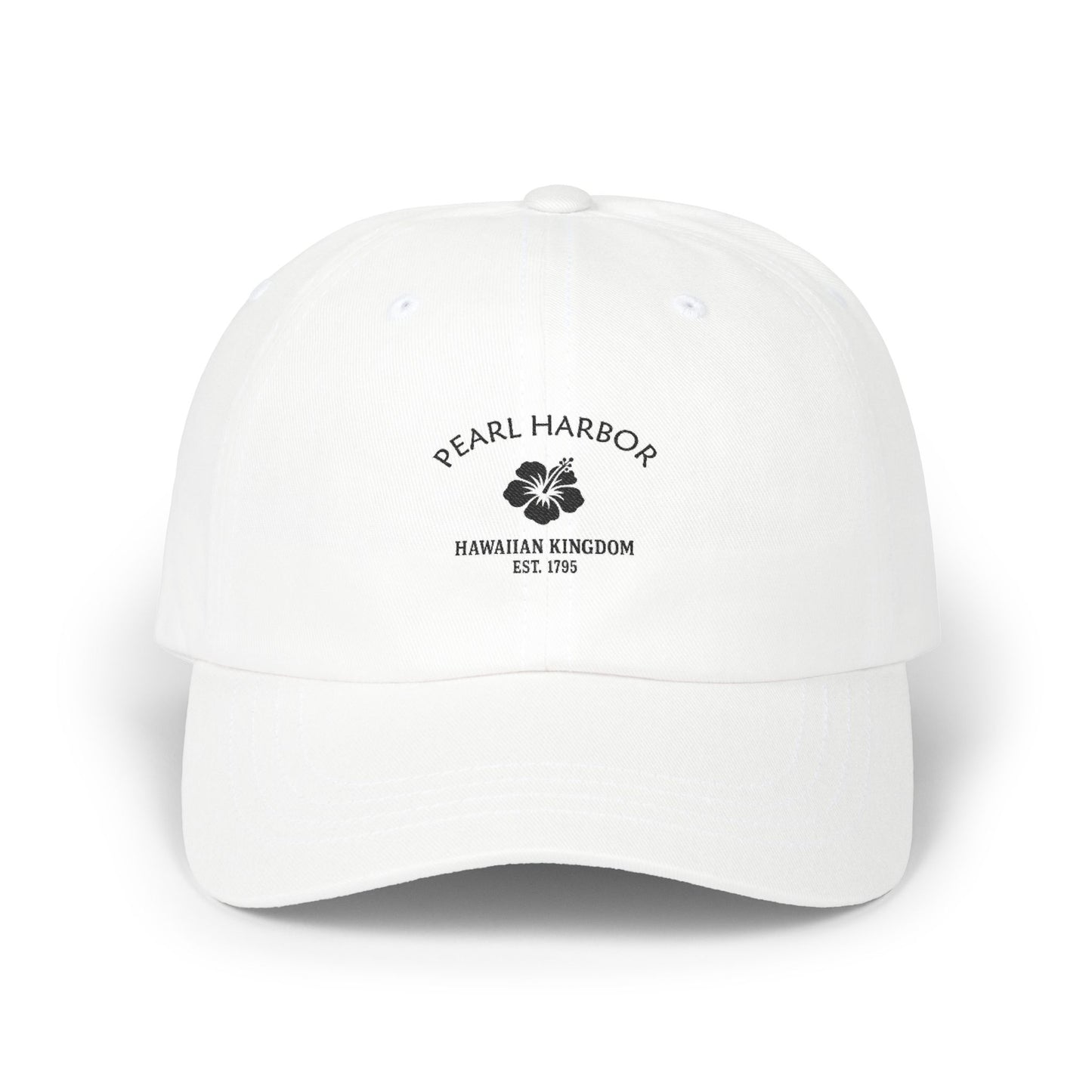
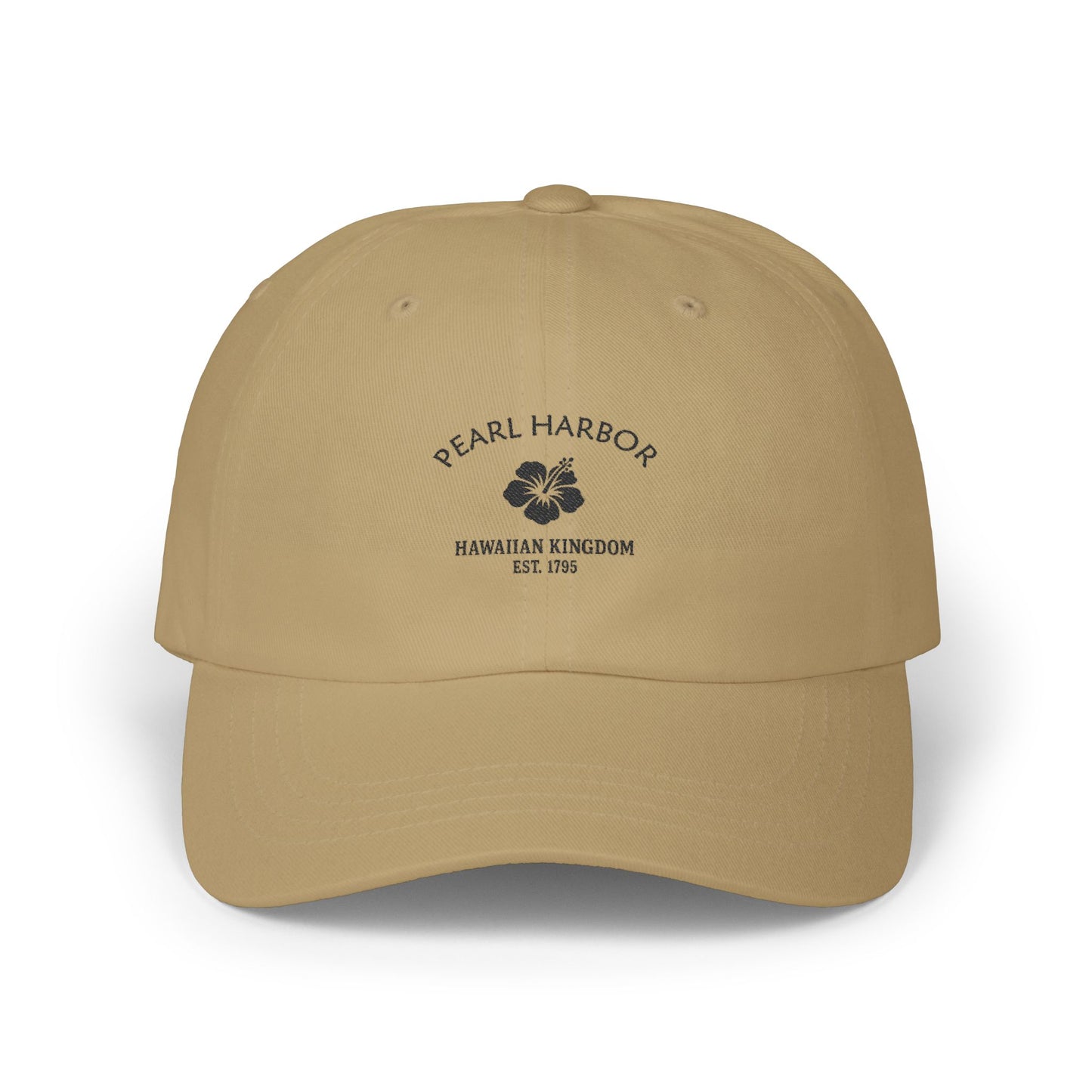
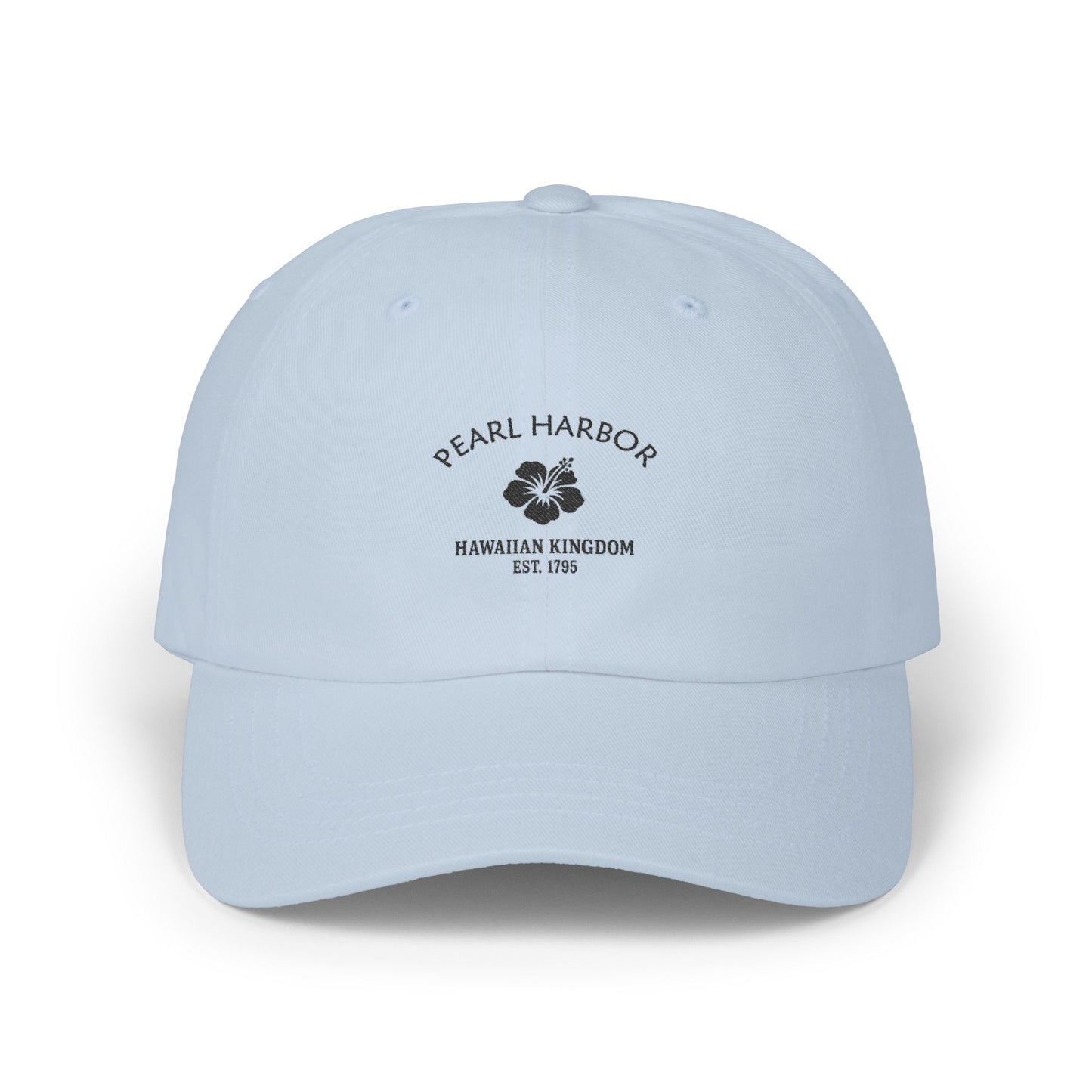
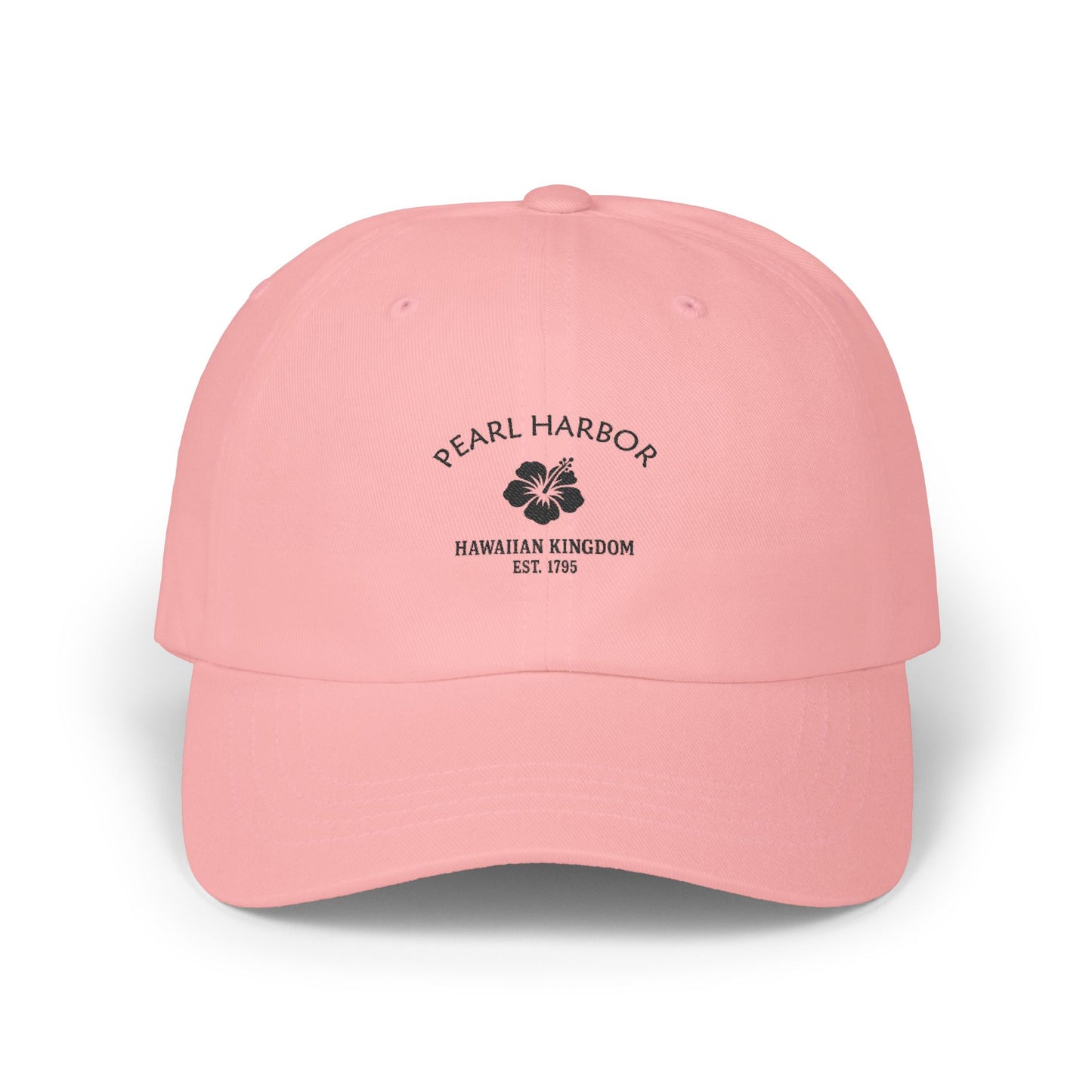
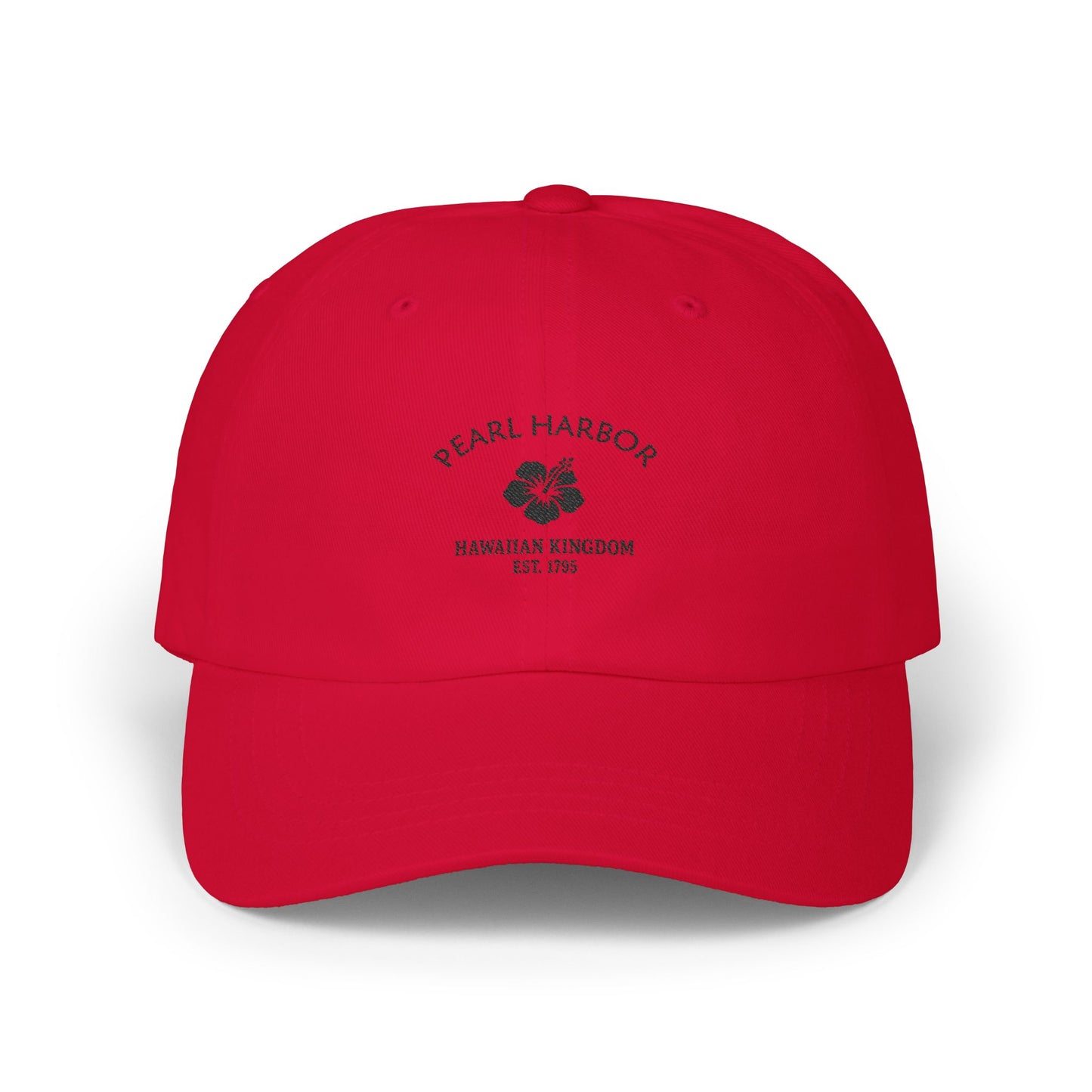
Our Pearl Harbor design wears the hibiscus, Hawaiʻi's flower, beneath the words “Hawaiian Kingdom — Est. 1795,” marking the year Kamehameha's victory on Oʻahu drew the islands into one realm. Rendered in clean black and white, like an old travel decal or crate label, it is a heritage mark — a nod to the islands' own story and to the deep Hawaiian identity of Puʻuloa, the waters of pearl. It is worn for the place and its people, not for any single chapter of its past.
Change came with contact. After Captain Cook reached the islands in 1778, foreign visitors learned the worth of the pearls the Hawaiians had set aside, and Kamehameha — who drew the islands together into one kingdom by 1795 — claimed the oyster beds as his own. Dredging and silt from the 1840s onward smothered the beds, and by about 1901 the pearl oysters of Wai Momi were effectively gone. The harbor's modern course was set by treaty: the Kingdom granted the United States use of the inlet under the Reciprocity Treaty of 1875, and exclusive use as a coaling and repair station in 1887, beginning the long naval era that would carry the place's name around the world.
