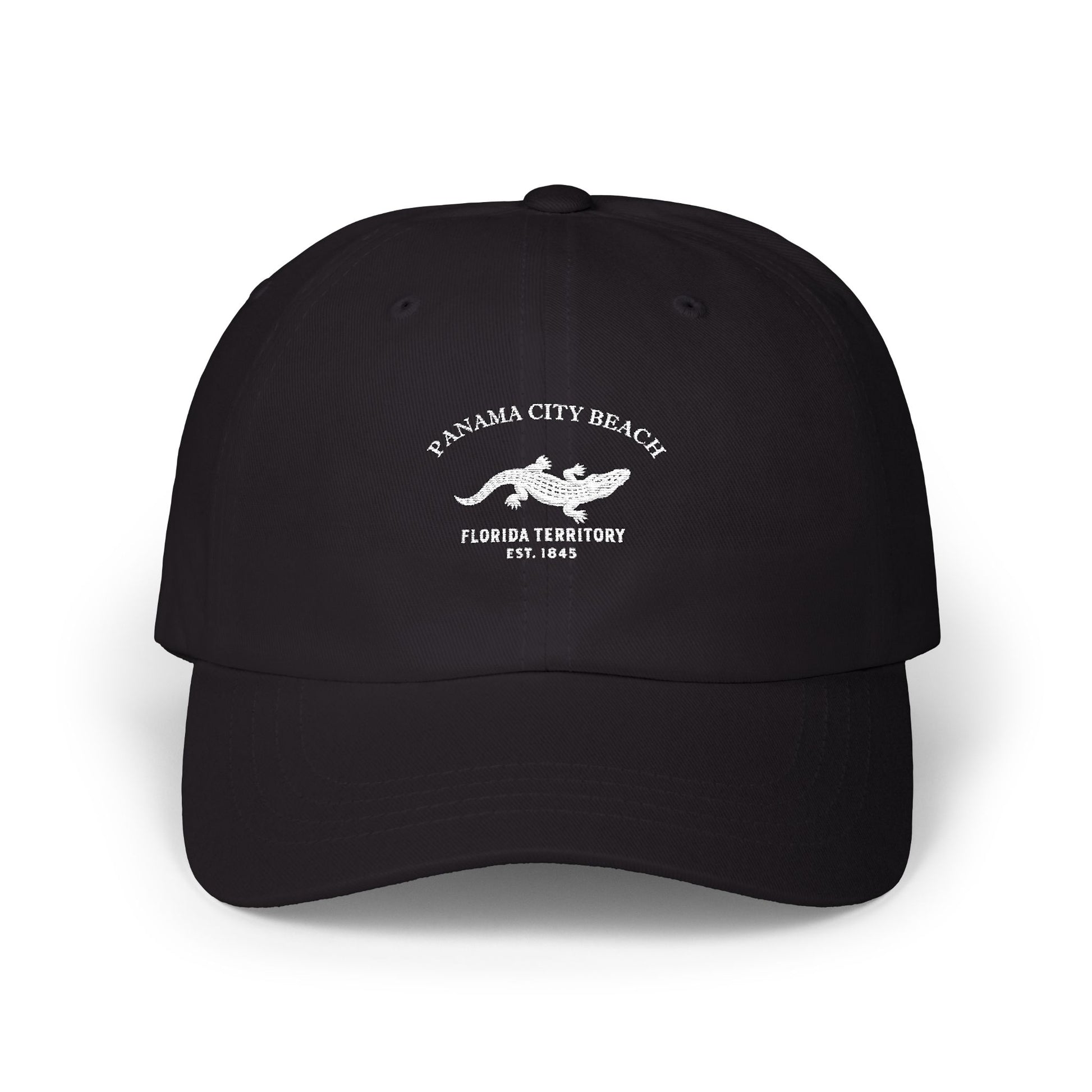
What’s with the Miracle Strip? For half a century the stretch of beach road through Panama City Beach was the Miracle Strip — a glorious tangle of neon, putt-putt, surf shops, and old-Florida kitsch, anchored by an amusement park. The Miracle Strip Amusement Park opened on Memorial Day weekend in 1963 around the Starliner, a wooden out-and-back roller coaster that was the first ever built in Florida. For forty years the Starliner’s white wooden hills were the skyline of the beach; in 1980 someone rode it for 336 straight hours and set a world record. The park closed in 2004 and the coaster was hauled away, but the name still means something here: the Miracle Strip is shorthand for old, neon, unpretentious Florida fun.
The Strip’s other landmark is older and stranger. In the late 1950s a welder-artist named Lee Koplin began pouring concrete dinosaurs, a sphinx, and a giant grinning gorilla beside a miniature-golf course, and Goofy Golf was born — Day-Glo roadside folk art that a Washington Post writer once said “ought to be placed on the national historic register.” It still stands. Around it grew the whole vocabulary of the old beach: motels with neon signs, sno-cone stands, a fake volcano, live sharks in tanks at the surf shops. This is the Florida of cheap, happy, slightly tacky fun, and Panama City Beach kept more of it than almost anywhere.
Why People Visit Panama City Beach
Panama City Beach rewards visitors who want bright white sand, warm emerald water, and an unpretentious good time, with a thread of retro neon still running through it. Add the piers, Shell Island, and the year-round Gulf sun, and the World’s Most Beautiful Beaches make their own case.
