


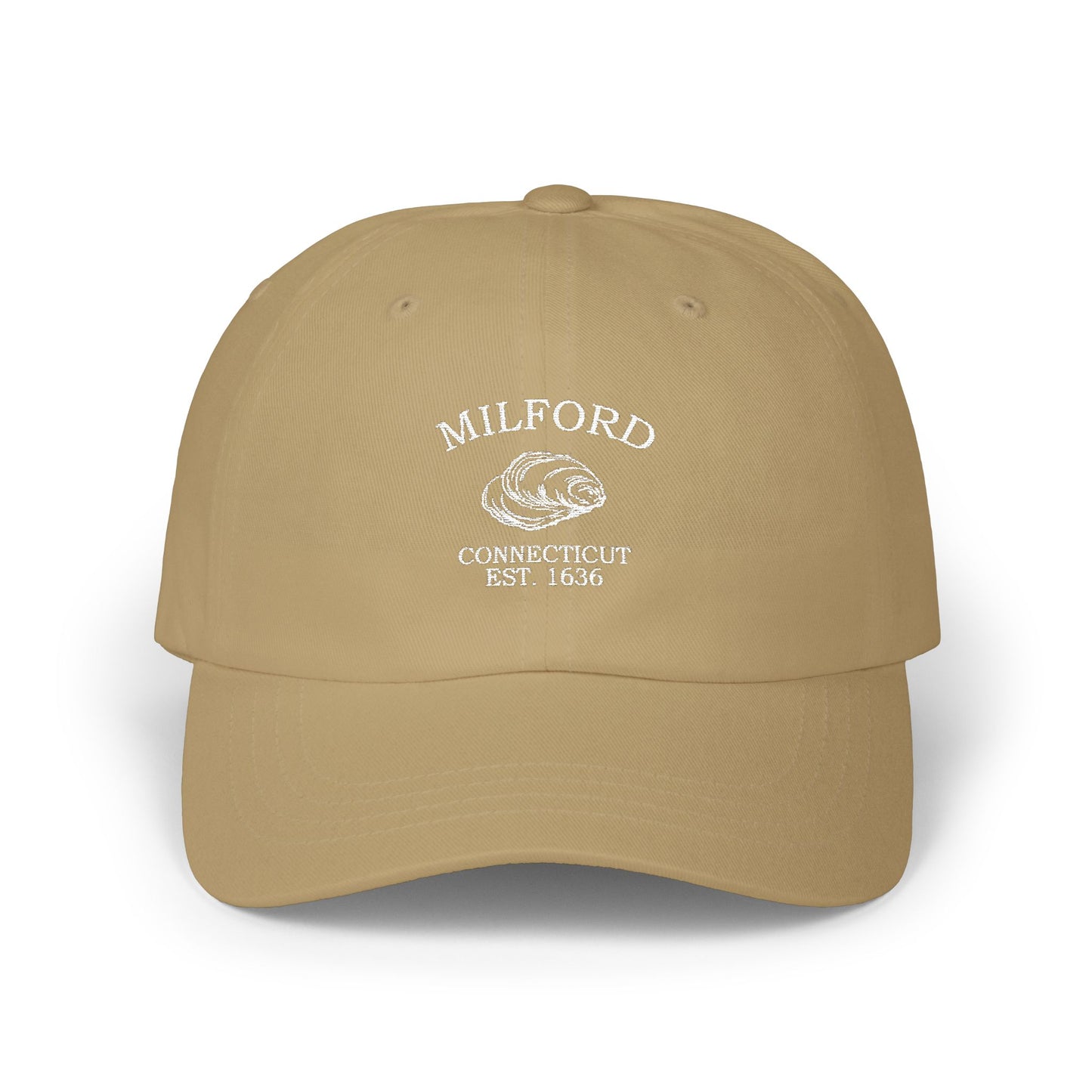
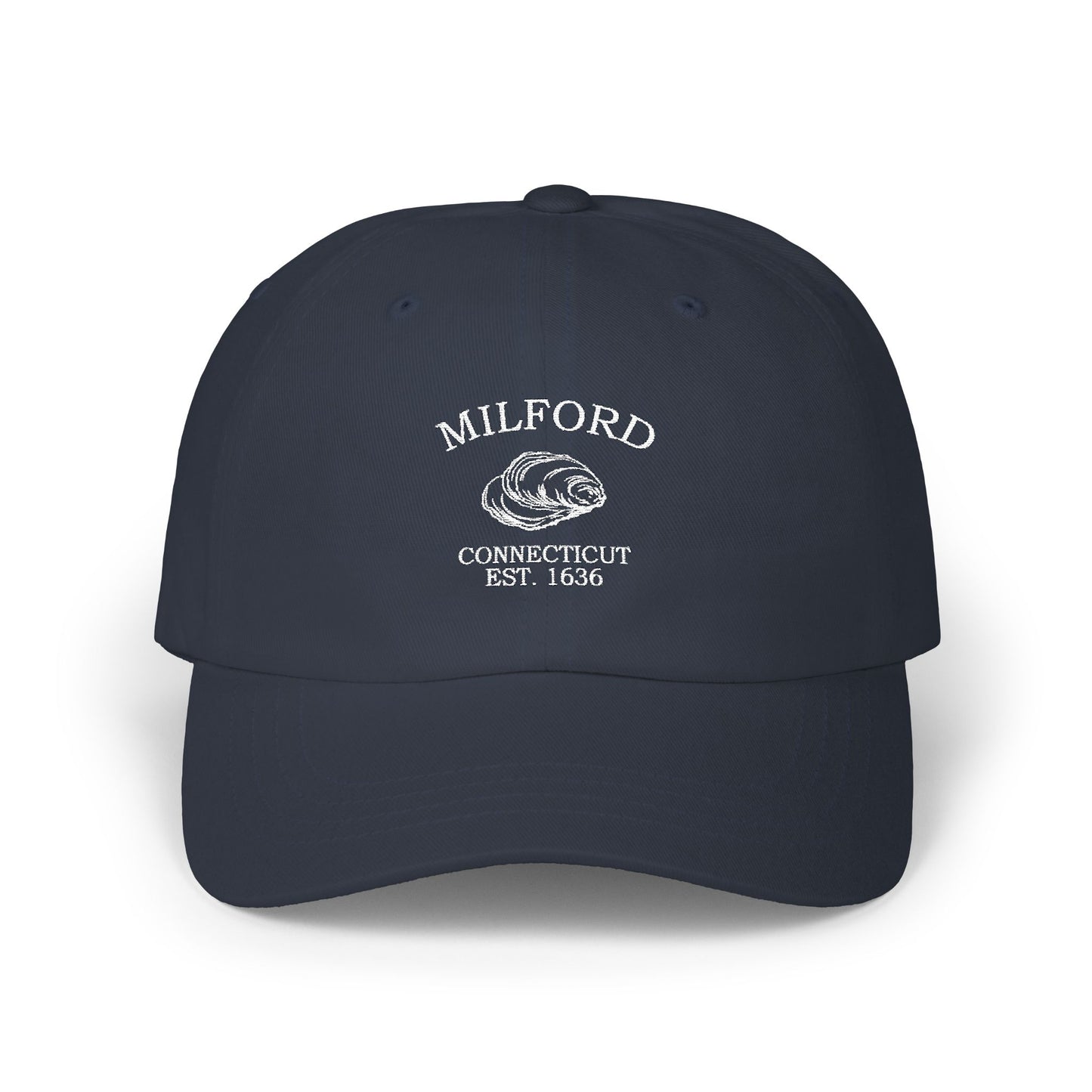
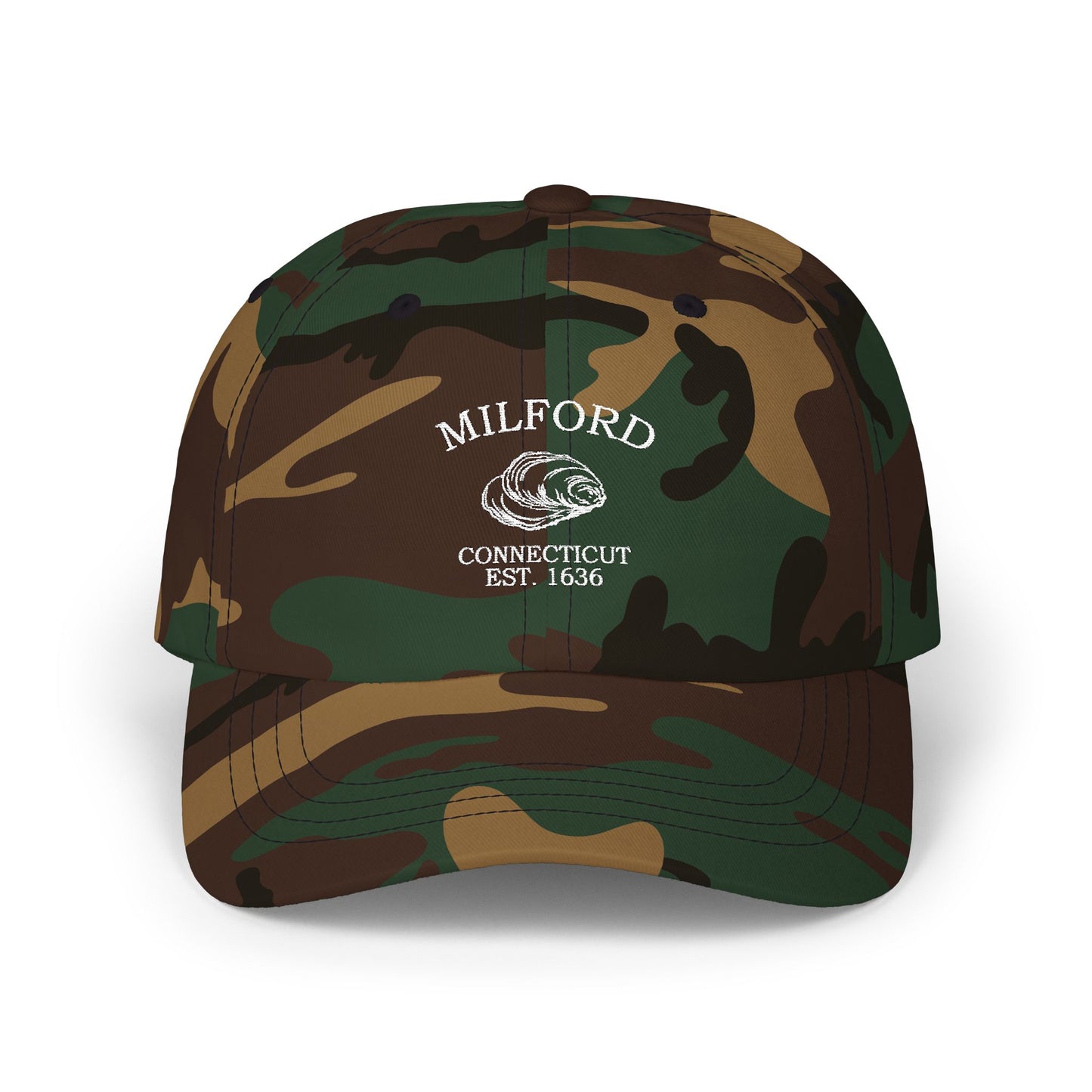
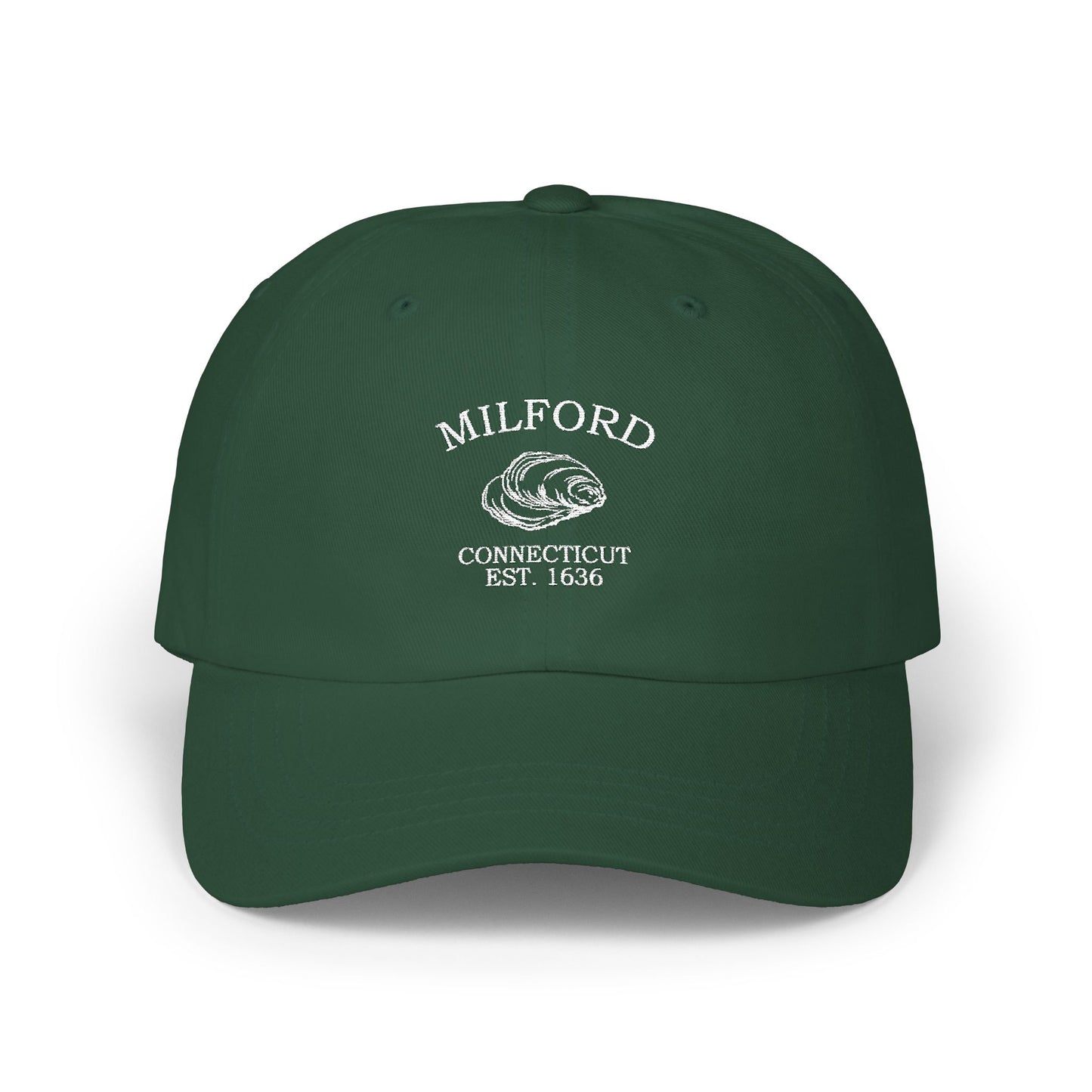
That story begins on the water's edge. In February 1639, English settlers led by the Reverend Peter Prudden bought the land the Paugusset called Wepawaug from their chief sachem, Ansantawae, whose bow and arrow still appear on the town seal. The settlers arrived that August, making Milford the sixth-oldest town in Connecticut. A year later, in 1640, William Fowler built a water-powered grist mill by the river — the mill at the ford — and the town took its name. Among the first planters was Robert Treat, who settled here at fifteen, rose to be governor of Connecticut, and later led the group that founded Newark, New Jersey.
A mile off Silver Sands Beach sits the town's most famous riddle: Charles Island, which the Paugusset called Poquahaug. At low tide a natural sandbar — a tombolo — rises out of the Sound and you can walk to it. The best-loved Milford legend says that in 1699 Captain Kidd, on his way to arrest in Boston, buried treasure there, iron chests of gold said to lie beneath the rocks and never found. The island is now a state-protected bird sanctuary, its woods a nesting rookery of herons and egrets, closed to visitors through the spring and summer — so the legend is best enjoyed from the beach, and the crossing only with the tide chart in hand.
Why People Visit Milford
Milford balances a historic green, a legendary island, and miles of easy shoreline. Visitors enjoy simple seaside walks, boardwalks, and small cultural stops between the beaches and the harbor. It is peaceful, family-friendly, and close to nature, with year-round appeal in its parks, paths, and public spaces. History and everyday coastal life sit side by side here, from the long Green and the colonial downtown to the oyster boats and the boardwalk beyond.
