


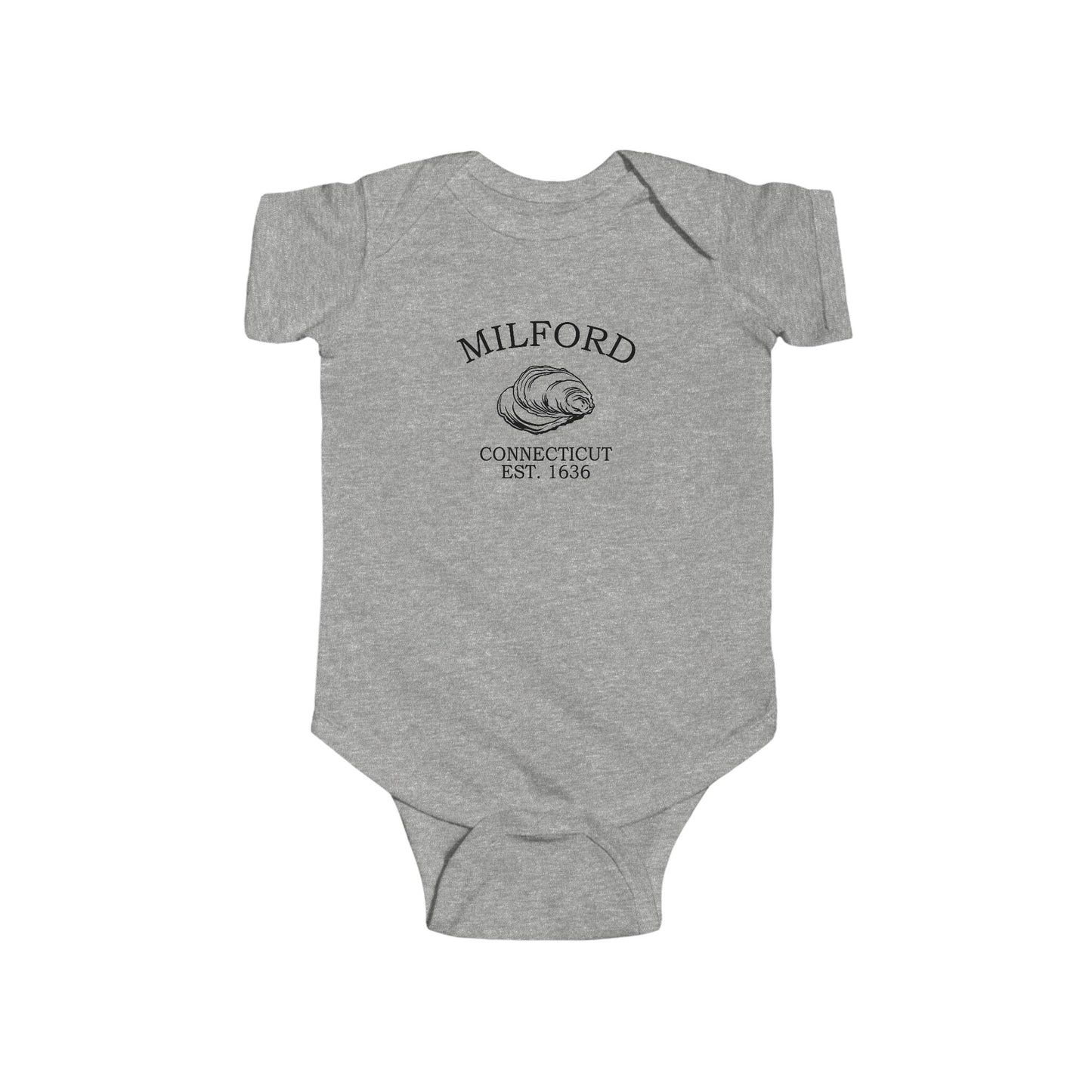
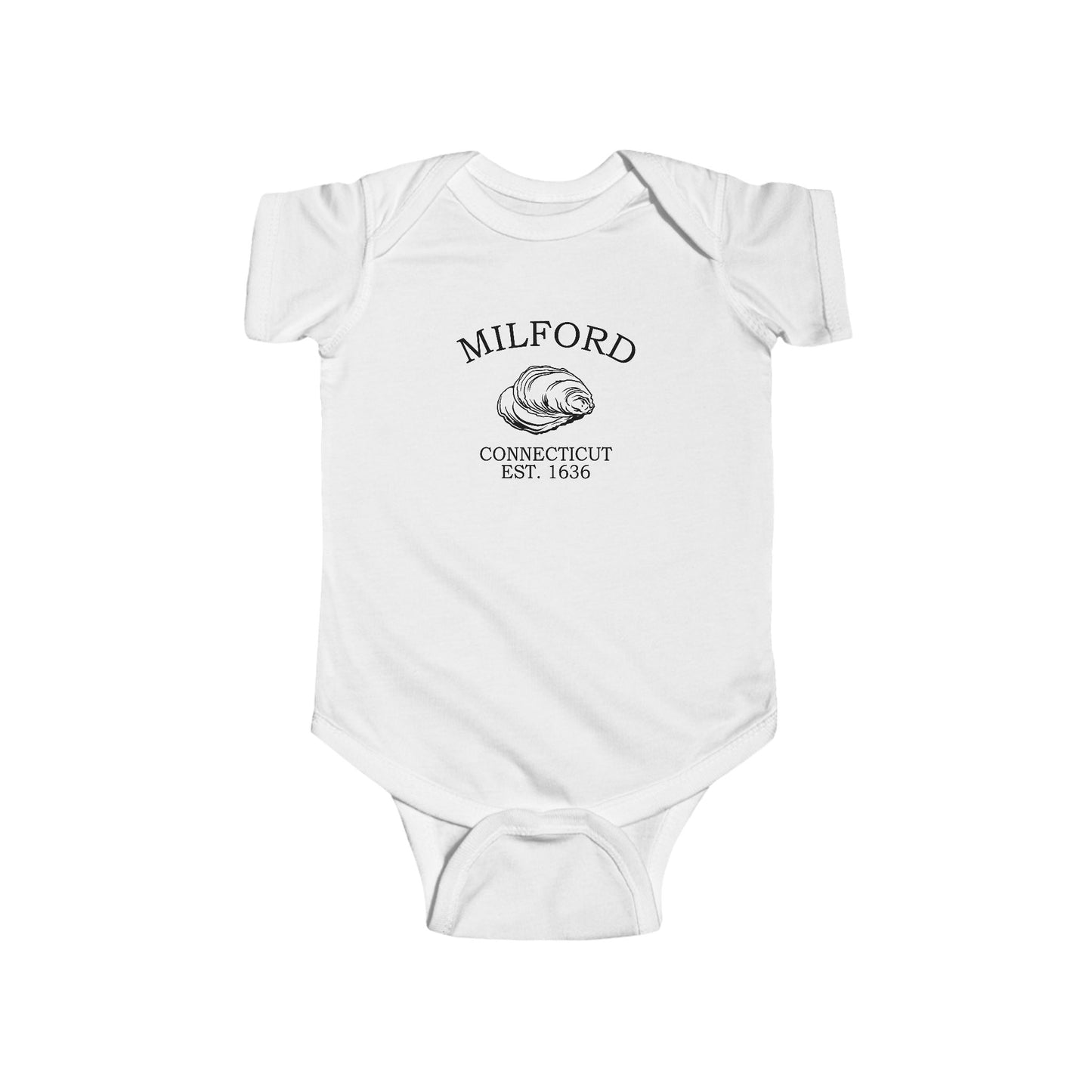
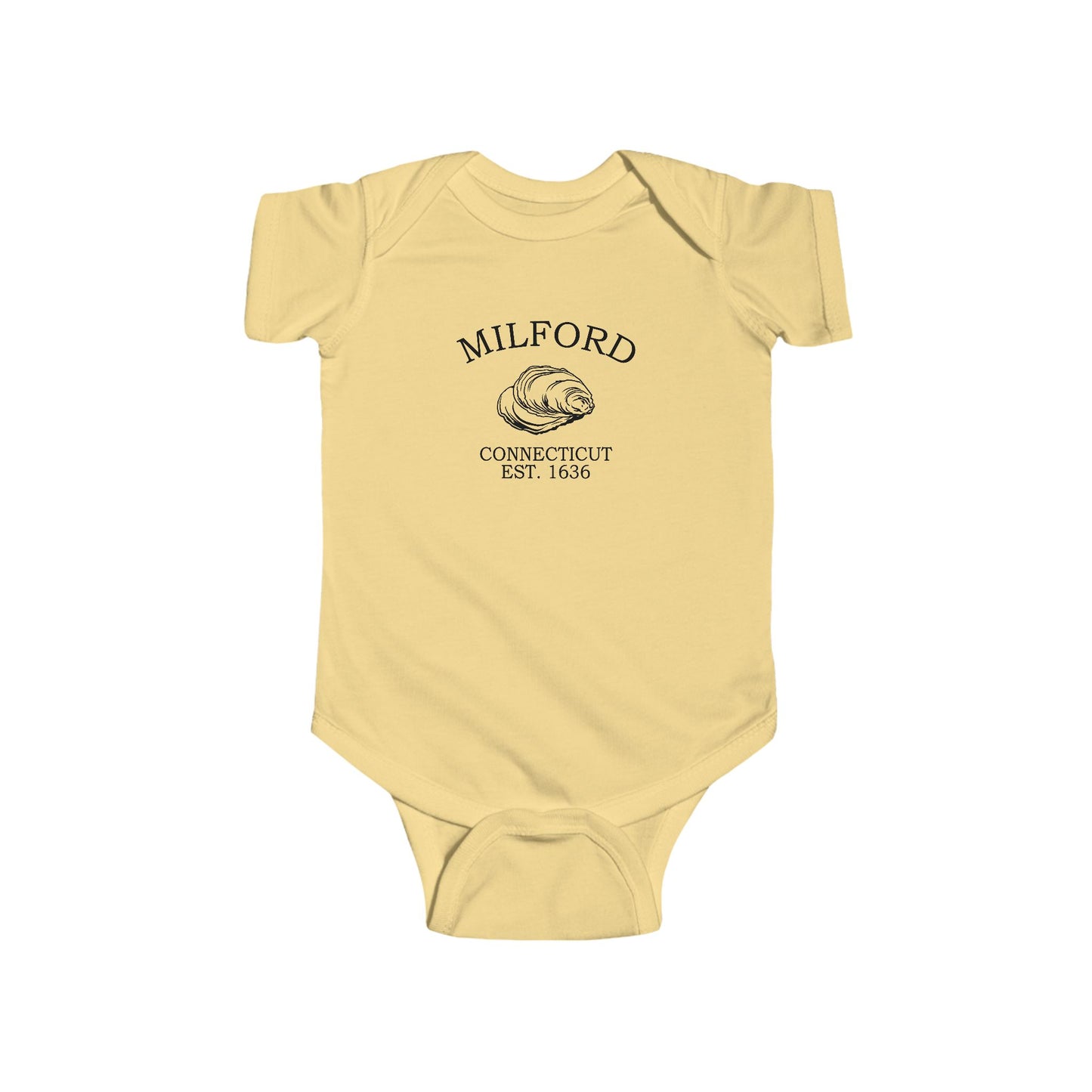
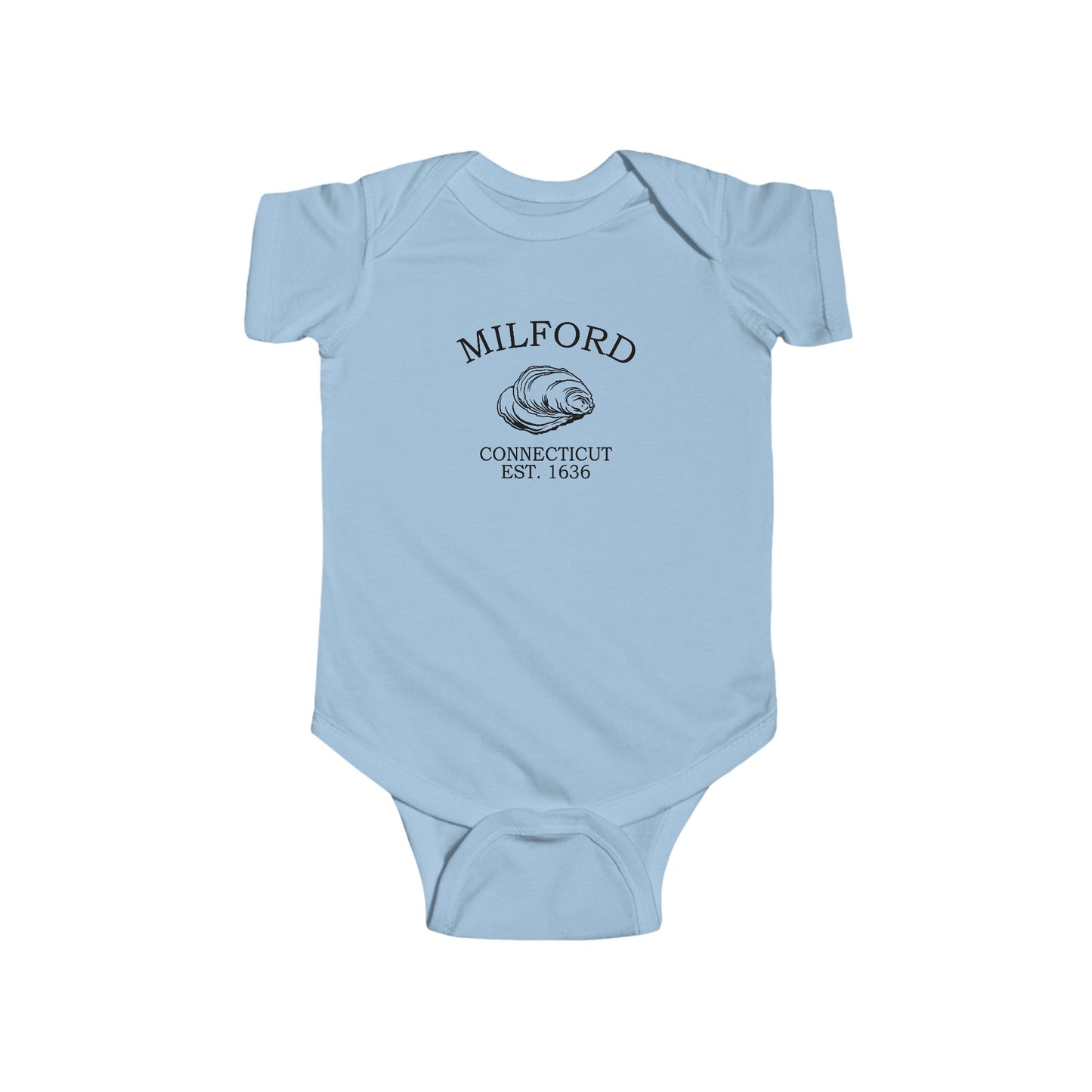
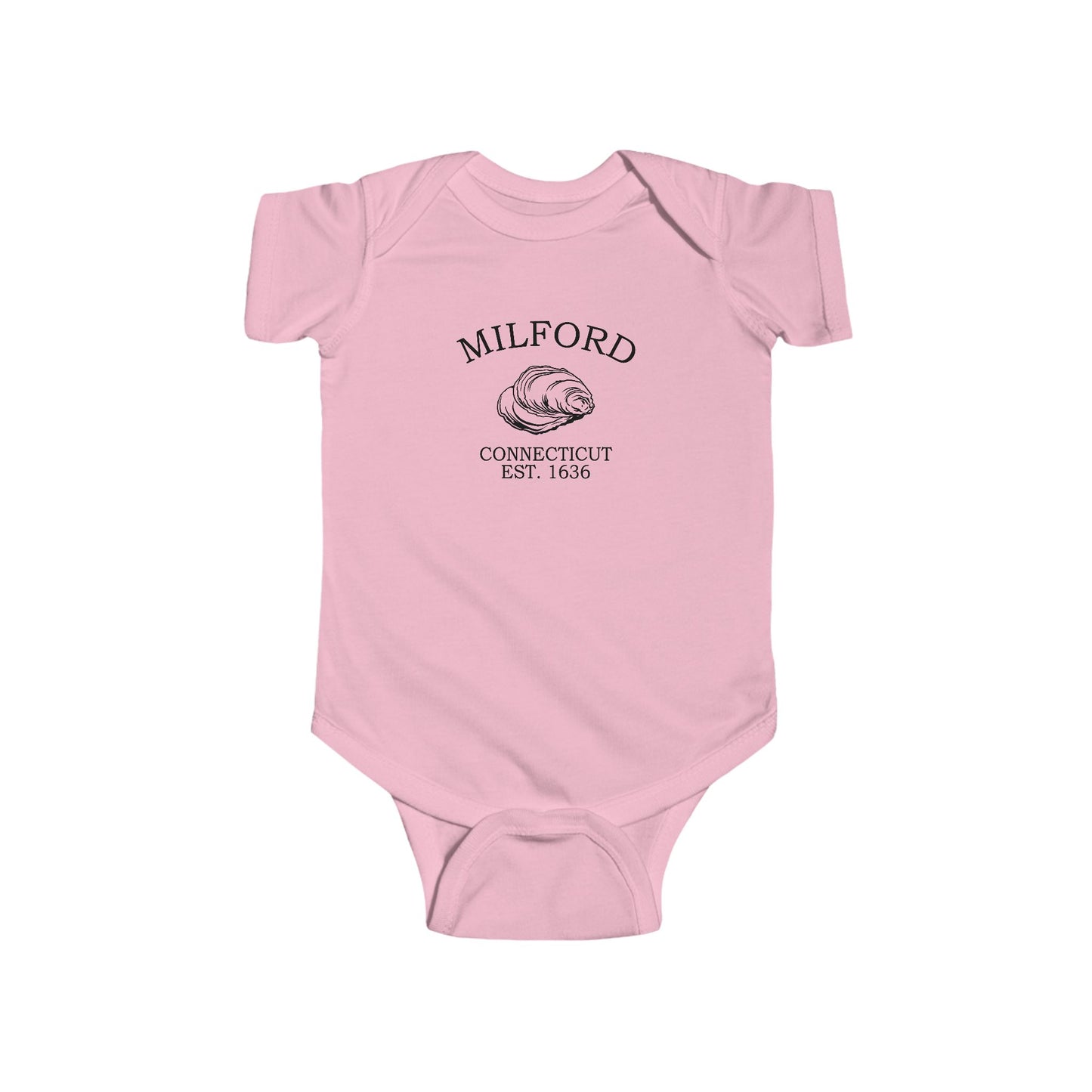
That story begins on the water's edge. In February 1639, English settlers led by the Reverend Peter Prudden bought the land the Paugusset called Wepawaug from their chief sachem, Ansantawae, whose bow and arrow still appear on the town seal. The settlers arrived that August, making Milford the sixth-oldest town in Connecticut. A year later, in 1640, William Fowler built a water-powered grist mill by the river — the mill at the ford — and the town took its name. Among the first planters was Robert Treat, who settled here at fifteen, rose to be governor of Connecticut, and later led the group that founded Newark, New Jersey.
Milford has always worked the Sound. Long Island Sound made it a town of oystermen and shipbuilders: oystering began here in the 1750s, oyster huts lined the shore, and beds were farmed in Gulf Pond. The trade was open enough that by 1878 sixteen of the town's forty-one oystering permits were held by women. The oyster on our logo is not decoration — it is Milford's own working heritage, pulled from these waters for nearly three centuries.
Why People Visit Milford
Milford balances a historic green, a legendary island, and miles of easy shoreline. Visitors enjoy simple seaside walks, boardwalks, and small cultural stops between the beaches and the harbor. It is peaceful, family-friendly, and close to nature, with year-round appeal in its parks, paths, and public spaces. History and everyday coastal life sit side by side here, from the long Green and the colonial downtown to the oyster boats and the boardwalk beyond.
