


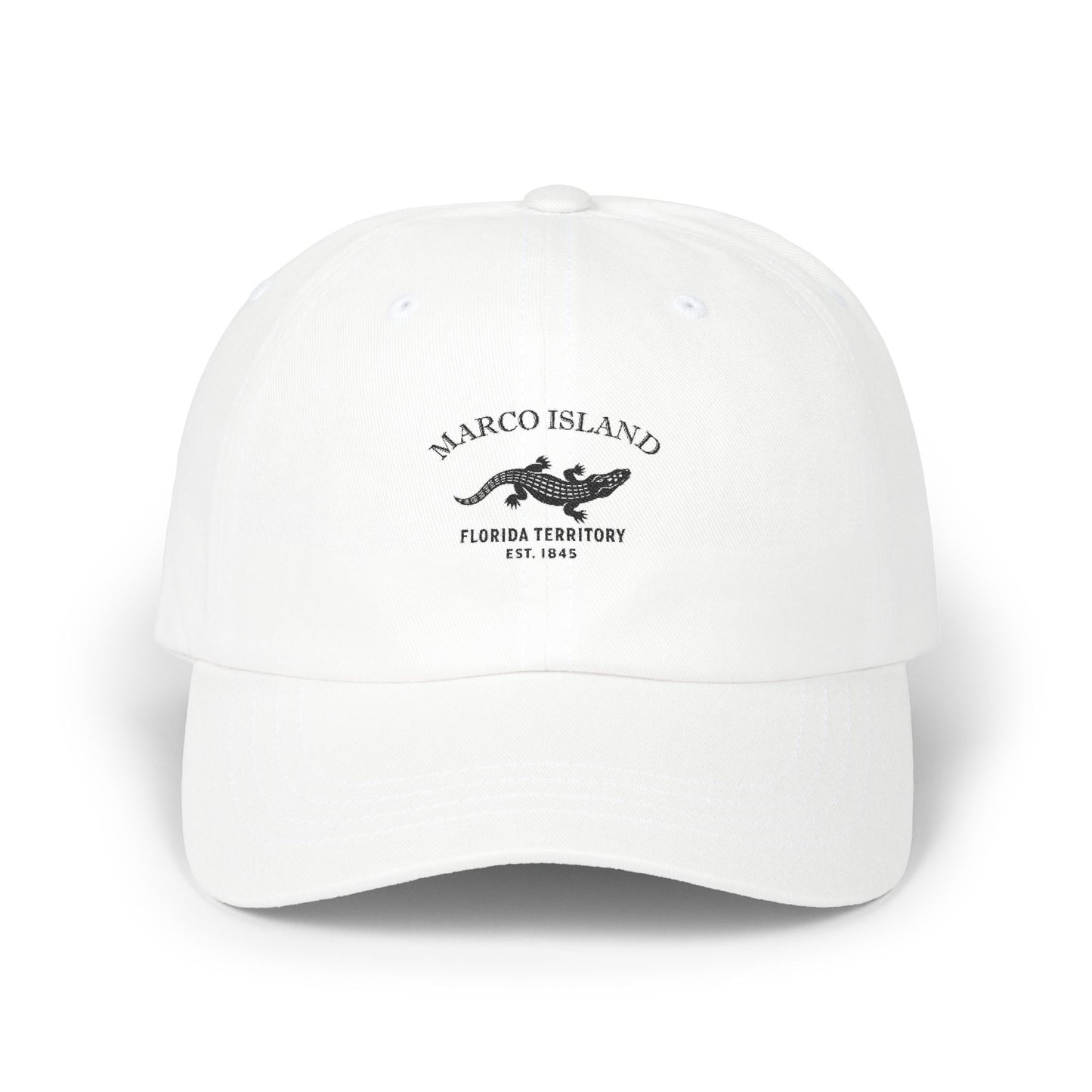
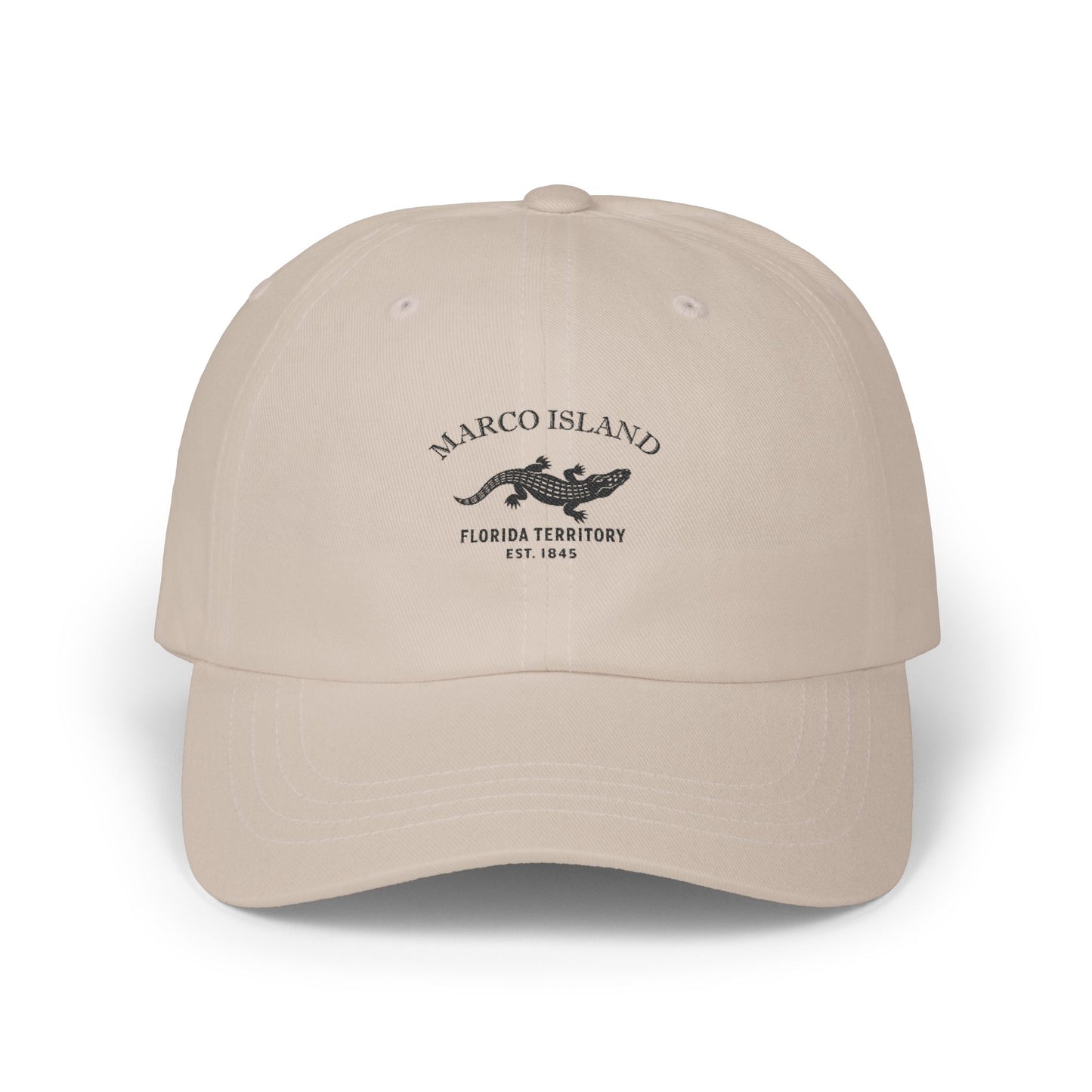
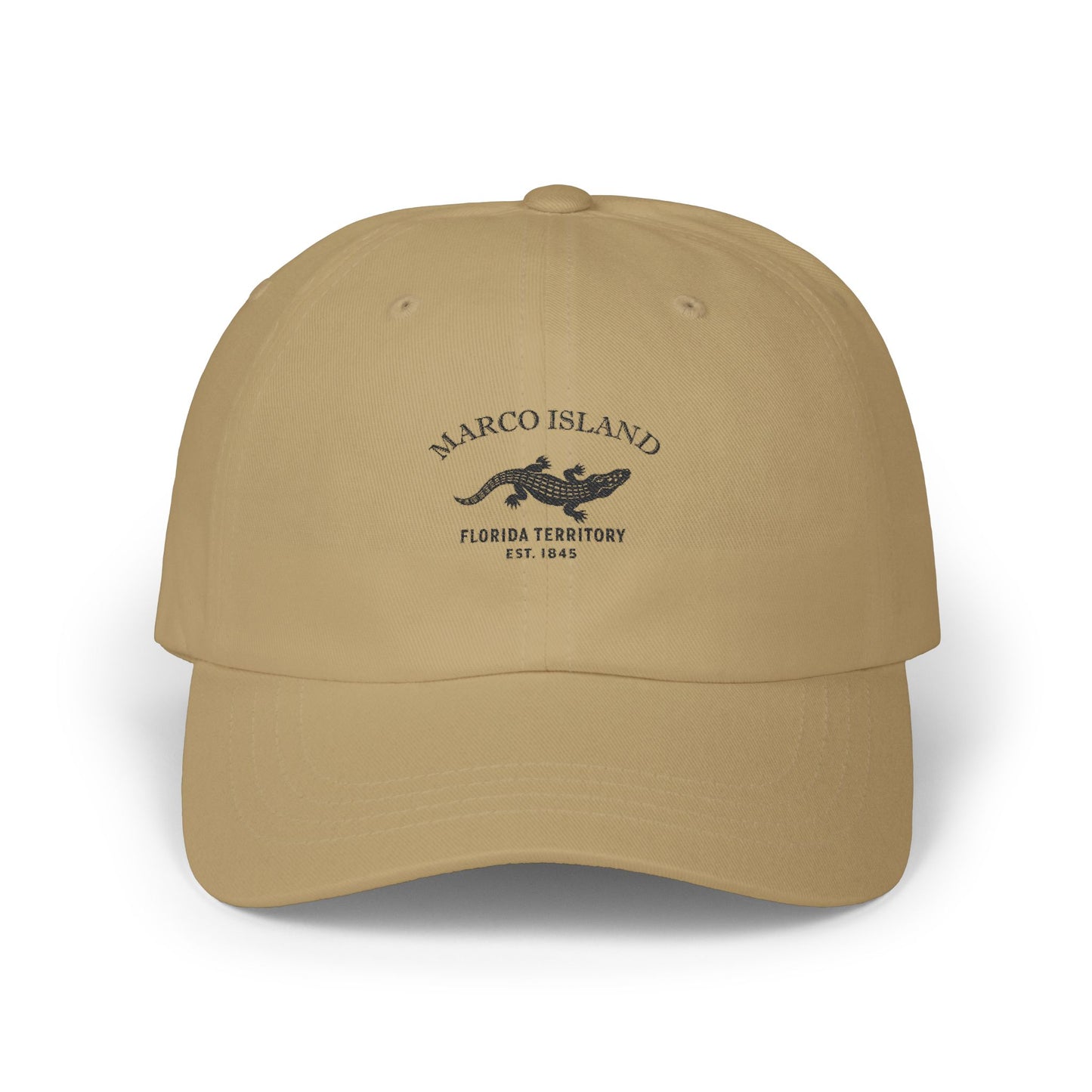
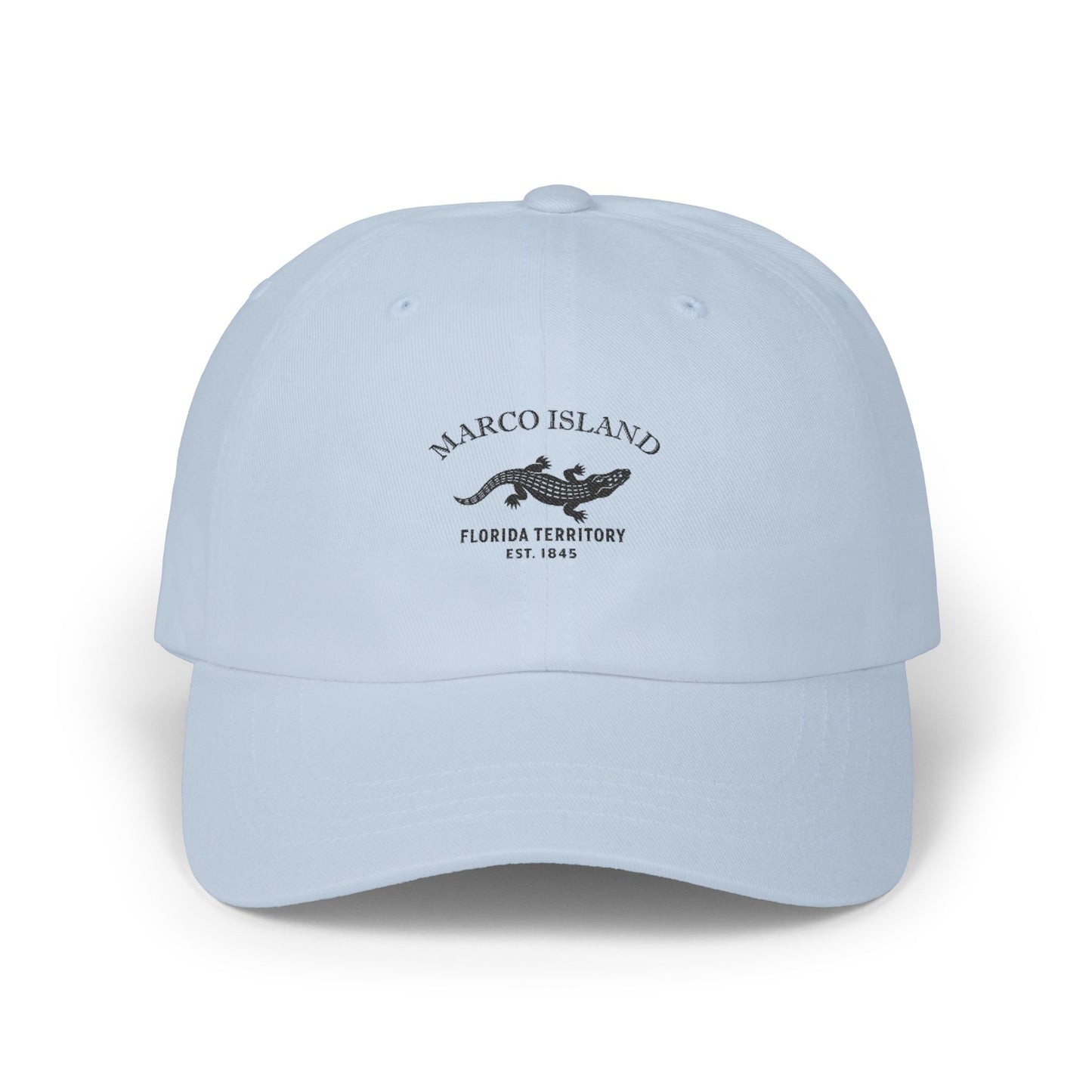
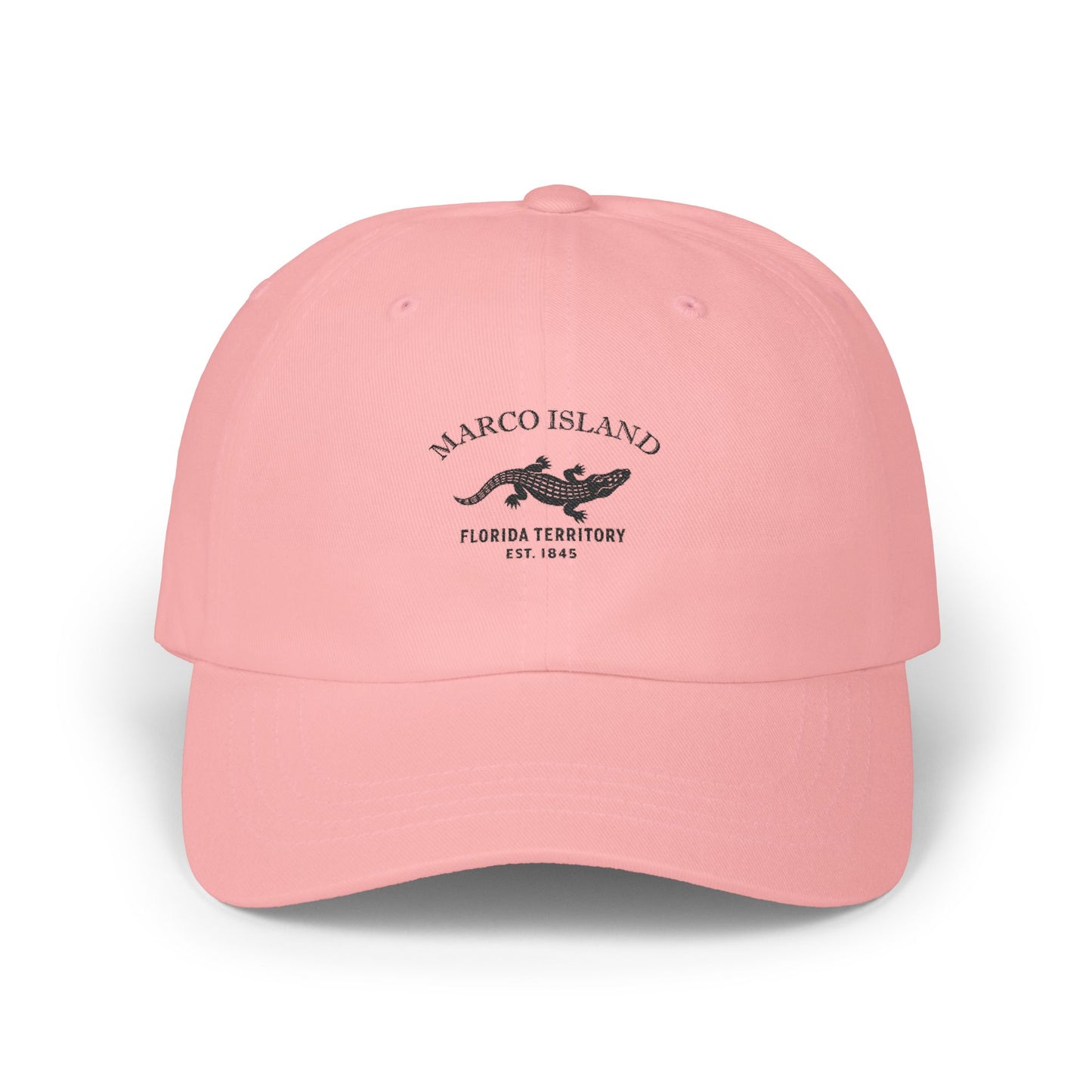
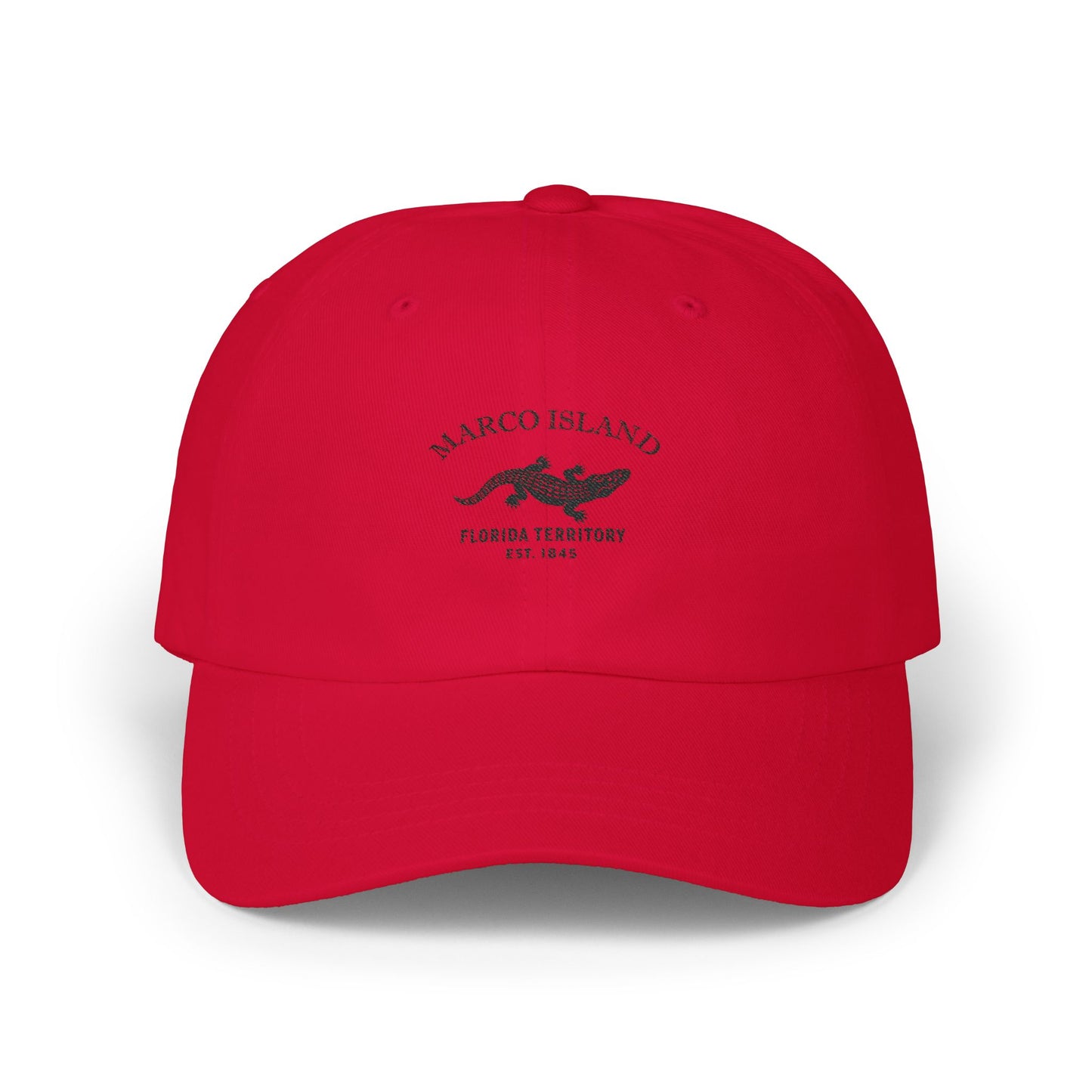
Today Marco Island is white sand and warm water, shell mounds and shelling, a quietly upscale paradise at the edge of the Everglades. Our Marco Island designs gather that identity — the alligator emblem, the Calusa shell island, the wide Gulf beach — into wearable form. Marco Island — where Florida’s widest sugar-sand beach rises from a thousand years of shells.
What’s with the Key Marco Cat? In 1896 an archaeologist named Frank Hamilton Cushing led a Smithsonian expedition into a muddy pond on the edge of this island and pulled out one of the great treasures of American archaeology. The waterlogged, airless muck had preserved what almost never survives: wood. More than a thousand carved wooden objects came up — masks, animal figureheads, tools a thousand years old — and among them a six-inch statuette of a kneeling, half-human, half-panther figure. Many of the other wooden objects, preserved only by the airless muck, dried out and fell apart soon after they reached the surface — which is part of why the surviving Cat is treasured as it is. The Key Marco Cat is now counted among the finest works of pre-Columbian art in North America. It sits today in the island’s history museum, on loan from the Smithsonian — a small wooden cat that has watched over Marco’s story for a thousand years.
Why People Visit Marco Island
Marco Island rewards visitors who want wide white sand, warm shallow water, and shells underfoot, with a rare depth of history close by. Add the boat trips into the Ten Thousand Islands and the year-round Gulf sun, and the case makes itself.
