


What’s with the Key Marco Cat? In 1896 an archaeologist named Frank Hamilton Cushing led a Smithsonian expedition into a muddy pond on the edge of this island and pulled out one of the great treasures of American archaeology. The waterlogged, airless muck had preserved what almost never survives: wood. More than a thousand carved wooden objects came up — masks, animal figureheads, tools a thousand years old — and among them a six-inch statuette of a kneeling, half-human, half-panther figure. Many of the other wooden objects, preserved only by the airless muck, dried out and fell apart soon after they reached the surface — which is part of why the surviving Cat is treasured as it is. The Key Marco Cat is now counted among the finest works of pre-Columbian art in North America. It sits today in the island’s history museum, on loan from the Smithsonian — a small wooden cat that has watched over Marco’s story for a thousand years.
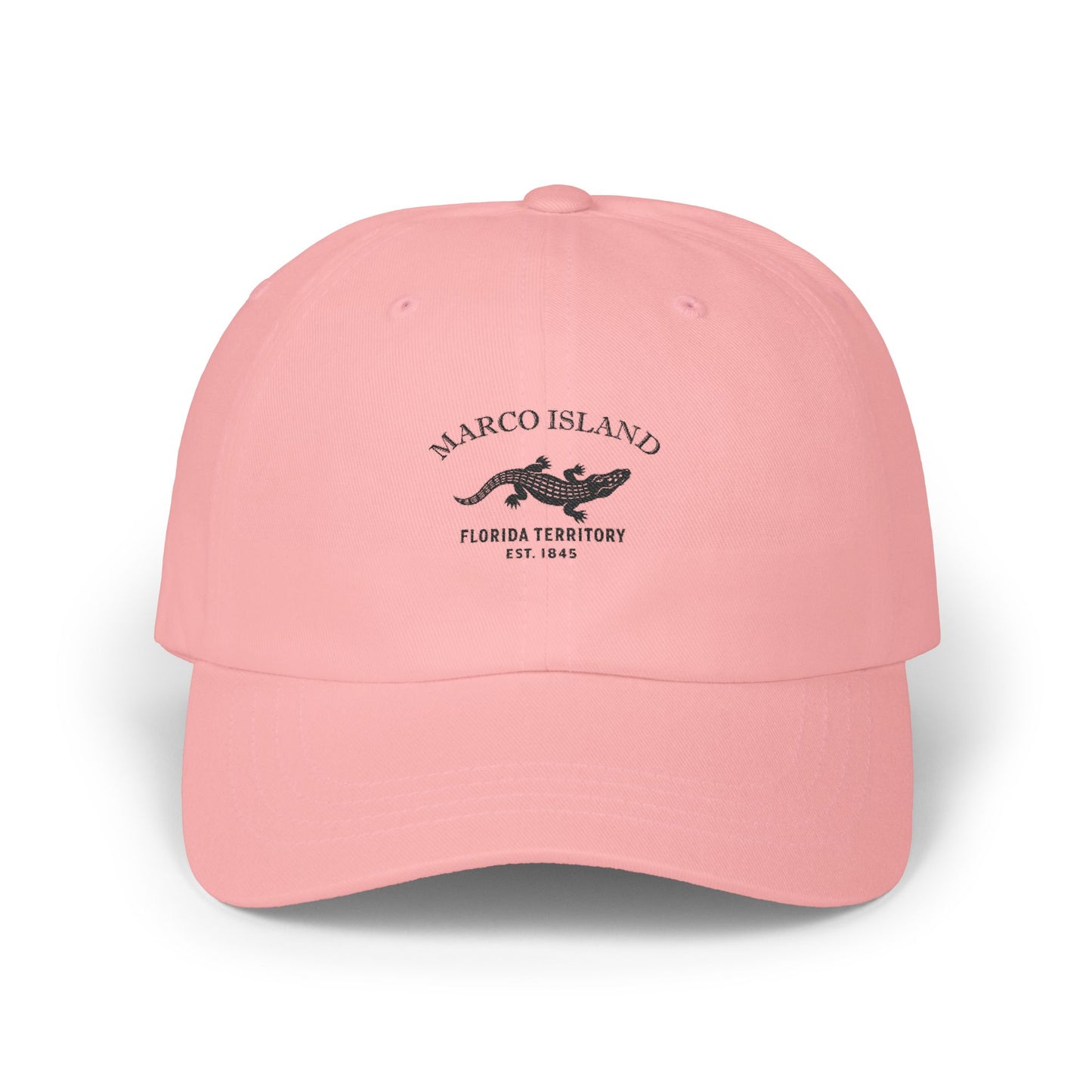
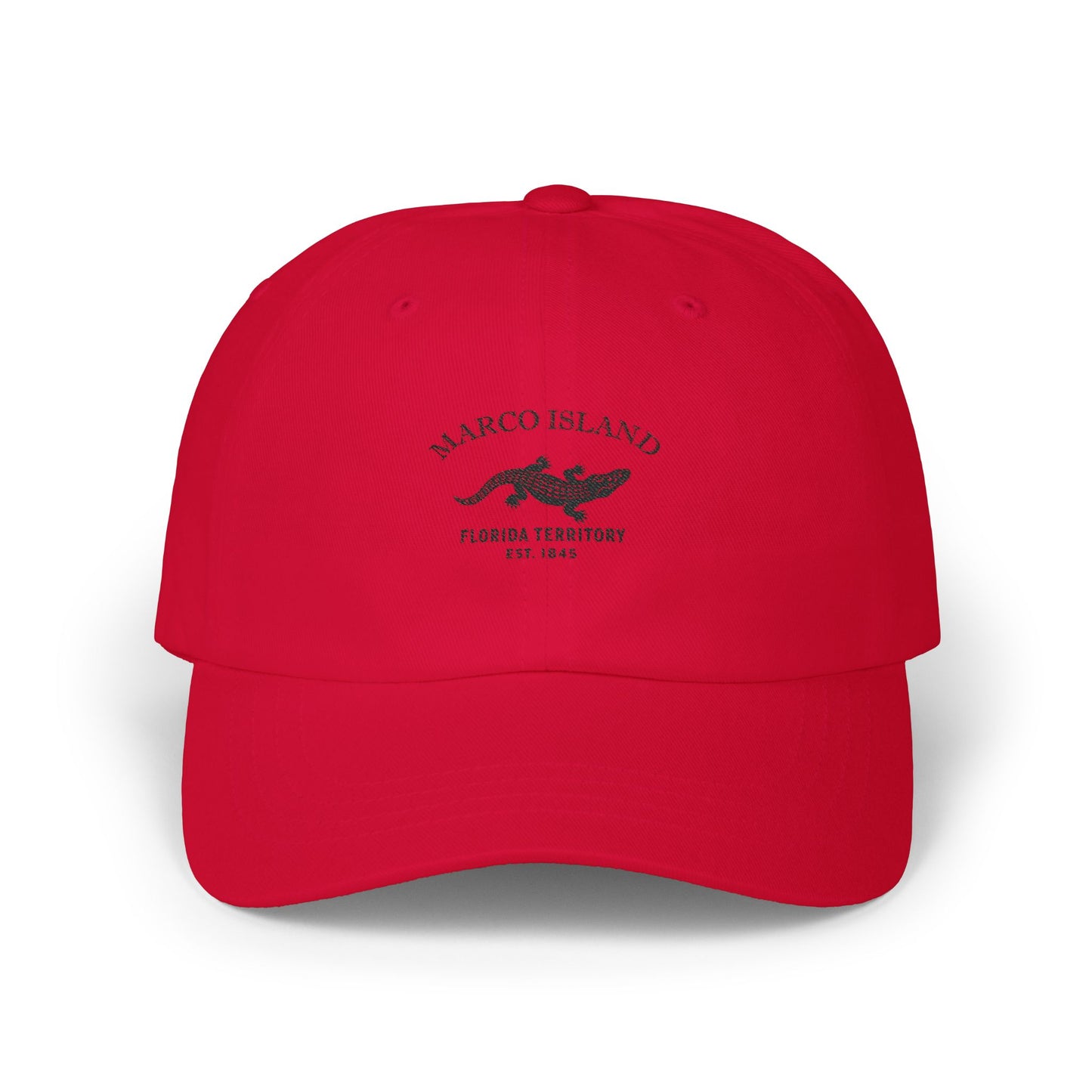
Our Marco Island logo carries the Florida alligator over “Florida Territory · Est. 1845,” the year Florida became a state — the shared emblem of every Merlin Classics Florida town. Printed in clean retro black-and-white that reads like an old crate label, the alligator stands for Florida as a whole; what makes this one Marco Island is everything behind it — the Calusa shell mounds and Indian Hill, the six-mile sugar-sand beach, the canal-laced planned island, and the Ten Thousand Islands at its back door.
Why People Visit Marco Island
Marco Island rewards visitors who want wide white sand, warm shallow water, and shells underfoot, with a rare depth of history close by. Add the boat trips into the Ten Thousand Islands and the year-round Gulf sun, and the case makes itself.
