


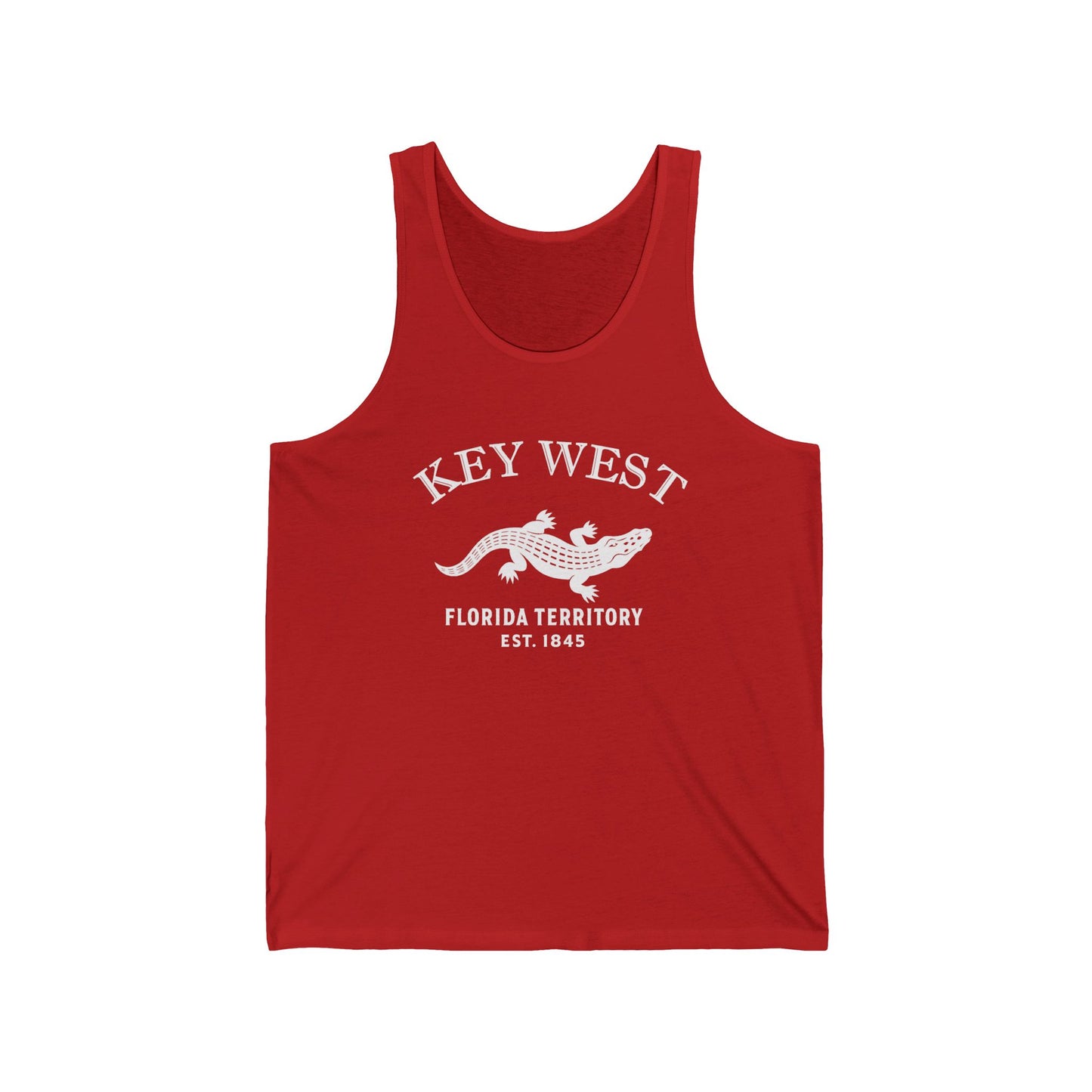


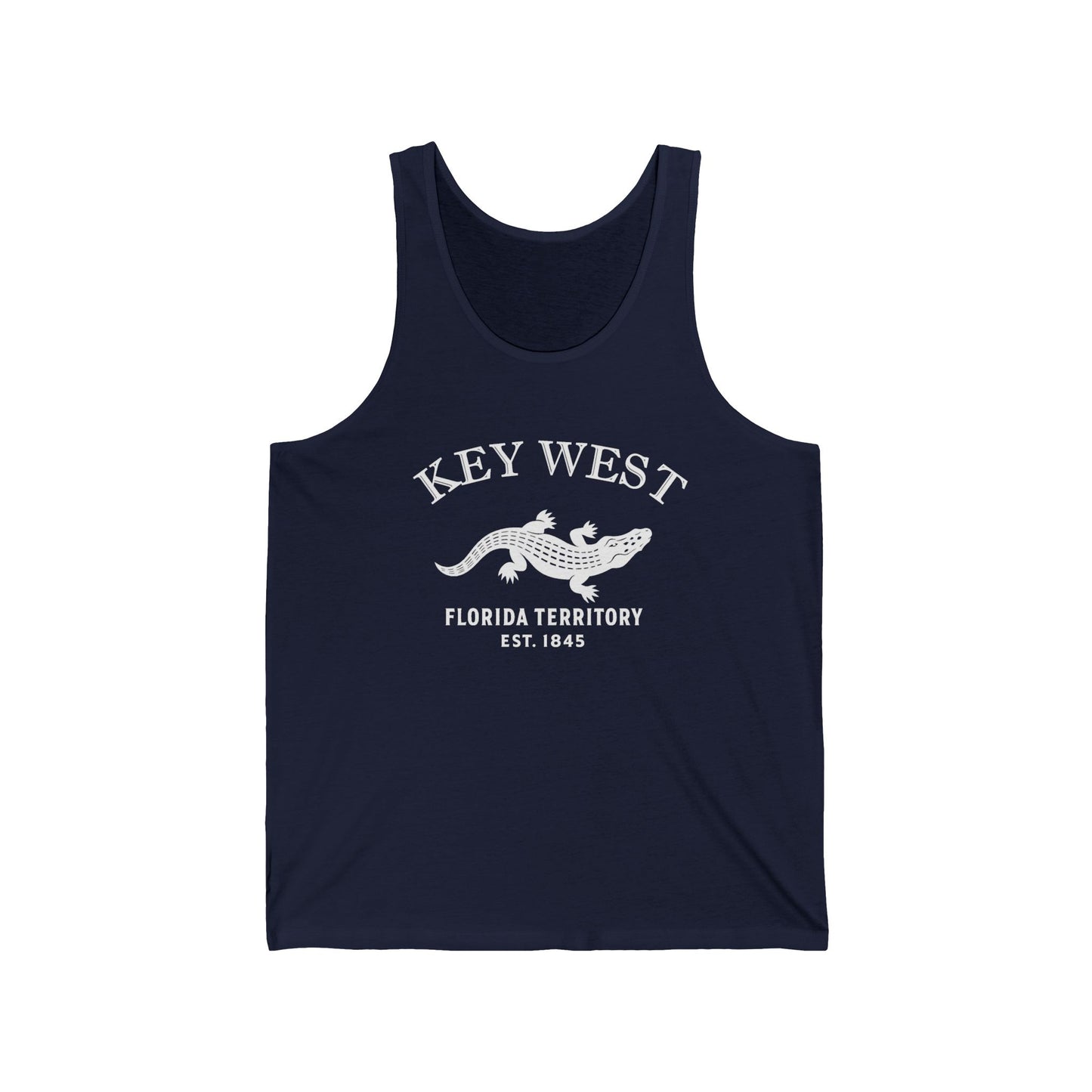
Our Key West logo carries the Florida alligator above "Florida Territory — Est. 1845," the shared retro emblem of our Florida towns, drawn in worn black-and-white like an old woodcut crate label. The 1845 date marks Florida statehood, and the alligator is the through-line that links Key West to every other Florida town we make. The detail that makes this one Key West is the island itself — the Conch Republic at the end of the Overseas Highway, the Southernmost Point, and Mile Marker 0 where the road, and the country, finally run out.
The Navy made Key West a base — a submarine station from the 1930s on — and the warm island drew writers and presidents. Ernest Hemingway kept a house at 907 Whitehead Street from 1931 to 1939, a place built of native limestone in 1851 and still known for the descendants of his six-toed cats. Tennessee Williams wrote here for decades. And Harry Truman so loved the old naval officers' quarters that they became his Little White House, where he ran the country through the winters of his presidency. The literary-and-presidential Key West remains a pilgrimage.
Why People Visit Key West
Key West rewards travelers who want history, water, and a freewheeling island culture rather than only a beach — the Southernmost Point, the Conch Republic, the literary and presidential houses, and a compact Old Town you can walk end to end. People come for the sunset at Mallory Square and the bars of Duval, for the Hemingway and Truman landmarks and the wrecking-era treasure, and for an easygoing day at Mile Marker 0 where the Overseas Highway, and the country, finally run out of road.
