


What reshaped the land was sugar. In 1835 Old Koloa Town, on the sunny south shore, opened the first successful commercial sugar mill in Hawaiʻi — the start of a plantation economy that would spread across the islands and reorder Kauaʻi's land and labor for more than a century. Big operations like Grove Farm followed, and the mills drew waves of contract laborers from China, Japan, Portugal, Norway, Puerto Rico, the Philippines and beyond. The plantation camps they built still shape the island's place names, foods, festivals, and family trees. The tie to Japan runs especially deep — so many workers came from one small island in Yamaguchi that it calls itself a cradle of the Hawaiʻi migration — and it is why Kauaʻi today counts sister cities across Japan, knit by more than a century of shared plantation history.
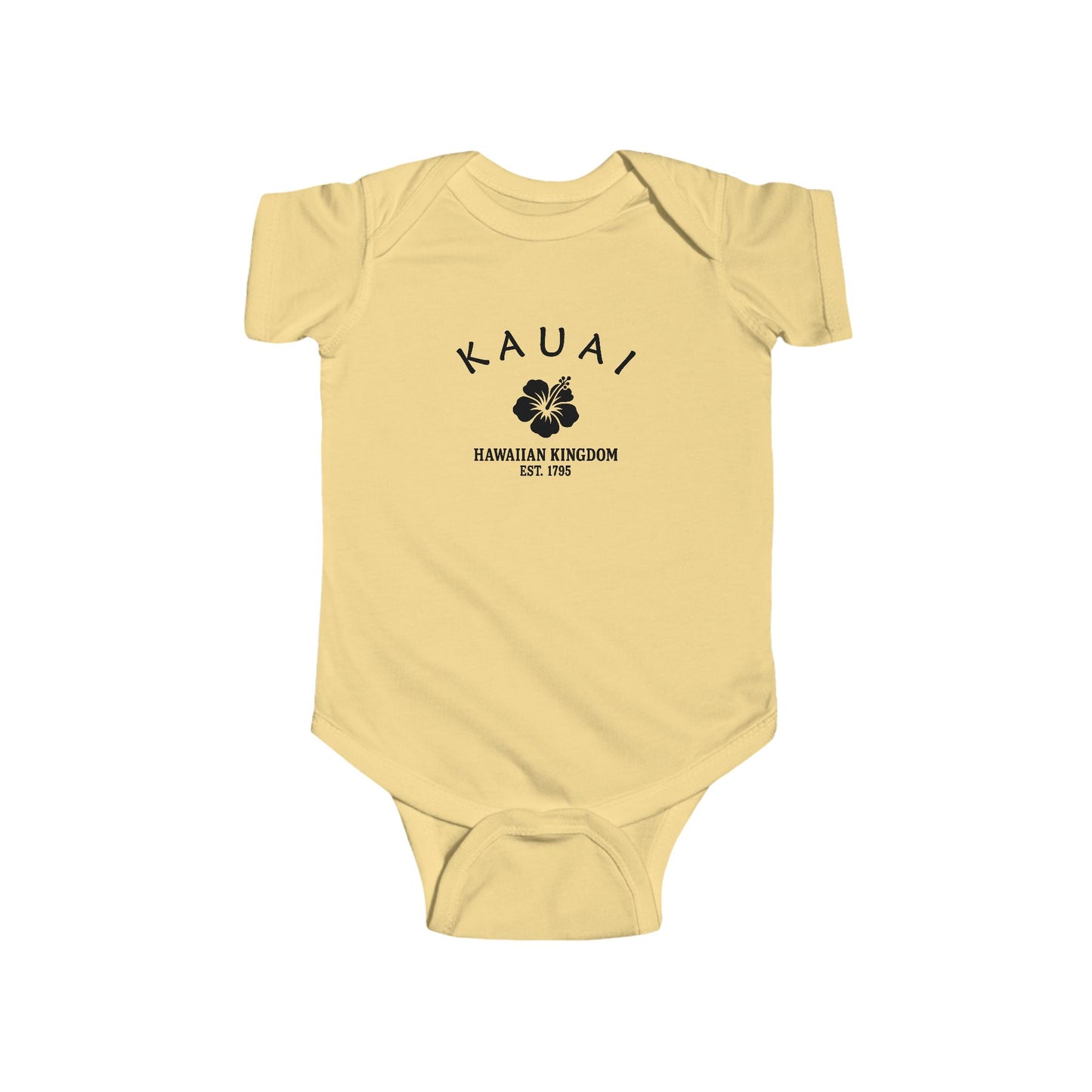
So Kauaʻi gathers the oldest Hawaiian island, the deepest green in the chain, a canyon and a coastline carved by rain, and the proud history of a kingdom joined but never taken. Our Kauaʻi designs gather that into wearable form. Wear the history. Kauaʻi — the Garden Isle, where the oldest Hawaiian island wears its green like a crown.
Why People Visit Kauaʻi
People come to Kauaʻi for the oldest, greenest island in the chain and the quieter pace that comes with it. It rewards travelers who would rather hike a canyon rim or paddle a north-shore bay than chase a crowd — a place of waterfalls, taro valleys, and emerald cliffs, with a deep Hawaiian history and a slower, garden kind of aloha.
