Skip to product information
1 of 5

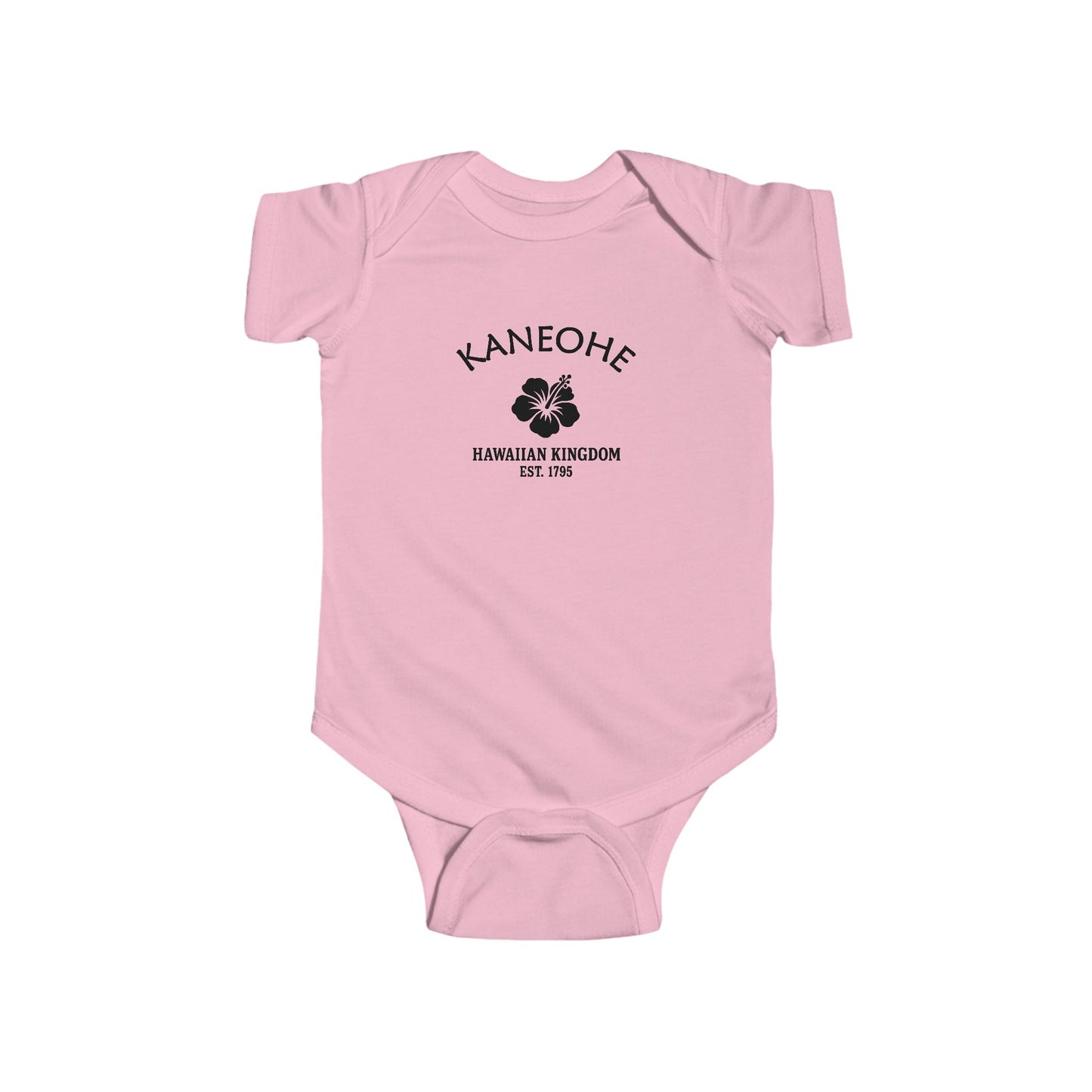
Kaneohe Hawaii Vintage Retro Cotton Jersey Baby Bodysuit - Black Logo

Kaneohe Hawaii Vintage Retro Cotton Jersey Baby Bodysuit - Black Logo

Regular price $26.00 USD
Regular price Sale price $26.00 USD
Sale
Free U.S. Shipping
Color
Size
Quantity


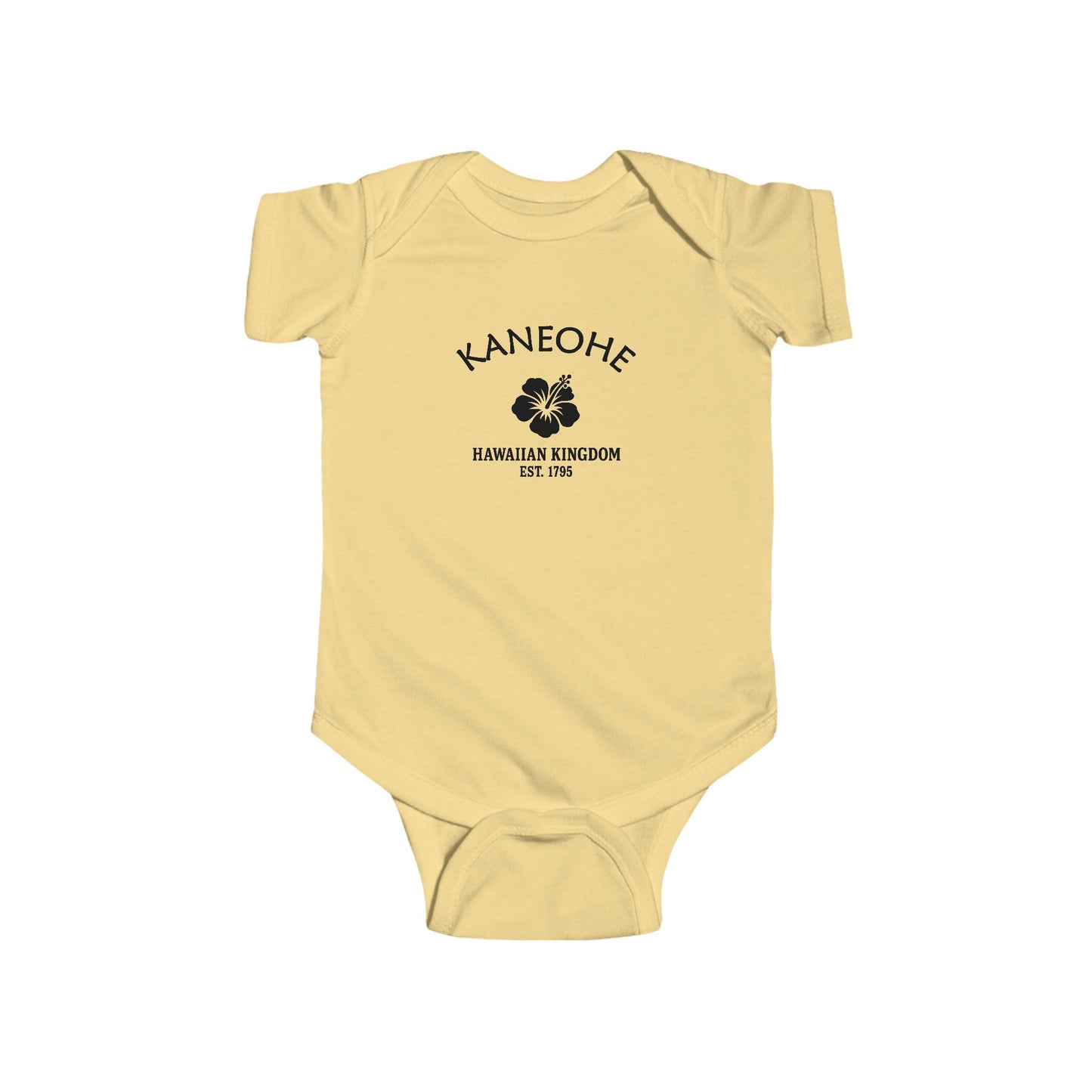
The Kāneʻohe baby bodysuit, for the town that looks across Hawaiʻi’s only barrier-reef bay. Soft fine jersey with the Kāneʻohe vintage retro logo on the front in black, newborn to 24 months.

This is the new-baby gift from the hometown: light, soft, with a snap crotch that makes changes easy and a logo the parents will photograph. Order it as soon as the news arrives; it is the Kāneʻohe piece most often bought for someone else.

This unisex baby bodysuit is made from soft, breathable fine jersey at a light 4.5 oz (153 g/m²). A secure snap crotch makes changes easy, and ribbed binding with side seams adds durability. Solid colors are 100% combed ringspun cotton; heathers include a cotton–polyester blend.

Kāneʻohe Bay, eight miles long and three wide, is a remnant of the ancient Koʻolau caldera, sheltered by one of only two barrier reefs in the Hawaiian Islands and the only one on Oʻahu. The ahupuaʻa of Koʻolaupoko was a major Native Hawaiian district for centuries, and windward Oʻahu’s largest town grew up against the pleated green cliffs of the Koʻolau Range.

Boats anchor on the submerged sandbar of Ahu o Laka in the middle of the bay, the Mokapu Peninsula became a military reservation in 1918, and the 1968 Byodo-In Temple in the Valley of the Temples, a replica of the 950-year-old temple at Uji, was built to mark a century of Japanese immigration. The windward side is the mark on this piece.


QUICK FACTS — KĀNEʻOHE HI COTTON JERSEY BABY BODYSUIT

Town: Kāneʻohe, Hawaiʻi

Founded: Settlement centuries pre-contact; base 1918

Known for: Kāneʻohe Bay and Hawaiʻi’s only barrier reef on Oʻahu; the Kāneʻohe Sandbar; the Koʻolau cliffs; the Byodo-In Temple (1968)

Art: Kāneʻohe vintage retro logo, black (printed)

Blank: Unisex infant bodysuit, ribbed binding, side seams, snap crotch

Fabric: 4.5 oz (153 g/m²) fine jersey; solids 100% combed ringspun cotton, heathers cotton–polyester

Made to order in the USA


Made to order and shipped free in the U.S. More Kāneʻohe pieces, and the rest of Hawaii, are one button away.


View full details

Wear Local. Feed Local. Stay Classic.

Product FAQs

How does your sizing work?

Every item is made to order, so please check the size chart on this page before you buy. Women's fitted tees run small; size up for a looser fit. Caps are one size with an adjustable strap.

How are items made and when will they arrive?

We make each item to order using premium blanks, embroidery and soft-hand prints. Production takes 2-5 business days (weekends and holidays excluded), then 4-10 days in transit via USPS, UPS or FedEx to U.S. addresses; most orders arrive within 6-15 business days. You'll get a tracking link the moment it ships. Any current shipping offer is shown in the bar at the top of every page and applies automatically at checkout, no code needed.

How do I send a gift?

Enter the recipient's address as the shipping address and your own as the billing address at checkout. Nothing ships with a price; the package includes a plain packing slip. Tracking goes to your email, not theirs. For birthdays and holidays, order two weeks ahead to be safe.

What's the return policy?

Made-to-order items can't be returned or exchanged for size or color, so please use the size chart and photos before ordering. If anything arrives defective, misprinted or damaged, send a photo and your order number within 30 days and we'll replace it or refund you.

How do I care for my item?

Apparel: wash cold, inside out, with like colors; no bleach; tumble dry low or hang dry. Embroidered pieces: iron inside out to protect the stitching. Caps: spot clean. Printed glasses and water bottles: hand wash only, no dishwasher, so the artwork lasts. Mugs and engraved glasses are dishwasher safe. Any item-specific care notes are in the description above.

Who makes this?

Merlin Classics is a small Connecticut brand making original retro designs for the towns people love. Every piece is printed, embroidered or engraved to order in the USA, and the business supports hunger relief in the communities our collections celebrate.

Our Kāneʻohe retro logo uses Hawaiʻi's hibiscus motif, emphasizing cultural pride and resilience. The hibiscus represents natural beauty, aloha spirit, and Hawaiian heritage, while "1795" ties the design to unification under Kamehameha I. Black-and-white styling is vintage and authentic, resembling travel labels or crate stamps. The motif bridges Kāneʻohe's heritage and suburban expansion, honoring tradition while reflecting resilience. On merchandise, it communicates authenticity, pride, and endurance, retro vintage in tone. The hibiscus motif symbolizes Kāneʻohe's layered identity, perfectly suited for celebrating a Hawaiian town defined by culture, community, and resilience.

Kāneʻohe, on Oʻahu's windward side, has roots in Hawaiian agriculture and tradition that run deep below the modern town. Indigenous Hawaiians cultivated taro in loʻi fields, fished the reefs of Kāneʻohe Bay, and built approximately thirty royal fishponds along its shore. Missionaries later introduced churches and schools, but Hawaiian culture remained central. The community's identity has always been tied to the land and ocean — symbols of strength and continuity in Hawaiian tradition, carried forward through every era that followed.

Why People Visit Kāneʻohe Hawaiʻi

  • Boat out to the Kāneʻohe Sandbar (Ahu o Laka) — the submerged sand bank in the middle of Kāneʻohe Bay that surfaces at low tide, accessible only by boat, kayak, or paddleboard from Heʻeia Pier or Heʻeia Kea Boat Harbor. One of Hawaiʻi's most famous shallow-water destinations.
  • Visit the Byōdō-In Temple at Valley of the Temples Memorial Park — the half-scale non-denominational replica of the 950-year-old Phoenix Hall at Uji, Japan, dedicated June 7, 1968, to commemorate the centennial of the first Japanese immigrants to Hawaiʻi. Koi ponds, gardens, the three-ton brass Bon-shō peace bell, and the Koʻolau Range as the backdrop. Open daily.
  • Walk the Hoʻomaluhia Botanical Garden — 400 acres at the foot of the Koʻolau Range, established by the U.S. Army Corps of Engineers as a flood-protection project; lake views, picnic spots, and the cliffs rising directly behind.
  • Watch the Koʻolau Range from below — the dramatic eroded basalt of windward Oʻahu, rising more than 2,000 feet directly behind town. The Haʻikū Stairs traced the ridge above Kāneʻohe until their 2024-2025 removal by the City and County of Honolulu; the silhouette of the range remains.
  • Drive Kamehameha Highway north along Kāneʻohe Bay through Heʻeia, ʻĀhuimanu, Kahaluʻu, Waiāhole, and Waikane toward the North Shore.
  • Look at Coconut Island (Mokoliʻi) in Kāneʻohe Bay — the small island that houses the Hawaiʻi Institute of Marine Biology, also recognizable as the silhouette in the opening sequence of the 1960s television series Gilligan's Island.
  • Visit Heʻeia Fishpond — the historic Native Hawaiian loko iʻa kept alive and producing by Kākoʻo ʻŌiwi; check current public-access programming.
  • Drive past Marine Corps Base Hawaiʻi Kāneʻohe Bay (K-Bay) on the Mokapu Peninsula — not visitor-accessible, but its silhouette and runways dominate the bay's northern edge; the December 7, 1941 attack happened here, eight minutes before Pearl Harbor.
  • Look for honu (Hawaiian green sea turtles) and Hawaiian monk seals along the windward shore — both federally protected; stay 50 feet away.

Kāneʻohe Hawaiʻi Merlin Classics retro vintage logo featuring Hawaiian hibiscus motif with 1795 Kamehameha unification date