The thing that settled the contest, and outlived the gold, was the railroad. In May 1898 crews began blasting a narrow-gauge line straight up the coastal wall behind town — the White Pass & Yukon Route, engineered by the Irish-born contractor Michael Heney, who liked to say he could build a railroad anywhere a man could climb. Working with hand tools and black powder through brutal winters, they reached the 2,885-foot summit early in 1899 and drove the last spike at Carcross, in the Yukon, on July 29, 1900. By then the rush was fading, but the "Scenic Railway of the World" had given Skagway a permanent reason to exist — and today it is the town's signature excursion.
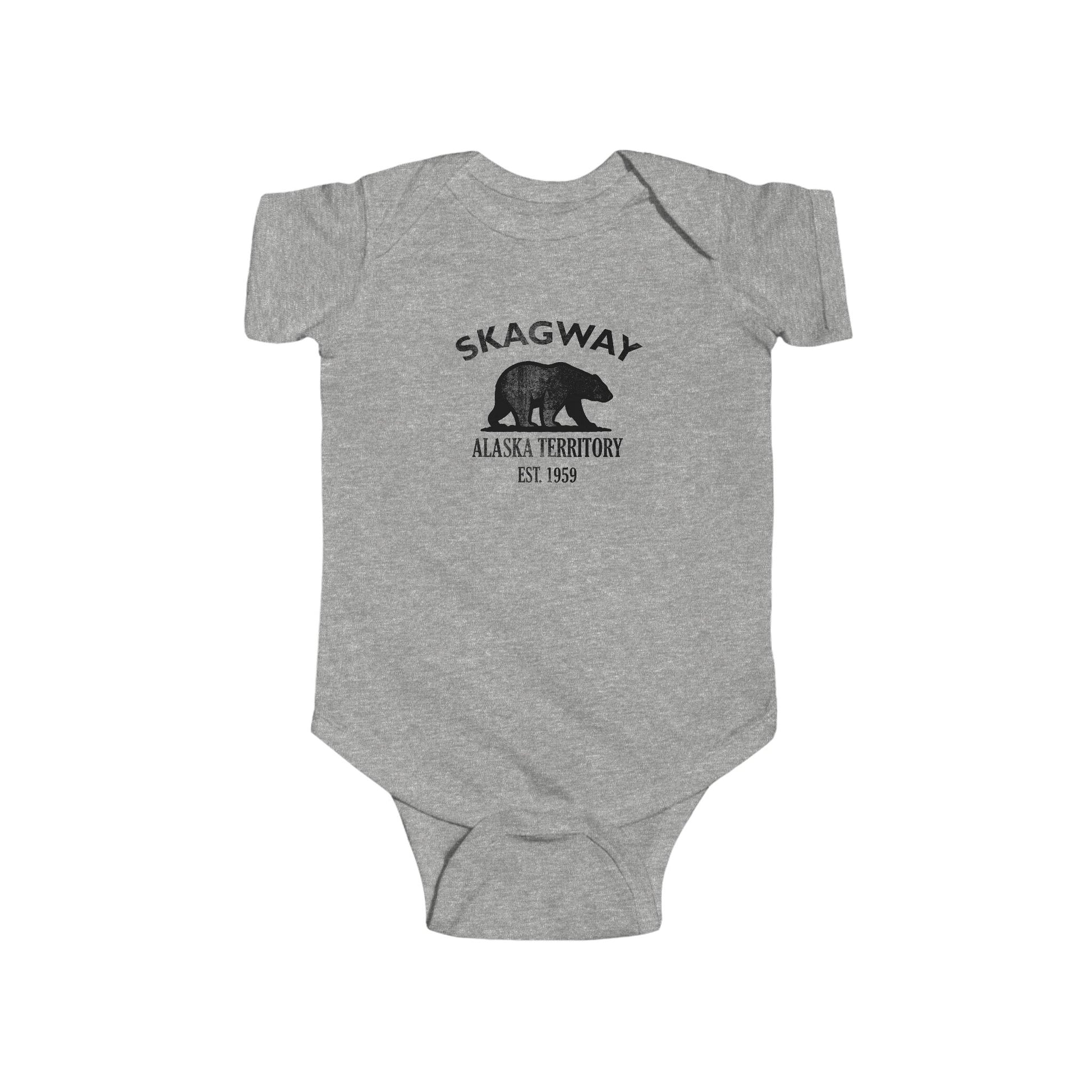
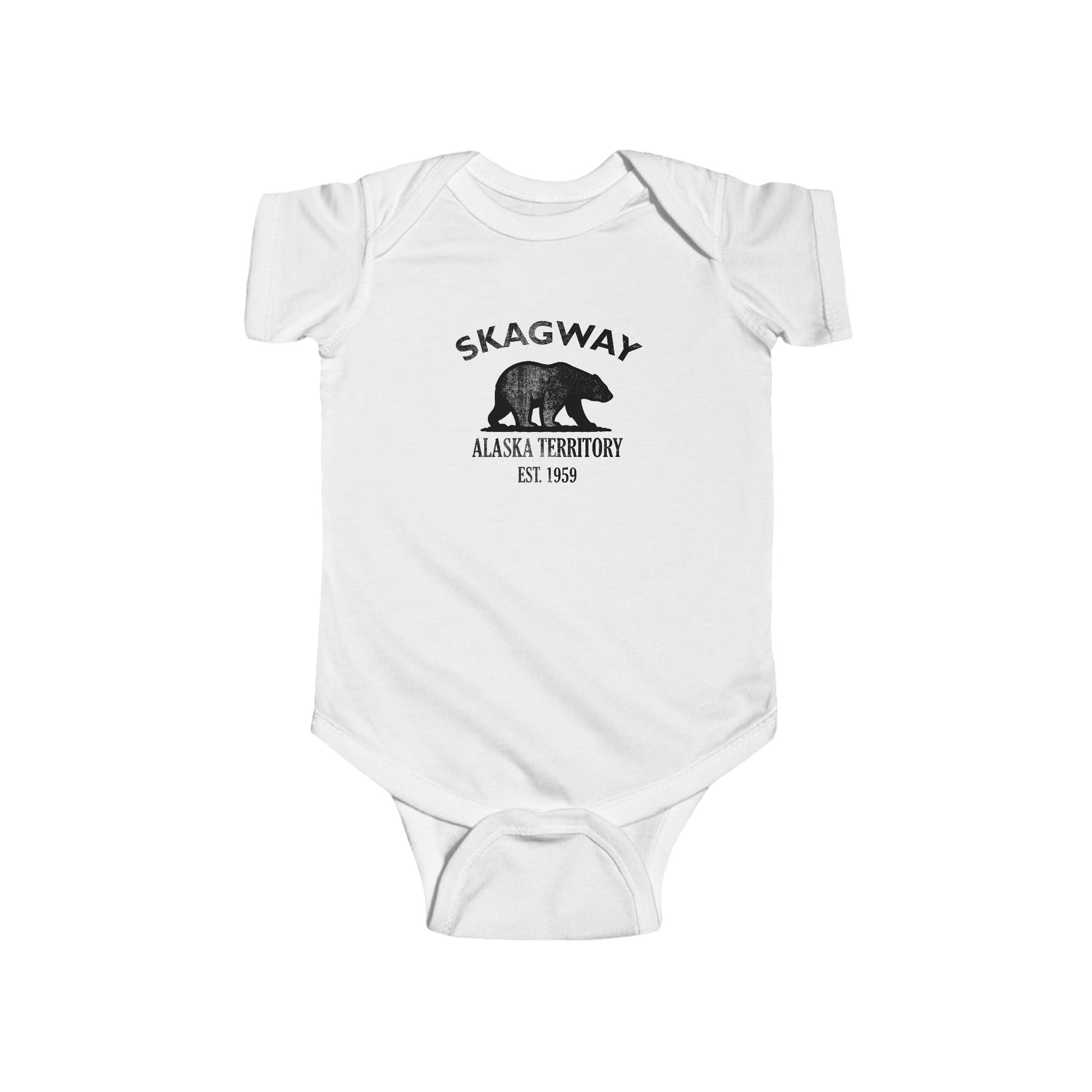
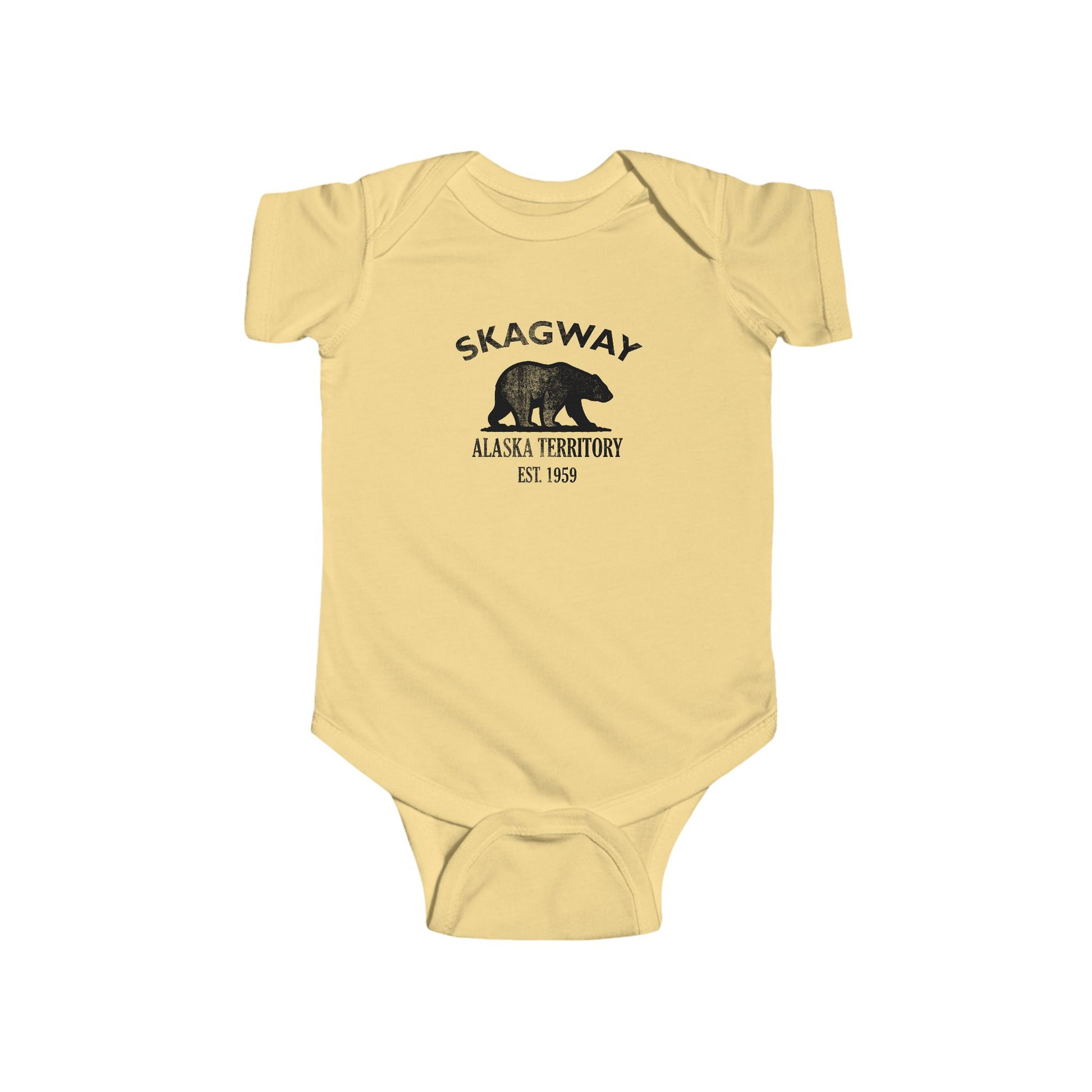
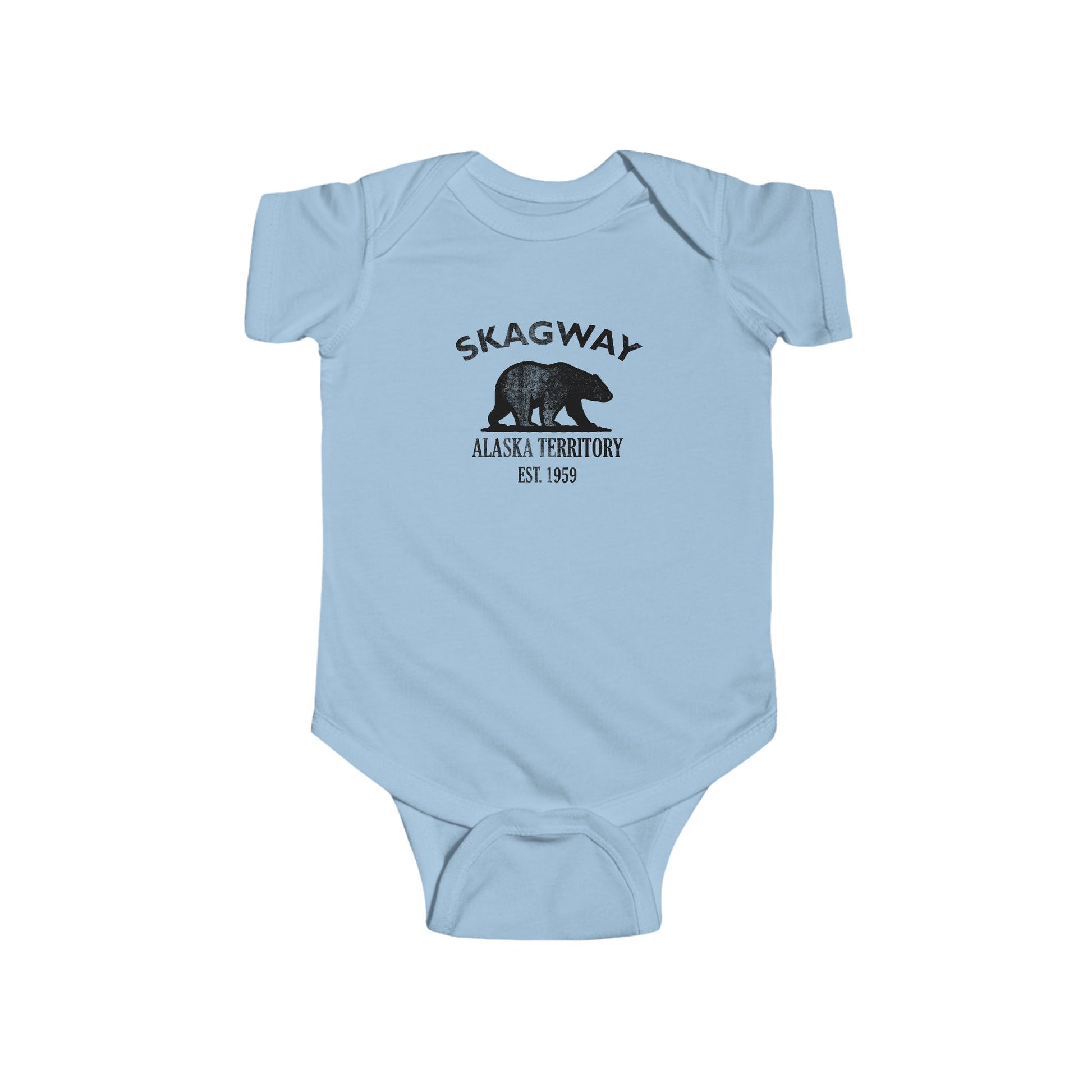
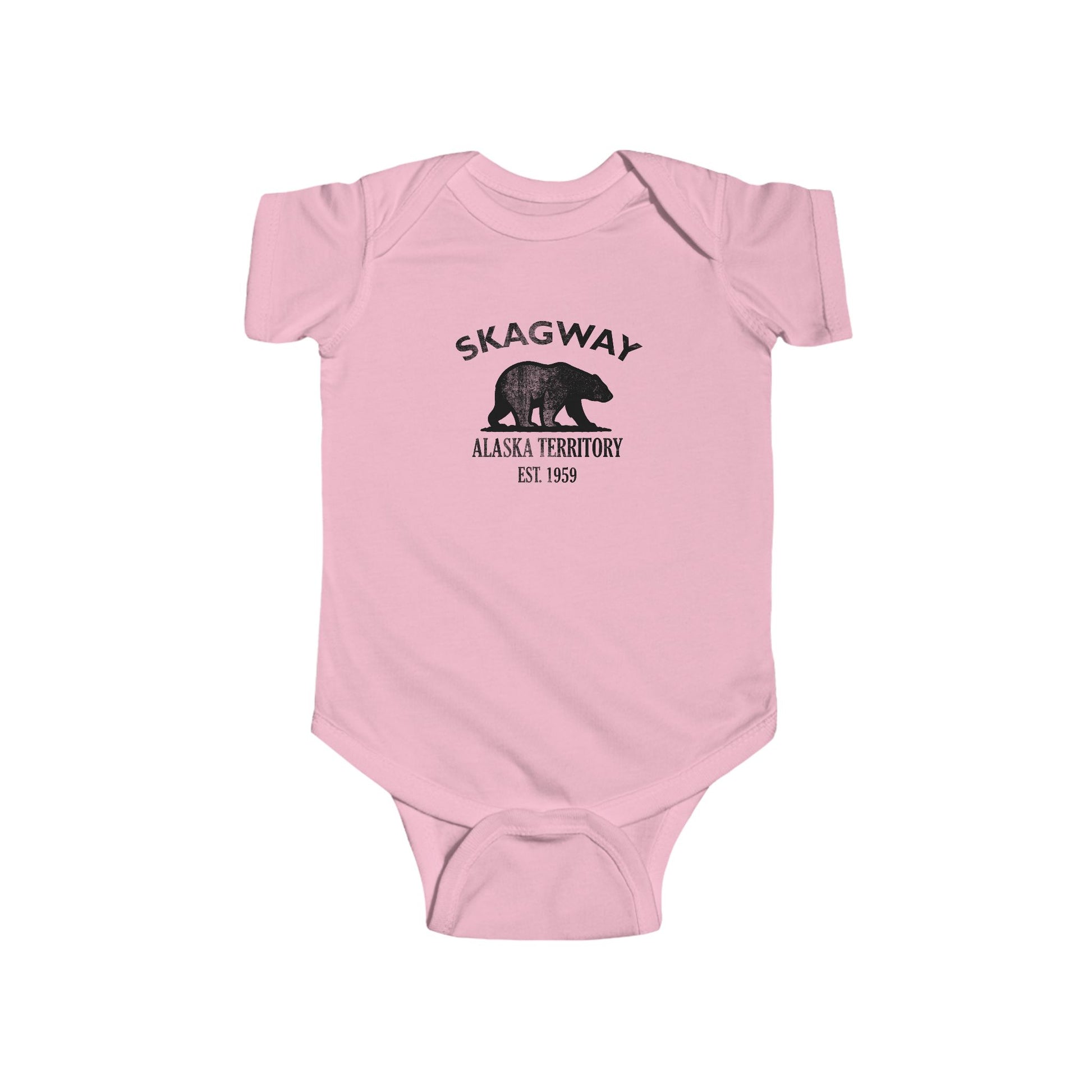
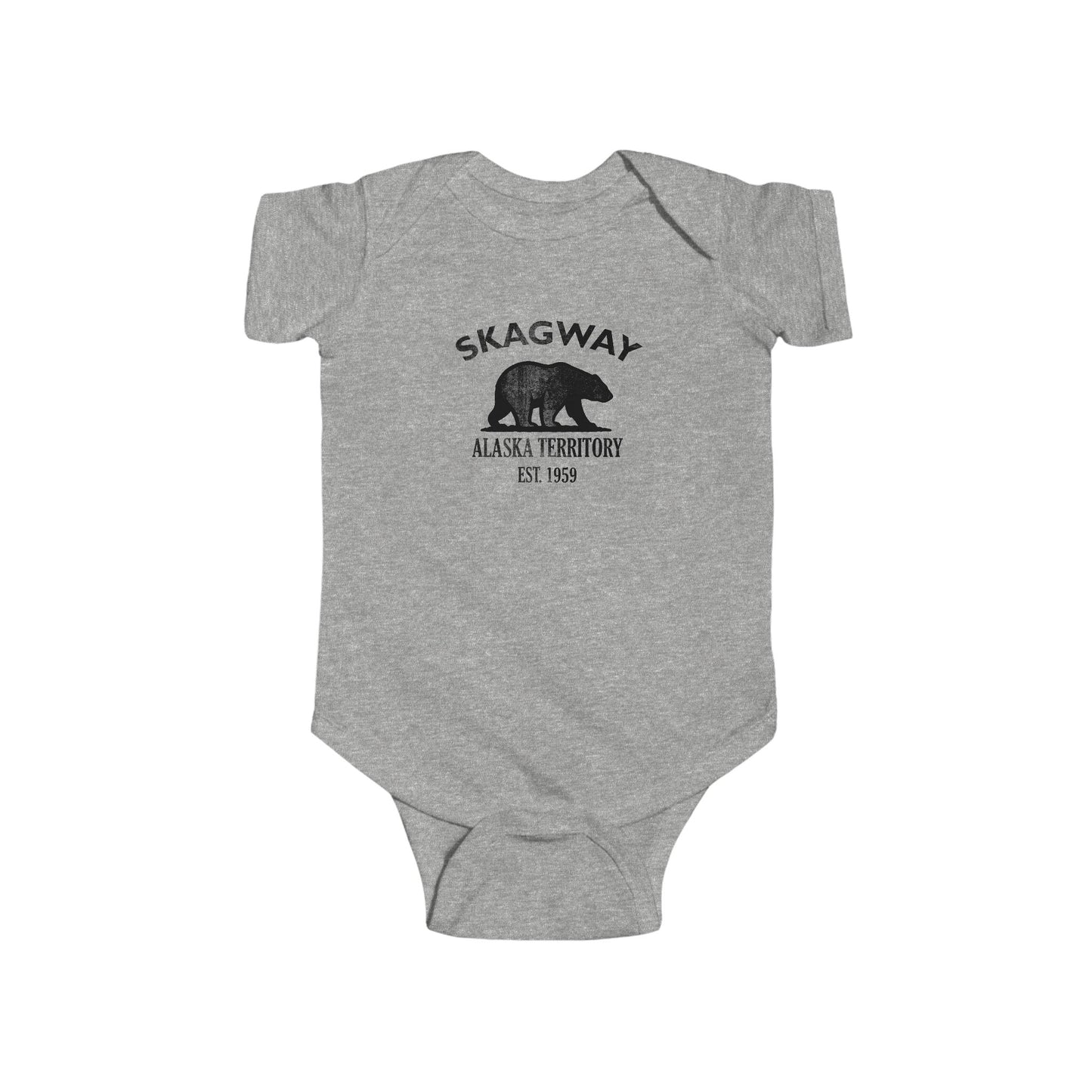
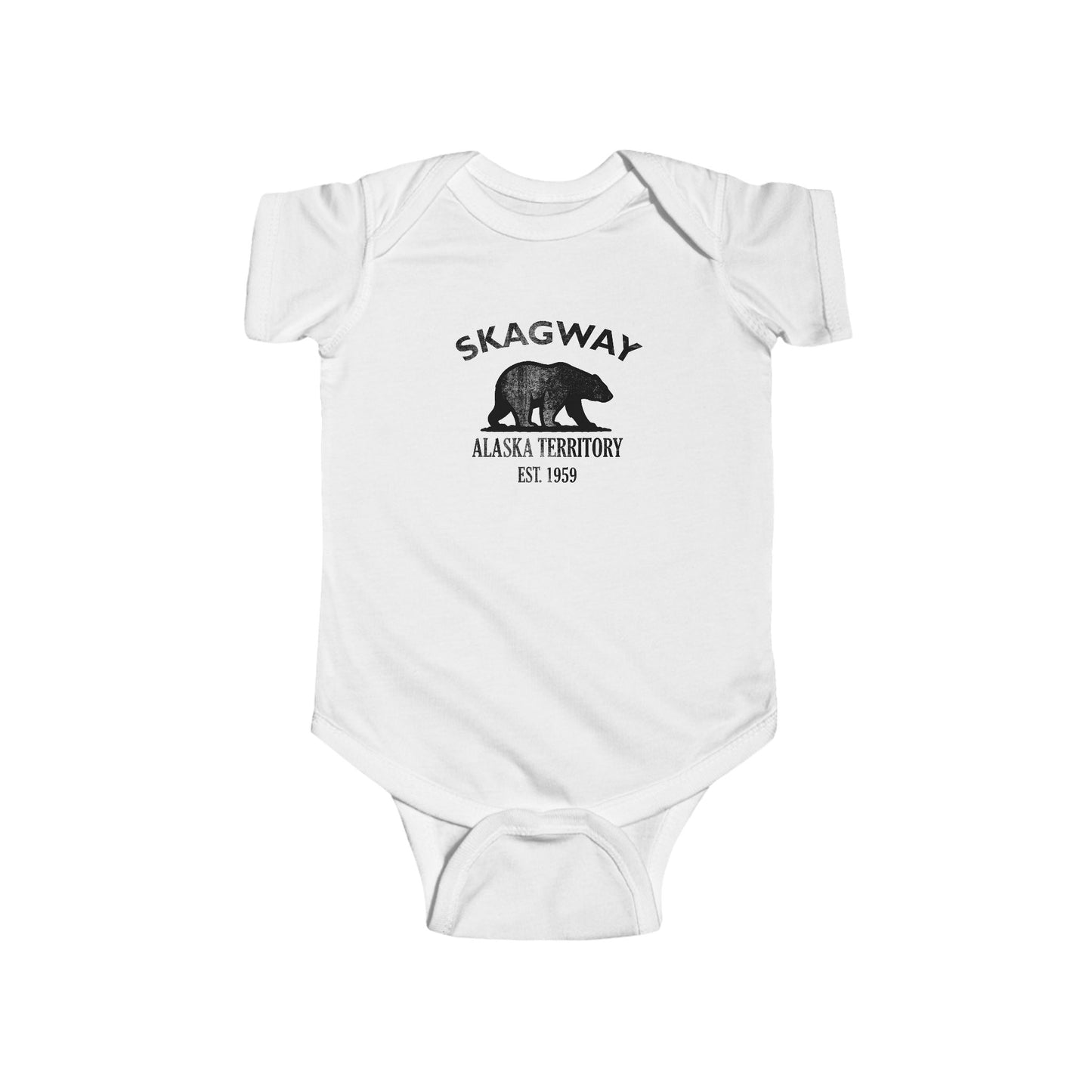
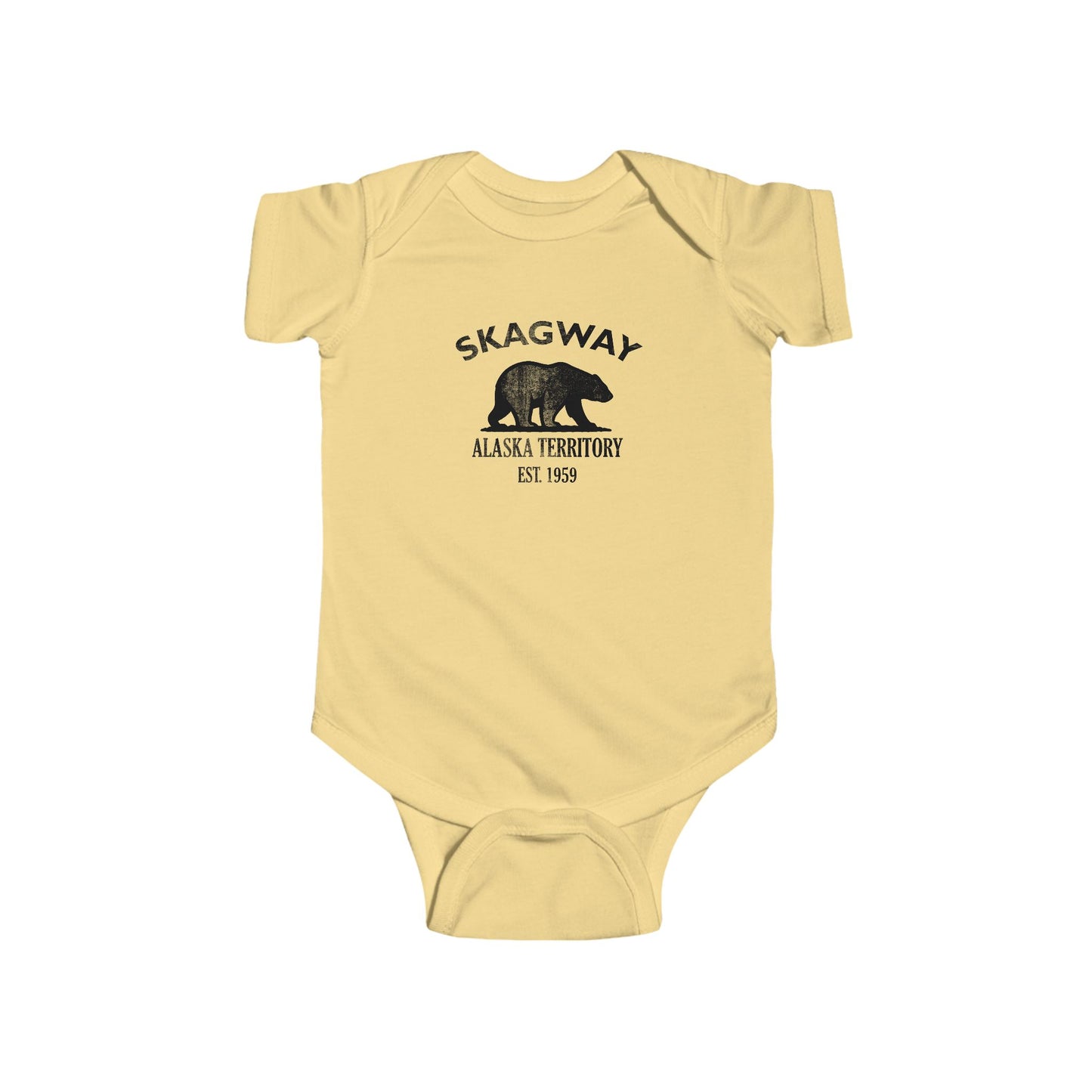
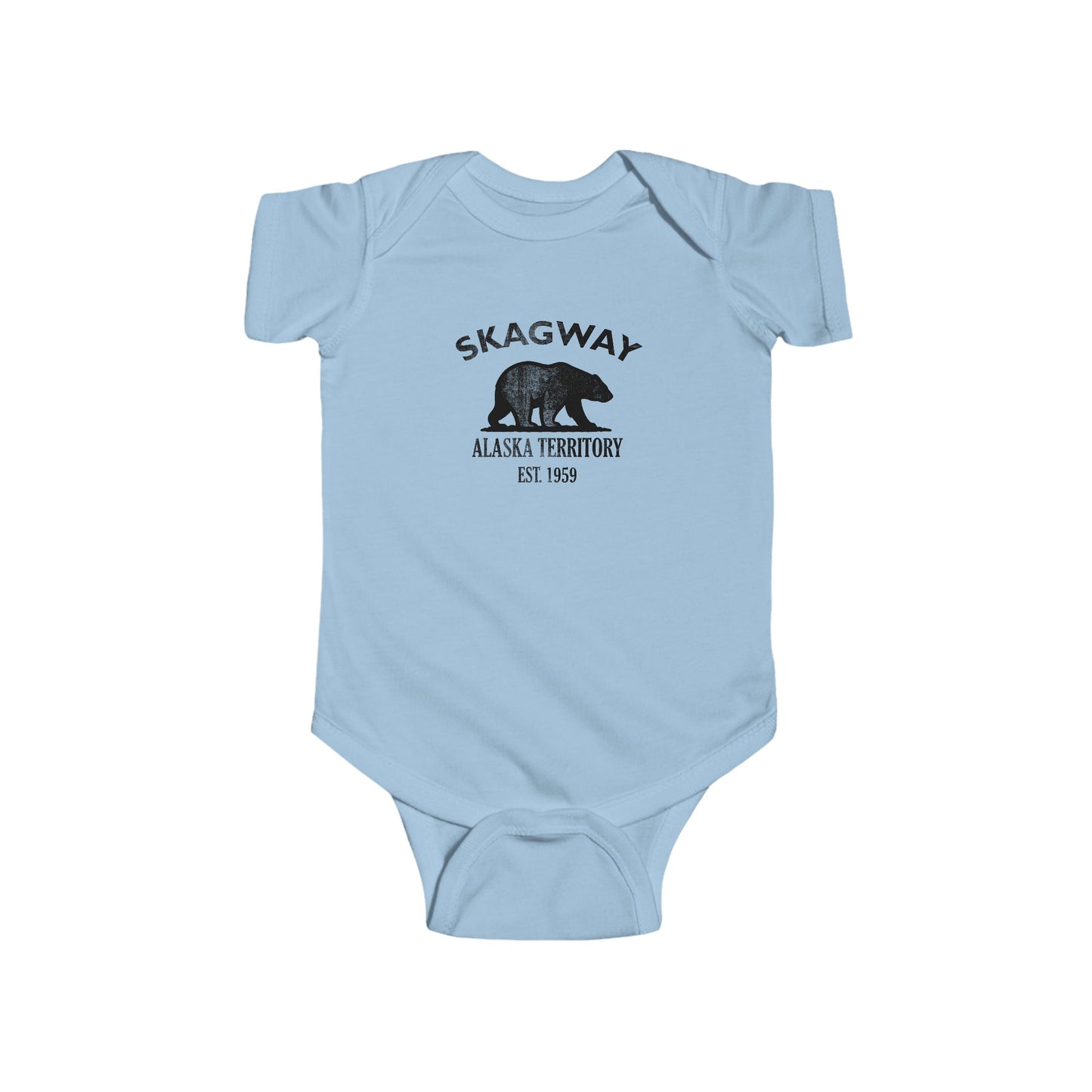
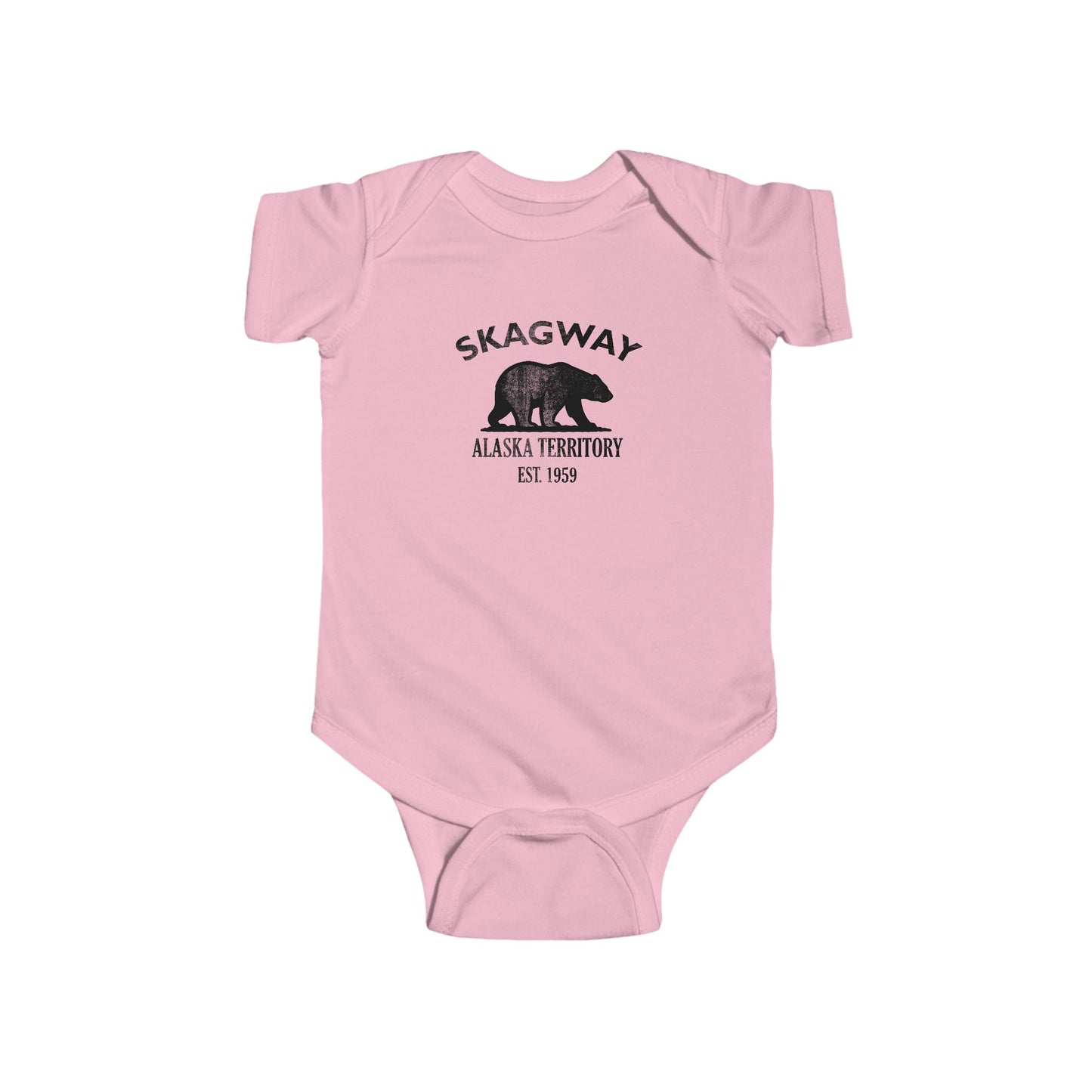
Our Skagway logo carries the distressed Alaska bear above "Alaska Territory — Est. 1959," the shared retro emblem of our Alaska towns; the bear stands for the wild, mountain-walled country the stampeders pushed through, and 1959 marks the year Alaska joined the Union as a state. Rendered in worn black-and-white, like a stamp on a shipping crate or an outfitter's mark, it ties Skagway to every other Alaska town we make. What makes this one Skagway is the town behind the brand — the Trail of '98, the railway up the pass, and the boardwalks that never came down.
Why People Visit Skagway
Visitors come to Skagway for the most intact Gold-Rush town in Alaska — a real boomtown you can walk through — and for the railway that climbs straight out of it into the mountains. It is compact, dramatic, and easy to explore on foot, with the harbor, the historic district, and the trailheads all close together. Equal parts living history and big northern scenery, Skagway rewards anyone who wants to stand at the starting line of the Klondike stampede.
