


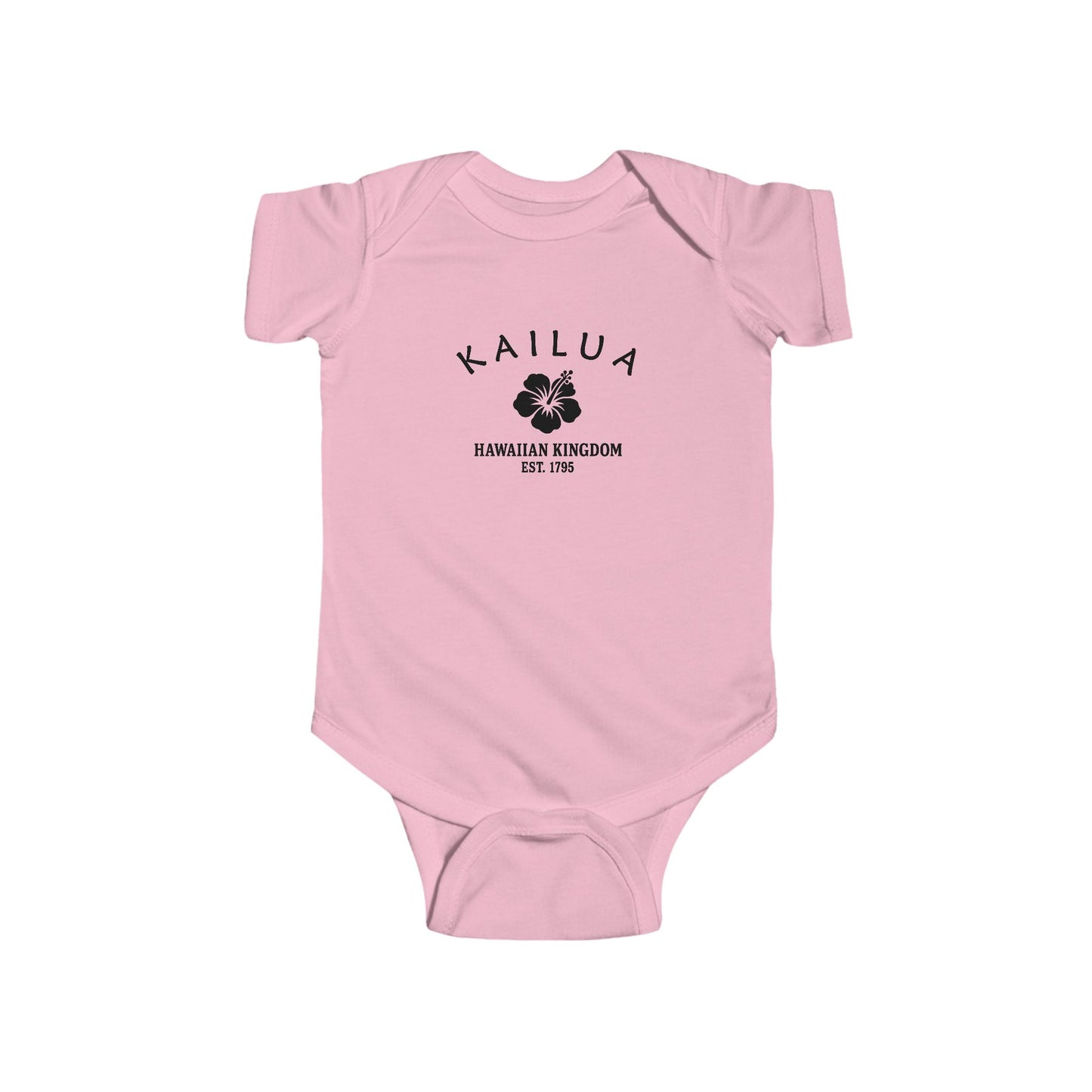
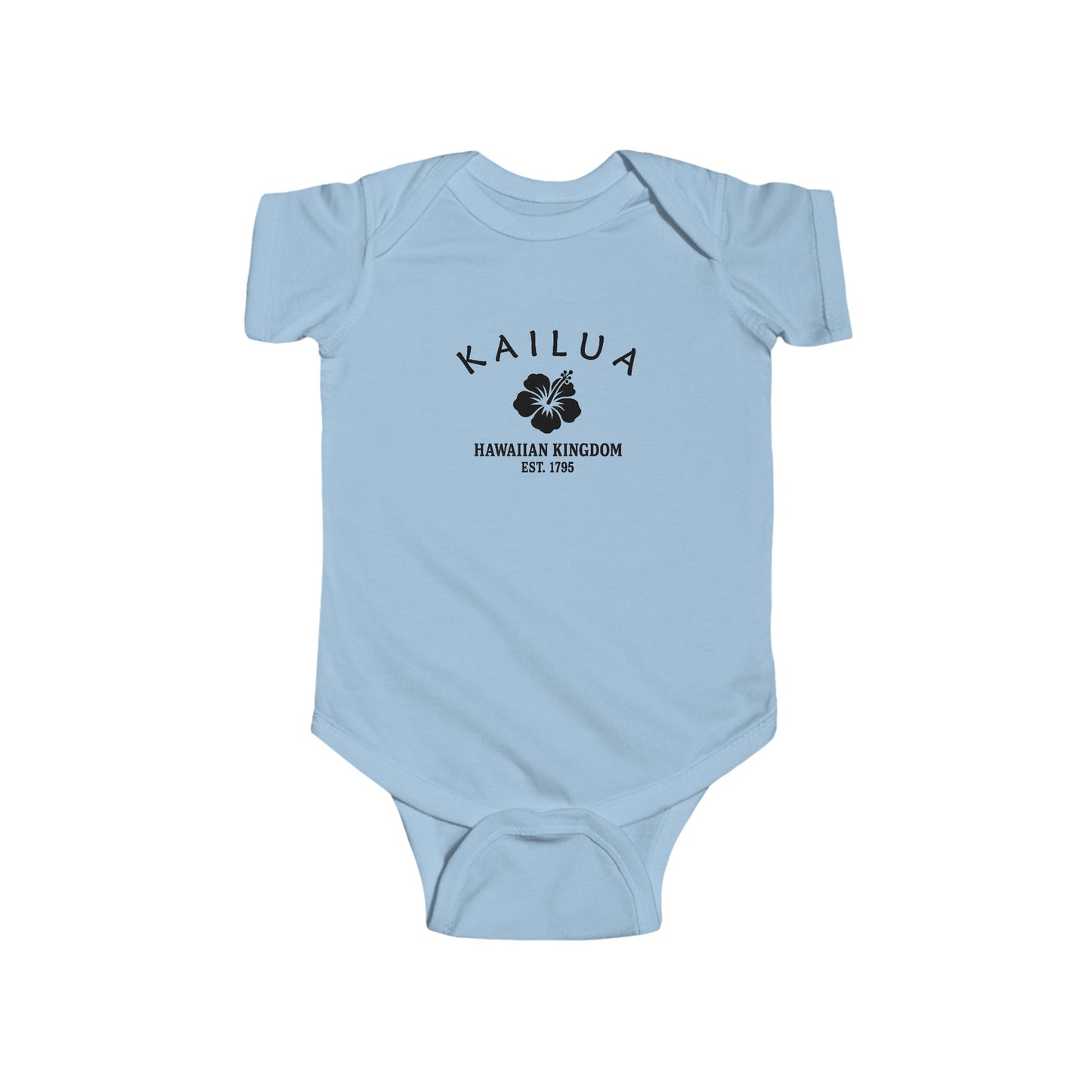
Our Kailua logo carries Hawaiʻi's hibiscus, drawn in worn black and white above the date 1795 — the year of Kamehameha's windward victory and the unification it sealed. The hibiscus is the islands' own flower, a stand-in for the natural abundance and the aloha that have always defined this coast, and the vintage stamp-and-decal styling makes it feel like something off an old travel trunk rather than a modern print. The flower and the date are the through-line that links Kailua to our other Hawaiian towns; what makes this one Kailua is everything around it — the two seas, the windward trades, and the Mokulua offshore.
Kailua stayed country until the middle of the twentieth century. After the war, new roads over and through the Koʻolau opened the windward side to Honolulu, and through the 1950s and 1960s Kailua filled in as a leafy bedroom community of schools, churches, and beach bungalows. Tourism mostly went the other way — to Waikīkī — which left Kailua delightfully local and let its beaches keep their easy, unhurried feel. What did draw the world was the wind: the same steady trades that cool the town make Kailua Bay one of the great windsurfing and kitesurfing waters anywhere, and the sport's early champions made their name on this very water.
Why People Visit Kailua
Kailua blends scenic windward beaches with deep Hawaiian heritage. Visitors come to swim, paddle out to the islands, and hike to a pillbox view, then slow down in a town that stayed local. It is picturesque, approachable, and meaningful to the island families who call it home — natural beauty and everyday culture side by side, with year-round appeal in its parks, paths, and shoreline.
