


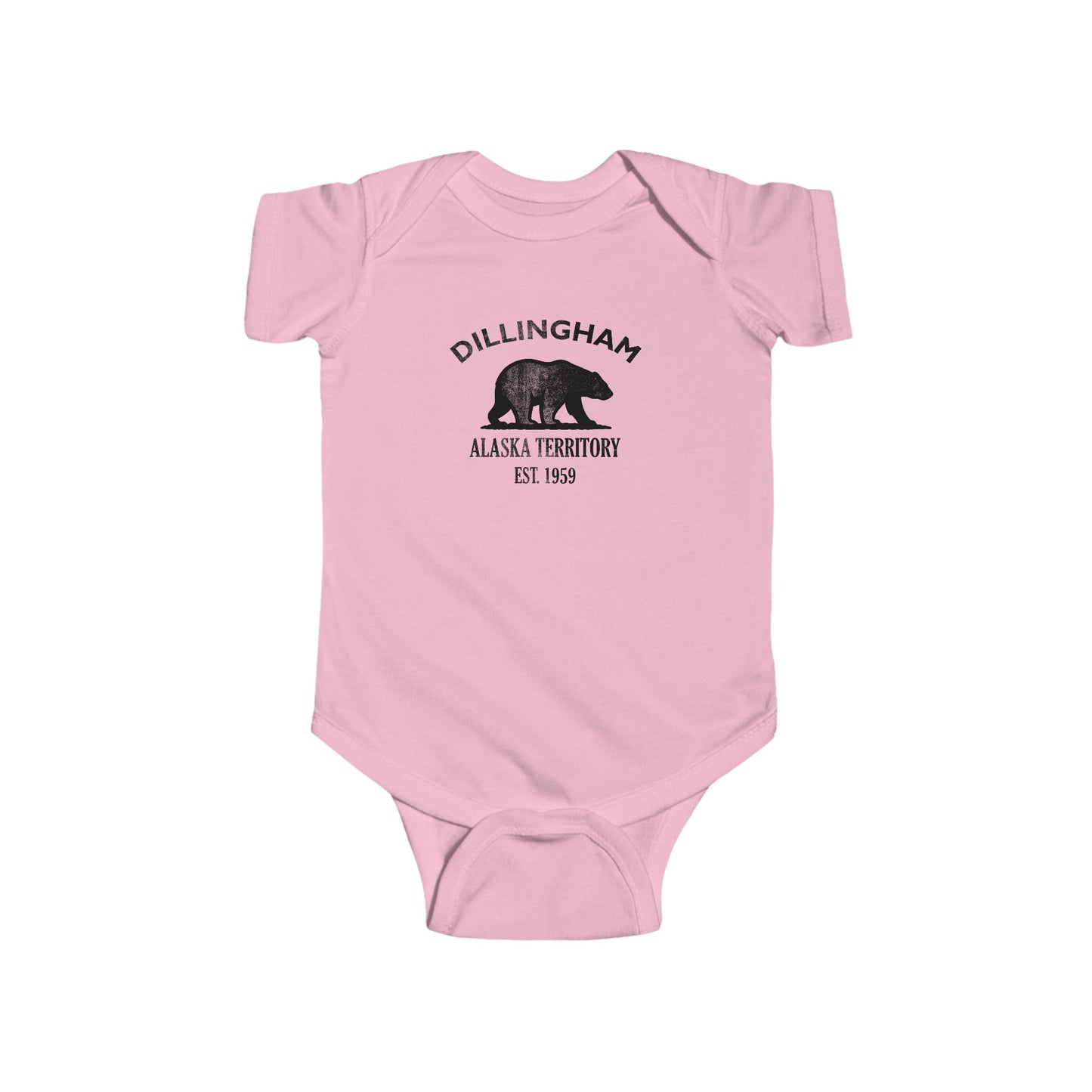
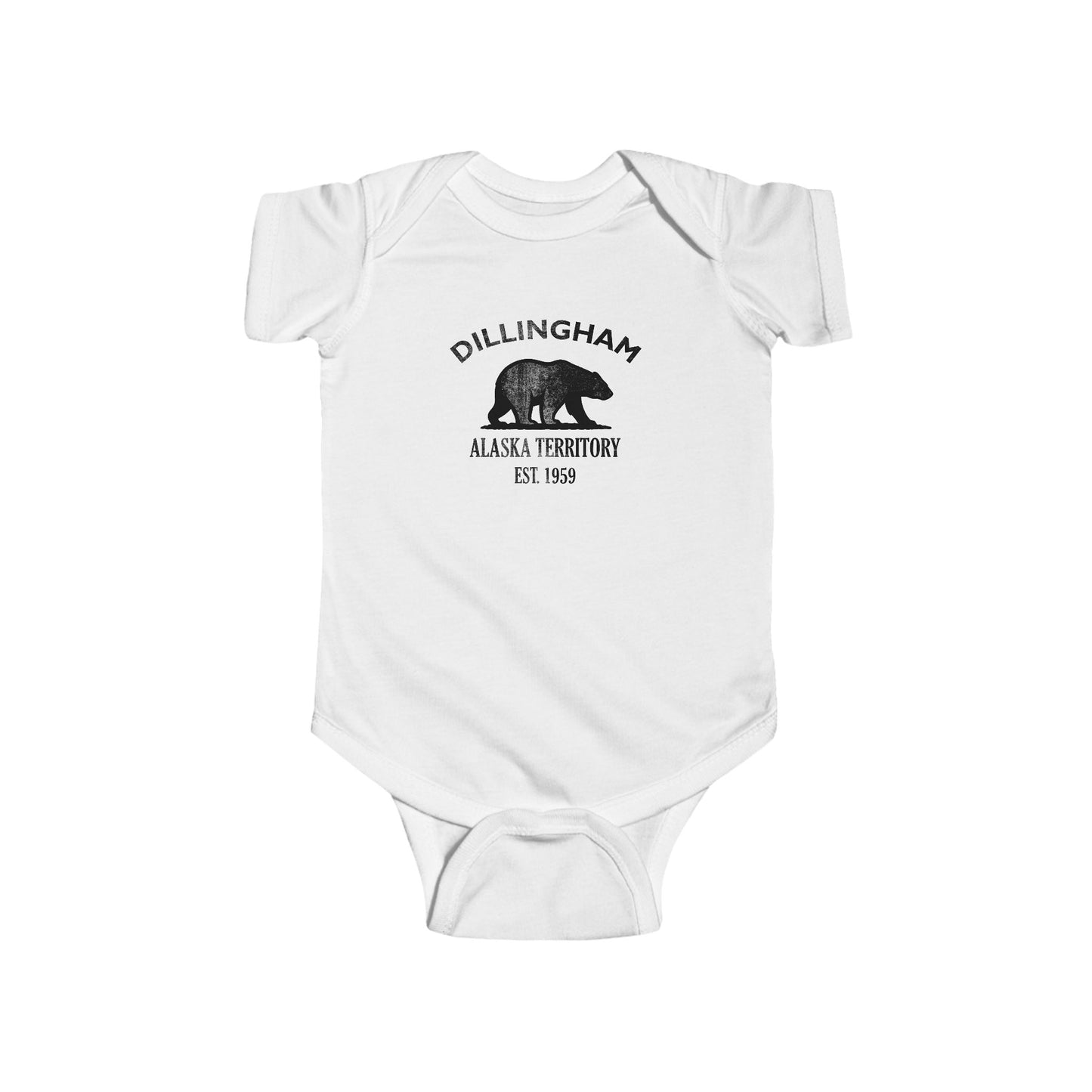
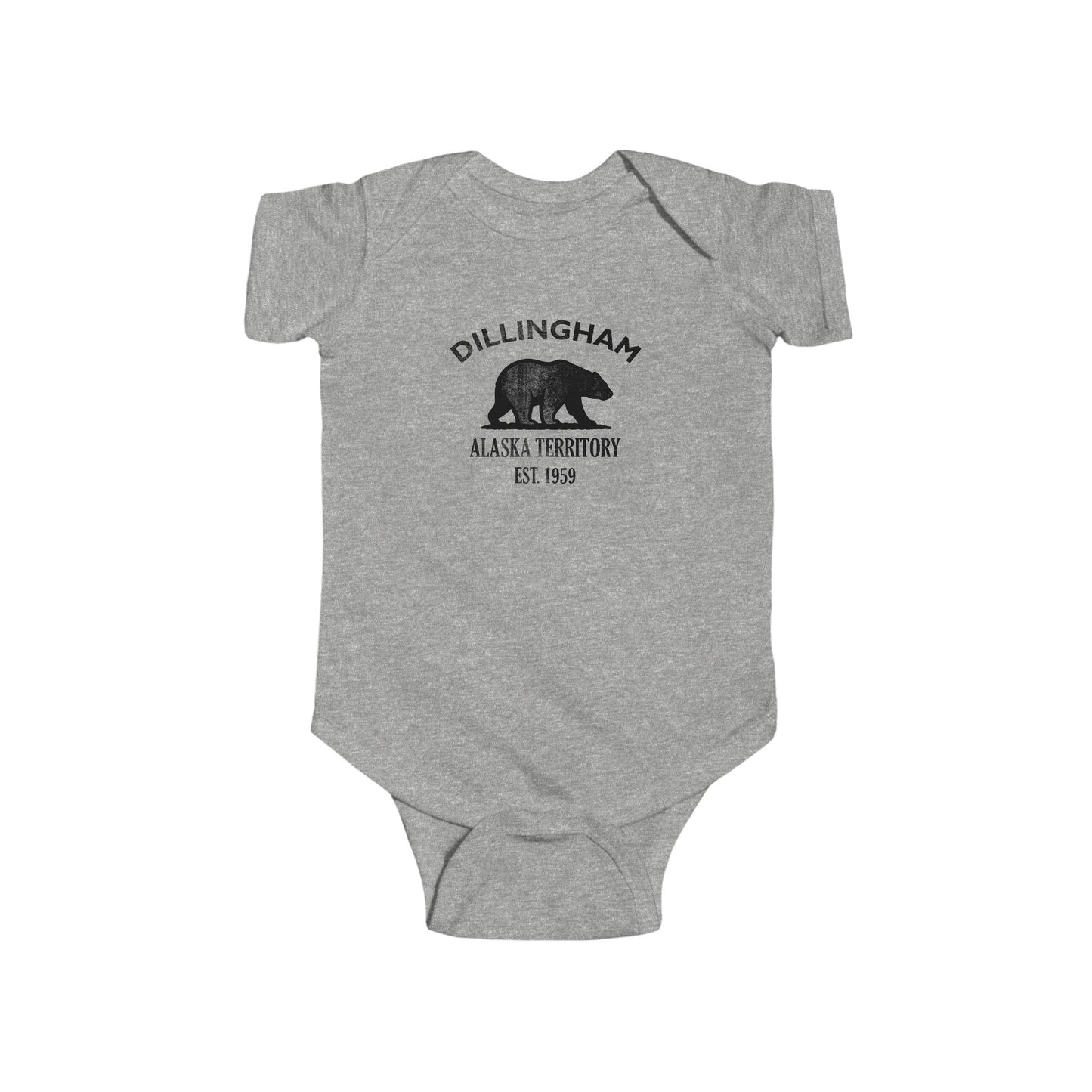
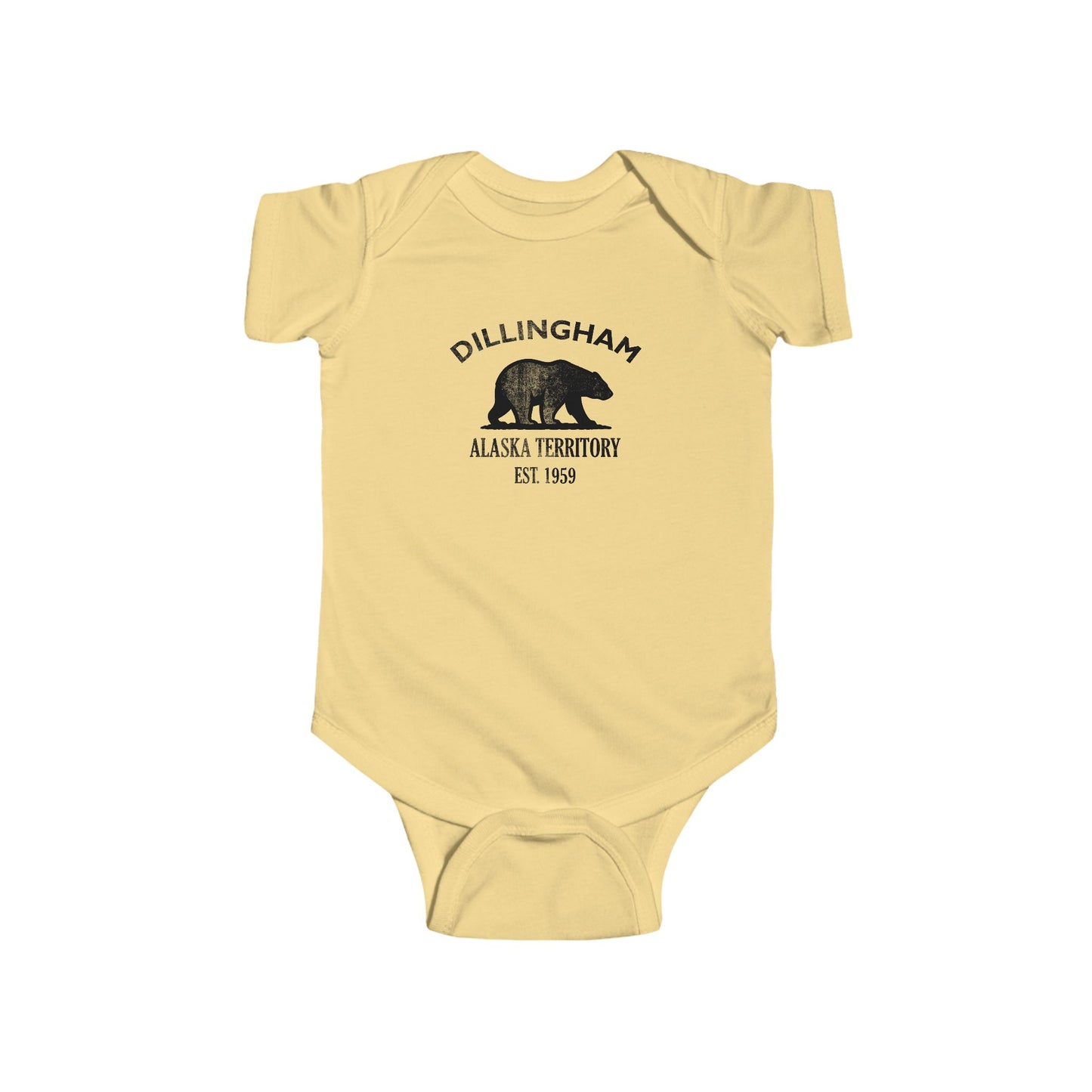

Our Dillingham retro logo uses Alaska’s distressed bear motif, representing strength, resilience, and wilderness identity. The bear reflects both Indigenous reverence and frontier endurance, while “1959” grounds the motif in Alaska’s statehood. Its black-and-white styling is rugged and vintage, resembling crate labels or outfitter branding. The motif bridges Dillingham’s dual identity: Native subsistence and modern fishing industry. On merchandise, it conveys authenticity, pride, and toughness, retro in tone. The bear emblem honors Dillingham’s story: resilience, heritage, and fishing pride. Retro in style, it is a vintage emblem of Alaska’s maritime and frontier endurance.
Dillingham developed into a major salmon fishing and canning center in the twentieth century. By the 1950s and 1960s, canneries dominated its economy, with residents balancing subsistence traditions and commercial work. Schools, churches, and civic buildings anchored the community. Its timeline reflects continuity: Indigenous heritage and modern industry coexisting. The mid-century decades highlighted resilience, as residents rebuilt after storms and economic swings. Dillingham’s growth showed adaptability and endurance, ensuring fishing remained central. Its story mirrors Alaska’s larger identity: resilience, subsistence, and pride, rooted in both Native tradition and modern industry.
Why People Visit Dillingham Alaska
- Drive the road north to Aleknagik and Lake Aleknagik — the single twenty-mile paved route out of town and the southern gateway to the Wood River Lakes.
- Fly into Wood-Tikchik State Park — at roughly 1.6 million acres the largest state park in the United States, a roadless wilderness of interconnected clear-water lakes; outfitters in Dillingham rent inflatable kayaks, rafts, and canoes, and a paddle from Lake Kulik back to Dillingham runs close to 140 miles over ten to fourteen days.
- Walk the small-boat harbor — the working docks of the Nushagak District fleet, drift boats and set-net skiffs, with views across the bay toward low mountains.
- Stroll the beaches along Kanakanak Road — tidal flats and the long changing light on Nushagak Bay.
- Learn the region's story at local cultural and heritage centers when open — the Yup'ik history of Curyung and the Bristol Bay fishery.
- Visit the headquarters of Togiak National Wildlife Refuge — 4.7 million acres of walrus, seals, migratory birds, and one of the largest wild herring fisheries.
- Watch for eagles, seabirds, and brown bears along shoreline pullouts and quiet overlooks — this is bear country, salmon country, and a major flyway all at once.
- Time a visit to summer salmon season — June and July, when the largest wild sockeye run on Earth fills the bay and the town runs around the clock.
