




More From Barrow (Utqiaġvik) Alaska
-
Barrow Alaska Vintage Retro Cotton Canvas Tote Bag - Black Logo
Regular price $28.00 USDRegular price -
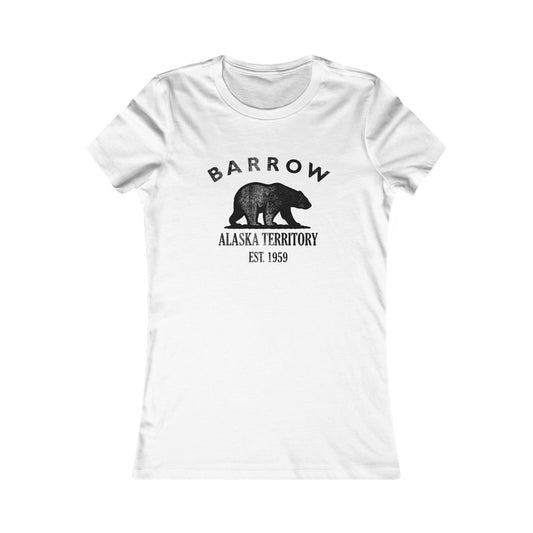
Barrow Alaska Vintage Retro Womens Fitted Ringspun Cotton Tee - Black Logo
Regular price $28.00 USDRegular price -
Barrow Alaska Vintage Retro Embroidered Cotton Cap - White Logo
Regular price $32.00 USDRegular price

Sixty-five nights, eighty days. The calendar here is unlike anywhere else in America. Two of the most extreme natural light cycles on the planet, in the same town, six months apart. In mid-November the sun sets and does not rise again for about 65 days — the polar night, when the aurora owns the sky at noon and the town runs on its own rhythm under streetlights and starlight. In late January the sun returns for minutes, then hours; by May it refuses to set at all, and for roughly 80 days, into August, Utqiaġvik lives in continuous daylight — midnight softball, midnight fishing, the Arctic Ocean glittering at 2 a.m. Even football bends to the latitude: the Barrow Whalers play on a field a few dozen yards from the Arctic Ocean, the northernmost gridiron in the world, sometimes under the midnight sun and sometimes racing the coming dark.
The name that came home. The first written record of the community's own name came in 1853, when Commander Rochfort Maguire of the Royal Navy set it down from Iñupiaq speakers as "Ot-ki-a-wing"; the British Admiralty, meanwhile, had already fixed "Barrow" to the maps — honoring Sir John Barrow, the English promoter of Arctic exploration and an Admiralty geographer in London, who never saw the place. An American whaler named Charles Brower arrived in the 1880s, built the Cape Smythe Whaling and Trading Station — still standing in the district that carries his name, Browerville — and the settlement grew around the meeting of two worlds. The City of Barrow incorporated on June 8, 1959, months after Alaska statehood.
Why People Visit Barrow Alaska
- Visit the Iñupiat Heritage Center, the cultural museum holding exhibits on 1,500 years of Iñupiat history, whaling, and contemporary Iñupiaq community life.
- Drive to Point Barrow, about 9 miles northeast of town, the northernmost point of US land where the Chukchi and Beaufort Seas converge — a major marine-mammal migration corridor.
- See the Whalebone Arch on the Arctic Ocean shore, the iconic bowhead-jaw landmark and photo stop.
- Tour the Birnirk archaeological site, a National Historic Landmark featuring 16 prehistoric Thule-culture dwelling mounds dating to roughly 500 CE.
- Walk the tundra boardwalk for migratory birds, snowy owls, and the brief summer wildflower bloom across the permafrost coastal plain.
- Visit the Will Rogers and Wiley Post Monument, marking the 1935 plane-crash site of the American humorist and pioneering aviator.
- Observe the aurora borealis from September through March on clear nights — the long polar darkness makes Barrow one of the best aurora-viewing locations in the world.
