


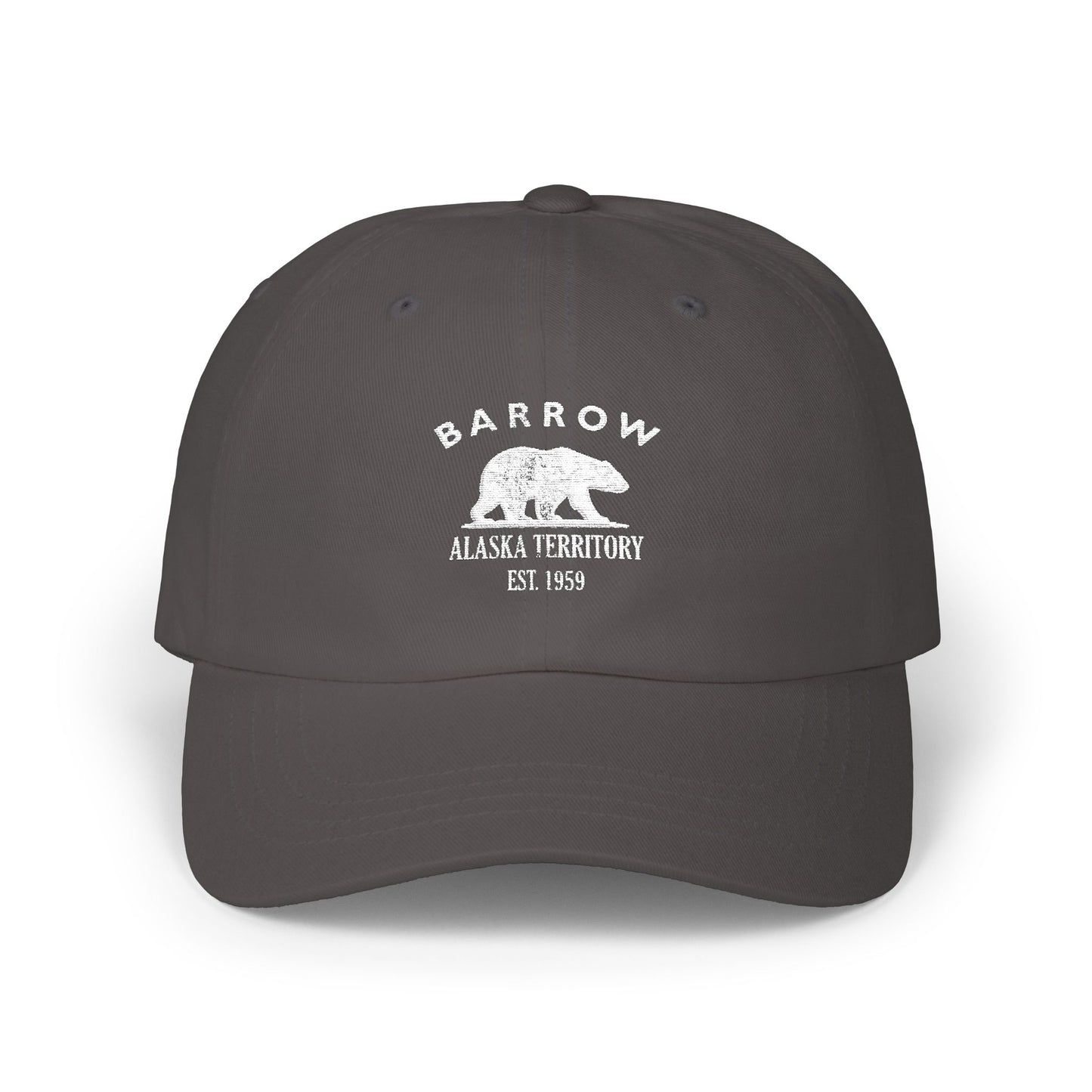
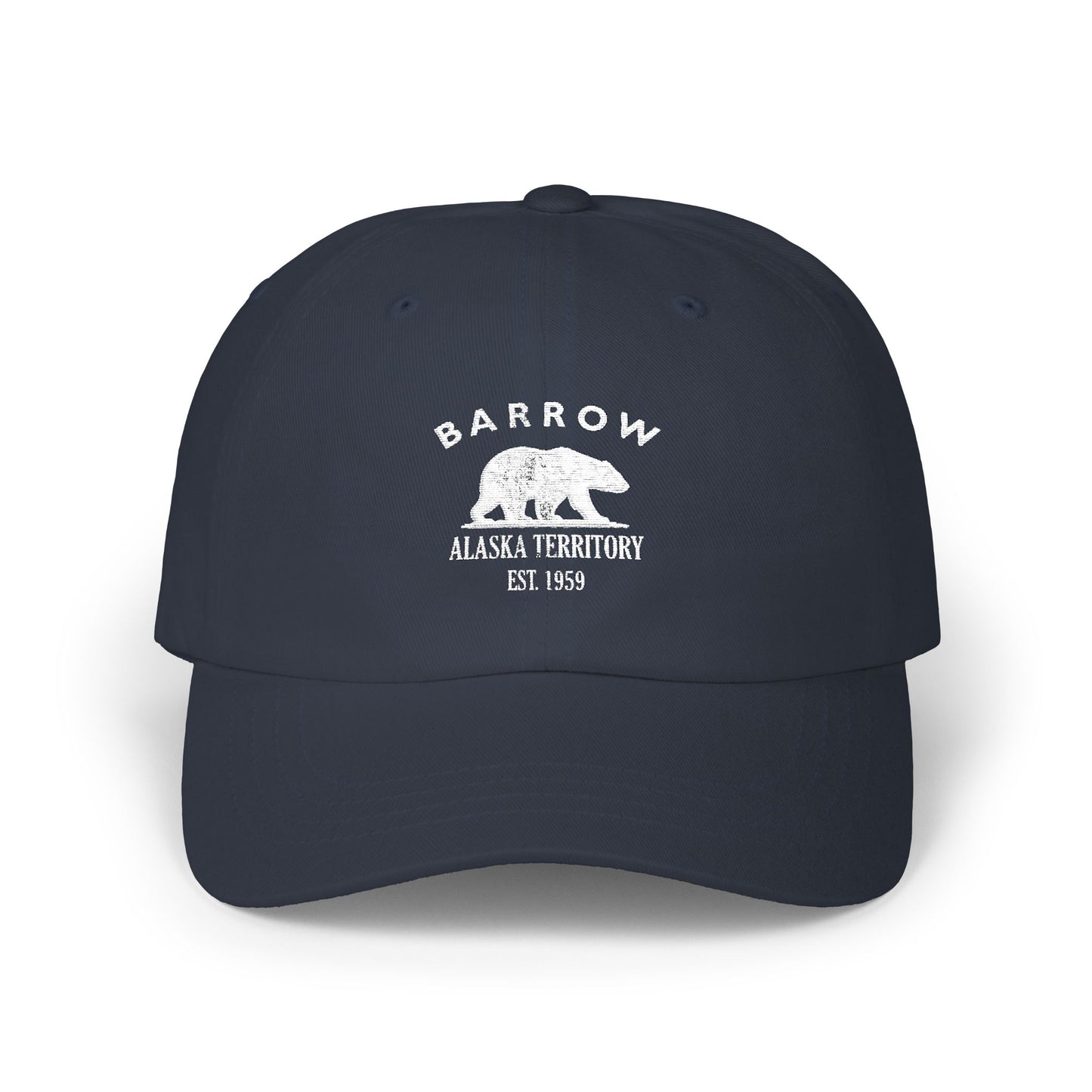
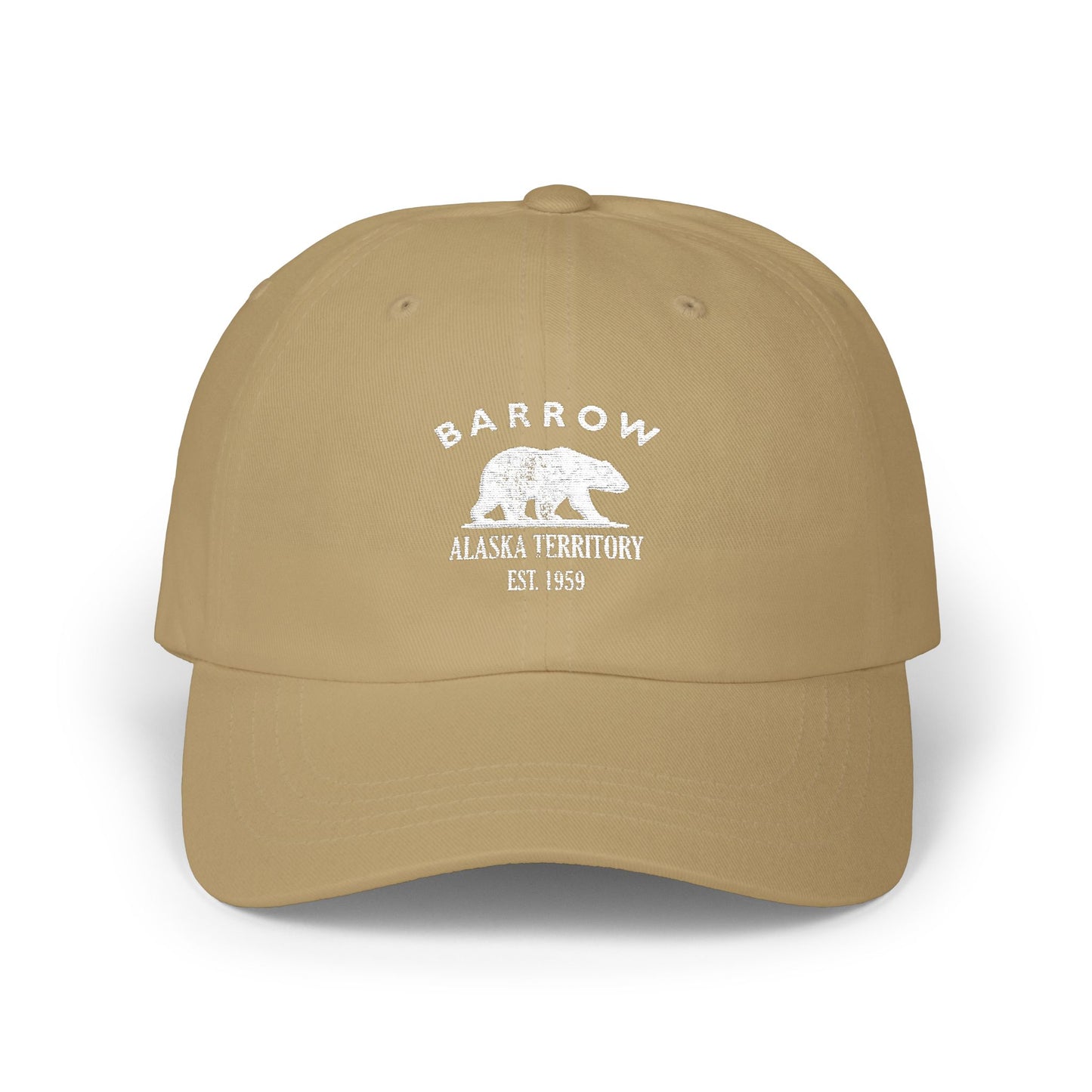
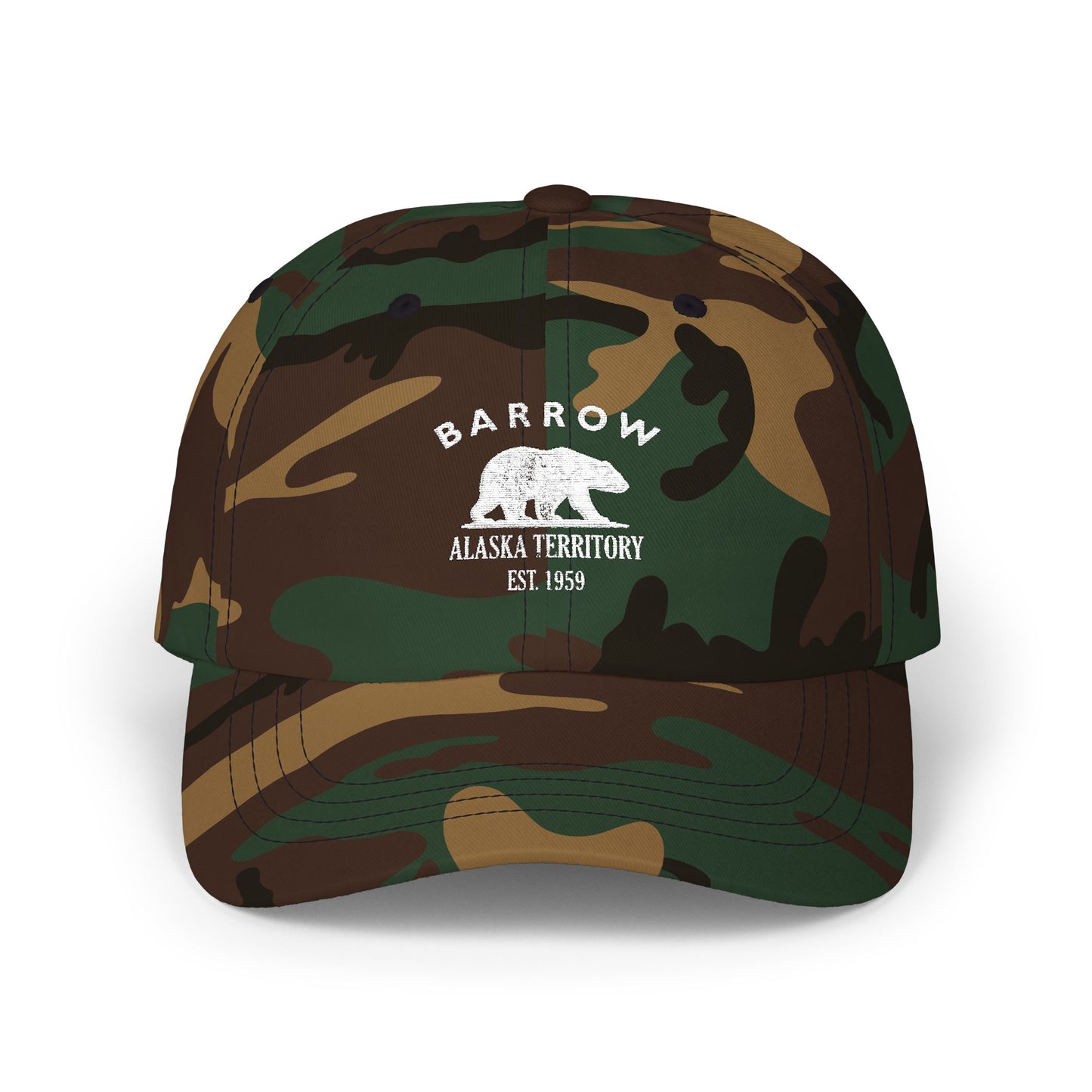
More From Barrow (Utqiaġvik) Alaska
-
Barrow Alaska Vintage Retro Cotton Canvas Tote Bag - Black Logo
Regular price $28.00 USDRegular price -
Barrow Alaska Vintage Retro Womens Fitted Ringspun Cotton Tee - Black Logo
Regular price $28.00 USDRegular price -

Sixty-five nights, eighty days. The calendar here is unlike anywhere else in America. Two of the most extreme natural light cycles on the planet, in the same town, six months apart. In mid-November the sun sets and does not rise again for about 65 days — the polar night, when the aurora owns the sky at noon and the town runs on its own rhythm under streetlights and starlight. In late January the sun returns for minutes, then hours; by May it refuses to set at all, and for roughly 80 days, into August, Utqiaġvik lives in continuous daylight — midnight softball, midnight fishing, the Arctic Ocean glittering at 2 a.m. Even football bends to the latitude: the Barrow Whalers play on a field a few dozen yards from the Arctic Ocean, the northernmost gridiron in the world, sometimes under the midnight sun and sometimes racing the coming dark.
The name that came home. The first written record of the community's own name came in 1853, when Commander Rochfort Maguire of the Royal Navy set it down from Iñupiaq speakers as "Ot-ki-a-wing"; the British Admiralty, meanwhile, had already fixed "Barrow" to the maps — honoring Sir John Barrow, the English promoter of Arctic exploration and an Admiralty geographer in London, who never saw the place. An American whaler named Charles Brower arrived in the 1880s, built the Cape Smythe Whaling and Trading Station — still standing in the district that carries his name, Browerville — and the settlement grew around the meeting of two worlds. The City of Barrow incorporated on June 8, 1959, months after Alaska statehood.
Why People Visit Barrow Alaska
Barrow offers Arctic culture, geography, and natural-light phenomena that few places on earth can match. Visitors come for the Iñupiat heritage, the tundra and Arctic Ocean horizons, the polar night and midnight sun, and the simple fact of standing in the northernmost city in the United States. It is remote, resilient, and unforgettable. History and everyday community life sit side by side at the top of the continent.
