


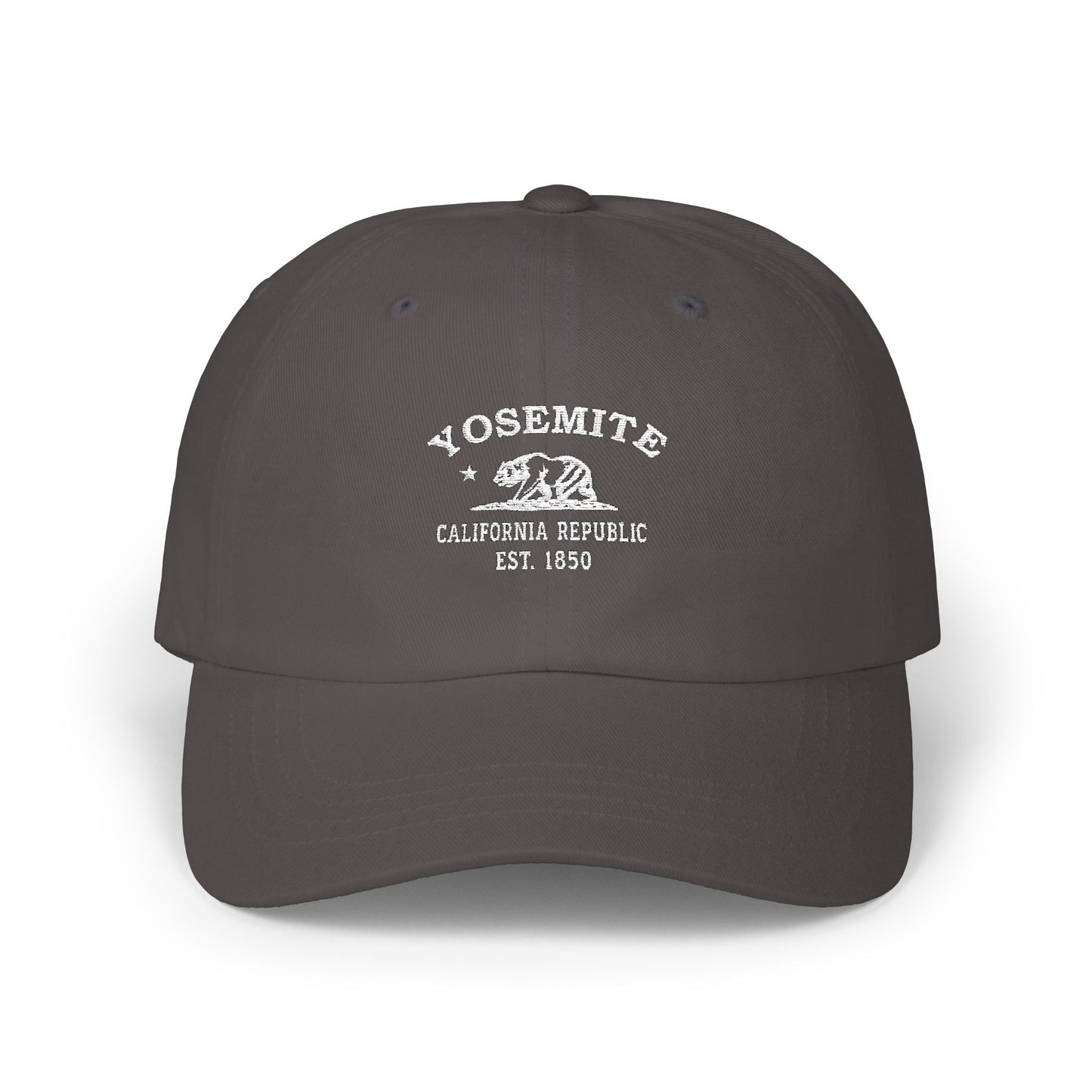
Today Yosemite is a crown jewel of the national parks — granite, giant sequoias, and the valley where, in 1864, America first decided some land was too beautiful to lose. Its story runs from the Ahwahneechee homeland and the 1851 displacement, through the 1864 Lincoln Grant and Muir's advocacy, to the 1890 park and a World Heritage Site visited by millions. Our Yosemite designs gather that identity into wearable form — the bear, the granite, and the sequoias. Yosemite, California: granite, giant sequoias, and the valley that taught America to save its wild places. Est. 1890.
Muir's campaign carried it the rest of the way. On October 1, 1890, Congress established Yosemite National Park, wrapping federal protection around the high country surrounding the state-held valley; in 1906 the valley and grove were receded to the federal park, and in 1916 the new National Park Service took over its care. The U.S. Cavalry had patrolled the park in the years between, the first rangers in all but name. Step by step a Gold-Rush militia's valley had become a model that the rest of the country, and much of the world, would copy.
Why People Visit Yosemite
Yosemite offers wilderness on a scale few places can match — a glacier-cut valley of granite cliffs and waterfalls, giant sequoias older than the country, and the high Sierra beyond, all carrying the founding story of the national-park idea. Visitors come for Half Dome, El Capitan, and the falls, and stay for the sequoias, the meadows, and the long Sierra light. From a valley stroll to the high country, it rewards a day or a week. It is timeless, humbling, and unmistakably California.
