


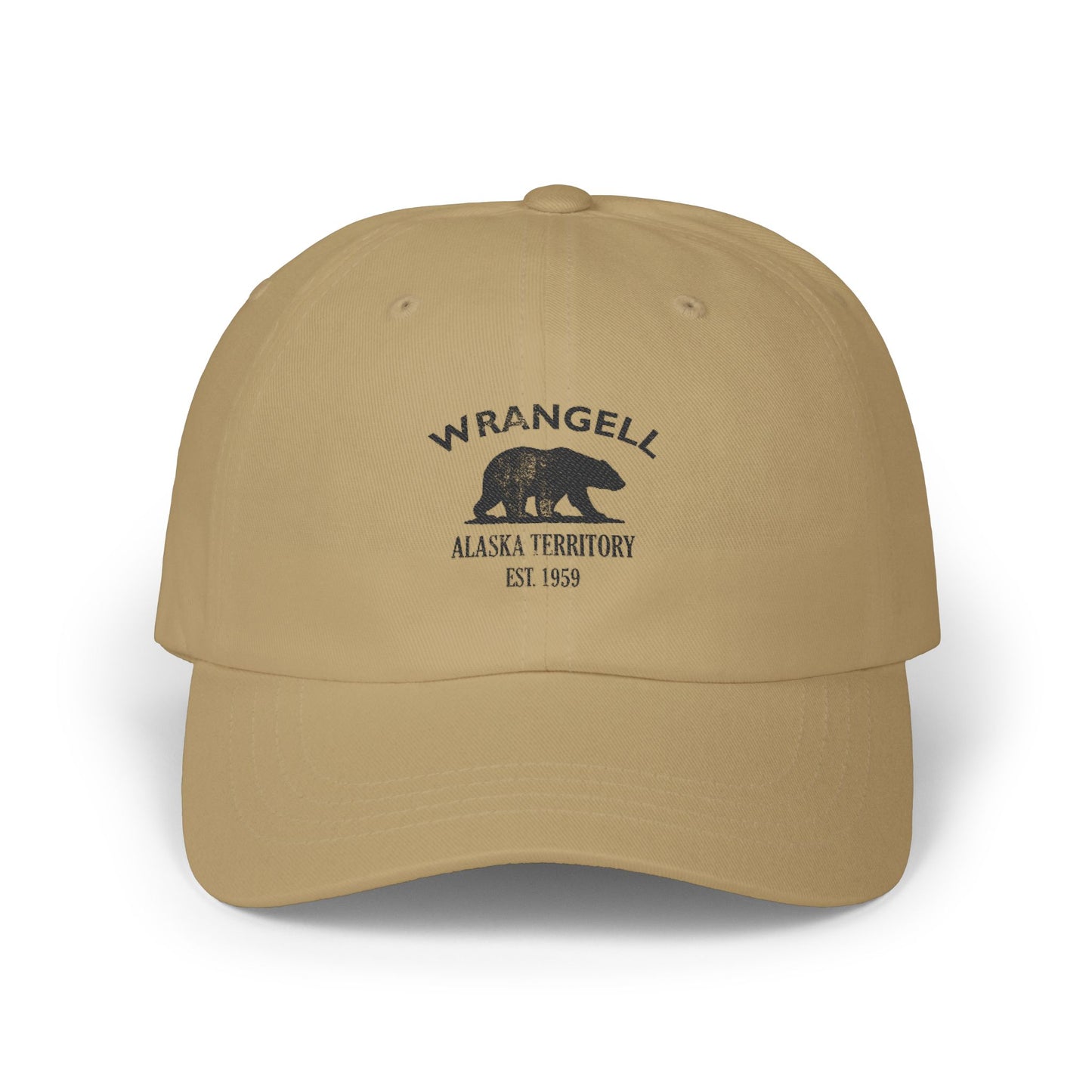
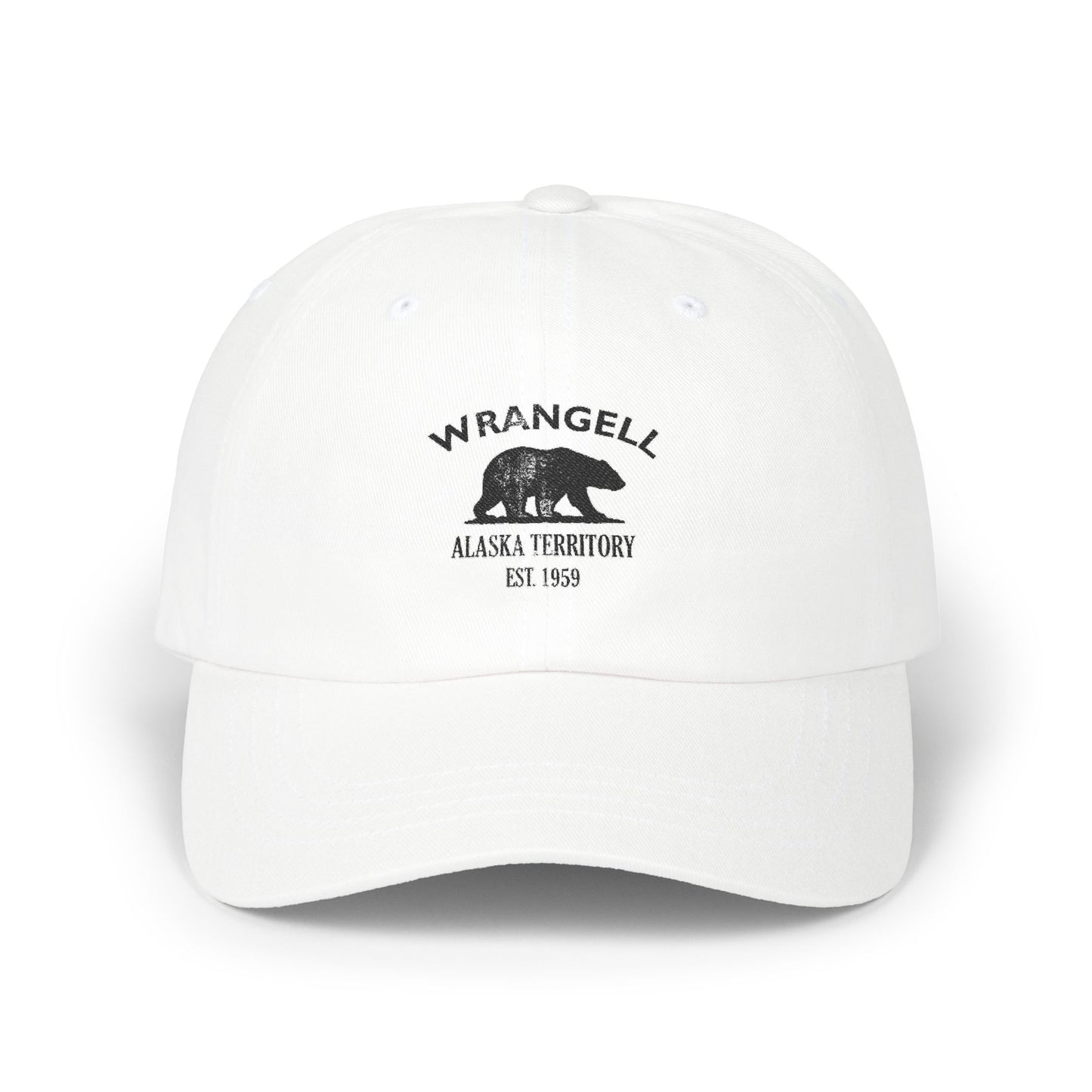
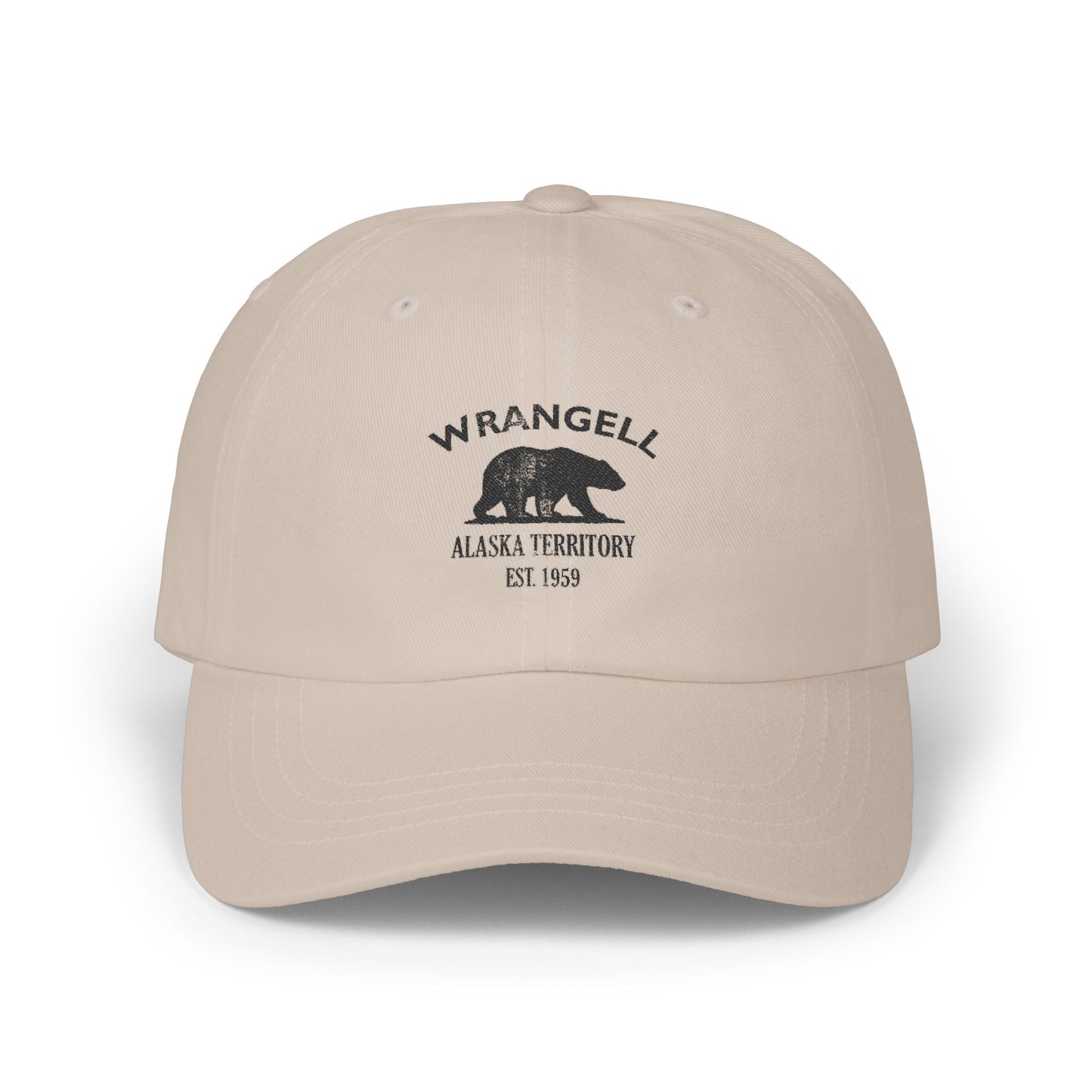
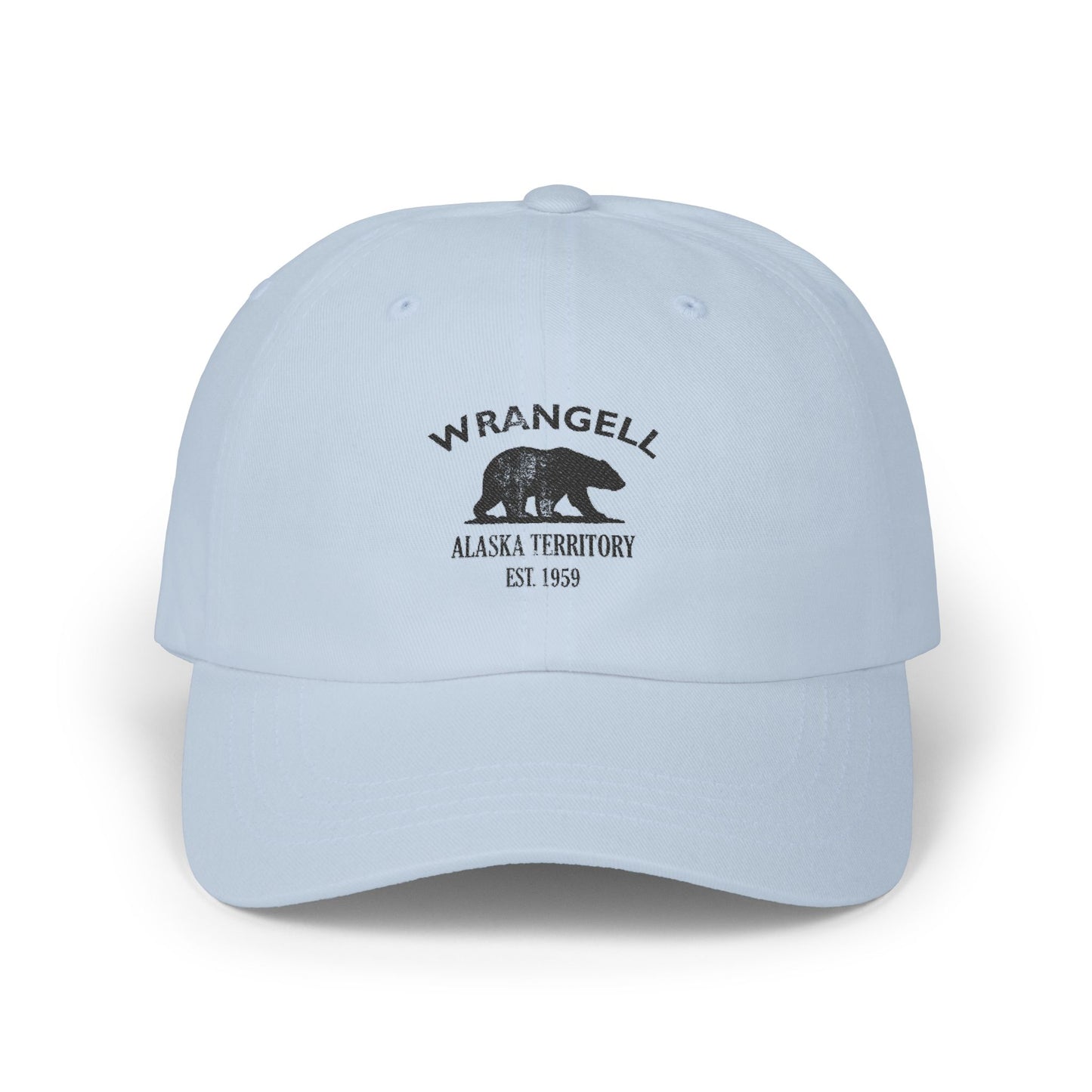
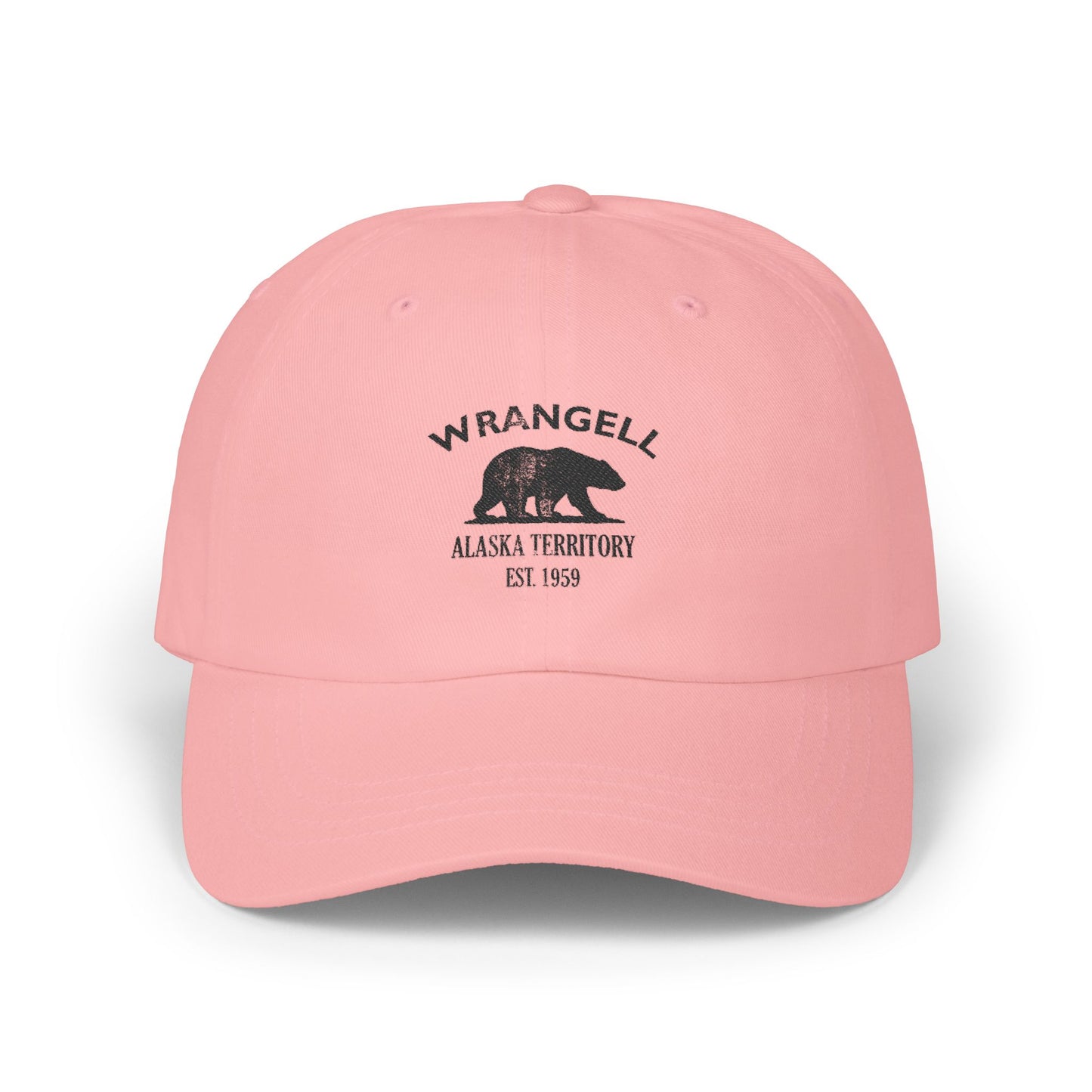
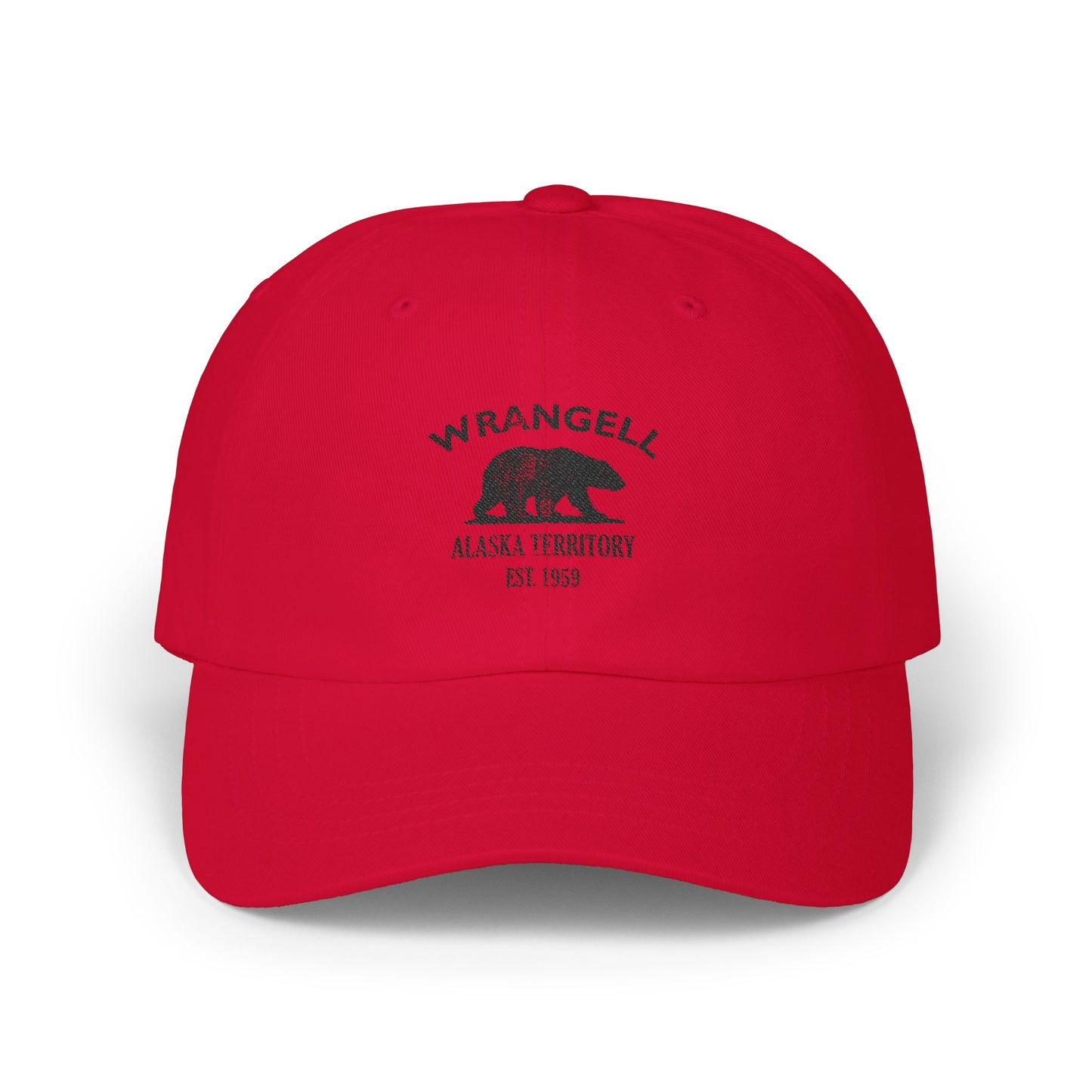
Our Wrangell logo carries Alaska's distressed bear, drawn in worn black and white above ‘Est. 1959,’ the year of statehood — the shared retro emblem of our Alaska towns. The bear stands for the wilderness and the toughness it takes to live in it, and the rugged crate-stamp styling makes the design feel like something off an old cannery label or an outfitter's crate. The bear and the date are the through-line that links Wrangell to every other Alaska town we make; what makes this one Wrangell is everything around it — the three flags, the Stikine River, the totems, and the carvings on the beach.
Start with the river and the people. The Stikine pours out of the Coast Mountains into the islands of the Inside Passage, and the Stikine Tlingit built their life around it — fishing, trading inland, and carving the totems the town is still known for. When the Russians arrived to guard the fur trade, Chief Shakes moved the Tlingit village to Shakes Island in the heart of today's harbor, beside the new redoubt. The island was named, like the town, for Baron Ferdinand von Wrangel, the Russian-American Company governor. The Hudson's Bay Company soon leased the Stikine country and flew the British flag over Fort Stikine; the lease ran until 1867, when the United States bought Alaska and a year later raised a third flag over Fort Wrangell.
Why People Visit Wrangell
Wrangell rewards the off-the-path traveler. It pairs living Tlingit culture with easy reach of the Stikine and bear country, and you can see totems, petroglyphs, and a working harbor in a single walkable day. It feels authentic, green, and quietly adventurous — an Alaska town that stayed itself — with year-round appeal in its trails, parks, and waterfront.
