


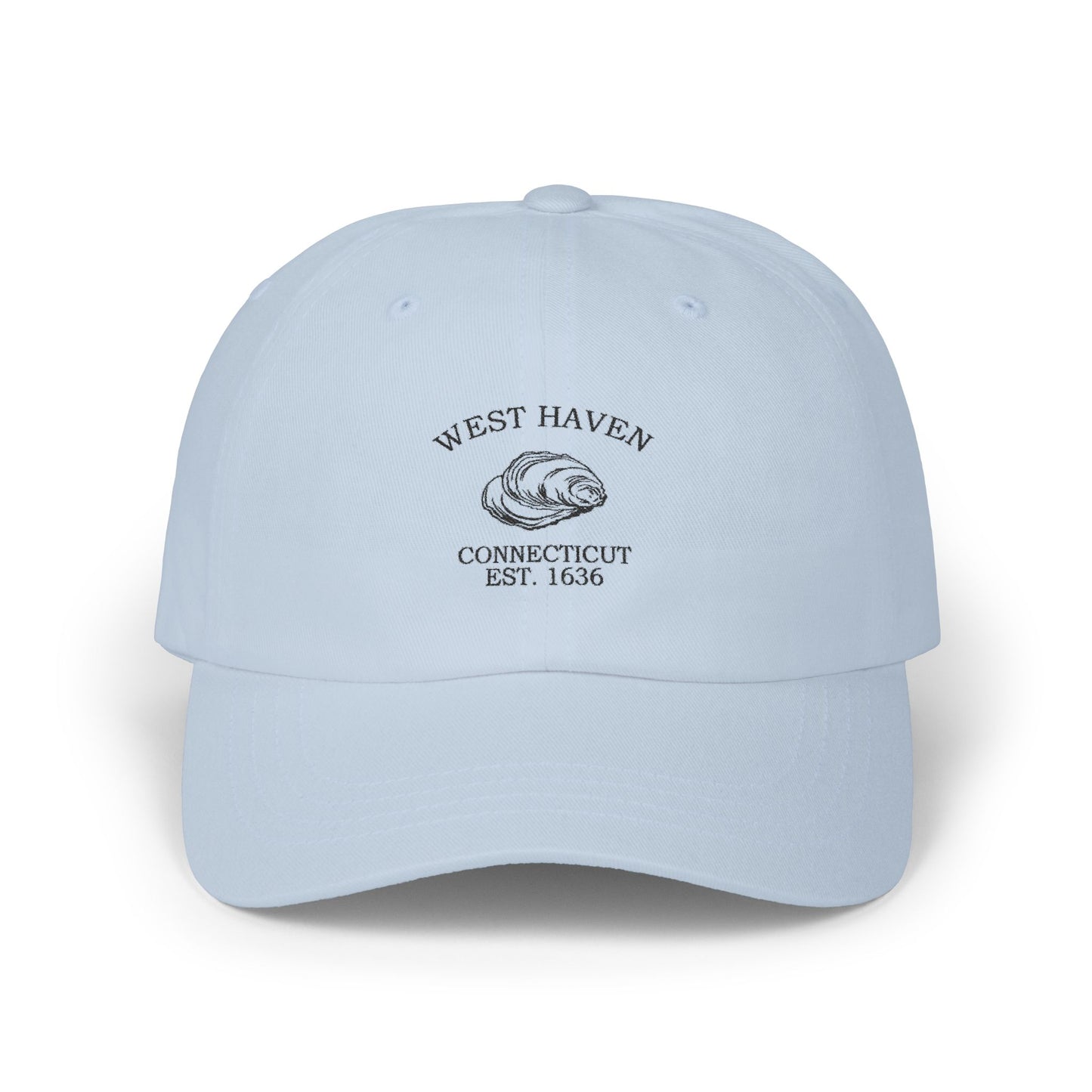
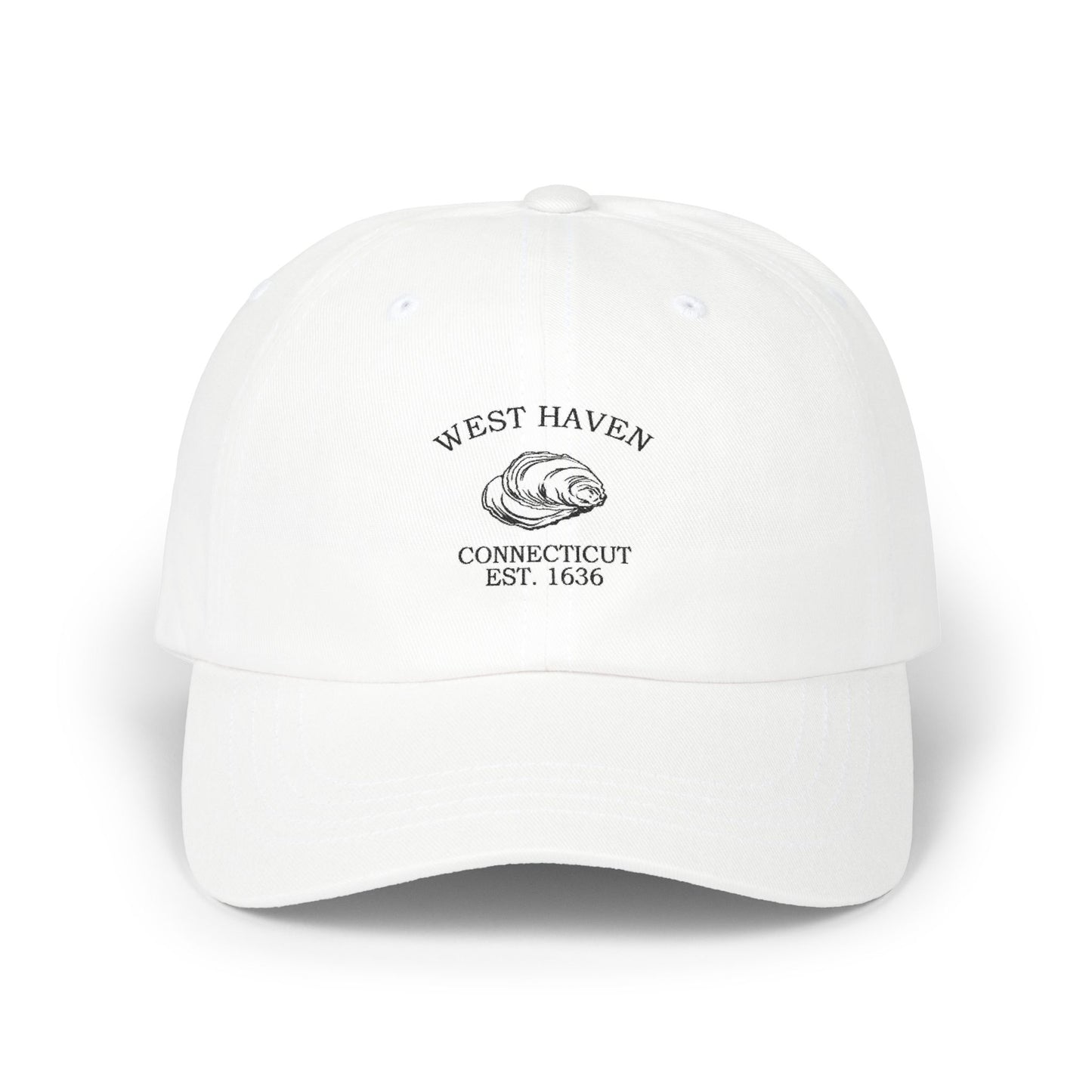
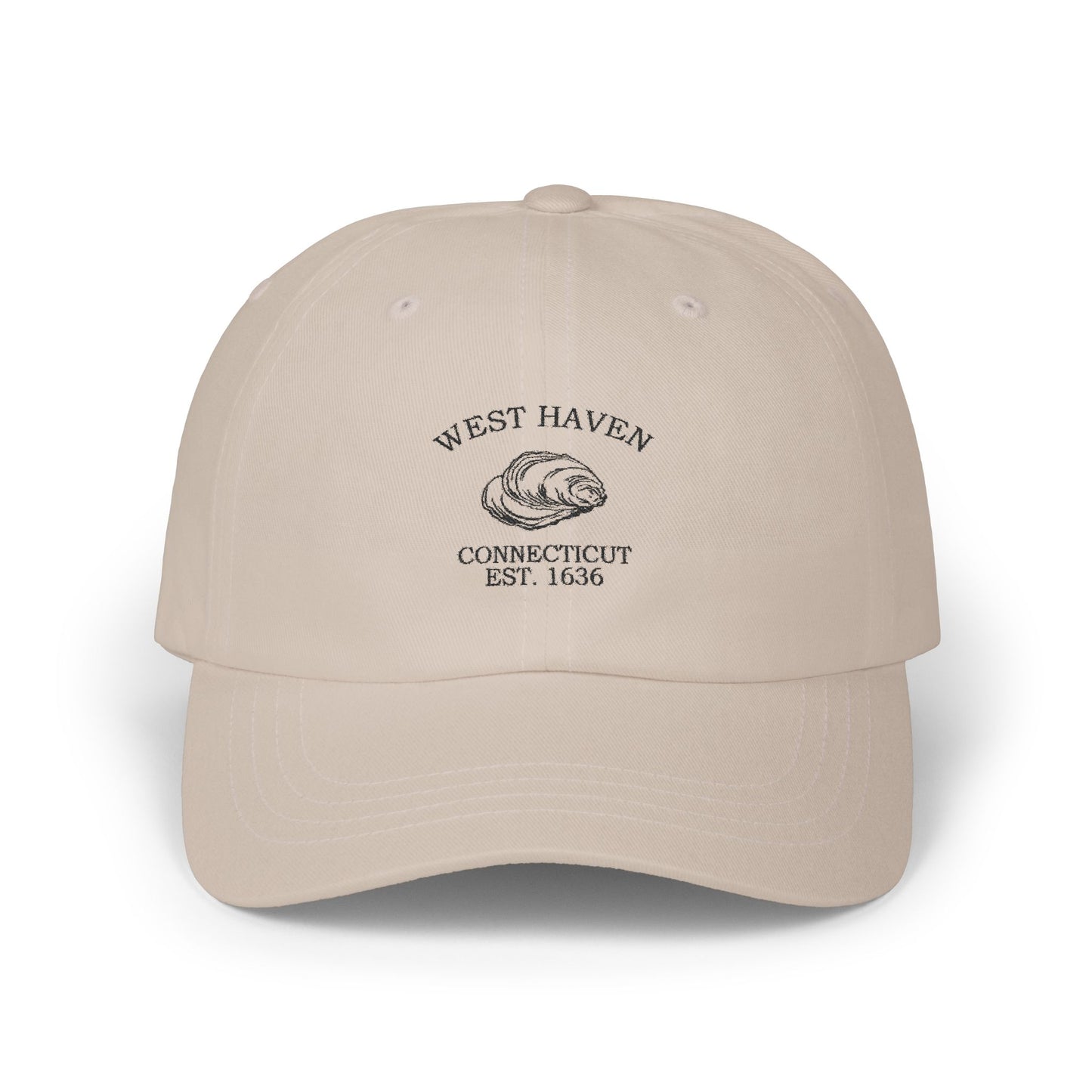

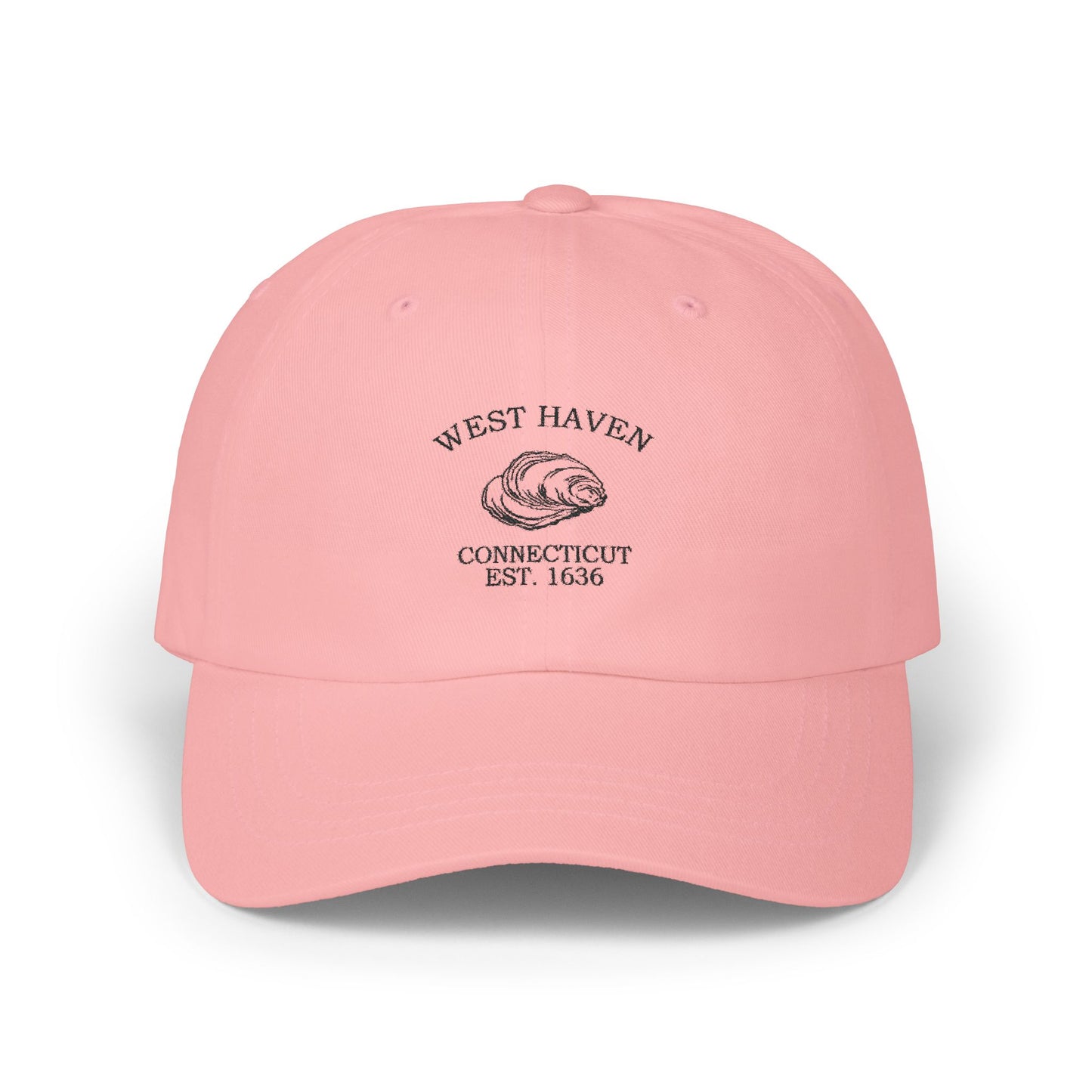
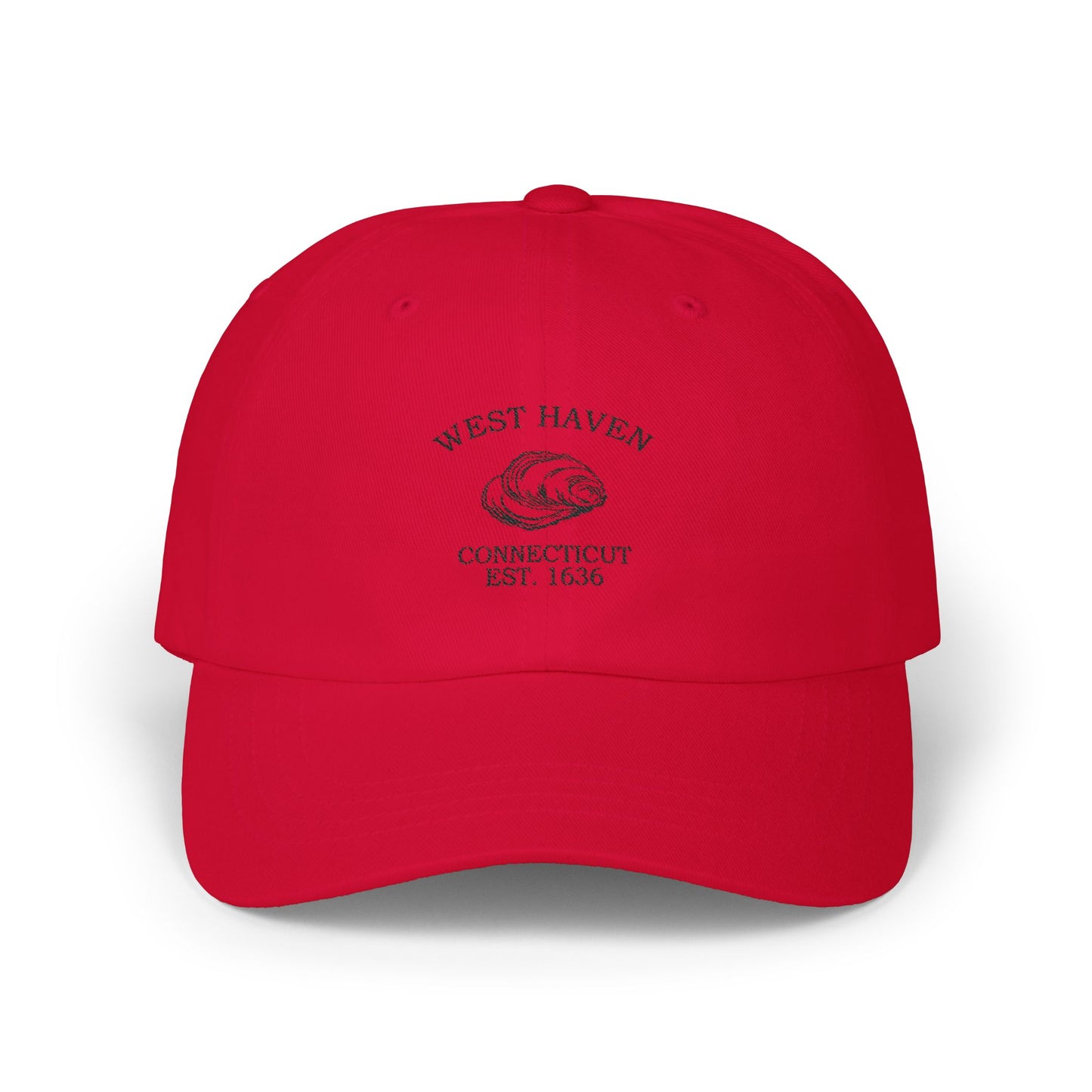
Our West Haven logo carries Connecticut's oyster above ‘Connecticut — Est. 1636,’ the shared retro emblem of our Connecticut towns. The oyster is the state shellfish, a nod to the shoreline beds the Quinnipiac and the early settlers worked, and 1636 marks the founding of the Connecticut Colony; the emblem is the through-line that links West Haven to every other Connecticut town we make. It fits a place that grew up on the water — oyster beds, shore dinners, and a boardwalk — rendered in the black-and-white style of an old crate label. What makes this one West Haven is Savin Rock underneath: a town that turned its shore into a holiday.
West Haven is older than its amusement park by three hundred years. The shoreline belonged to the Quinnipiac people long before English settlers from the New Haven Colony laid out farms here in 1648 and called the place ‘West Farms.’ For generations it was a quiet district of oystermen and farmers on the west side of New Haven Harbor. It joined with North Milford to form the town of Orange in 1822, then set off on its own in 1921 to become the Town of West Haven — Connecticut's youngest — and was chartered as a city in 1961. One of the state's oldest settlements wears the title of its newest city.
Why People Visit West Haven
West Haven appeals with simple shoreline beauty and strong local pride. Visitors pair long beach and boardwalk walks with small museums, the historic Green, and the nostalgia of Savin Rock. It is relaxed, local, and close to the water, with year-round appeal in its parks, paths, and public spaces. The vintage-summer feeling of the old amusement park is evergreen, and history and everyday shoreline life sit side by side in a welcoming way.
