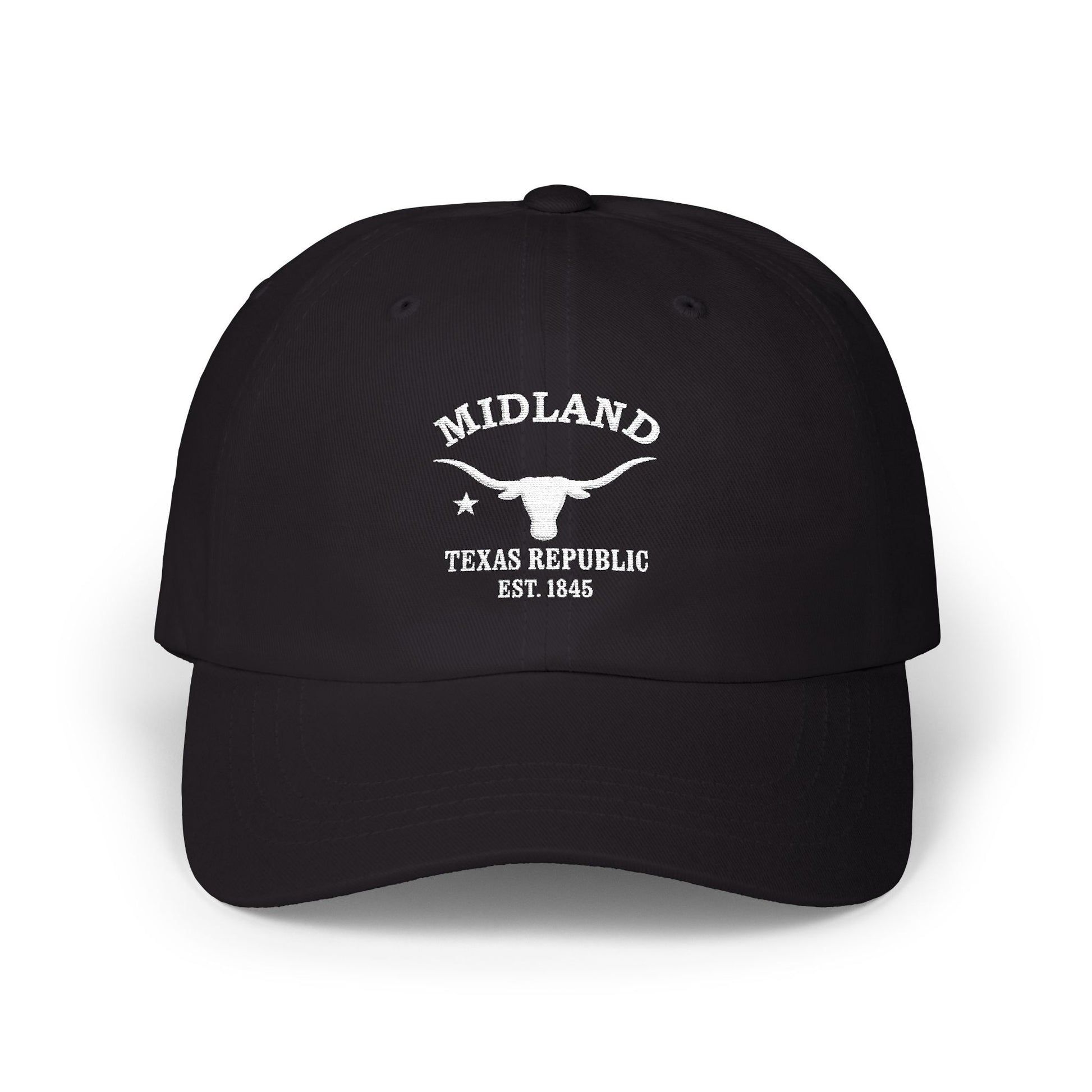
The skyline rises out of nothing. Drive across the flat West Texas plains and Midland appears the way nothing else out here does — a cluster of high-rises standing straight up off the caprock, visible for miles before you reach the city limits. They call it the Tall City, and the towers are monuments to what lies beneath: the Permian Basin, the richest oil field in North America. Founded in 1881 as a railroad midpoint and built into the corporate heart of the oil boom, Midland is a city that runs on what is buried under it — and this page tells its story.
Midland began as a dot on a timetable. In 1881 the Texas & Pacific Railway laid track across the Llano Estacado — the high, flat, semi-arid "staked plains" of West Texas — and a townsite went up at the midway point between Fort Worth and El Paso, first called Midway Station and renamed Midland in 1884. Herman Garrett, a sheep rancher, was among the first permanent residents, and Midland County was organized in 1885. For its first decades the town was ranching country: cattle and sheep on the wide high plains at nearly 2,800 feet.
Why People Visit Midland Texas
Midland draws visitors with a mix of oil-country heritage, museums, and that unmistakable skyline standing up off the West Texas plains. Travelers find it both the business capital of the Permian Basin and a proud, practical high-plains city with deep boom-and-bust history. It is ambitious, plainspoken, and unmistakably West Texan.
