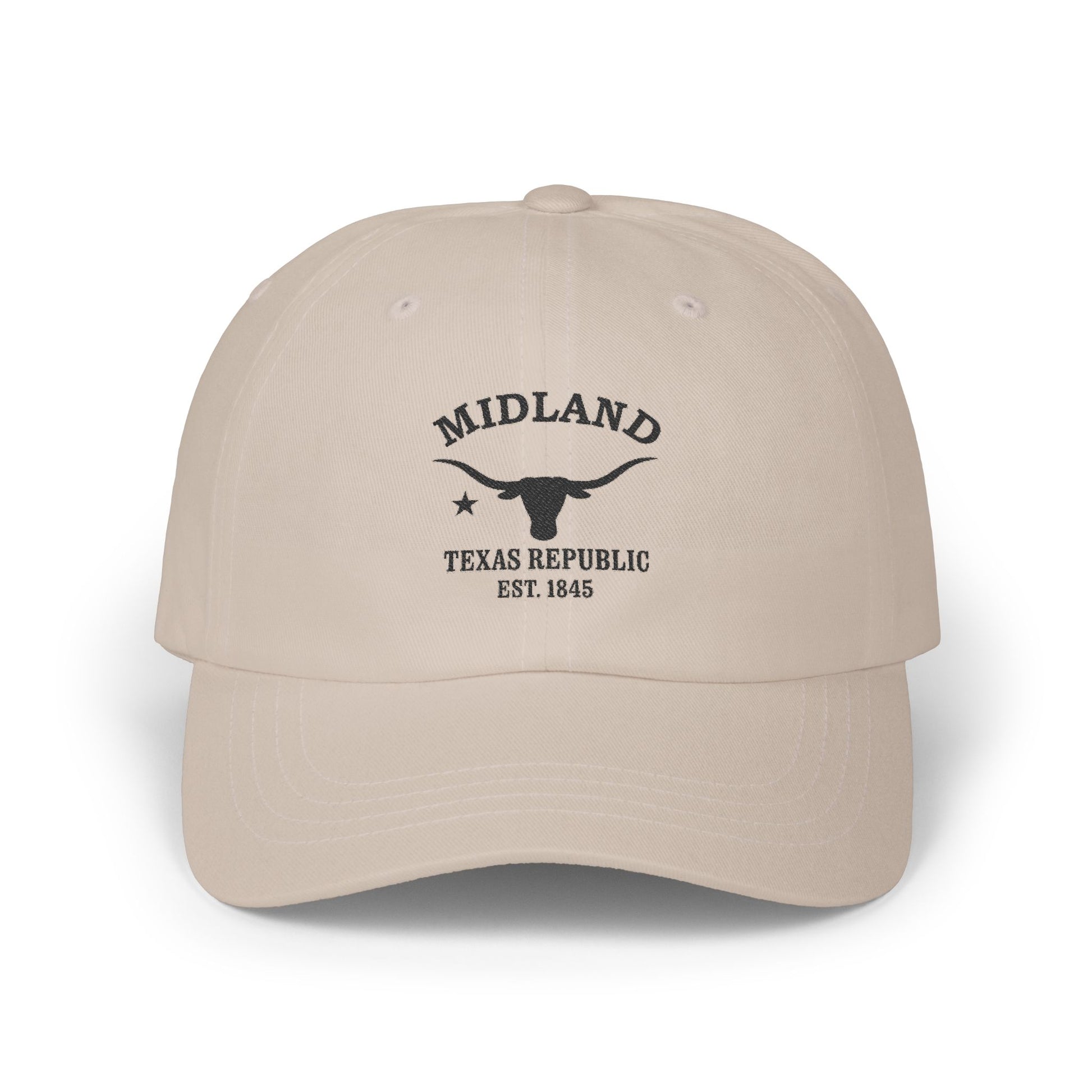
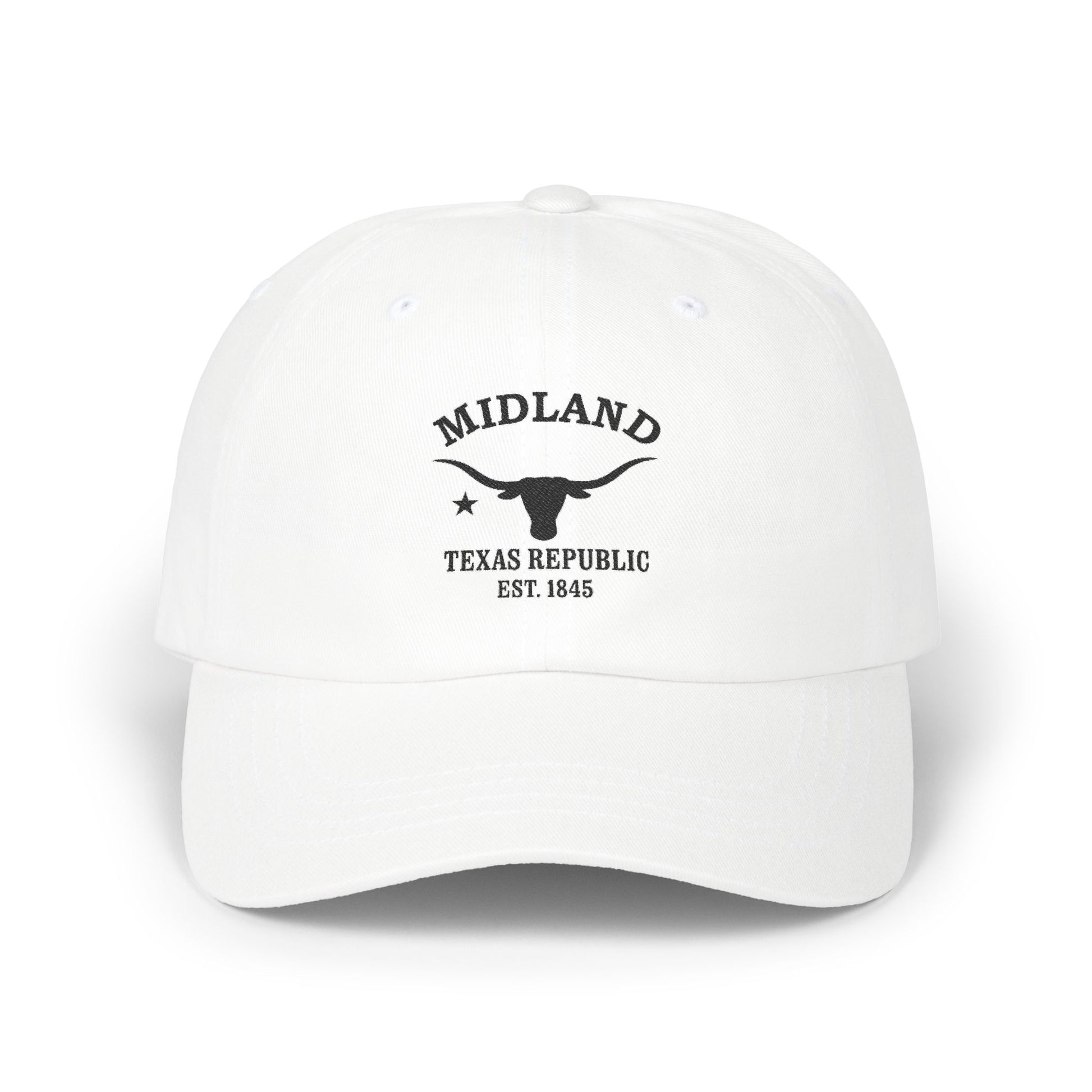
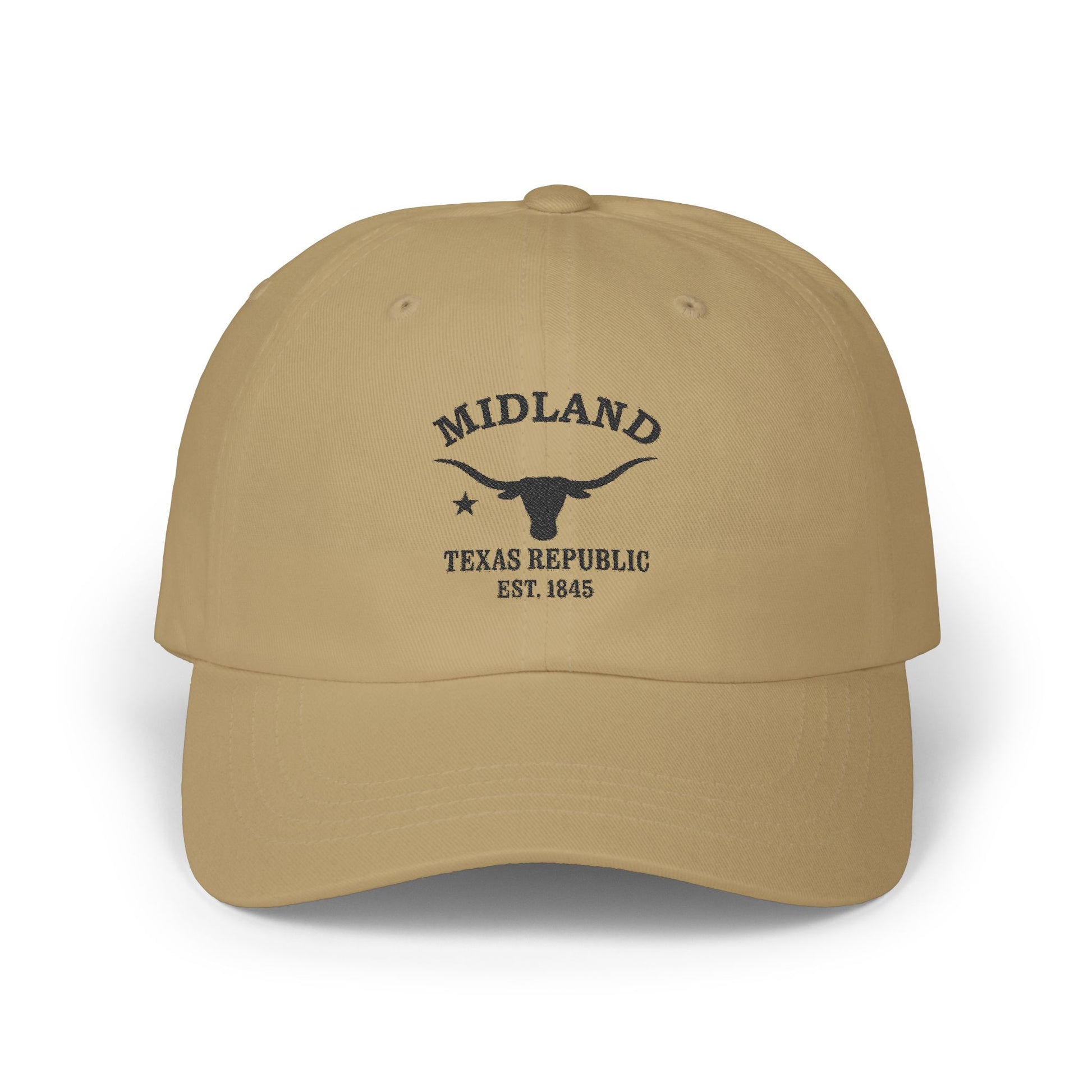
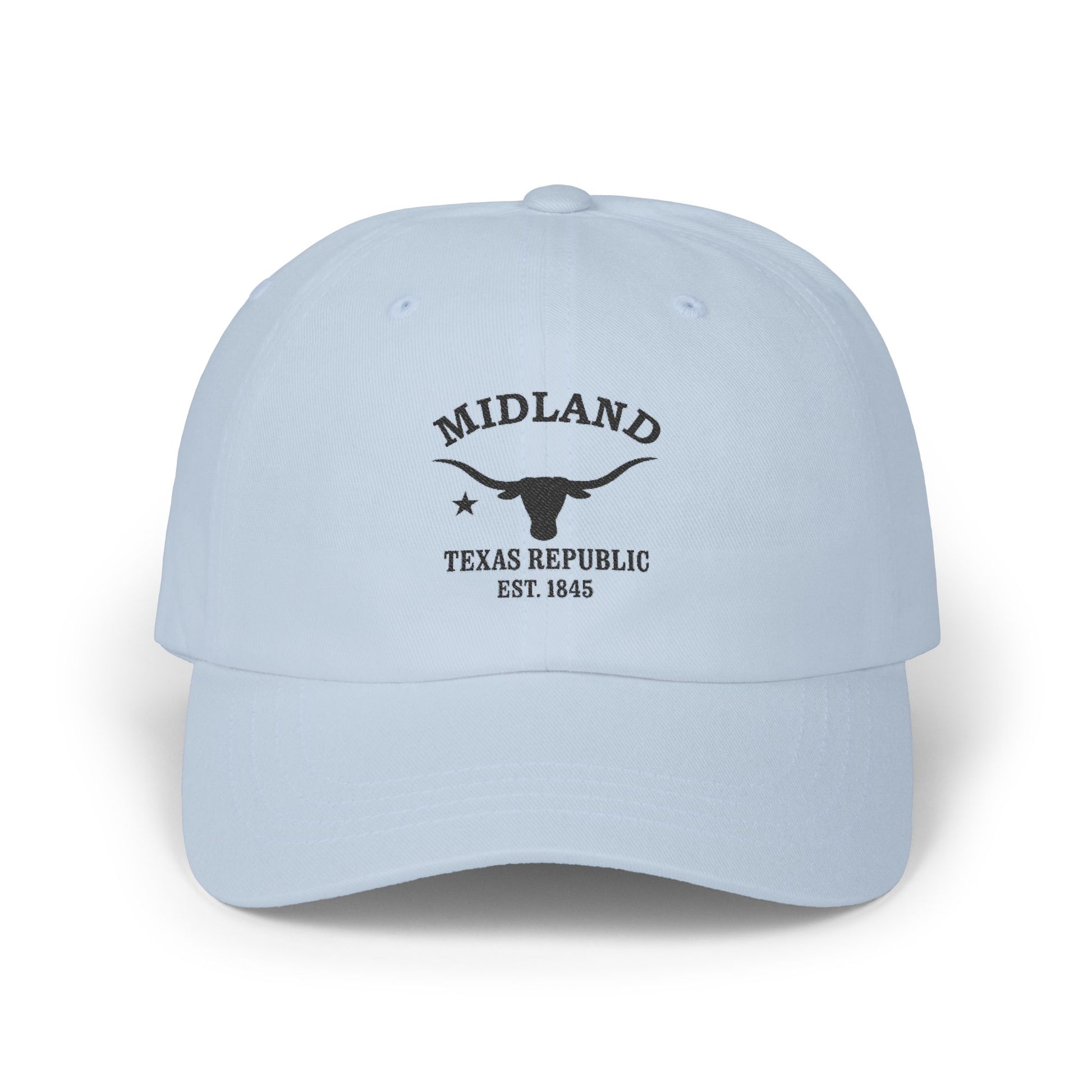
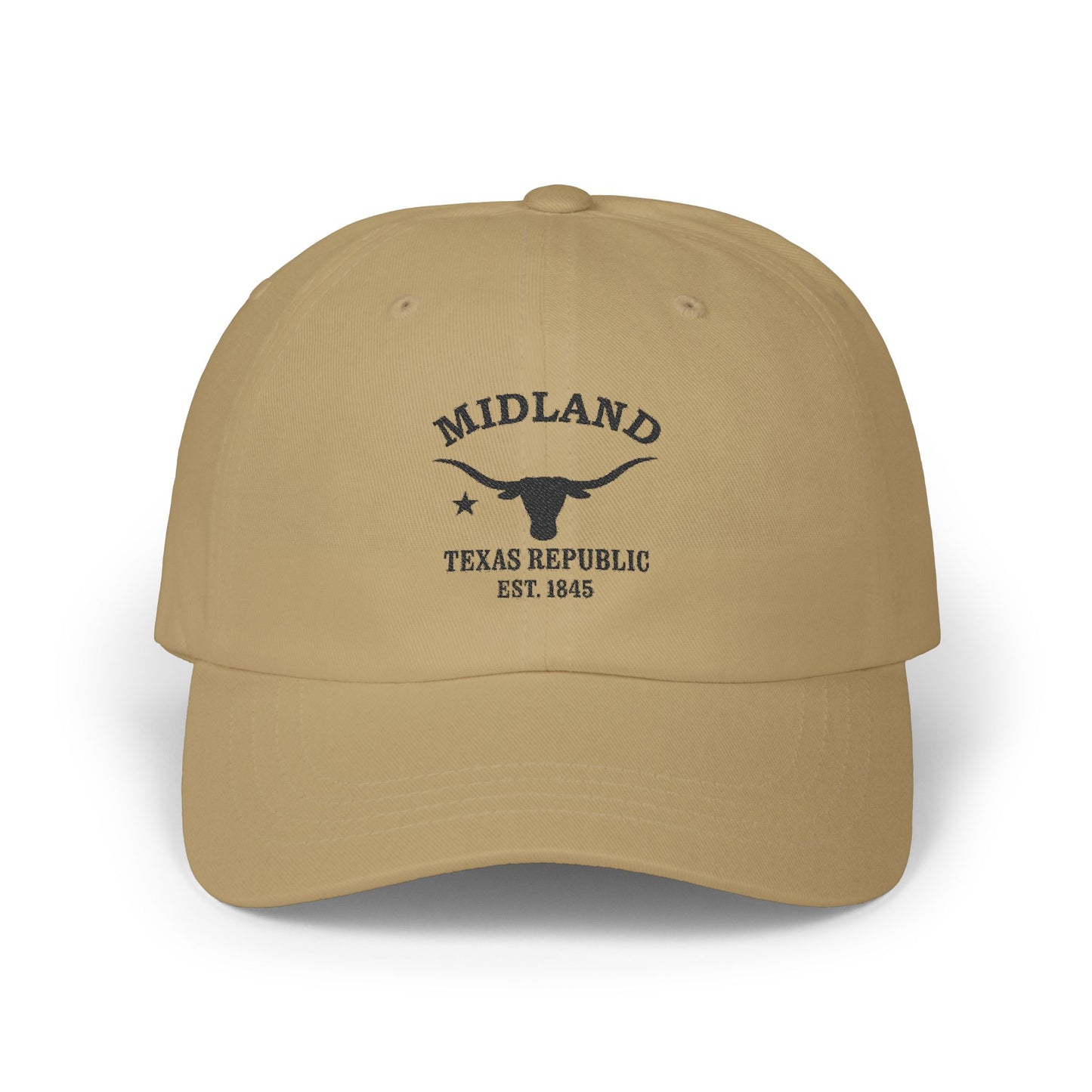
Our Midland logo carries a Texas longhorn — the breed that worked this range before the derricks — and a Lone Star over "1845," the year of statehood and the shared emblem of every Merlin Classics Texas place. Printed black-and-white with the worn look of a branding iron or a stockyard sign, the longhorn and star read as Texas in shorthand: cattle country, the Lone Star, the open West Texas horizon. What makes this one Midland is the place behind it — the Tall City, the Permian Basin, the wildcatter's gamble, and the skyline standing up off the plains.
The skyline rises out of nothing. Drive across the flat West Texas plains and Midland appears the way nothing else out here does — a cluster of high-rises standing straight up off the caprock, visible for miles before you reach the city limits. They call it the Tall City, and the towers are monuments to what lies beneath: the Permian Basin, the richest oil field in North America. Founded in 1881 as a railroad midpoint and built into the corporate heart of the oil boom, Midland is a city that runs on what is buried under it — and this page tells its story.
Why People Visit Midland Texas
- Tour the Permian Basin Petroleum Museum, with interactive galleries on the geology and engineering of the oil boom and a replica 1930s Boom Town.
- Visit the Museum of the Southwest, combining art, science, and a children's museum on a historic estate.
- Walk the downtown Tall City core to see the high-rise skyline that rises straight off the plains.
- See the Bush Family Home, a Texas Historical Commission state historic site in a 1940s neighborhood.
- Catch a performance at the Wagner Noël Performing Arts Center, the region's marquee venue.
